
CO2 Punch!
Globally, 14 percent of greenhouse gas emissions originate from the transportation sector—and that jumps to 27 percent in the United States. Cars aren’t the only culprits. The aviation industry is also concerned about its share of carbon dioxide (CO2) going into the atmosphere. On our way to a sustainable, carbon-neutral future, bypassing such pollution is a must. The ACCJ Journal spoke with companies in the automotive and aerospace sectors to take the pulse of transportation and find out where future journeys might take us.
On the road and in the air, companies are charting a more sustainable future for transportation and travel
Electric propulsion enables small, zero-emissions aircraft that have the potential to bring sustainable flight closer to home.
Those old enough to remember road trips in the days before handheld video games, televisions mounted in headrests, and smartphones will recall the myriad ways in which we entertained ourselves as the miles went by. Some games involved punching each other when a (gas-powered) Volkswagen Beetle was spotted. Others required finding out-of-state license plates. And then there were those about numbers.
Today’s numbers from the road are a bit less fun. Globally, 14 percent of greenhouse gas emissions originate from the transportation sector—and that jumps to 27 percent in the United States. Cars aren’t the only culprits. The aviation industry is also concerned about its share of carbon dioxide (CO2) going into the atmosphere. On our way to a sustainable, carbon-neutral future, bypassing such pollution is a must.
The ACCJ Journal spoke with companies in the automotive and aerospace sectors to take the pulse of transportation and find out where future journeys might take us.
Hit the Road
Everywhere you turn, there’s a car. And most are still burning gasoline. But as climate change becomes a more urgent problem, the tide is turning. The compound annual growth rate of the electric vehicle (EV) market is now at 24.8 percent, and sales are projected to reach $980 billion dollars by 2028, up from $185 billion in 2021.
The move by California to ban the sale of new gas-powered cars and light trucks by 2035 is sure to accelerate that change, at least locally.
While it might feel as if electric cars are a rather new invention, they’ve been around for a long time. The first was Scottish inventor Robert Anderson’s motorized carriage around 1832, more than 50 years before German engineer Karl Benz rolled out the first gas-powered car.
So, what’s old is new again as EVs drive their way to the head of the pack and cut greenhouse gas emissions in the process.
Tesla may be the first brand that comes to mind when asked to name an EV, but there are many options on the road today, ranging from the very affordable Nissan Leaf to GMC’s powerful-but-expensive Hummer EV pickup. Chevy has even announced an all-electric Corvette. What would Florence Jean “Flo” Castleberry have to say about that? These are all changing the way we think about automobiles.
“Similar to the way the smartphone turbocharged the use of the internet, pushed it to become fully mobile, and instigated many new services—and industries—EVs are digitally transforming the transportation industry as a conduit for new mobility technologies that go beyond simply using an electric power source,” explained Karma Automotive LLC’s Chris Sachno, who will speak about electrifying mobility at an event hosted by the American Chamber of Commerce in Japan Information, Communications, and Technology Committee on October 6.
The senior vice president for e‑mobility, cloud services, and innovation said this is summarized by the CASE model of automotive technology megatrends. An acronym for connected services, autonomous vehicles, shared mobility, and electrification technologies, CASE is providing a superior user experience with groundbreaking technologies, Sachno explained. “There are economic benefits, as well, such as lower total cost of ownership and reduced emissions, which encourage economic activity within communities,” he added.

The Karma GS-6 54 Edition
Karma has developed a commercial solution called Powered by Karma which enables existing internal combustion engine (ICE) vehicles to be converted to electric powertrains.
“This dramatically reduces the complexity of the drivetrain by 90 percent, from more than 1,000 components to fewer than 100,” Sachno said. “Installing an electric powertrain into an existing commercial vehicle also extends the life of the vehicle’s other parts, such as the body, chassis, brakes, and interior. This reduces the emissions created during the production of a new vehicle, or from scrapping or recycling the old vehicle.”
The Powered by Karma electrification solution, which utilizes the company’s OEM experience and automotive grade technology in providing top-quality engineering, design, electrification, and contract manufacturing, delivers a total cost of ownership reduction of up to 48 percent.
“We believe this provides a unique proposition for the commercial vehicle space by offering electrification solutions for existing vehicles, rather than relying on the replacement of existing ICE vehicles. Substitution will take considerable time, especially given the long lifetime of commercial vehicles,” Sachno said.
The Irvine, California-based EV startup also designs and manufactures its own vehicles. The Revero GT is powered by dual electric motors that offer extended range and embody Karma’s goal of offering leading technology with a luxury experience. And last year, Karma introduced the 536-horsepower GS-6, which Sachno said “looks amazing, is incredibly fun to drive, and is packed full of cutting-edge technology.”
While building such vehicles, Karma is dedicated to sustainability and, in 2021, joined The Climate Pledge, which was co-founded in 2019 by Global Optimism, and ACCJ corporate sustaining member Amazon. As a signatory, Karma has committed to become net-zero by 2040.
“This commitment encompasses our production facility, supply chain partners, and product lineup, which includes vehicles powered both by hybrid and pure electric powertrains and propulsion systems,” Sachno explained. “Karma continues to align with partners that share the same philosophy on protecting the environment and investing in research and development projects that have a positive effect on the planet. We look forward to collaborating with other Climate Pledge signatories on research and development of green technologies in the automotive space to advance and attain the goal of becoming net carbon neutral.”
Take Flight
The ground can only get you so far. Air travel is essential to life in the 21st century. In our tightly knit, global community, the movement of people and goods is key to a healthy economy, quality of life, and support of those in need following disasters and during humanitarian crises.
The coronavirus pandemic may have curtailed travel, but the statistics from 2019, the last year before the appearance of Covid-19, demonstrate the importance of air travel. In that year, according to the Geneva-based Air Transport Action Group, 4.5 billion people flew, $7 trillion in goods were exchanged, and the aviation industry supported 87.7 million jobs.
The environmental impact of aerospace will again increase, what with global travel now recovering as border restrictions and testing requirements are lifted. Japan, one of the only countries still limiting the number of tourists it allows in, announced on September 23 that it will fully reopen on October 11.
In 2019, the airline industry generated 900 million tons of carbon emissions, accounting for 12 percent of transportation-related emissions and 2.6 percent of all emissions globally.
Two companies with which The ACCJ Journal spoke explained the steps they are taking to reduce their carbon footprint.
Boeing, also an ACCJ corporate sustaining member, designs and manufactures some of the most widely used passenger planes. It put additional emphasis on sustainability in 2020 by naming a chief sustainability officer, reviewing the composition of its board-level subcommittee, and explicitly incorporating sustainable aerospace into the company’s values and strategic objectives.
There are four pillars to Boeing’s sustainability activities:
- People
- Products and services
- Operations
- Communities
“Today, all our stakeholders are increasingly concerned about sustainability and, specifically, the environmental impact of aerospace,” said Will Shaffer, president of Boeing Japan and an ACCJ governor. “We recognize climate change-driven risks and the need to decarbonize aerospace for sustained long-term growth, as well as stakeholder trust and preference.”
Everything for Zero
Boeing’s vision for future flight is embodied in the company’s Everything for Zero initiative, which comprises four strategies to get to zero-climate-impact aviation:
- Fleet renewal: replacing older models with more efficient ones
- Operational efficiency: leveraging data, digital tools, and modifications to reduce emissions
- Renewable energy transition: utilizing sustainable aviation fuel (SAF), renewable electricity, and green hydrogen
- Advanced technologies: intersecting fuel sources with advanced-technology flying machines
Also, part of the initiative is verified offsets—midterm, market-based solutions for matters which cannot yet be sufficiently addressed.
“Boeing has invested more than $60 billion over the past 10 years to improve sustainable product lifecycle, including innovative technologies such as the digital thread, carbon composite materials, and advanced high-bypass-ratio engine designs,” explained Shaffer. “Other aerodynamic improvements include a natural laminar flow that reduces drag to improve environmental efficiency.”
These efforts have led to planes which provide significant efficiency gains. Each generation reduces fuel use and emissions 15–25 percent, as demonstrated by the Boeing 777-9, which has 25-percent lower CO2 emissions compared with previous planes. The 777-9 is slated to enter service in 2025.
Airlines flying Boeing planes are taking advantage of these new technologies as they move along their routes to net-zero.
“Many customers have accelerated the retirement of older airplanes during the pandemic to optimize their fleets with the latest, most-efficient models,” Shaffer said. “Our latest Commercial Market Outlook forecasts that 49 percent of the 41,170 planes needed will be fleet replacements. Boeing will continue to invest in efficiencies that reduce fuel use and carbon emissions.”
Given that those airplanes will use current propulsion technology and be flying for the next 20–30 years, SAF will play a big part in realizing the aviation industry’s ambitious goal of zero carbon by 2050. Boeing and the world’s airlines recognize the importance of increasing SAF production and promoting its use. In fact, this year Boeing procured 2 million gallons of SAF for its own operations at its factories in the United States. And in Japan, it recently joined ACT for SKY, a voluntary organization of companies from the airline, engineering, and biofuel industries, among others, that works to commercialize, promote and expand the use of Japan-produced SAF.
Sustainable Flight Challenge
Fellow ACCJ corporate sustaining member Delta Air Lines, Inc. is one Boeing customer that is assisting with the development of new technologies and solutions.
In April, Delta’s most fuel-efficient plane at the time, the Boeing 737-900ER, made a flight powered by a fuel blend that included 400 gallons of SAF. It was part of the Sustainable Flight Challenge hosted by the SkyTeam Alliance, a group of 18 airlines that operates more than 10,000 daily flights over 1,062 destinations in 170-plus countries. The flight was part of Delta’s ongoing efforts to reduce its carbon footprint—a goal to which the airline is devoting significant resources.
Delta now has even more fuel-efficient planes in its updated fleet, including the Airbus A350-900 and the A330-900 neo.

Airbus A350-900
“In 2022 alone, we are expecting to have reduced fuel consumption by more than 10 million gallons through operations and fleet modifications, including reducing aircraft weight, modifying landing approaches, and optimizing flight speed,” according to Victor Osumi, managing director and president of the Atlanta-headquartered airline’s operations in Japan.
“We’re also funding top minds to accelerate new innovations through our pension fund’s co-investment with the TPG Rise Climate Fund.” This fund opened in early 2021 and closed its inaugural fundraising in April of this year, having brought in $7.3 billion. The primary climate investing strategy of global alternative asset manager TPG, it focuses on five climate sub-sectors:
- Clean energy
- Enabling solutions
- Decarbonized transport
- Greening industrials
- Agriculture and natural solutions
To support the exchange of knowledge and generate investment opportunities, TPG formed the Rise Climate Coalition. Some 28 companies, including Boeing, are part of the alliance, and Delta announced its involvement in March. Delta Vice President of Sustainability Amelia DeLuca said in the announcement that “investing in TPG Rise Climate is the next step … as we work to decarbonize our operations while supporting promising solutions for the future.” All these efforts are important parts of how Delta is pushing the industry forward.
“As we reshape the fundamentals of aviation, we are dedicated intently across these areas to making immediate progress and to investing wisely in disruptive solutions,” explained Osumi, who is also an ACCJ governor. “A portfolio of short-, medium-, and long-term actions across the industry are essential to achieving net-zero aviation.”
Start Me Up
Electricity could be one solution. Might it serve as a power source for aircraft, as it now widely does for cars? Osumi said that, as of now, electric-powered aircraft appear to be an option for smaller, shorter-haul flights. “But as investments and innovations continue, that could evolve,” he added. “We believe that there are many paths that could help accelerate us to a more sustainable future.
Renewable electricity is part of Boeing’s Everything for Zero initiative. The company and its joint venture partner Wisk Aero LLC announced on September 20 a roadmap for the deployment of an electric vertical take-off and landing (eVTOL) solution for urban commuters.
“Boeing and Wisk are developing a two-passenger eVTOL air taxi, which has flown more than 1,500 successful test flights since 2017,” explained Shaffer. “Wisk’s sixth-generation eVTOL aircraft will represent a first-ever candidate for the certification of autonomous, all-electric, passenger-carrying aircraft in the United States.”
And in January, GE Aviation announced the selection of Boeing to support the flight tests of its hybrid electric propulsion system—a big step forward in exploring ways to reduce carbon emissions.

Boeing has been exploring and developing concepts for advanced aircraft that can meet specific energy-efficiency, environmental, and operational goals.
Hydrogen High
Given the success of transitioning cars to electricity, it’s no surprise that the same ideas are being applied to aircraft. But what about the universe’s most abundant chemical substance? Could hydrogen one day be used to zip air passengers around the globe?
Osumi said that hydrogen is one of the options being explored by Delta for next-generation aviation. The company has partnered with Airbus to study hydrogen-powered aircraft as well as the ecosystem required at airports and beyond as a way to reduce aviation emissions exponentially.
Boeing is also innovating with hydrogen. Shaffer noted that they’ve been developing hydrogen and fuel cell applications on board aircraft for more than 15 years, carrying out six hydrogen technology demonstrations with crewed and uncrewed aircraft using hydrogen fuel cells and hydrogen combustion engines.
“We benefit from green hydrogen for any version of the future,” he said. “Green hydrogen is used to produce SAF and it has the potential to be used in future propulsion systems, when the technology is ready.”
A new Japan Research and Technology Center, focused on sustainability, that opened in August is just one of the investments Boeing is making to find sustainable solutions in Japan. As part of this, Boeing and its Japanese partners will pursue research into zero climate impact aviation under an agreement with the Ministry of Economy, Trade and Industry. In addition, it also announced a partnership with Mitsubishi Heavy Industries in July that will involve the study of hydrogen as well as other sustainable technologies.
New Heights
Osumi said he and Delta look forward to fostering collaboration with the industry, academia, and startups to accelerate the sustainable future of flight. “We’re optimistic about early-stage companies pushing the boundaries with futurist thinking on aircraft, propulsion, and more.
“And we’ve proven that the infrastructure exists to make sustainable aviation fuel, or SAF, accessible to every major airport on the East Coast by leveraging our partnership with Colonial Pipeline.” This company operates the largest pipeline system for refined oil products in the United States.
With the evolution of next-generation technologies, he expects to see new designs for planes and a completely transformed client perception. “Even now, on Delta planes, the customer experience is beginning to look more sustainable, with refreshed onboard product offerings such as artisan-made amenity kits, recycled bedding, reusable and biodegradable service ware, and premium canned wine.” Together, these products will reduce onboard single-use plastic consumption by approximately 4.9 million pounds per year—roughly the weight of 1,500 standard-sized cars—and significantly increase Delta’s support of minority- and women-run businesses.
Boeing aims for much the same.
“Our common goal is to have zero impact on our planet while maintaining and growing the societal benefits of air transportation,” concluded Shaffer. “To ensure the benefits of aerospace remain available for generations to come, we have work to do. We’ve made great strides since the beginning of the jet age, but our greatest accomplishments are yet to come. We believe the future of flight will take ‘everything for zero.’”

Individual Matters
Offices in Japan have seen a revolution over the past two years or so, with the pandemic having ushered in the need for remote work. as living with Covid-19 has become standard, many businesses have back-pedaled or adapted their approach as they navigate a return to the office. Others have come to see the new normal as an opportunity to reflect on where, when, and how employees work, to foster greater productivity, and expand their diversity, equity, and inclusion efforts.
Companies put diversity, equity, and inclusion at the center of return-to-office policies
Offices in Japan have seen a revolution over the past two years or so, with the pandemic having ushered in the need for remote work. Despite being largely unfamiliar with the practice, companies across the country stepped up to the challenge. But, as living with Covid-19 has become standard, many businesses have back-pedaled or adapted their approach as they navigate a return to the office. Others have come to see the new normal as an opportunity to reflect on where, when, and how employees work, to foster greater productivity, and expand their diversity, equity, and inclusion (DEI) efforts.
The ACCJ Journal spoke with leading companies in various industries to explore the lessons they have learned from the pandemic vis-à-vis work and what the future might hold for employees in Japan.
Starting from Behind
When Japanese enterprises were slow to respond to the government’s request, in February 2020, to allow 70 percent of employees to telework to help contain Covid-19, they came under fire. Critics said companies’ working cultures were outdated and being held back by a focus on presenteeism and physical administration tools such as hanko (seals).
A study by Tokyo-based brand consultancy Riskybrand Inc., however, shows that Japan was simply behind the curve. Only five percent of the country’s workforce was practicing telework pre-pandemic (compared with 32 percent in the United States and 27 percent in the United Kingdom), making remote work an abrupt switch for Japanese companies.
Still, many were able to implement the recommendation quickly. According to a Riskybrand survey of some 1,700 businesspeople in Japan, in May 2020 almost 40 percent were working remotely at least three days a week, of whom 20 percent were doing so daily. The larger the company, the more extensive the implementation, with 30 percent of large organizations (those with more than 3,000 staff) offering telework compared with 14 percent of small and medium-sized enterprises (SMEs), defined here as having fewer than 50 employees.
Managed talent services provider MESHD, a brand of Tokyo-based HCCR, was among those to respond swiftly. On the declaration of Covid-19 being a pandemic, the enterprise shifted from office-based work to a compulsory work-from-home model across its Japan and India offices.
“On the whole, the company responded positively to the changes, and we saw no visible dips in performance and limited impact on team dynamics,” said Chief Executive Officer Sean Travers. “We felt the team was working as effectively remotely as they [had been] from the office.”
“Covid-19 and the workstyles adopted to mitigate it have boosted understanding of, and a desire for, greater DEI in business.”
Following the government’s first state of emergency declaration, healthcare company Novartis Pharma also introduced remote work for all staff, unless it was absolutely necessary for them to go to the office or attend critical customer visits. To support employees affected by the closure of schools and childcare centers, Novartis provided additional childcare services until the end of 2020.
Coca-Cola (Japan) Co., Ltd., meanwhile, encouraged employees to work remotely in the early days of the pandemic, before closing its office for a time in March 2020 and asking all staff to telework. On reopening, the organization capped office attendance at 25 percent to ensure employees were allowed to access the office for critical work of specific needs.
From those early days, the uptake of remote work by companies with white-collar workers has continued to rise—and increasingly so with the emergence of the highly contagious omicron variant of the coronavirus. By fall 2021, 52 percent of enterprises in Japan were offering telework, according to statistics portal Statista.
Office Allure
With Japan now well into the third year of the pandemic, many companies are returning to the former status quo.
In a survey of 6,500 companies by Tokyo Shoko Research, Ltd., 27 percent of those offering telework during the height of the pandemic had stopped doing so as of June, up from 21 percent in October 2021. Only 29 percent of those surveyed now offer the option of remote work, down from 37 percent in October 2021. Large enterprises were more flexible (57 percent offered telework) compared with 24 percent of SMEs.
And it is not only companies that are trying to go back to the former normal. About one-quarter of those offering teleworking said only 10 percent of their staff were using the option as of June 2022.
The reasons for this are unclear, especially as 80 percent of employees surveyed by Teikoku Databank Ltd. in February 2022 said they wanted to continue teleworking, citing reasons such as saving time on commuting, having freedom to care for family members, or gaining greater work–life balance.
But the past two years have shown that teleworking can pose difficulties for some groups, including those without an adequate office setup or a conducive working environment at home, which may make returning to the office appealing.
From the early days of the pandemic, EY Japan recognized that not everyone would have the ideal environment for telework and supported staff financially by purchasing display monitors, microphones, and other equipment for their use at home.
The company’s DEI leader, Megumi Umeda, said the move acknowledged the potential of remote work to “enhance the workforce by welcoming working mothers, people with disabilities, and others who have limitations on their workplace and working hours.”
Patrick Jordan, vice president of human resources for Coca-Cola Japan & Korea at The Coca-Cola Company, also found that not all staff were equipped—physically, mentally, or emotionally—to work from home, noting that the company’s implementation of telework was “a great learning experience” regarding employee needs.
“While we wanted to ensure the safety of our employees from Covid, we also recognized we have to ensure their safety in many other ways, such as mental health,” said Jordan, adding that staff with medical concerns or who were uncomfortable working at home were allowed to return to the office, while undertaking thorough infection control measures.
For MESHD’s Travers, only a few months of telework brought to light issues for new hires. “New joiners were really struggling with their onboarding,” he said, noting that he “underestimated the impact of them not being in the same room as senior members” who could guide them in phone interactions, exchanges with fellow employees, day-to-day queries, and so on.
Learning Lessons
As the advantages and disadvantages of telework have become more apparent, so too have some successful approaches to future workstyles. Many companies have been finding out more about what employees want and giving them the choice to work in ways that suit them, all the while offering a hybrid work model.
Coca-Cola removed the office’s staff capacity rate of 25 percent in June and monitored attendance to see if there were any changes. When the number of staff working in the office didn’t rise, leaders had a sense of validation, believing that staff “didn’t want to return, didn’t see value in returning, or were not sure how to return,” explained Jordan.
However, the subsequent introduction of flex guidelines, to enable teams to choose how to work virtually, has resulted in an organic increase in attendance to 30 percent capacity. This shows that “clearer instructions are needed to help people settle into a more balanced hybrid way of working,” he added.
He also pointed out that survey data is critical for gaining better understanding of the desirable elements of hybrid working, as well as people’s concerns about working at the office or at home.
Flexibility is also key at Novartis. The company offers a framework called Choice with Responsibility, which was implemented in July 2020 in the belief that the pandemic would last longer than the world anticipated.
“This evolving framework asks employees and leaders to continue redesigning the way we work and make the best choices for high-impact hybrid work—not just for the individual but also for the team,” explained Chanel Leitch, country head of people and organization for Japan at Novartis.
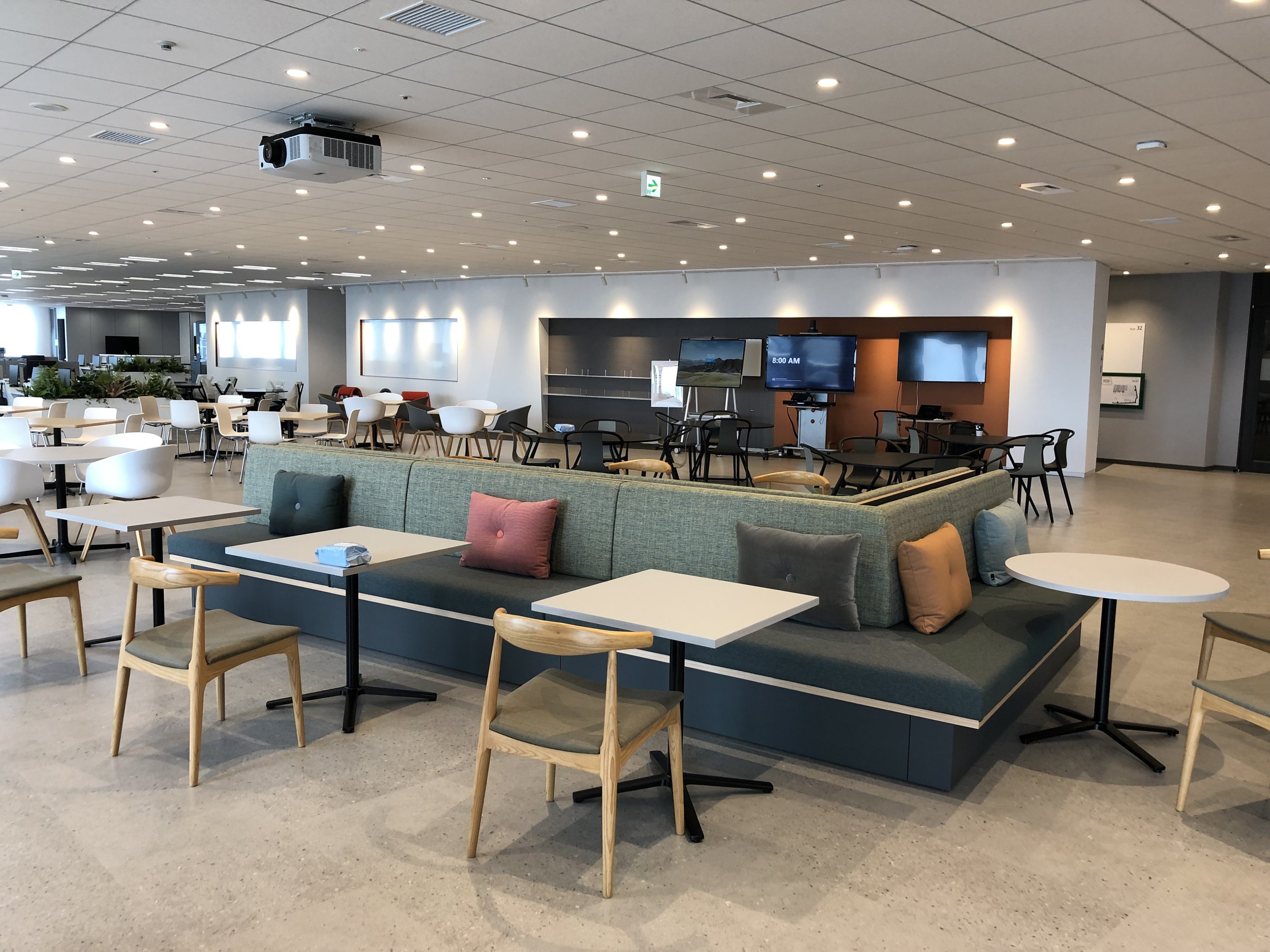

Novartis has a new space for individual work which can be easily converted for small group discussions or medium-sized group short meetings.
While the company continues to restrict the number of staff working at headquarters to 50 percent of each division at any one time, other limitations, such as the number of face-to-face attendees in meetings, have been relaxed to give staff autonomy over their workstyle. As a result, “each employee is now used to making sound decisions as to how they can best produce outcomes as an individual and a team in a hybrid working environment,” said Leitch, adding that the approach is “a key driver of engagement and continued retention.”
Similarly, EY Japan’s recent people survey also shows that continuing to offer telework options has resulted in improved engagement and inclusivity.
Since introducing this workstyle in 2018, the company launched its Flex and Remote Program in 2020 as a commitment to employees. EY Japan has promised to continue offering staff flexibility regarding where and when they work, regardless of the Covid-19 situation.
“Each person’s schedule is unique, considering the needs of the individual, the project they are working on, and the needs of the client and the team,” and therefore requires flexibility, Umeda said.
A new volunteer program was implemented to provide financial support to employees who wanted to move outside central Tokyo and work remotely from the suburbs. This supports employees desire to live outside Tokyo and contributes to the larger community.
Big Picture Thinking
Looking ahead, the future of work is likely to focus on how and why people work, as much as where and when they work. For many companies, the pandemic has shone a light on what work traditionally has been and has prompted or accelerated discussion on what work could be after some out-of-the-box thinking.
“As an organization, we need to think about the reasons we want our team to spend time together in the office,” said Travers. “It needs to go beyond just working at your desk.”
Indeed, with staff now able to conduct meetings online and do “deep work” and other individual-based tasks remotely, companies are keen for office-based time to focus on interactive activities, such as mind mapping and team building.
Coca-Cola has redesigned one floor of its headquarters as the Coke Collaboration Center, an experimental initiative to encourage teamwork via hot desks, lockers, meeting spots for different groups, and phone booths for individual or remote meeting participation.
EY Japan’s Umeda agrees that the role of the office has changed, noting that it should “become a collaboration space for colleagues, clients, and business partners, not a workspace.”
And, given that online employee social events “could never really be a substitute for an in-person, on-premises event,” office time should also be used for staff to spend time together and build relationships with each other, said Travers. For MESHD, a key reason for the hybrid work model is to forge a strong company culture and sense of community via employees’ in-office time.
Jordan agrees, noting that “the need for social interaction is very important.”
To encourage it, Coca-Cola has begun offering events at the office such as free lunches in the cafeteria, a summer festival that includes employees’ family members, and a bar serving alcoholic beverages.
“Each employee is now used to making sound decisions as to how they can best produce outcomes as an individual and a team in a hybrid working environment … the approach is a key driver of engagement and continued retention.”
Most important though, Covid-19 and the workstyles adopted to mitigate it have boosted understanding of, and a desire for, greater DEI in business.
EY Japan’s Umeda said people’s own challenges during the pandemic had made them “recognize the importance of inclusiveness, equity, and respect for others.”
The Novartis Choice with Responsibility framework has enabled the company to further embrace diverse needs and “look for ways to progress in building an inclusive environment,” said Leitch.
And at Coca-Cola, the hybrid work model is fostering inclusivity. “Returning to the office is all about inclusion,” said Jordan. “Each [employee] has developed personal habits which interact with their professional habits … so we need to be mindful of each individual’s needs and not treat everyone the same.”
MESHD’s Travers also has staff front of mind. The pandemic has enabled him to “come to the realization that it’s the employees who will dictate the future of work, irrespective of companies establishing regulations,” he said.
Indeed, the pandemic has increased employees’ willingness to change employers if they are not satisfied with their workstyle. In June, the JLL Workforce Preferences Barometer found three out of four of the 4,000 office workers surveyed would reconsider their involvement with their company if they wanted greater work flexibility.
Setting up suitable work models and fostering DEI has, therefore, never been so important for recruitment and retention.
Certainly, Travers notes, companies investing “time, money, and resources into their employees’ skills, emotional wellbeing, and job satisfaction will reap the rewards in the future.”

A Culture of Inclusion
Shaping workplace culture and inclusion. Leading the change. These are the themes of the 2022 ACCJ-Kansai Diversity and Inclusion Summit, which will again follow the format of three two-hour online sessions, to be held over successive weeks in October and November.
Previewing this year’s ACCJ-Kansai Diversity and Inclusion Summit Series
Shaping workplace culture and inclusion. Leading the change. These are the themes of the 2022 ACCJ-Kansai Diversity and Inclusion Summit. Following the same format that debuted to great success in 2020, three two-hour online sessions will be held over successive weeks in October and November, each with its own keynote speaker, small-group discussions, and practical training.
The format was born of the pandemic, when organizers had to adapt the normally daylong program to a world of virtual interaction. It proved highly successful. The online format opened up access to people throughout Japan, and registrations rose from 224 for the previous year’s in-person event to 320. Similar results were repeated last year. Not only has accessibility been boosted, but the extended interactions also strengthened the summit’s impact and benefits.
With such success, the committee has decided to stick with the three-day series, and this year will host sessions on October 4 and 18, as well as November 8.
The first day will focus on gender diversity and equality, and will feature a training session with Jennifer Shinkai, an ikigai and inclusion facilitator and coach. The main session for the day will be led by Tetsuya Ando, founder of Fathering Japan, the non-profit organization he started in 2006 to focus on supporting fathers who are balancing the responsibilities of work and home.
The second day will feature a discussion of cultural diversity and inclusion with Nissan Corporate Vice President Catherine Perez, while Day 3 will explore psychological safety in sessions hosted by Google.
The series will be a wonderful opportunity to share personal and professional experiences in advancing D&I in Japan and abroad, including strategies that can be employed individually, at work, and in the community at large. Additional coverage can be found on the Digital Journal website following the sessions.

An Evening in the Windy City
Despite being virtual, the 2020 and 2021 galas brought great fundraising success. But there’s no substitute for the vibrant atmosphere of a live event. So, the ACCJ Charity Ball Committee, in partnership with the ACCJ-Kansai Community Service Committee, has been hard at work to bring the Charity Ball back, live and in person. On December 3, we’ll unplug from virtual space and step back to a more analog era as we gather at the Hilton Tokyo in Shinjuku to celebrate the Windy City itself: Chicago.
The ACCJ Charity Ball returns for an in-person celebration of Chicago
One of the most popular dates on the social calendar each year is in December. That’s when the American Chamber of Commerce in Japan (ACCJ) hosts the annual Charity Ball. Since the onset of the coronavirus pandemic in early 2020, the exciting gathering has been pushed online. But this year, the winds of change are blowing. On December 3, we’ll unplug from virtual space and step back to a more analog era as we gather at the Hilton Tokyo in Shinjuku to celebrate the Windy City itself: Chicago.
Despite being virtual, the 2020 and 2021 galas brought great fundraising success. But there’s no substitute for the vibrant atmosphere of a live event. So, the ACCJ Charity Ball Committee, in partnership with the ACCJ-Kansai Community Service Committee, has been hard at work to bring the Charity Ball back, live and in person.
The theme will offer attendees a chance to experience Chicago—from food to music to spirits. And don’t worry, there’s no prohibition here! We hope you’ll dress the part and bring back the chorus lines of Chicago or that Blues Brothers look made famous by John Belushi and Dan Akroyd.
Community Support
While the Charity Ball is great fun, and a chance to close out the year by celebrating with friends and networking with business associates, it’s also an important opportunity to raise money for the local community. As the chamber’s biggest fundraiser of the year, the Charity Ball supports the ACCJ Community Service Fund, which provides assistance to recipients for whom relatively small donations have a significant impact.
This year, the selected charities focus on at-risk children—including homes and programs for these children—as well as the homeless and citizen science.
These charities include:
- The Mike Makino Fund
- The ACCJ Community Service Fund
- YMCA/ACCJ Ohisama Camp
- YouMeWe
- Children’s Shelter Okinawa
- Safecast
- Kansai Food Bank
- Minna no Gohan
- Kurumu
You can learn more about these charities on the ACCJ website. Details about the entertainers, food and drink, and the ever-popular raffle will be added as we get closer to the event.
Sponsorships are also available and are a great way to highlight your business while making a real difference in the community.
We look forward to seeing you on the streets of Chicago and toasting the return of the in-person Charity Ball!
December 3, 2022
Hilton Tokyo, Shinjuku
Tickets and details: accj.or.jp/charityball
Dynamic Times
The past few months have been an incredibly dynamic time for Japan and the chamber, as we have continued to be very active in its engagement with the US and Japanese governments through meetings with congressional delegates. Japan laid former Prime Minister Shinzo Abe to rest, and Prime Minister Fumio Kishida announced on September 22 that Japan will fully reopen on October 11.
From advocacy to events, Japan and the ACCJ see change and progress
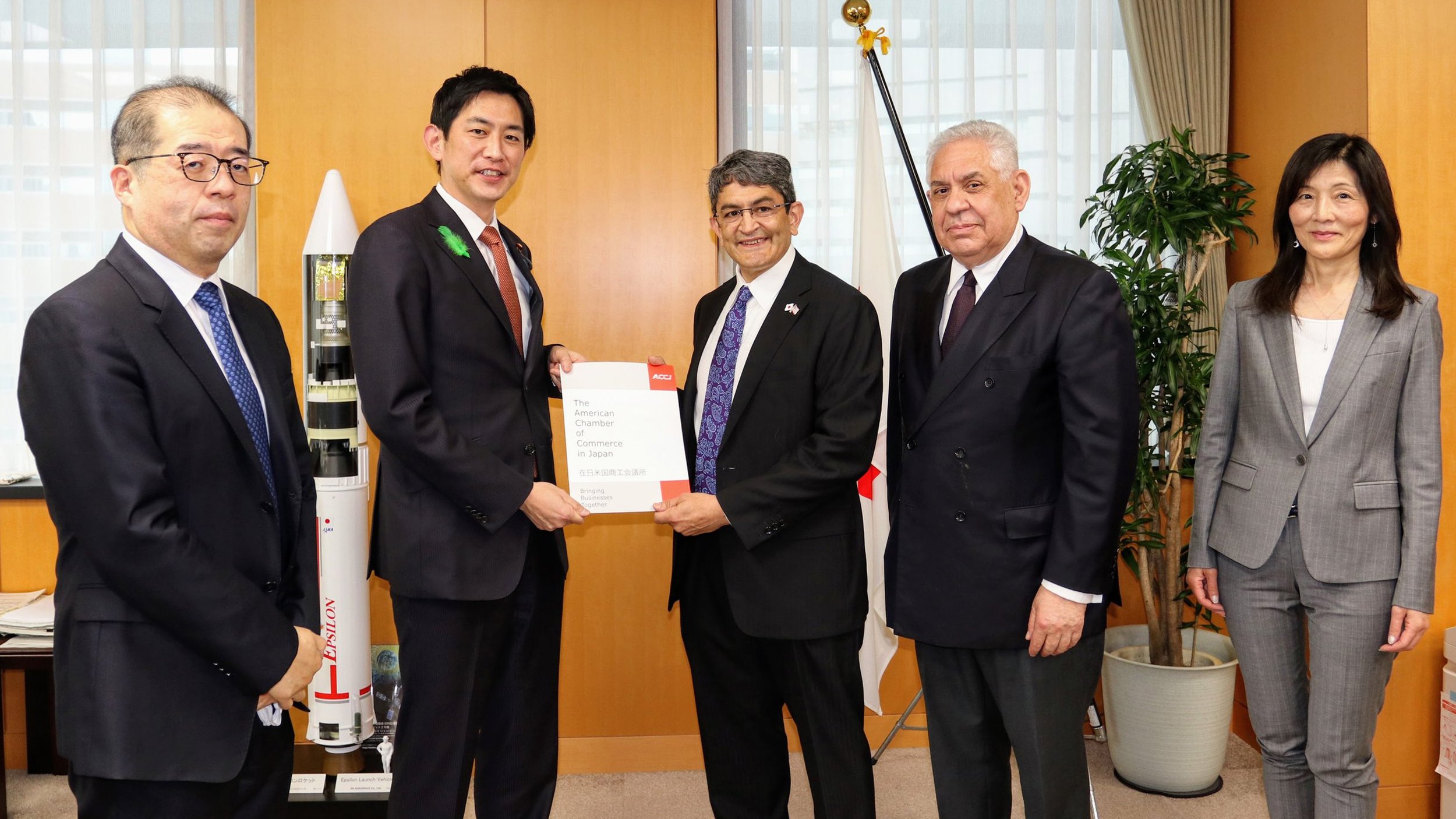
From left: ACCJ Economic Security Task Force Vice-Chair Shuichi Izumo, then-Economic Security Minister Takayuki Kobayashi, ACCJ President Om Prakash, task force Chair Arthur Mitchell, and Vice-Chair Megumi Tsukamoto
The past few months have been an incredibly dynamic time for Japan and the American Chamber of Commerce in Japan (ACCJ). The chamber has continued to be very active in its engagement with the US and Japanese governments through meetings with congressional delegates.
I want to start with a moment to honor Shinzo Abe. As Japan lays the former prime minister to rest, I’d like to acknowledge his many accomplishments during a lifetime of contributing to the US–Japan relationship. As the longest-serving prime minister, he was a source of stability that allowed the alliance to grow in depth and strength.
Many of his structural reforms reinforced the ACCJ’s advocacy pillars. Abe was especially devoted to the advancement of women, and spoke at the 2015 ACCJ Women in Business Summit to reinforce his support for women’s empowerment.
He was a leader who stood out in a chaotic world. Here in Japan, he was a supporter of the chamber and the international business community, and a personal friend of many members. We honor him and extend our sincere condolences to his family, colleagues, and the people of Japan.
Easing Entry
We have all been heartened by the progress made on the easing of entry restrictions, and Japanese Prime Minister Fumio Kishida announced on September 22 that Japan will fully reopen on October 11.
Over the past two and a half years, our members have shared with us how the entry restrictions have impacted them, their companies, and their families. With the full reopening, Japan can kickstart the recovery of its economy and reestablish itself as a leading global financial center.
I’d like to express my gratitude to ACCJ Special Advisor Christopher LaFleur for leading the chamber’s advocacy efforts, and the many other members who have helped. Chris personally has regularly engaged the Japanese government and media, including earlier this year when he represented the ACCJ at a press conference hosted by the Foreign Correspondents’ Club of Japan. His contributions have helped bring about the progress we’ve seen, and have directly benefited members who have been impacted by the restrictions.
Economic Security
Another key area in which the ACCJ has been active on the advocacy front is economic security. We’ve collaborated closely with the Japanese government and, in April, announced the ACCJ Principles for the Promotion of Economic Security. The ACCJ Task Force on Economic Security discussed these directly with then-Economic Security Minister Takayuki Kobayashi, since when it has issued a new viewpoint on ensuring a level playing field for cloud services. The task force also met with the Ministry of Economy, Trade and Industry to discuss the Economic Security Promotion Act, which was approved by the Diet on May 11.
These were productive meetings, with the ACCJ introducing our recommendations and the Japanese government expressing its appreciation for our support of the issue.
Economic security among like-minded nations is vital to sustainable economic growth, which in turn enhances economic security. Our engagement on the issue is just one of many examples of how the chamber plays a key part in helping to set a regional and global standard for protection of people, businesses, and governments.
Exciting Events
While the chamber is very much about advocacy, it’s also very much about networking. I’m happy to see that fall is full of exciting opportunities for our members to come together in person and online. I encourage all members to join us at the virtual Ordinary General Meeting on November 2 for an update on all that the chamber and our members have accomplished this year. We are also planning an in-person gathering right before so we can capture the best of both worlds.
On my last note, I just got a new tuxedo so that I’ll be ready for the return of the in-person Charity Ball! This is one of Tokyo’s most important community-oriented events, which we are planning for December 3. This year’s special theme is Chicago: An Evening in the Windy City.
I look forward both to seeing many of you at our upcoming events, and to your continued contributions and personal efforts on our ever-important advocacy.

Japan’s Energy Alignment Goals
For several decades, Japan has executed a successful strategy of importing its energy via long-term contracts and relationships. Meanwhile, renewable electricity supply has expanded greatly under the feed-in-tariff and feed-in-premium systems, known as FIT and FIP. But current circumstances pose a challenge that necessitates a new approach.
Charting a route to greater energy independence and net-zero
It has been 11 years since the Great East Japan Earthquake and Tsunami triggered a nuclear disaster in Fukushima that would change the country’s energy landscape. Today, another energy shock is upon us, with the cost of imported energy commodities driving electricity prices to their highest level in a generation.
Japan’s electrical system was strained nearly to breaking point this summer, and the outlook for winter energy supplies remains unclear. At the same time, the crisis presents opportunities to reevaluate priorities, redirect investments, and focus on decreasing Japan’s exposure to international energy markets while also driving decarbonization.
Additional opportunities are arising as Japanese businesses—on a global and domestic level—are chasing aggressive carbon-reduction goals that will necessitate a massive increase in installed renewable energy capacity in the country.
For several decades, Japan has executed a successful strategy of importing its energy via long-term contracts and relationships. Meanwhile, renewable electricity supply has expanded greatly under the feed-in-tariff and feed-in-premium systems, known as FIT and FIP. But current circumstances pose a challenge that necessitates a new approach.
We are in a very difficult position due to these and other factors, with the global energy marketplace never having been as competitive as it is now and the security of energy suppliers in question.
Aggressive Carbon Reduction Goals
Japan’s carbon reduction goals have been described by observers as bold and ambitious, and marked by three key milestones.
The first is Japan’s commitment, under the United Nations Framework Convention on Climate Change, to reduce greenhouse gas (GHG) emissions by 26 percent from 2013 levels by 2030.
The second is to promote the development of innovative technologies by 2050. They would enable Japan to contribute to the global reduction of accumulated atmospheric CO2 to a level the Japanese government has dubbed Beyond-Zero.
The third and most ambitious milestone, unveiled by former Prime Minister Yoshihide Suga in 2020, is for Japan to achieve net-zero GHG emissions by 2050. This would set the nation on a course to becoming carbon neutral in just 30 years.
But with the first milestone just 92 months way, action is needed now.
Demand for Change
Today, Japan-based corporations and international companies, including many members of the American Chamber of Commerce in Japan (ACCJ), are leading the market towards decarbonization.
This can be seen from the sheer number of companies taking part in key corporate environmental initiatives. And, while nuclear energy is likely to play a role in a low-carbon future, many Japanese companies have already committed to increasing their consumption of renewable energy.
Japan represents one of the top three participating countries in each of the following global efforts:
- CDP (formerly the Carbon Disclosure Project): a reporting framework for carbon emissions
- RE100: a push by companies to use 100 percent renewable electricity in their operations
- The Science Based Targets initiative: a pathway for companies committing to specific carbon reduction targets
- The Task Force for Climate Related Financial Disclosure: a framework for divulging climate-related risks
There is also the Japan Climate Leaders’ Partnership, in which 217 companies, including World Kinect Energy Services, participate.
Time to Align
To meet the goals of these organizations, participants require direct access to renewable electricity supplies. This can be achieved by a variety of pathways, including the tracking and tracing of environmental attributes.
Unfortunately, in Japan, the main system for tracking, auditing, and trading environmental attributes—called non-fossil fuel certificates (NFC)—is one of the most complex procedures in the world. Simplifying the system and bringing it more in line with international standards, such as the International Renewable Energy Certificate system, could help companies in Japan report their progress on reducing carbon emissions with greater confidence.
“Simplifying the system and bringing it more in line with international standards, such as the International Renewable Energy Certificate system, could help companies in Japan report their progress on reducing carbon emissions with greater confidence.”
Another key tool for reducing electricity-related carbon emissions is the renewable corporate power purchase agreement (CPPA). This enables a corporate end user of electricity and a developer to reach a long-term agreement on renewable energy for one or more projects.
CPPAs are considered a high-quality pathway to reducing carbon emissions and can help to drive private capital into the energy system. The ACCJ Energy Committee has been working closely with stakeholders to identify and reduce barriers to CPPAs.
Japan needs to improve its policy allowing renewable energy to connect to the grid as well as expedite the approval process for new projects which will provide short-term benefits.
For longer-term benefits, physical grid improvements will need to continue in an expedited and transparent manner, while including flexibility to integrate new technologies and grid-level storage.
Benefits for All
Whether supporting our clients with a CPPA or supplying energy attribute certificates, increased investment in renewable energy resources benefits not only the end user, but also the nation on its road to net-zero.
We recognize that the Government of Japan is making an effort to address these issues, but it needs to move faster to ensure that the nation remains at the forefront of evolving international standards.
In addition, Japan must consider and support to the fullest an array of technologies—including wind and geothermal—to meet future demand.
We want to see Japan be successful, and we invite ACCJ members to become more involved in the Energy Committee to help support the expansion of renewable energy opportunities in Japan.

Who Will Buy Japan?
Currency markets move in the direction of maximum pain. Now that yen depreciation is accelerating toward my ¥150–160 to the dollar parabolic overshoot target, outlined in the spring 2022 issue of The ACCJ Journal, it is worth thinking about where the maximum pain threshold might be, and what forces will arrest the yen’s fall from grace. Who will buy Japan?
The yen’s rapid fall may bring deep-rooted change and rising returns
Currency markets move in the direction of maximum pain. I received this insight from one of the most successful currency-market speculators in recent history, the leader of the team that broke the Bank of England 20 years ago, on September 16, 1992.
Now that yen depreciation is accelerating toward my ¥150–160 to the dollar parabolic overshoot target, outlined in the spring 2022 issue of The ACCJ Journal, it is worth thinking about where the maximum pain threshold might be, and what forces will arrest the yen’s fall from grace. Who will buy Japan?
Land of Bargains
It is now very easy to demonstrate that Japan is cheap:
- A Big Mac costs ¥390 in Tokyo versus $5.50 in Los Angeles, making your dollar’s purchasing power double this side of the Pacific
- Japanese labor costs are down to $33,000 per year on average, less than half the $69,000 payout in the United States
- A Tokyo-based software engineer now comes about 30 percent cheaper than one based in Ho Chi Minh City, Vietnam
- And at ¥150 to the dollar, a nurse in Manila would earn more than one in Tokyo
Importantly, even without the exchange rate, Japanese companies are cheap, with 49 percent of listed companies trading below book value, their assets worth more than what you must pay in the market to buy them.
Japanese companies trade on a 12-times price-to-earnings (PE) multiple, which is cheap compared with the 24-times PE multiple commanded by those in the United States.
When buying Japan Inc., you basically earn back your investment in half the time—corporate earnings alone will let you recoup your investment in just 12 years in Japan, while you must wait 24 years in the United States. So, the costs of buying and operating productive assets has become very attractive in Japan.
Land of Opportunity?
Where, exactly, are the opportunities, and who will seize them? Here it gets interesting because, in my view, the forward-looking dynamics are poised to force much more deep-rooted change than old-style models of inward investment would suggest.
This is because the coming investment wave will be primarily in the service sector, not the industrial or manufacturing sectors.
Clearspeak: neither Japanese nor global manufacturers will begin to build significant new factories or add production capacity here in Japan. Against this, all aspects of the domestic service sector are poised for an unprecedented investment boom.
Why? For manufacturing, labor costs are an increasingly minor factor in deciding where to build a factory. Much more important is proximity to market, proximity to suppliers, and full end-market reach. Moreover, national economic security forces an additional steep discount on produce-for-export strategies. Specifically, recent US legislation has made it uneconomical for global carmakers to compete in the US market unless they produce onshore. The new subsidies and incentives to redirect energy and environmental consumer preferences in the United States dictate as much.
“When buying Japan Inc., you basically earn back your investment in half the time—corporate earnings alone will let you recoup your investment in just 12 years in Japan, while you must wait 24 years in the United States.”
To wit, within mere weeks of US President Joe Biden’s new economic policy bill having been passed, both Honda and Toyota, as well as electric-vehicle battery maker Panasonic, announced plans for new US-based production sites and research-and-development facilities totaling more than $15 billion. All this to ensure that their “made by Japan” products are eligible for the new US industrial and consumer-policy incentives. I have no doubt that the industrial onshoring wave in the United States is only just beginning.
In contrast, Japan’s service sector is poised to be swept away by its own wave of onshoring. Unlike in manufacturing, labor costs are a dominant factor driving service companies’ performance. And here, Japan has become cheap and, now, has a competitive advantage. Watch for a pickup in direct investment, with more global service giants buying into Japan following PayPal’s $2.4 billion acquisition of Tokyo-based startup Paidy last year and the growing success stories of Salesforce, Inc., Amazon Japan G.K., Yahoo Japan Corporation, Google G.K., SAP Japan Co., Ltd., Aman Resorts Ltd., and law firm Morrison & Forester LLP in Japan, to name but a handful.
All said, I am very much looking forward to seeing more and more US and global service companies buying into and expanding business here in Japan. Most important, developing a service business in Japan has become more attractive than ever, labor market mobility having increased greatly, primarily because the pandemic has freed many from traditional corporate loyalties and unlocked a quest for better opportunities and higher pay. Potential employees are available, cheap, and motivated.
Zombie Killer
What does this have to do with the yen? Well, if I am right and global investment in Japan starts to pick up, this is one potential source of demand for yen. However, in the end, it will always be Japanese investors who hold the key to the yen’s fortunes. Japan is, after all, the world’s largest creditor nation, so where Japan invests matters.
So far, Japanese investors have not been investing in their own markets. They will only do so if and when Japanese domestic companies present credible business plans and productive investment strategies. Clearly, Japanese investors do not believe the value proposition outlined above, namely, that half the companies are trading below the value of their assets. They think the assets are underutilized, are not sweated hard enough, and that Japan is a heaven for zombie companies rather than a breeding ground for corporate excellence and best-in-class performance.
Can Japanese Prime Minister Fumio Kishida’s new capitalism deliver the end of zombie capitalism? There is no question that, since the end of the bubble economy in the early 1990s, Japan’s model of capitalism has become increasingly focused on providing more-or-less-free capital in a bid to shelter local companies from the forces of asset deflation, technology-induced disruption, rising capital costs, and other forces of creative destruction.
Twenty years on, rather than having global top performers, the result is a capitalism marked more by zombie companies that drag down industry, macroeconomic performance, productivity, and financial returns. This is where Kishida’s promise of a new capitalism could have real meaning.
If new capitalism marks a departure from zombie capitalism, and actually seeks to incentivize sector-by-sector industrial reorganization and streamlining, then prospects for a true productivity-led growth spearheaded by the service sector come into sight. The combination of global entrepreneurs wanting to seize unprecedented attractions and opportunities offered by Japan’s domestic service sector, combined with domestic political capital invested in accelerating the long-overdue consolidation and reinvention of local service providers, could be an incredible force for future prosperity.
I know this is a big if, but let’s give optimism a chance.
Clearspeak: if the current pain of yen depreciation feeding cost–push inflation delivers both long-overdue industrial reorganization and the emergence of true Japanese service-sector national champions, Japan’s investors will be rewarded handsomely. This will be not just from a tactically expedient increase in yen equity allocations because, say, the United States enters a recession, but from a strategic Japan overweight position, where yen companies deliver rising returns based on, yes, the domestic service sector.

The S in Sustainability
ESG has become another fixed feature of a company’s operating landscape. As such, it requires increasingly specific rules and requirements. So far, the ESG agenda has primarily focused on the E, as companies tackle climate change, largely by reducing emissions and carbon footprints. However, the spotlight is also moving to the S, which includes the social impact of our value chains.
How human rights due diligence is expanding the dialogue on social impact
Environmental, social, and corporate governance (ESG) has become another fixed feature of a company’s operating landscape. As such, it requires increasingly specific rules and requirements regarding ethical accountability, transparency, and disclosure, together with tough questions about where and how companies are generating revenue.
So far, the ESG agenda has primarily focused on the E, as companies tackle climate change, largely by reducing emissions and carbon footprints. However, the spotlight is also moving to the S, which includes the social impact of our value chains.
This task is more challenging compared with that of the E, in the sense that we are now being asked to take responsibility for practices and issues over which we may have little control, and for which we cannot offer sufficient transparency.
Increased Governmental Oversight
Meanwhile, social impact regulations are developing swiftly. The drive for human rights due diligence (HRDD) has gained pace since the United Nations issued its Guiding Principles on Business and Human Rights (UNGPs) in 2011. Known as the Ruggie framework, because it was developed under the leadership of then-Assistant Secretary-General for Strategic Planning John Ruggie, the UNGPs are based on three pillars:
- Protect
- Respect
- Remedy
Let’s look at these in more detail.
Duty to Protect against Human Rights Abuses
Government action, in the form of new legislation and regulation, is prompting companies to take human rights more seriously. Based on the UNGPs, national action plans (NAPs) have been developed by many countries. These include the United States and Japan, which published its NAP in October 2020.
In Europe, measures are moving toward enforcing human rights culpability. Germany’s Supply Chain Due Diligence Act will come into effect in January 2023 and require companies to conduct due diligence for human rights and related environmental risks throughout their supply chains. It also will require measures to prevent and mitigate human rights abuses, as well as the establishment of grievance and reporting processes.
In June this year, the US Customs and Border Protection law enforcement agency implemented provisions of the Uyghur Forced Labor Prevention Act, which prohibit imports into the United States of products related to forced labor in Xinjiang. And recently, the US Securities and Exchange Commission issued two regulatory drafts for publicly held corporations and investment funds, requiring mandatory disclosure of ESG aspects of their business operations.
“An organization’s policy is not sufficient should human rights issues be alleged or identified. Operational frameworks which activate these policies and make them meaningful and effective are necessary.”
In July, the Japan–US Economic Policy Consultative Committee Meeting pledged to coordinate efforts to foster an environment in which companies uphold human rights and, in September, Japan’s Ministry of Economy, Trade and Industry (METI) issued its HRDD guidelines, which include expectations regarding due diligence processes, remediation, and stakeholder engagement.
Corporate responsibility to protect human rights
Companies are being compelled to demonstrate a commitment to protecting human rights. An organization’s policy is not sufficient should human rights issues be alleged or identified. Operational frameworks which activate these policies and make them meaningful and effective are necessary, and identification of adverse impact on human rights requires that companies remedy such a situation.
Even if not involved directly, a company is still expected to act on the information and, ultimately, to consider whether to continue business with the party in question should no remedy be found.
Right of victims to access effective remedies
Similar to the structure of whistleblowing and ethics hotlines, there are likely to be mechanisms to enable claims from all tiers of supply against companies at the top of the chain.
This would inevitably require changes to the relationships companies have with suppliers, and implementation of specific onboarding policies, due diligence protocols, and corporate social responsibility measures. Monitoring and audit rights would need to be carefully built into contracts, as well as working and reporting processes.
So, for companies, HRDD can be summarized as:
- Assessment of actual and potential human rights issues and risk
- Mitigation and remedial action for such issues and risk
- Corporate commitment to, and responsibility for, human rights throughout the value chain
- A set of mechanisms for reporting and communicating human rights breaches, as well as for monitoring and contributing to human rights
Given the complexity of our value chains, when looking at the S in ESG, it is helpful to consider social impact in a similar way to how we scope emissions when addressing the E.
The METI HRDD guidelines also outline a similar categorization:
- Scope 1: Adverse human rights impact caused directly by our business activities
- Scope 2: Adverse human rights impact to which our business activities contribute
- Scope 3: Adverse human rights impact related to activities or entities with which we have a business relationship, and that are linked to our operations, products, or services
Increased Scrutiny
As legislation and public statements on ESG commitment have evolved, well-funded non-governmental and non-profit organizations have begun monitoring human rights issues ranging from wages, working hours, and conditions to child labor. These organizations are rightfully passionate about the causes to which they seek to give a voice.
Awareness of social concerns is rising among investors, shareholders, employees, and consumers, as are calls for related assurances. Perhaps most meaningfully, the influence of HRDD can hold negligent companies accountable through legal and civil liabilities.
Realizing Opportunities
All this brings new and sizeable burdens, including understanding risk exposure and expectations, as well as determining to what we must commit and how far we need to go. Companies must also determine how to put into operation and implement necessary actions, while considering reputation, profitability, growth, cost efficiency, as well as investor, employee, and consumer confidence.
Negative exposure can quickly damage profit-ability and status, as well as reputation with investors, customers, suppliers, workers, business partners, and other stakeholders on which we depend for business.
However, we will not make much headway in creating a more sustainable global economy if sustainability is viewed as being about risk mitigation, reporting duties, compliance, and regulatory burdens. The key to progress is not to lose sight of the overall objectives.
We must commit to change and realize the opportunities to pursue and maximize growth. We must seek competitive advantage rather than view this as a constraint to fulfill obligations. A significant dimension to consider is the company’s power to attract young talent and increase employee engagement. The business opportunities are many.
They can be realized through brand differentiation and innovation in supply management and manufacturing processes, product and service life cycles, new forms of cost efficiency, emerging channels for market access and diversification, novel applications of technology, and by building a more diverse workforce.
Hannah Perry contributed to this article. Perry works in the Corporate Communications Department at AIG Japan Holdings K.K. and is vice-chair of the ACCJ Sustainability Committee.

Do Androids Dream of Electric Sheep?
AI is beginning to create content that is sparking questions about ownership. For some time, companies have been using AI-powered tools to give computers the task of writing articles, social media posts, and web copy. Now, AI-powered image-generation engines, such as Stable Diffusion, Midjourney, and the Deep Dream Generator, have hit the mainstream. One day, might DEI be extended to machines?
Rethinking DEI in an age of rapidly expanding artificial intelligence
I have always been fascinated by the idea of artificial intelligence (AI). I remember chatting back in the 1980s with a version of Eliza for Commodore 64. Eliza is a program created in 1964 by German American computer scientist Joseph Weizenbaum at the MIT Artificial Intelligence Laboratory. Rudimentary by today’s AI standards, Eliza is a natural language processor that converses with the user based on their input. It tries to mimic a real person and was one of the earliest applications to attempt what has come to be called the Turing test, a way of gauging a machine’s ability to exhibit intelligence. Passing this test, developed by English scientist Alan Turing, means a machine can conceal its identity, making a human believe it is another human.
I’ve been thinking back to that experience because we are now at a point where we must start considering how we will coexist with and treat truly intelligent machines. We’re not quite there yet, but the rapid advance of AI, and its integration into so many aspects of life, means this is a question that is no longer the providence of science fiction. It will be a real part of our future. Machine identity and rights will one day be an extension of the diversity, equity, and inclusion (DEI) that we talk about in this issue of The ACCJ Journal.
AI is beginning to create content that is sparking questions about ownership. For some time, companies have been using AI-powered tools to give computers the task of writing articles, social media posts, and web copy. Now, AI-powered image-generation engines, such as Stable Diffusion, Midjourney, and the Deep Dream Generator, have hit the mainstream. You may have seen some of their creations in the news. As these engines are trained on existing art, often scraped from the internet, there are questions about copyright and plagiarism. Stock media giant Getty Images announced on September 21 that it is banning AI-created art over these concerns.
Eventually, I believe, the visuals that machines create will become less obviously imitative and will express a view of the world unique to the creator, in the same way that the work of a human artist is an expression of the inner working of their mind. And when that happens, we really will have to ask ourselves what distinguishes us from machines.
Back to the Present
We still have some time before that question must be answered. For now, our focus can remain on the people who make our companies successful and our societies prosperous.
We explore DEI initiatives in this issue, along with sustainability efforts that can help ensure that our world has a healthy future.
I take to the road and the air on page 26 to explore the future of transportation and sustainability initiatives by member companies. I also talk to Bank of America’s Japan country executive and president of BofA Securities Japan, Tamao Sasada, on page 18 about the importance of diversity and the company’s efforts in the areas of DEI; environmental, social, and corporate governance; and sustainable finance.
I hope you enjoy this special issue and find useful ideas to help you achieve your own DEI and sustainability goals.
Sincerely yours, Eliza.

Bridge the Gap
Tamao Sasada, Japan country executive for Bank of America and president of BofA Securities Japan, sits down with The ACCJ Journal to share her thoughts on a number of topics, including how Japan can push the DEI and ESG agendas forward.
Bank of America’s Tamao Sasada shares her thoughts on DEI, ESG, and sustainable finance
Tamao Sasada says that her grandmother was her mentor. “When I was a kid, she always told me that I would need to have a career with a professional skill set,” Sasada shared. Her advice was based on experience gained as a woman doctor during World War II—something rarely seen during those days—that gave her this wisdom to share with the granddaughter who, one day, would lead Bank of America in Japan.
Sasada was already a career-minded student when she attended university in Japan in the early 1990s, but those words from her grandmother helped her find her path. She chose to study law.
But what should be her next step? Where should she work?
“Back then, some Japanese women who aspired to advance their careers chose to work for US or non-Japanese companies, as these were perceived to be more performance driven and gave women more opportunities to advance their careers,” Sasada explained. “So, after graduation, I chose to become a lawyer in New York.”
From there, her path took her into the world of banking and back to Japan. Today, as Japan country executive for Bank of America and president of BofA Securities Japan, she focuses on business growth for the bank and also devotes considerable effort to promote environmental, social, and corporate governance (ESG); diversity, equity, and inclusion (DEI); and sustainable finance at Bank of America.
Sasada spoke at a fireside chat hosted by the American Chamber of Commerce in Japan (ACCJ) Alternative Investment Committee on September 7, and she later sat down with The ACCJ Journal to share her thoughts on a number of topics, including how Japan can push the DEI and ESG agendas forward.
What are your memories of that first job in New York?
I made the decision to go there knowing that it would be a tough and competitive environment. And it was. I remember walking into meeting rooms and being the only woman—and a young Asian woman—there. That was not uncommon. There were a number of women lawyers at the junior level, but far fewer at the senior and partner levels.
But one thing that was quite eye-opening was the law firm provided a lot of training and development programs, which was something not so common in Japan back in the 1990s. They took time to really invest in junior people, which certainly gave me a solid training and allowed me to excel in my career.
How did you start to grow your career in finance?
The opportunity arose to work for Merrill Lynch, now BofA Securities, the brokerage and investment banking arm of Bank of America. I took a position in Japan.
I’ve been with the company for 24 years. Looking back, it was quite interesting to find that, even in a US organization, the work environment in Japan back then was quite male dominated. Of course, it is very different now. I found myself trying extra hard to make sure that I could deliver, and that people would not judge me on the basis of being a woman.
As an investment banker in Japan, part of the job is to bridge the gap between Japan and our global franchise, identifying clients’ needs and offering our full capabilities.
“Diversity matters because it brings different perspectives. At Bank of America, we believe that the more diverse we are, the stronger and better we are.”

BofA employees join the firm in driving DEI and environmental efforts, such as the Arakawa River Cleanup.
Also, one of the key challenges working for a US company in Japan is that you need to make sure that the Japan franchise is visible and has strong presence, not only in the eyes of clients but also in the eyes of the headquarters in the United States. I believe this is a challenge for everyone who works in a gaishikei (multinational organization) in Japan, regardless of gender.
So, even today, I still think about how best we can serve our clients in Japan and connect the dots between what our Japanese clients need and what we can offer globally. On top of that, navigating the organization and connecting people through business and social relationships have always been important aspects of how I built my career.
Why does diversity matter when building teams?
Diversity matters because it brings different perspectives. At Bank of America, we believe that the more diverse we are, the stronger and better we are. When we connect our diverse backgrounds and perspectives, we can better meet the needs of our colleagues, clients, and communities.
For us, DEI is action oriented. Our chief executive officer, Brian Moynihan, and all members of the management team are very focused on building an inclusive culture where our employees feel comfortable being who they are and bringing their whole selves to work, knowing they have equal access to opportunities regardless of their differences such as gender, ethnic background, or other such factors.
Such a culture has allowed us to attract and retain more diverse talent, and I find this to be true when we recruit in Japan as well as other parts of the world.
Are there aspects of DEI unique to the financial sector?
In banking, it’s important to bring in different perspectives and skill sets. Our clients are diverse, so we need to be diverse. Also, much of our business is cross-border in nature. For example, in mergers and acquisitions (M&A), our Japanese clients are buying and selling not just in the domestic market but also abroad.
Due to this, we need to work with a lot of colleagues outside Japan. Building connectivity—that’s the term we use—around the organization is important to growing trusting relationships.
So, for a global bank, DEI becomes very important because we need to understand that our clients and colleagues come from different backgrounds with different thought processes. Embracing these differences and removing any unconscious bias is critical for successful outcomes.
That’s why I feel that our company is stronger when we are more diverse in thinking and mindset, and creative in how we bring the business together and leverage the people and platform we have. Clients appreciate this because this allows us to better meet their needs.
How can companies strengthen their DEI?
Our commitment to DEI starts at the top. Our management team sets the diversity and inclusion goals of the company. Each management team member has action-oriented diversity goals, and they are reviewed by the board every quarter.
Our Global Diversity and Inclusion Council, consisting of senior executives from every line of business, meets quarterly to discuss DEI objectives and the progress we are making at each level of the company.
I have been a part of this council as one of the two representatives from Asia, having worked very closely with this leadership team. Over the years, I have witnessed how passionate our leaders are and how hard our company works to narrow the gap in any diversity spectrum.
From a gender perspective, 50 percent of our workforce and more than 30 percent of our management team are women, and we have a very ethnically diverse board. At the end of 2021, our company was one of only nine S&P 100 companies with six or more women on the board.
So, the statistics are strong, but what is equally important is to create a culture where people are given equal access to opportunities regardless of backgrounds, and to put people into their roles because of their capability.
What unique DEI challenges do Japan-based companies face? How can they overcome them?
I think Japan has come a long way. Particularly since former Prime Minister Shinzo Abe’s three arrows and empowerment of women initiatives, there has been progress, such as more women being put into managerial positions. But certainly, more needs to be done. The increasing pressure from investors on broader ESG goals, and the latest update to the corporate governance codes that requires companies to disclose their DEI progress, are all encouraging to me.
In addition, building an inclusive culture is really key to driving DEI. There are a few things that might be helpful in achieving better results. One is male advocacy. The terminology might not be familiar to some. It means men, or male managers, taking ownership of ensuring women are given equal access to opportunities and are supported, including through various programs. Say you have a very capable female manager who is a working mother. It is not uncommon for companies in Japan to offer benefits to support working mothers. What is important is how the male manager supports these colleagues’ career development and encourages colleagues to be understanding. If a company can follow this approach for a period of time, that will result in a robust pipeline of middle-level to senior women managers.
“As the country executive for Japan, driving business growth is one of my principal missions, but creating an inclusive workplace where people feel they can bring their whole selves to work is equally important.”

Tamao Sasada
The second is a strong mentorship and sponsorship program. Different companies might have different mentor programs, but sponsorship is something that may not be so common in Japan. A sponsor is usually someone influential and powerful in the organization who helps a rising talent succeed. They help the individual increase visibility within the company, speak up for them, and assist them through advancement opportunities.
Also important is building a meritocracy culture. Put people into the role because of what they can do, regardless of their backgrounds.
How did you overcome career obstacles?
Fortunately, at Bank of America, the culture has always been supportive. My motto is, when you are given the opportunity, always try to go out of your comfort zone and give it try.
When I was a junior banker, I was given the chance to become a coverage banker for one of our biggest clients in Japan at the time. It was unusual for a junior banker to be given such a big responsibility, but I believe my manager trusted that I could do the job and took a chance on me.
I worked extra hard to ensure I delivered for that client, who had a lot of doubts about me at the start.
This client aspired to expand the business globally. To help them, even though I was still junior, I fearlessly reached out to colleagues around the world to get help. That was a great opportunity to get to know people in the organization, understand what we could do globally, and deliver what the client needed.
This client was happy with the outcome and became one of my advocates.
So, the lesson learned was to go out of your comfort zone. There are always learning experiences that come out of doing so. And once you have experienced that, you can pay it forward.
Why is stakeholder capitalism important?
Stakeholder capitalism is a term defined by the World Economic Forum half a century ago, which has gained renewed focus in recent years. It essentially means companies must deliver not only for shareholders, but also for all stakeholders including clients, employees, and the wider community.
This is something our company really believes in, and it has been reflected in our corporate philosophy for many years. We have a corporate strategy called Responsible Growth, which states that we are here to serve wider stakeholders. DEI is always part of that strategic focus, and ESG as well.
How does DEI tie into ESG and sustainability?
DEI is part of ESG, which has been a long-term focus for us, even before the term became so prevalent.
This goes back to our Responsible Growth Strategy, delivering for all stakeholders. And that is really the core essence of the stakeholder capitalism that we talked about.
As mentioned, there has been a renewed focus on stakeholder capitalism in the global business community. Our CEO, who is a passionate advocate of ESG, has been chairing the International Business Council at the World Economic Forum, leading global companies in pushing ESG standardization forward.
In recent years, more focus has been put on the E, the environment, with more than 130 countries and many companies having pledged their net-zero goals.
At Bank of America, we announced our goal of achieving net-zero by 2050. The urgency is felt in both the private and public sectors globally. Just like our role in helping accelerate ESG in the global business community, Bank of America is taking a leadership role in the net-zero transition through sustainable finance.
About a year ago, we announced a $1.5 trillion pledge to mobilize capital to support clients’ ESG efforts. That’s $1 trillion for climate transition and another $500 billion to promote social inclusion, such as racial and gender equality, healthcare, and education.
What is sustainable finance? Why is it important?
We believe that the finance sector has a key role to play in providing and mobilizing the capital needed to drive the transition to a low-carbon, sustainable economy. A lot of our clients are making net-zero pledges, and they are working hard to come up with a roadmap to carbon neutrality. Our mission is to support them through sustainable finance, such as providing green loans, helping clients issue sustainability or green bonds, or advising on M&A transactions in the renewables space.
We do it ourselves as well. Bank of America was one of the first financial institutions to issue green bonds and sustainable bonds. During the past two years, we issued one of the first Covid bonds and sustainability equality bonds to help advance many of the social issues we saw in the past few years.
How do you see the future of DEI in Japan?
Certainly, progress has been made. We must keep driving that culture of change. Within each organization, it’s important to follow up on initial efforts. Much has been done, but focusing on some of the things I mentioned earlier—meritocracy culture and initiatives such as a sponsorship and mentorship program—are definitely key steps. It’s great to have maternity and paternity programs as well as a support system for working mothers, but building a supportive and inclusive culture is equally important.
As the country executive for Japan, driving business growth is one of my principal missions, but creating an inclusive workplace where people feel they can bring their whole selves to work is equally important.
I look forward to seeing companies in Japan continue to drive these efforts forward and create inclusive cultures that will promote further acceleration of DEI.

From Mist to Medals
Just over an hour by train from Shinjuku, the Godo area of Isehara, Kanagawa Prefecture, lives up to its name, which means “gate of the gods.” The mists rising from nearby Sagami Bay often shroud the peak in mysterious clouds, leading to the nickname Afuri-yama (Mount Rainfall). And tucked away in the lush foothills is Kikkawa Jozo, a century-old sake brewery that is gaining international acclaim.
Kikkawa Brewery is innovating its way to international gold
Mount Oyama, part of the Tanzawa Mountains, is one of Japan’s most sacred mountains. And tucked away in its lush foothills is Kikkawa Jozo, a century-old sake brewery that is gaining international acclaim.
Just over an hour by train from Shinjuku, the Godo area of Isehara, Kanagawa Prefecture, lives up to its name, which means “gate of the gods.” The mists rising from nearby Sagami Bay often shroud the peak in mysterious clouds, leading to the nickname Afuri-yama (Mount Rainfall).
Abundant rain filters through the rock and becomes the groundwater from which Kikkawa draws to make its sake and instill it with a rich flavor and full aroma.
For six generations, the Kikkawa family has worked its magic. Since the founding of the brewery in 1912, a long line of artisans has been combining the area’s clear water and top-quality rice to create their sake, Kikuyu.
However, in 2020, things were looking bleak. Facing bankruptcy and with no one to take over, it seemed that the sake brewery’s proud tradition was at an end.
Fortunately, the Shimada Group swept in, taking the brewery under its wing and providing a rather unusual kuramoto (brewery owner)—former architect Norimichi Goto—to lead the way. “I aimed for the sky by designing skyscrapers, but now, instead, I am diving into the deep ocean of sake-making traditions, which is very rewarding,” Goto said.
His first months on the job were not easy. “I walked into a rough situation. The brewery was on the brink of closing,” Goto recalls. “They hadn’t even ordered rice for the next season; that’s how dire things were.”



Left: Oyama Afuri Shrine (Photo: Kunihiko Meguro, Shinto Priest of Oyama Afuri Shrine)
Center: Kikkawa toji Masanori Mizuno • Right: Kikkawa Afuri sake
But he soon came to realize the strength of the brewery’s traditions and connections to the Isehara community. And he was impressed by how the toji (master brewer), Masanori Mizuno, and his team refused to abandon ship.
“I was so deeply touched that they stayed, and it is thanks to their hard work, and the support from the community and Oyama Afuri Shrine, that we got things running again so quickly,” Goto said.
While Kikkawa is still producing the locally beloved Kikuyu brand, with the change in leadership in spring of 2021 came a new brand, Afuri. Despite being new, the Afuri brews have already received gold medals at multiple world-class sake competitions. Nari, a refined junmai daiginjo, even won the Platinum Award at the prestigious Kura Master competition in 2022 in Paris.
“We want to push the boundaries of sake, creating new varieties and bringing our products to new markets, to share the culture of sake with as many people as possible,” Goto shared.
This includes combining traditional processes with innovations that allow the brewing process to be more sustainable, such as reducing waste by only polishing away 10 percent of the rice surface or switching from oil-powered steamers to more efficient electric ones.
For those interested in trying Kikkawa’s new generation of brews, why not sample Rosy-Kasumi, a low-alcohol sake (just eight percent) that is gaining attention for its beautiful, fresh flavor. The use of an unusual pink yeast gives several of the Afuri varieties, such as the floral ‘Ohana, a festive, rose-hued tinge. More expert sake drinkers will be enthralled by Terra/Y, another Kura Master gold medalist made using minimally polished rice and slowly aged at low temperatures for an elegantly sweet finish.
This is definitely a brewery to watch.
Learn more about Kikkawa:
www.kikkawa-jozo.com/en/


Plants and Trees
A stone monument, two or three feet tall, with a simple inscription stood before me. It read: “plants and trees.” Somokuto, as they are known in Japanese, are monuments concentrated mainly in Okitama, a region in southern Yamagata Prefecture in Tohoku, the northern part of Japan’s main island of Honshu. Adam Fulford shares more.
Finding the true nature of somokuto in Yonezawa
A somokuto monument inscribed with the Chinese characters for “plants and trees” stands in a forest on the outskirts of Yonezawa City. (Photo: Plat Yonezawa)
A stone monument, two or three feet tall, with a simple inscription stood before me. It read: “plants and trees.” Somokuto, as they are known in Japanese, are monuments concentrated mainly in Okitama, a region in southern Yamagata Prefecture in Tohoku, the northern part of Japan’s main island of Honshu.
I first became aware of somokuto in 2014, when I visited the small community of Nakatsugawa, in the town of Iide, also in Yamagata. I was there as a judge in a national beautiful village contest, and my hosts felt that somokuto might interest visitors.
I was certainly intrigued. Although the phrase somoku (plants and trees) occurs in Buddhist sutras, I was told that the stone monuments were erected by members of the local community, mostly in centuries past and without the direct involvement of shrine or temple representatives.
But for what purpose? At the time, relatively little information was available about somokuto online, but I interpreted them in my own way, as an opportunity to say “please” or “thank you” when entering or leaving the forest.
Later, I became a community consultant in Iide and started to consider the souvenir potential of somokuto. Under the guidance of a local pottery instructor, I made several batches of ceramic mini-somokuto.
With his help, I also made a batch with a group at Denden, a facility in Iide for those with intellectual disabilities.
But I still knew little about the origins of somokuto. And so, when Ruth Jarman of Jarman International invited me to Yonezawa to spend an afternoon learning about somokuto with Yohei Sano, an expert on the subject, I leaped at the chance.
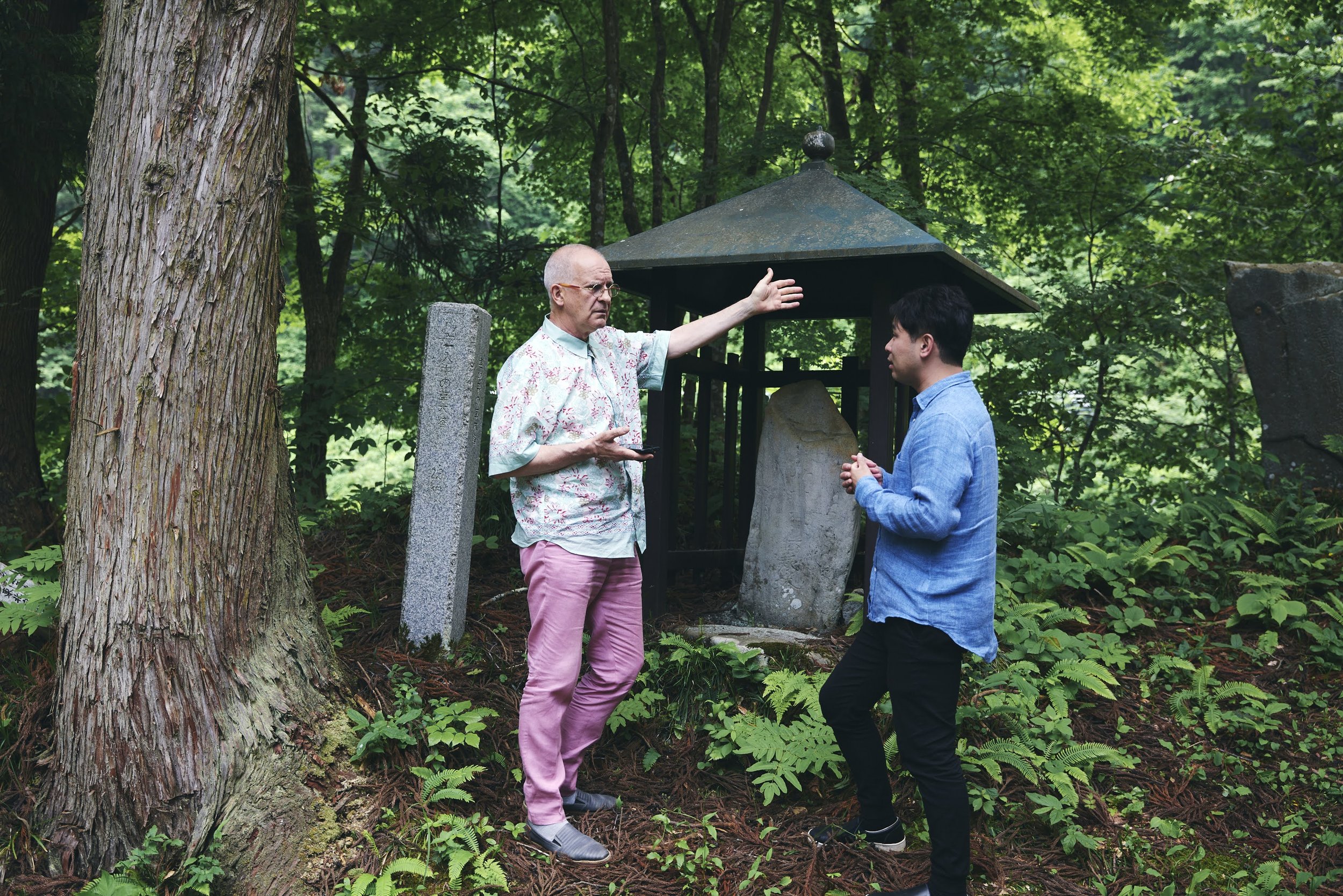
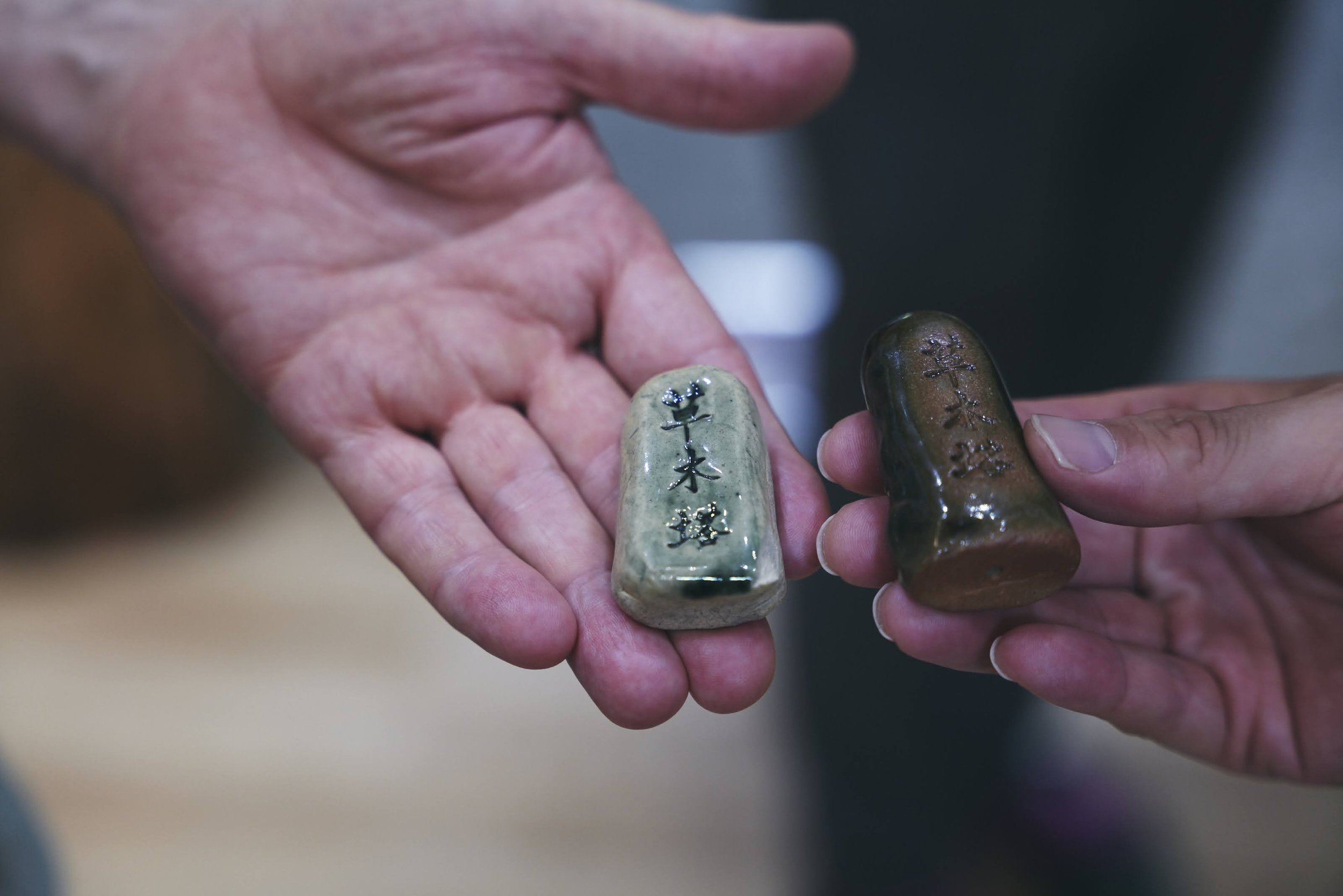
Left: The oldest somokuto in Yamagata dates back to 1780 and is found in the Tazawa district of Yonezawa City.
Right: Ceramic mini-somokuto produced by Denden in Iide Town. (Photos: Plat Yonezawa)
Sano and I went first to Shiojidaira, the site of a once-thriving logging community in the Tazawa district of Yonezawa. Here, I saw the oldest of the 140 somokuto in Yamagata (there are only about 20 elsewhere in Japan). It dates back to 1780.
In those days, the forests of Shiojidaira were a source of “official” firewood and timber for Yozan Uesugi (1751–1822), a famous local lord whose later admirers would include US President John F. Kennedy. After Uesugi’s large mansion in Edo (now Tokyo) burned to the ground in 1772, timber from Shiojidaira would have been used to rebuild it. A few years later, more would have been needed after a big fire in Yonezawa.
For the people of Shiojidaira, a bare mountainside must have been shocking. Have we done something unforgivable? Anxious thoughts of this kind may have culminated in the erection of the first somokuto as a requiem, perhaps, for lost greenery.
Sano explained that, as the years went by, interpretations of somokuto began to shift. They came to be seen as an opportunity to express gratitude to the forest, and later as a reminder to safeguard nature.
My own view of somokuto may be somewhat out of sync with their true nature, but if I’d never encountered them, I wouldn’t have had the chance to get to know Sano, an ideal recipient of the small gift that I gratefully presented to him: a mini-somokuto from Denden.

In a Class of Its Own
In the nearly 160 years since it was founded in the English county of Worcestershire, Malvern College has become synonymous with the very highest levels of education and renowned for producing prime ministers, Nobel laureates, noted authors, and even an Olympic gold medalist. Now, to complement its international campuses in Egypt, Switzerland, and China, the college is to open a state-of-the-art Tokyo school in September 2023.
Malvern College Tokyo plans to offer a richly diverse learning environment
Presented in partnership with Malvern College Tokyo
The Malvern College Tokyo campus
In the nearly 160 years since it was founded in the English county of Worcestershire, Malvern College has become synonymous with the very highest levels of education and renowned for producing prime ministers, Nobel laureates, noted authors, and even an Olympic gold medalist.
Now, to complement its international campuses in Egypt, Switzerland, and China, the college is to open a state-of-the-art Tokyo school in September 2023.
Malvern College Tokyo (MCT) aims to offer the globally acclaimed International Baccalaureate (IB) curriculum, with particular emphasis on technology and entrepreneurship.
Forward Thinking
The school also has a deep commitment to the future of the planet and will provide its students with an enriching Forest School Program, in which they spend time learning in the great outdoors. In addition to giving children the opportunity to learn a variety of skills, the program is designed to foster awareness from a very young age of the importance of our natural environment.
Another key element of a Malvern College education will be a fusion of the school’s British heritage with the values and traditions of Japan. Japanese language classes will be mandatory, while the culture, cuisine, and other key elements of the host nation will be reflected in the learning experience.
By being exposed to the very best of both worlds, MCT graduates will be uniquely equipped to thrive in international settings, believes Mike Spencer, the founding headmaster.

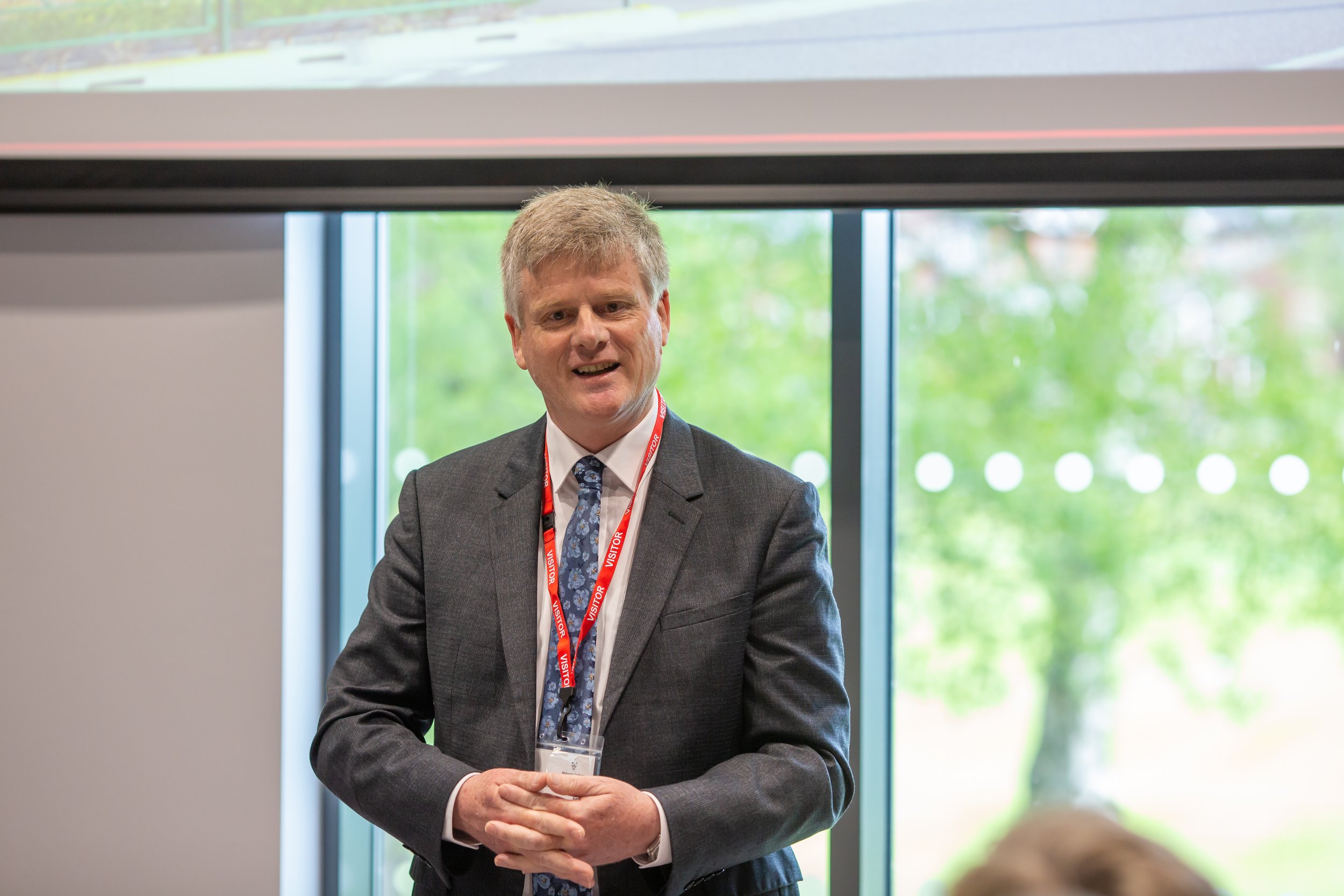




“At the heart of any IB school is a commitment to learning, which is challenging, relevant, and active,” said Spencer. “As we expand Malvern College Tokyo, we aim to develop a curriculum that builds intercultural understanding and tackles issues of global significance.
“We will strive to prepare our students for the best universities but, more importantly, we aspire to equip them with the personal qualities that will serve them and their communities well beyond their school years,” he added.
Spencer arrives in Tokyo after more than 20 years leading schools in India, China, and, most recently, Mozambique. The world has changed greatly in those two decades, he admits, and transformation continues at a rapid pace. “We are aware that we are preparing our students for a world that we can only imagine,” he explained. “This requires us to ensure that today’s students have the skills necessary to be adaptable, resourceful, creative, and confident.”
Creativity and Confidence
A critical part of that is the notion of entrepreneurship.
“Entrepreneurs see opportunities and they take calculated and thoughtful risks to resolve challenges,” Spencer said. “They seek creative solutions and have the confidence to see failure as a learning opportunity. At its heart, entrepreneurship is about adding value, and we would like our pupils to embrace the skills that enable them to add value in all areas of their lives, and in the lives of others.
“We know, too, that technology holds the key to so much of what lies ahead for us all. Our intention is to ensure that each student has access to, and can use, the technological tools that will shape our futures,” he added. “Being open-minded and adaptable to new technologies will be a prerequisite for success.”
In parallel, the importance of sustainability and responsible citizenship “will lie at the heart of a Malvern College education,” he added.
In the short time he has been in Japan, Spencer has been impressed by the “deep sense of identity that Japanese share,” as well as the systems, structures, and traditions that are the bedrock of daily life here. He intends to make sure that the courtesy, kindness, and respect that he has experienced so far are qualities that are also reflected in the MCT experience.
“I do hope that our stakeholders will see and feel that Malvern College is a school that puts its students first, and that cares deeply about the progress, hopes, aspirations, and well-being of each and every one of them,” he stressed. “It will be important to uphold the strong academic traditions of Malvern, so that our students have access to some of the best universities around the world.”


Executive Upgrade
The need for good leadership has never been more pronounced. It impacts hiring, retention, employee engagement, and productivity. And its importance in landing complicated organizational shifts through successful change management is highly visible in the market right now. Half Managing Directors for Robert Half’s Executive Search in Japan Nick Scheele and Andrew Sipus share how to find the right leaders.
Why the right leader matters … and where to find them
Presented in partnership with Robert Half • Photos by Kayo Yamawaki

The need for good leadership has never been more pronounced. It impacts hiring, retention, employee engagement, and productivity. And its importance in landing complicated organizational shifts through successful change management is highly visible in the market right now, said Nick Scheele, managing director of Robert Half’s Executive Search division.
“What we have observed over the past several years is that many global organizations—and this includes both Japanese and foreign—have been making a concerted effort to upgrade their leadership capability,” he added.
With more than 70 years of history, plus 300 locations and some 14,000 employees around the world, Robert Half has a long and deep view of the talent market. “Simply put, we have a global network that’s unlike any other and spans nearly a century of relationships, which we can leverage,” Scheele explained.
Robert Half provides contract and permanent placement solutions for finance, accounting, technology, marketing, and HR in Japan. Protiviti, a fully owned subsidiary of Robert Half, offers internal audit, risk, business, and technology consulting solutions and we regularly partner to offer clients a full suite of services.
What powers it all is their global network. Fellow Executive Search Managing Director Andrew Sipus said this pool of diverse expertise and experience creates synergy between Japan and the United States, as well as the rest of the world, when it comes to Executive Search.
“We are experts in providing bespoke retained search advisory services for finance, accounting, technology, marketing, and HR sectors, with more than 100 Executive Search colleagues around the world who are just a phone call away,” Sipus explained. “If we look to the United States as an example, our Executive Search division received the Forbes 2022 accolade as America’s Best Executive Recruiting Firm, which is certainly a testament to the quality of relationships we have at our disposal … we can easily tap into them, their resources, and their markets to understand the latest market conditions and trends in whatever area we need to better understand.”
“Globally, Robert Half and Protiviti have been named by the Human Rights Campaign Foundation for five consecutive years as one of the best places to work for LGBTQ+ equality.”
Robert Half Japan regularly connects with peers from North and South America, Europe, the Middle East, and the Asia-Pacific region to gain the latest market insights. This helps them successfully fill difficult searches that require unique resources and expertise.
Such searches can arise as Japanese companies look to expand their diversity, equity, and inclusion (DEI) as well as remain competitive in areas evolving beyond traditional approaches to management.
Sipus recalls one such case.
“We scanned the market many times over and found that what our client was looking for simply didn’t exist in Japan; or, if it did, it was untouchable,” he explained. “There were no more than a handful of candidates, and even then, they had only 20–30 percent of what the client required. What that meant for us is that we had to be very creative. We had to do a lot of coaching with the client, and we had to look outside Japan. Through this rigorous process, we were able to identify Japanese talent located overseas, and the client was supportive of relocating them back to Japan.”

Nick Scheele (left) and Andrew Sipus
Robert Half has also helped companies factor DEI into their Executive Search process and consider non-traditional candidates.
“In the case of Japanese companies, we’ve shown them what other organizations are doing and how those organizations are benefiting from more inclusive practices,” explained Sipus. “This could mean highlighting impacts on engagement, creativity, employer branding, and how that leads to gains in productivity and overall business health. We can use tools such as market maps, which give a more accurate sense of the distribution of talent, to counter or confirm the assumption that there are no solutions in the market. This helps our clients identify opportunities where they can make strategic hires using DEI and relevant data sets as a consideration.”
Robert Half itself is awash in diversity. The nearly 100 employees in the Japan office represent 22 nationalities. And globally, Robert Half and Protiviti have been named by the Human Rights Campaign Foundation for five consecutive years as one of the best places to work for LGBTQ+ equality. They have also earned a perfect score on the foundation’s Corporate Equality Index, a national benchmark for US businesses’ dedication to LGBTQ+ equality in the workplace. They have also been selected for the Bloomberg Gender-Equality Index for the fourth consecutive year, for their commitment to promoting equality, creating opportunities for women to succeed, and providing a culture that supports diversity.
Is Robert Half’s Executive Search division the right choice for you?
Scheele encourages those considering hiring leadership talent to think about the level of engagement they’d like, the level of services required, and what it is going to take to deliver the talent sought. “If you need a bespoke, dedicated project team that won’t simply present you with profiles but will manage the entire process and fully represent your interests as an extension of your talent acquisition and employer branding, then Robert Half’s Executive Search division is an ideal fit.


Home-Grown Unicorns
There are 488 unicorns in the United States and 170 in China. Japan is home to just 11. The Ministry of Economy, Trade and Industry (METI) is on a mission to narrow this gap. In June, Japan’s Cabinet Office approved the Grand Design and Action Plan for a New Form of Capitalism: Investing in People, Technology, and Startups. The plan includes the formulation of a five-year roadmap for nurturing Japan’s startup ecosystem.
Japanese startup investment poised to accelerate

Japanese Prime Minister Fumio Kishida (center) alongside award-winning startup founders.
There are 488 unicorns in the United States and 170 in China. Japan is home to just 11. The Ministry of Economy, Trade and Industry (METI) is on a mission to narrow this gap.
The first step is identifying the barriers to global success for Japanese startups.
A combination of factors is hindering the development of Japan’s startup ecosystem, explained Shinpei Ago, deputy director-general for startup policy in the agency’s Minister’s Secretariat. Firstly, the entrepreneur population is relatively small. Rather than starting or joining startups, a lot of Japan’s top talent is being scooped up straight from university by big companies. Secondly, venture capital (VC) funds operating in Japan are small compared with those in many countries. And Japanese startups are often too focused on the domestic market and lack a global mindset.

Shinpei Ago, deputy director-general for startup policy in the Minister’s Secretariat of METI shares the latest on the startup environment in Japan.
All these issues are intertwined, so a piecemeal approach that tackles each one by one will not be effective. Instead, Ago concludes, a cross-ministry initiative featuring a comprehensive set of policy measures addressing all the challenges at once is needed.
In June, Japan’s Cabinet Office approved the Grand Design and Action Plan for a New Form of Capitalism: Investing in People, Technology, and Startups. The plan includes the formulation of a five-year roadmap for nurturing Japan’s startup ecosystem.
Agencies will also explore how to free up entrepreneurs from systems which discourage them from taking risks—specifically, the practice of requiring entrepreneurs to extend personal guarantees for loans from financial institutions, thus making them liable to repay debt. While the government-backed Japan Finance Corporation already provides loans to some startups without personal guarantees, this type of financing is set to be expanded.
To grow the talent pool for startups, METI is considering expanding its Exploratory IT Human Resources Project, also known as the MITOU Program, which aims to discover and nurture top IT talent. More than 2,000 people have completed the program since its launch in FY2000, and more than 300 have successfully started a business or brought a product to market. Well-known alumni include Miku Hirano, chief executive officer and founder of Cinnamon Inc., an artificial intelligence development company, and Ken Suzuki, chairman and CEO of Smart News Inc., developer of Japan’s leading news curation app.
The government’s new approach to working with international VC funds is sure to draw attention. Beyond capital, VC funds also bring valuable expertise on how to grow businesses, manage talent, and build rich networks. Partnering with international VC funds helps Japan expand opportunities to nurture fledgling domestic startups.
Japan has experienced a quiet renaissance as startup investments increased nine-fold between 2013 and 2021. That trend may be set to continue with the emergence of even more globally minded entrepreneurs.
One Japanese startup looking beyond Japan is Astroscale.

CEO Nobu Okada (third from left) and the management of Astroscale pose with a satellite designed to test core technologies necessary for cleaning up space debris. Photo: Astroscale
In the nine years since its founding, the on-orbit servicing company has leveraged its prowess in the deep tech sector to global acclaim. Time magazine named Astroscale to its TIME100 Most Influential Companies list in 2022.
Space debris is a truly global issue. More than 35,000 objects orbit Earth, including defunct satellites and upper bodies of rockets. A collision with these objects traveling at eight kilometers per second could greatly damage working satellites, potentially affecting national security, telecommunications, television broadcasts, and much more. Major disruptions could put us back 70 years.
The secret to Astroscale’s success lies in founder and CEO Nobu Okada’s pioneering of a completely new market—so new that some said it didn’t exist even on a global stage. From the start, he had a firm commitment to global business development. While many startups launch in Japan and aim to go global after achieving domestic success, working globally from the start primes a business for success and helps it avoid competing over the smaller domestic pool of funding, Okada said.
METI hopes that the success of new homegrown ventures such as Astroscale, combined with greater government support, will inspire and encourage more entrepreneurs to be bold enough to shoot for the stars.


Deepening Africa–Japan Business Ties
While the number of Japanese companies active in Africa has doubled over the past decade to more than 900, Japan continues to lag the European Union, the United States, China, and India. The Ministry of Economy Trade and Industry (METI) is focused on encouraging Japanese businesses to support sustainable growth in Africa through projects that address vital social needs, leverage digital transformation, provide technical skills training, and boost renewable power generation.
Investment in people, innovation, and sustainable energy to play a key role at the TICAD 8 conference
Dots for’s Carlos Oba (third from left) and Emmanuel Agossou (far left) in a village close to Zagnanado, Benin.
On August 27 and 28, the Republic of Tunisia will host an international conference dedicated to deepening the economic ties between Japan and the 54 nations that make up the continent of Africa. Japan has taken the lead in the Tokyo International Conference on African Development, otherwise known as TICAD, since 1993, when TICAD 1 was held in Tokyo. Meetings take place every three years, and the Tunisian gathering—TICAD 8—is only the second to be held in Africa.
While the number of Japanese companies active in Africa has doubled over the past decade to more than 900, Japan continues to lag the European Union, the United States, China, and India. The Ministry of Economy Trade and Industry (METI) is focused on encouraging Japanese businesses to support sustainable growth in Africa through projects that address vital social needs, leverage digital transformation, provide technical skills training, and boost renewable power generation.
TICAD 8 comes as foreign direct investment in Africa more than doubled between 2020 and 2021 to about $83 billion, according to a report by the United Nations Conference on Trade and Development. This underscores the vital and timely role of Japan–Africa relations ahead of the upcoming gathering of African leaders, development partners, and international and regional organizations, along with representatives of the private sector.
As former METI Minister Koichi Hagiuda told attendees of a TICAD 8 preview event, “Japan sees three key catalysts for partnership opportunities with Africa.” He went on to highlight how compelling demographics mean one in four people will be African by 2050 and noted that a digital revolution is driving a thriving startup scene. He added that, as Africans seek alternative ways to grow their economies, the opportunities for green growth projects will increase.
Digital Revolution
Carlos Oba is a good example of how Japanese expertise is helping fuel digital startups in Africa. He is co-founder of Dots for Inc., a tech startup launched in October 2021 with a mission to provide internet access to 200 million people living in rural areas of West Africa by 2030.
While it was a trip through Tanzania in East Africa that opened Oba’s eyes to how people living in rural areas are being left behind as the digitalization wave sweeps through larger towns and cities, Dots for’s initial projects have been in West Africa, beginning with Benin in December 2021 and Senegal the following year.
Emmanuel Agossou, the Dots for country manager in Benin, said the challenges are daunting. “Most of our clients are farmers, often with just primary-level education and small incomes from farms and fisheries—though we also have a few university students, graduates, and teachers,” he explained. “They live in villages where there is almost no electricity and no—or very weak—mobile network coverage and internet.”
That lack of universal online access is fueling a rapidly widening disparity between rural and urban areas of Africa, and Oba was prompted to action when he realized major digital players would be reluctant to invest based on low foreseeable profits.
Dots for was awarded just over $300,000 in seed money from two projects initiated by METI: AfDX and J-Partnership. The funding has enabled Oba and his co-founder, Sho Nakata, to develop d.CONNECT, a distributed wireless network communication infrastructure that brings the internet to African villages at extremely low cost. This is accomplished through Wi-Fi routers equipped with mesh network technology, which cuts out dead zones and can provide uninterrupted Wi-Fi.
Residents connected to the village wireless network can use their smartphones to access services and digital content stored on a server also installed in the village. Oba envisions a “smart village,” where users can use online platforms for distance learning, telemedicine, and crowd work. Not only is this meant to improve overall convenience, but the ability to access government and corporate digital services may also boost income and quality of life.

Residents of a village close to Zagnanado, trying out smartphones
“As the Dots for services expand, villagers will get strong internet connectivity and digital platforms to boost their business, education, and work opportunities,” Agossou said. “Young people may be able to work remotely from their village homes, without the need to trek to the big cities, where they would be forced to live apart from their families.”
The system is operated on a subscription basis, targeting users who can see the prospective advantages and are prepared to commit to making ongoing payments. According to Agossou, Dots for employs local agents in or near villages who promote the services either face-to-face with farmers or in village meetings that include young people and village heads. The emphasis is on explaining the advantages of the service to the community as well as to those looking to run businesses, he added.
The service has been successful in helping men and women aged 23 to 45 find steady jobs, Agossou said. But the reality of life in an African village remains harsh, and he notes that payment challenges exist for villagers with small incomes as well as university students and new graduates who have yet to find employment. As a result, Dots for is testing a lower-fee business model to boost client interest.
Based on forecast population increases, and the rising desire to be connected, the need for the company’s offerings is likely to extend to other African nations.
“Dots for services have a huge potential market, and I can see the model expanding from Benin to many other French- and English-speaking African countries, such as Côte d’Ivoire, Ghana, and Nigeria, to name just a few,” Agossou noted.
Sharing Skills
Japan is also committed to providing high-quality technical training to 5,000 young Africans over the next three years.
In Kenya, METI is cooperating with the Kenyan Association of Manufacturers (KAM) to promote training for human capital in the Kenyan manufacturing industry. METI seeks not only to raise technical levels throughout the entire Kenyan manufacturing industry, but to enhance the Japanese presence in the former British colony.
In February, METI dispatched a specialist team to Kenya, which conducted a 10-day guidance program. A further eight-day program was directed by similar specialists in June.
In May, representatives of the Kenyan Ministry of Industrialization, Trade and Enterprise Development, together with KAM, were sent to Thailand, where they took part in third-party training conducted by Japanese experts.
Among KAM’s client companies is Nairobi-based Plast Packaging Industries Ltd., a family-run business involved in the manufacture of environmentally friendly plastic bottling, packaging, and printing products. The company participated in a technical guidance program during which Japanese experts installed sensors on factory equipment and instructed program participants on how to apply the gathered data.
“Japanese technology has helped us monitor our production capacity on a real-time basis,” said Group Chief Executive Officer Mary Ngechu.
The sensors were installed at the Plast Packaging production line without disrupting operations. As a result, production efficiency has improved. This should also have a knock-on impact on sales, she added.
Ngechu has been impressed with the devotion of the Japanese engineers. “The Japanese team are committed to ensuring any project they spearhead goes to completion and that the companies benefit,” she said. “They have offered immeasurable support to me and my family in our business, and we look forward to partnering with them in different areas.”

Mary Ngechu

A METI team visited Plast Packaging in May 2022.
Future Power
At the Second Japan–Africa Public-Private Economic Forum, held on May 3 in Nairobi, participating countries reaffirmed their commitment to green energy. Given the number of African states, and the different issues they face, there is no one-size-fits-all solution to green-energy requirements. METI’s stance is that the most realistic approach is for each nation to select the path that best suits its needs.
To solve the challenges of limited supply and higher costs for electricity, due to power generation through heavy fossil fuel use and power importation from neighboring countries, Toyota Tsusho Corporation has conducted studies financed by METI on the feasibility of solar power generation with battery storage in several countries, including Zambia, Angola, Eritrea, and Benin. One possible approach using this method is to store power generated during the day in batteries and discharge this energy at night.
Against the backdrop of a rapidly growing population, the Egyptian government is targeting the supply of 20 percent of electricity from renewable sources by 2022 via initiatives that include onshore wind power created with support from Japan.
Toyota Tsusho and its subsidiary, the renewable-energy company Eurus Energy Holdings Corporation, in partnership with France’s Engie and Egypt’s Orascom Construction PLC, have developed the 262.5-megawatt Ras Ghareb Wind Energy project. The wind farm is located on the west coast of Gulf of Suez, 260 kilometers southeast of Cairo. This project raised $320 million of limited recourse financing, of which the Japan Bank for International Cooperation (JBIC) provided $192 million as overseas investment loans. The remaining $128 million came from commercial lenders Sumitomo Mitsui Banking Corporation and Societe Generale as loans covered by Nippon Export and Investment Insurance (NEXI) Overseas Untied Loan Insurance.
The Ras Ghareb Wind Energy project is the first independent wind-power production project in the country. After reaching financial close in December 2017, it began commercial operation in October 2019—two months ahead of schedule. With 125 wind turbines, it continues to generate enough electricity to power 500,000 Egyptian households.
In December 2019, a €110 million project-financing loan agreement for the Taza onshore wind farm in Morocco—led by Parc Eolien de Taza, the shareholders of which are EDF Renewable and Mitsui & Co., Ltd.—was signed by JBIC, the Bank of Africa, Sumitomo Mitsui Banking Corporation, and MUFG Bank, Ltd. The funds provided by the latter two commercial banks were insured by the state-owned export credit agency NEXI. The electricity generated by the project will be bought by Office National de L’Électricité et de l’Eau Potable, Morocco’s public electricity and water company.

Wind power is beginning to play a key role in the energy mix of nations such as Egypt and Morocco.
Kenya has committed to the realization of a green, hydrogen-based society as it looks to reduce its reliance on fossil fuels and has established a working group led by the Ministry of Energy. A strategy and roadmap are currently being drawn up, and institutional design and development of pilot projects will follow.
Japan’s public and private sectors are expected to work together to lead the development of greener energy resources. For the 2022 fiscal year, Toyota Tsusho and METI have decided to implement a feasibility study on green-hydrogen value chain development in Kenya. This study aims to pursue the formation and commercialization of pilot projects which lead to a green economy. The goals of such projects include unlocking the potential of green hydrogen as a new energy source through various industries, such as freight and passenger transportation, port cargo handling, steelmaking, fertilizer manufacturing, and alternative fuel and electricity storage solutions.
Financial Foundation
Project finance is risky in some respects. The special-purpose vehicle set up to run the project has limited underlying capital, and repayment of loans is funded only from project proceeds, which can take years to come to fruition. Such long-term finance risk is higher in developing countries.
One way to mitigate risk is to have loans insured by organizations such as NEXI, which provides coverage for loans made by private-sector Japanese banks to overseas businesses in which Japanese companies participate. NEXI was founded in 1993 and, according to a NEXI International Relations Group spokesperson, a high-level African focus has been in place since TICAD 1, which was held the same year in Tokyo.
In December 2020, NEXI insured a $520 million loan made to the African Export-Import Bank (Afreximbank) by Mitsubishi UFJ Bank, Ltd. and Mitsubishi UFJ Trust and Banking Co., Ltd. as support for the Pandemic Trade Impact Mitigation Facility (PATIMFA) for African countries affected by the Covid-19 pandemic. Through the PATIMFA program, the money is being widely used to support medical care, hygiene, environmental, and educational projects in Africa.
The spokesperson also revealed that NEXI has decided to participate in a telecommunications project in Ethiopia—jointly conducted by Sumitomo Corporation and Vodafone Group Plc of the United Kingdom—which began in May. The project will be reinsured by the African Trade Insurance Organization (ATI) based on a memorandum of cooperation concluded in 2019 at TICAD 7 in Yokohama.
Leading up to TICAD 8, NEXI is planning to host joint webinars with Afreximbank and ATI as side events to introduce these projects in more depth, the spokesperson said.
Tunisia is in an optimal position to host TICAD 8 given its unique geographical advantage as the gateway to the continent, as well as being an important partner for Japan in the Middle East and Africa. The conference has won the broad support of the African states, and Japanese Prime Minister Fumio Kishida is scheduled to attend. Tunisian President Kais Saied will chair the conference—a role which he is scheduled to share with Macky Sall, president of the Republic of Senegal and chairperson of the African Union.
Backed by more stable funding sources for clean energy projects, high-level training facilities, and the rapid uptake of digital services across the continent, TICAD 8 is on its way to securing a firmer and more deeply founded relationship between Japan and Africa as we move toward 2050.

2022 DC Doorknock
ACCJ leaders made their first DC Doorknock visit to Washington since before the pandemic June 14–16. View a selection of photos from the event.
From left: ACCJ Executive Director Laura Younger, President Om Prakash, Chair Eriko Asai, and Governor Victor Osumi
American Chamber of Commerce in Japan (ACCJ) leaders made their first DC Doorknock visit to Washington since before the pandemic June 14–16. ACCJ President Om Prakash was joined by Chair Eriko Asai, Governor Victor Osumi, Special Advisor Christopher LaFleur, and Executive Director Laura Younger as they engaged face-to-face with members of the executive branch and Congress.
The annual DC Doorknock, which was canceled in 2020 and 2021 due to Covid-19, is an important part of the ACCJ’s dialogue with the US Government and is key to the chamber’s advocacy efforts. The delegation received a warm welcome from administration officials, members of the Senate and House of Representatives, the Embassy of Japan, the US Chamber of Commerce, and various think tanks.
“There’s energy and urgency in the US–Japan partnership on all fronts—from the economy to national security,” said Prakash, “[and] we are pleased and encouraged to see the United States leading in the region, and the heightened role Japan has taken on the world stage.”


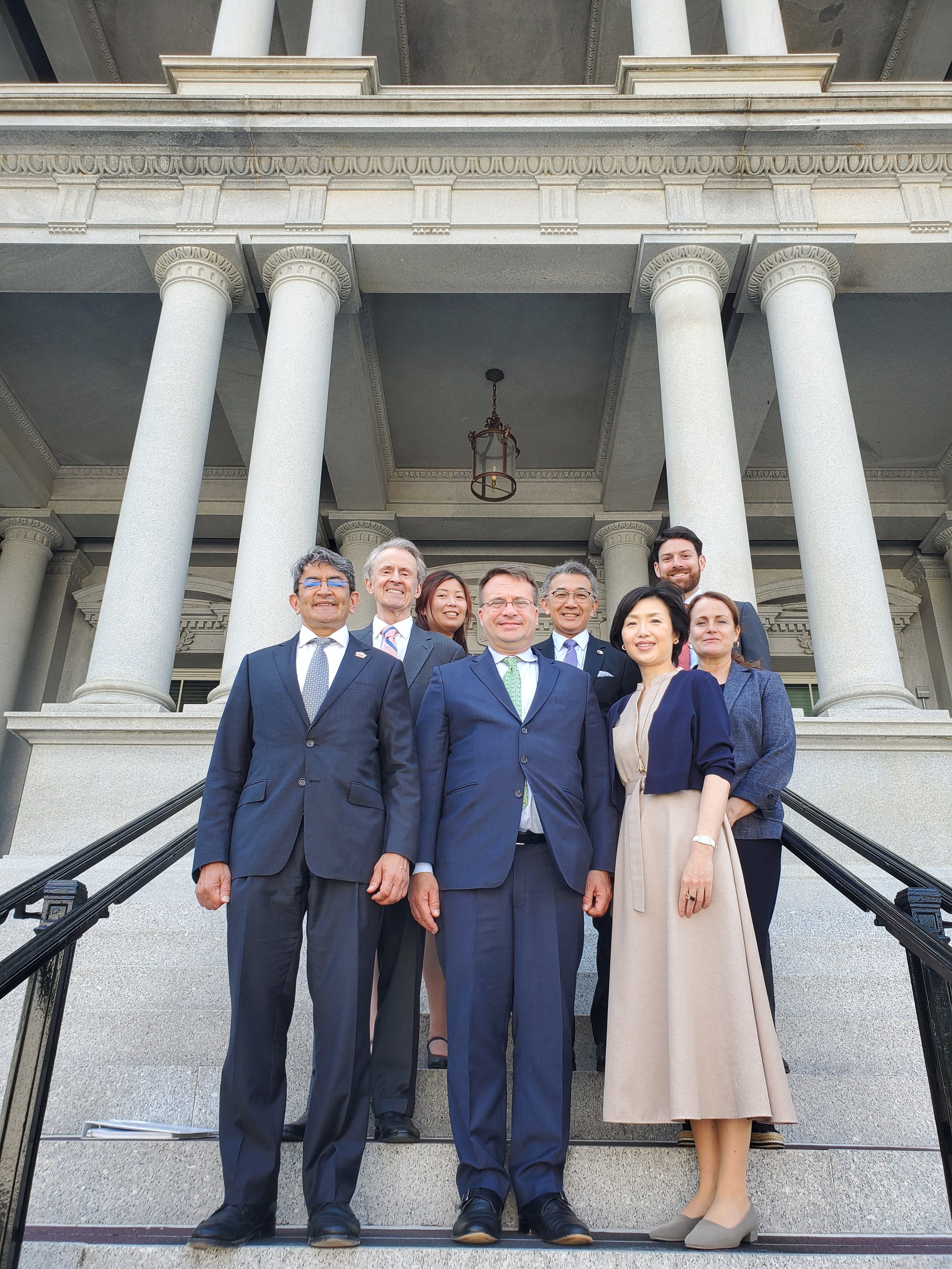


Changed Reality
When Rahm Emanuel arrived in January as the 31st US ambassador to Japan, he wasted no time in building new connections and strengthening existing ties between the two countries. His experiences as mayor of Chicago, President Barack Obama’s chief of staff, a member of the US House of Representatives, and senior advisor to President Bill Clinton coalesce into a whirlwind of diplomatic energy. On May 16, Emanuel took time out from this fast-paced schedule to speak to members and guests of the American Chamber of Commerce in Japan (ACCJ).
US Ambassador to Japan Rahm Emanuel shares his views on the state of the bilateral relationship
Photos by Miki Kawaguchi/LIFE.14
Listen to this story:
When Rahm Emanuel arrived in January as the 31st US ambassador to Japan, he wasted no time in building new connections and strengthening existing ties between the two countries. His experiences as mayor of Chicago, President Barack Obama’s chief of staff, a member of the US House of Representatives, and senior advisor to President Bill Clinton coalesce into a whirlwind of diplomatic energy. He has already visited 10 of Japan’s 47 prefectures and attended events stretching from Hiroshima to Otsuchi, in Iwate. And his love of trains and use of the country’s mass transit has captured the hearts of Japanese media.
On May 16, Emanuel took time out from this fast-paced schedule to speak to members and guests of the American Chamber of Commerce in Japan (ACCJ). Organized by the ACCJ Government Relations Committee, the luncheon at Tokyo American Club saw more than 200 in-person and remote attendees listen as the ambassador shared his thoughts on Japan and the great potential for the bilateral relationship. Emanuel also graciously responded to a range of questions during a lengthy Q&A session.
Following a welcome from committee Vice-Chair Anne Smith, ACCJ President Om Prakash delivered opening remarks. Noting that the ACCJ, as the voice of the US business community, has enjoyed a close and valuable relationship with the US Embassy, Tokyo, over the course of the chamber’s nearly 75-year history, he said, “I can’t think of a better person at the right time in the right place than this man.” In response, the ambassador quipped, “Intros like that make you wish your parents were here, because you know your mother would be proud and your father would be amazed.”
Impact on Investment
Emanuel began by noting that, after two years without an ambassador to its most important ally in the most important region, the White House and President Joe Biden are placing great value on Japan. The bilateral relationship, Emanuel believes, is at an inflection point. “We are no longer discussing, as we have for the past 40 years, alliance protection. I think the US–Japan relationship has matured into alliance projection,” he explained. “Yes, it’s about the two countries, but it is about the two countries projecting forward into the region in a shared way.”
As he said this, the embassy was preparing for Biden’s May 22–24 visit. That the trip took place so soon after the ambassador’s arrival highlights how their long working relationship energizes efforts to build cooperation with the administration of Japanese Prime Minister Fumio Kishida.
Stable, Sustainable Business
The challenges facing the world are many, and some are shaking the foundations of long-held approaches to business operations.
Emanuel said he feels we are transitioning from neoliberalism to a world in which consideration of potential conflict and political turmoil must play a key role in corporate decisions.
“There have been three major events that have shaken people and their calculations of what is going to be the road going forward,” he said. “And it’s a level of uncertainty, and an intensity of uncertainty, that really hasn’t been experienced in a long time when it comes to international affairs and international economics.
“My own view is that low cost and efficiency, which have been the guiding North Star for your individual companies for how you make investments, where you make investments, etc., those North Stars are slowly but surely … being replaced by stability and sustainability. No company today making a major decision economically, internationally, is going to be stuck with a major investment in an insecure, unstable political environment, a country that can one day have major sanctions [placed] on it,” he continued, alluding to the fallout from Russia’s invasion of Ukraine and the potential for future conflicts.
New Calculus
The coronavirus pandemic, he noted, has already exposed the fragility of supply chains, and the war in Ukraine is having a similar impact in how it raises concerns over uncertainty in and around political systems, even in democratic countries. “You’re going to start to change the calculus of how you make investments, based on whether a country is politically stable and if it lives by the rule of law. Does it have the resilience and sustainability that you need as a company?”
Speaking of uncertainty as it pertains to international trade, Emanuel said that we are witnessing the emergence of a new political and economic equation, one that will become clearer over the next five years. To stability and sustainability he added resilience. “Each of those, in some way, becomes more dominant in how we think about political decisions, commercial decisions, and economic decisions.”
He closed by saying that he feels we have a unique opportunity to advance US–Japan relations.
“I said when I was confirmed, I think that what we do in the next three years, as the US and Japan, will determine our relationship for the next 30.”
The ambassador believes that, if Kishida emerges victorious in the July elections, Biden has a chance to build a solid foundation with the Japanese prime minister, with whom he came to be on a first-name basis after they had spent just one day together in May.
Emanuel knows what can happen when there is instability at the top, and how that can impact the bilateral relationship. As Clinton’s senior advisor, he saw six Japanese prime ministers come and go in eight years. “As soon as you started to get to know somebody, they were gone,” he said. “There’s a chance President Biden will have one prime minister for his tenure,” he continued. “That’s a unique opportunity not only to develop a relationship but [to work with] a person who, without an election overshadowing decisions, has the ability to make some real decisions for the future of the US–Japan relationship, including as it relates to the Indo–Pacific.”
To that end, Emanuel applauded Kishida for his leadership in the face of recent global uncertainty.
“One of the things I think Prime Minister Kishida has done very successfully is he has taken the Indo–Pacific and the Transatlantic and collapsed them into a single strategic sphere,” he said. “Just in the past 10 days, he’s hosted the European Union president, the Finnish prime minister, the chancellor of Germany and, two days prior to that, on his visit to Europe, he was with the British prime minister, the Italian prime minister, and the Pope. That should be seen as a way in which Europe now has a vested interest in a free and open Indo–Pacific. That is a major change of where we are politically and a major change of where we are economically.”
Concluding his speech, Emanuel told the crowd: “I look forward to the next three years working with each of your companies and promoting not only your commercial interests but, more importantly, our shared interests.”

Final Frontier
Cooperation between the United States and Japan in the space industry is growing stronger and represents a great pathway for innovation in the bilateral relationship. A significant player in the space travel industry in Japan is the Space Port Japan Association (SPJ), which was established in 2018 and is attracting considerable attention on both sides of the Pacific. SPJ co-founder and Representative Director Naoko Yamazaki joined members of the American Chamber of Commerce in Japan (ACCJ) on April 21 for an hour-long online discussion.
Former astronaut Naoko Yamazaki shares her vision for bilateral space cooperation and spaceports in Japan
Listen to this story:
The United States and Japan share a long history of collaboration in space, working together on projects such as the International Space Station (ISS) and the Artemis program, which aims to return astronauts to the moon by 2024 and can also be seen as a preparatory stage for human missions to Mars.
Cooperation between the two countries in the space industry is growing stronger and represents a great pathway for innovation in the bilateral relationship. A significant player in the space travel industry in Japan is the Space Port Japan Association (SPJ), which was established in 2018 and is attracting considerable attention on both sides of the Pacific.
SPJ co-founder and Representative Director Naoko Yamazaki joined members of the American Chamber of Commerce in Japan (ACCJ) on April 21 for an hour-long online discussion organized by the Chubu Aerospace and Manufacturing Committee.
Licensed to Fly
The accomplishments of Yamazaki, who participated as a panelist at the ACCJ Women in Business Summit in 2014, are impressive. Currently she is a member of the Committee on National Space Policy at Japanese Prime Minister Fumio Kishida’s Cabinet Office. And as a former astronaut with the Japan Aerospace Exploration Agency (JAXA), she became the second Japanese women to fly into space when she took part in an assembly and resupply mission to the ISS in 2010 aboard the space shuttle Discovery. She retired from JAXA in 2011.
Besides appearing in the media to promote the SPJ, Yamazaki occasionally meets with government officials in both the United States and Japan. For example, US Ambassador to Japan Rahm Emanuel greeted her and space startup leaders at the US Embassy, Tokyo, in February to discuss bilateral collaboration on the space front.
Direct Connections
During the April 21 webinar, ACCJ members learned that direct cooperation began with the signing of the 1969 US–Japan Space Agreement and has since blossomed into a relationship involving many US-made products. While a young organization, the SPJ has already established relationships with four regional governments interested in hosting spaceports. The projects include:
- HOSPO (Taiki, Hokkaido Prefecture)
- Spaceport Kii (Kushimoto, Wakayama Prefecture)
- Shimojishima Spaceport (Okinawa Prefecture)
- Spaceport Oita (Beppu, Oita Prefecture)
Other cities in Japan are also interested in such an investment in point-to-point suborbital space transportation hubs.
Besides sending future passengers to other planets, spaceports in Japan could become a launchpad from which to transport time-sensitive food and cargo to other locations on Earth. For example, Yamazaki pointed out, entrepreneur and investor Elon Musk proposed in 2017 a plan to use his SpaceX rockets to fly passengers from New York to Shanghai in just 39 minutes.
Supporting STEM
Yamazaki is recognized as a space policy expert not only in Japan but also in the United States. She was recently invited by the University of Pennsylvania (Penn) as a visiting fellow at the Perry World House, a center for scholarly inquiry, teaching, research, international exchange, policy engagement, and public outreach on pressing global issues. She is lending her expertise to Penn so that its students can develop and advance innovative policy proposals, and hopes to see more Japanese students benefit from the experience of studying abroad.
Finally, Yamazaki spoke about her involvement in the Japanese Rocket Society, where she chairs the Sorajo Committee, whose name means women in aerospace. She is a staunch advocate of inclusivity and gender equality in the Japanese aerospace industry—a goal very much aligned with the beliefs of the ACCJ and its member companies. Science, technology, engineering, and mathematics—or STEM—is a growing area of passion for this former astronaut, and we hope to see her and other members of the SPJ at future ACCJ events.

Chubu Walkathon
On May 22, more than 1,000 participants took part in the 31st Annual Chubu Walkathon International Charity Festival. This year’s event took place on a beautiful Sunday in Nagoya’s Meijo Park and was also livestreamed. More than ¥7 million was raised to support local charities.
Annual event raises millions of yen for charity on a sunny day of food, friends, fun, and fitness in Nagoya
Photos by Andy Boone

On May 22, more than 1,000 participants took part in the 31st Annual Chubu Walkathon International Charity Festival. This year’s event took place on a beautiful Sunday in Nagoya’s Meijo Park and was also livestreamed. More than ¥7 million was raised to support local charities. The Walkathon’s mission is to improve the lives of the less fortunate by creating an opportunity to increase awareness, recruit volunteers, and raise funds at a family-friendly, international outdoor event. More than ¥177 million has been donated over 31 years, and 18 charities received funds in 2021.