
University Briefings
Through custom sessions, the chamber helps professors and students navigate the US–Japan business landscape.
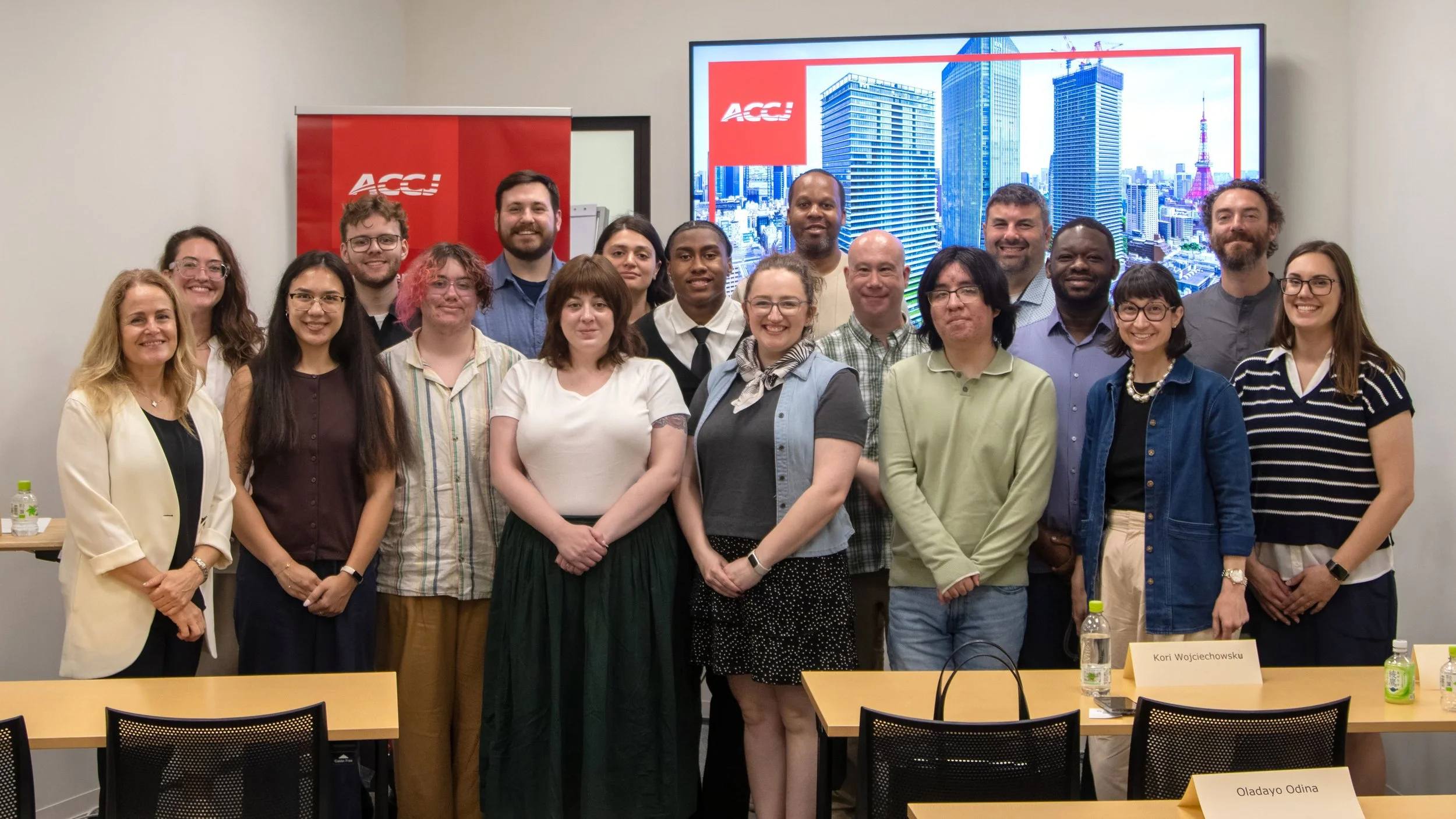
A delegation from the University of Michigan–Flint
Through tailored sessions, the American Chamber of Commerce in Japan (ACCJ) gives emerging US business leaders a direct view of Japan’s economy and the US–Japan commercial relationship.
For US students preparing for careers in global business, the ACCJ University Briefings program offers an executive-level perspective on Japan’s business environment and the bilateral relationship. The sessions examine the opportunities and challenges companies face in Japan and the role of the business community in strengthening economic ties between the two countries.
ACCJ Executive Director Laura Younger personally leads each briefing and tailors the discussion to the needs of the visiting group. The sessions connect Japan’s business environment to the wider bilateral agenda. Discussions have covered Japan’s regulatory and business environment, US–Japan economic relations, technology and artificial intelligence policy, demographic and workforce challenges, healthcare, and the importance of professional networks and long-term relationships in Japanese business.
To date, the ACCJ has conducted 50 briefings and reached more than 1,400 students from US universities. The program gives these emerging leaders an opportunity to test their classroom learning against practical perspectives from the ACCJ’s executive director.
The program also contributes to the wider US–Japan relationship. Educational exchange is an important form of soft diplomacy because it gives future US leaders a more informed understanding of Japan and encourages sustained bilateral engagement. By giving US students a more nuanced understanding of Japan’s economy, institutions, and business environment, the briefings prepare them to engage more effectively with Japan throughout their careers and strengthen the human foundations of bilateral commercial and policy cooperation.
Selahattin Imrohoroglu, a professor of finance and business economics at the University of Southern California’s Marshall School of Business, is among the educators who have brought their students to the ACCJ University Briefings program.
“Visiting the ACCJ was an excellent experience that gave our group a deeper appreciation of Japan’s business environment, professional culture, and the important role of international organizations in connecting business leaders, policymakers, and students,” he explained. “The briefing helped us better understand Japan’s current economic and demographic challenges, the opportunities for foreign companies, and the importance of cross-cultural communication and long-term relationship building in doing business in Japan.”
“The briefing helped us better understand Japan’s current economic and demographic challenges, the opportunities for foreign companies, and the importance of cross-cultural communication and long-term relationship building in doing business in Japan.”
The University of Arizona’s Justin Jarvis brought his executive MBA candidates to the ACCJ to learn how international companies navigate regulatory, cultural, and market differences. “I also hoped they would see how organizations like the ACCJ play a role in shaping dialogue between the private sector and government,” said the director of the school’s master’s studies. “The experience exceeded expectations. One of the biggest takeaways for me was just how different Japanese business culture is from that in the United States. While both countries are highly developed economies, the business environment, as well as the interpersonal and social dynamics of doing business, are meaningfully different.”
For Greg Laurence, 2026 marked the seventh time he has led a study-abroad group to Japan. As a professor of organizational behavior and human resources management, as well as chair of the University of Michigan-Flint Department of Management and Marketing, Laurence teaches a course on design thinking, namely, how organizations and the people in them solve problems.
“Many of our site visits are with very focused organizations,” he explained. “We wanted students to get a broad picture of business in Japan and how it relates to them in the United States. Japan can feel very far away. When visiting with boutique ceramics makers in Bizen [Okayama Prefecture], it is easy to lose sight of the US–Japan relationship, which matters to boutique ceramics makers in Bizen even if they don’t talk about it. The goal was to get that 10,000-meter view and to think about central design-thinking questions: Why does the ACCJ exist? What problems does it aim to solve and how?”
At least one student from each of Laurence’s past trips has made the move to Japan. “I think that is a pretty impressive testament to their experience there. Japan opens our students’ eyes to what is possible for them.”
Professor Arup Varma of Loyola University Chicago’s Quinlan School of Business has been leading students on trips to various parts of the world for the past two decades. “In 2026, the students were keen on visiting Japan, and I must say we had an absolutely outstanding trip,” he explained. “We visited both Tokyo and Kyoto. One of the highlights was the initial visit to the ACCJ, which helped set the framework and the context. I was very excited because [chambers] typically have deep experience in a country, and their breadth of knowledge of the intricacies of doing business in that country helps set the stage for subsequent visits.”
Quinlan student Przemek Thomas Krydka said the visit gave him confidence that, should he ever seek to establish a business presence in Japan, the ACCJ would be an invaluable resource and trusted partner. “I came away from our meeting with a strong impression that the ACCJ can provide American businesses with the relationships, knowledge, and support needed to successfully establish a foothold in the Japanese market.”
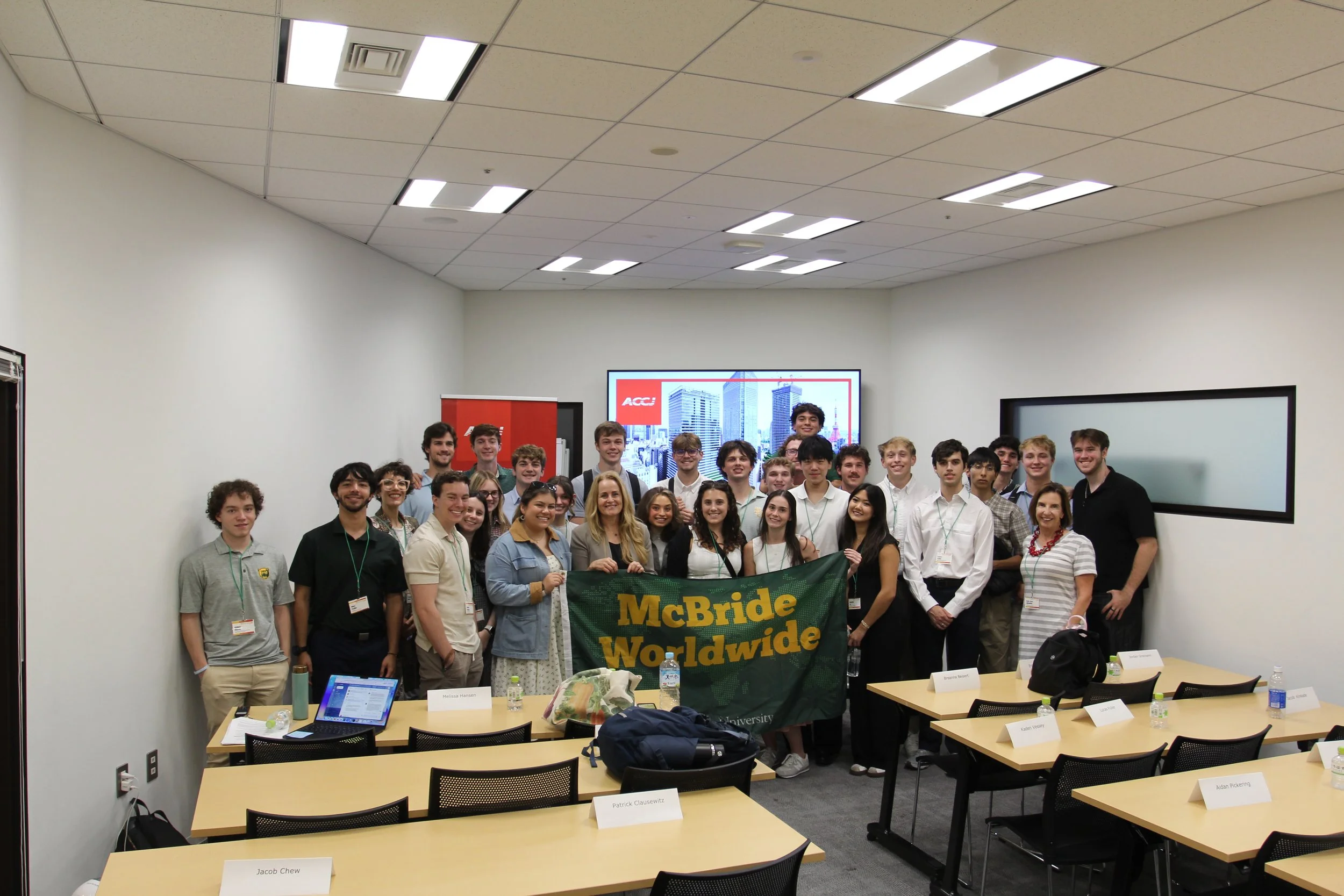
Students from Baylor University’s McBride Worldwide program visit the ACCJ
Another student who found the University Briefing inspiring is Rhiannon Noel, who visited as part of Lynn University’s undergraduate delegation. Apart from business insights, she found her post-university vision energized. “Seeing interns who came from backgrounds other than Japanese gave me peace of mind that I would fit in if I decided to come back and also do an internship,” she said.
Since returning to Florida, Noel has given presentations and worked on projects related to Japan’s need for immigration, discussing topics such as the declining birth rate, the Highly Skilled Professional program, and the Specified Skilled Worker program, which is designed to address labor shortages in key sectors. “Japan remains one of my favorite places I’ve traveled to, and I am still planning to come and do an internship eventually after the conclusion of my degree.”
Baylor University undergraduate Max Fuller said he came to the University Briefing hoping to learn more about how businesses from outside Japan are able to succeed and adapt to Japan’s different culture.
“After meeting with Executive Director Laura Younger, I actually understand that it is not easy due to tax laws and regulations, and also how people interact,” he explained. “Laura used real-world examples. Through visiting the ACCJ, I have been able to hear firsthand experiences that you usually wouldn’t in a normal classroom setting.”
Younger’s deep experience and insights were also appreciated by Shizuka Modica, a lecturer at the University of Virginia’s Darden School of Business. Modica brought a delegation of MBA students to the ACCJ University Briefing as part of the school’s course titled Japan: Where Tradition Meets Innovation.
“Laura introduced ACCJ’s role in strengthening the US–Japan business environment and offered grounded, practical perspectives on how business is conducted in Japan,” she said. “Her lively, highly interactive presentation wove together economic and regulatory data with firsthand stories about pain points American executives commonly encounter and how the ACCJ helps them navigate those challenges. This brief but rich visit helped students process their new experiences and articulate deeper insights into Japan’s political, economic, and social challenges. We are deeply grateful to Laura and the ACCJ for their generosity and impact on our students’ learning.”
