
Ground Truth
The ACCJ launches its AI Futures Series with a look at infrastructure, energy, and economic security.
The ACCJ launches its AI Futures Series with a look at infrastructure, energy, and economic security.
Artificial intelligence (AI) is all around us. With each passing day, it seems that more of the tools we use are infused with the technology, more people and businesses are relying on it, and demand is forcing rapid reflection on how we work and how we feed AI’s thirst for resources.
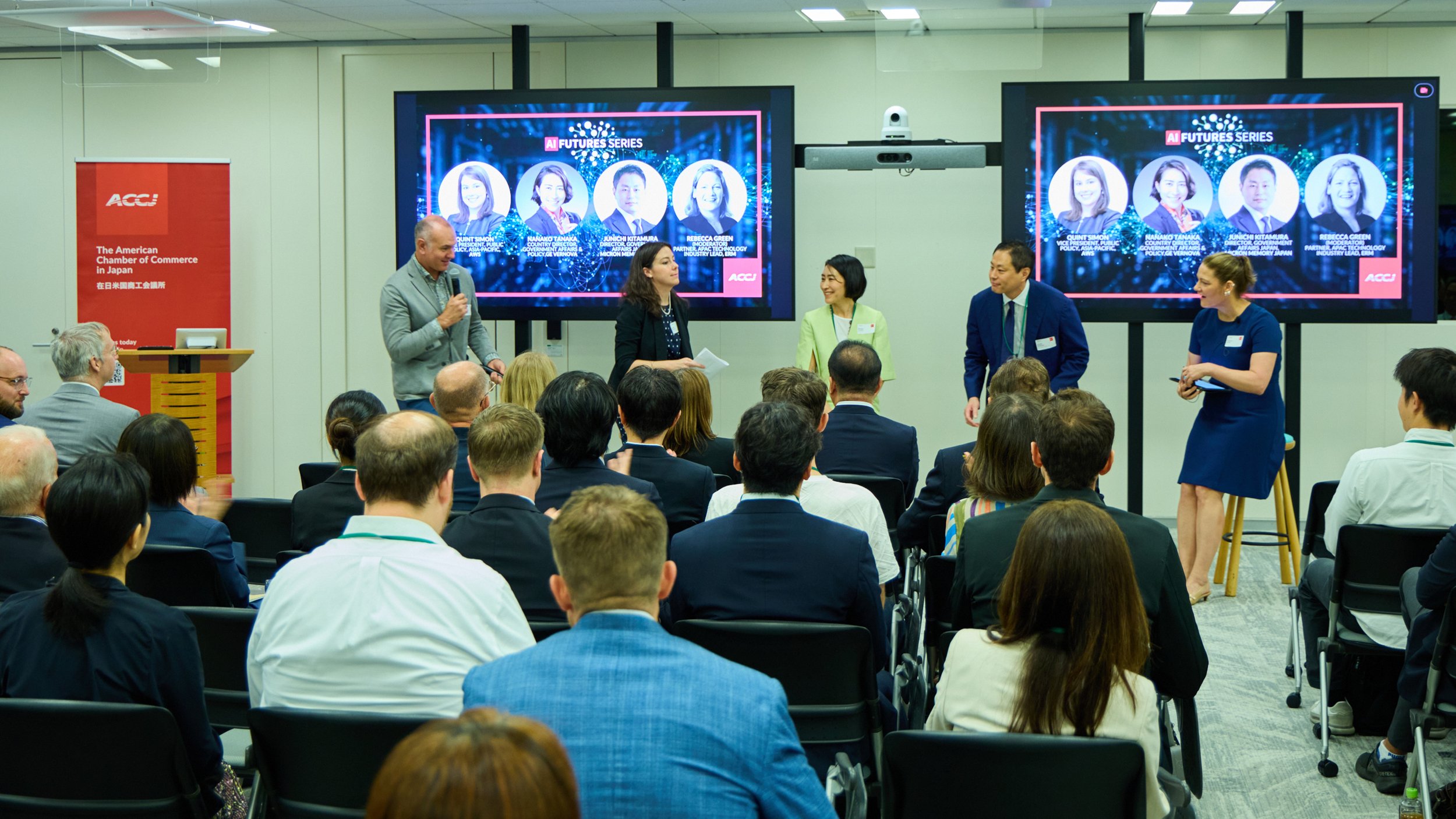
American Chamber of Commerce in Japan (ACCJ) members and guests gathered on September 3 at the office of President’s Circle member Cisco Systems G.K. for the first in a series of signature events focused on the technology.
The first session of the AI Futures Series examined the physical and policy foundations that AI requires to scale in Japan.
ACCJ Digital Forum Co-chairs Shuichi Izumo and Ken Haig welcomed attendees and thanked sponsor Aflac and Cisco’s fellow President’s Circle members KKR and Eli Lilly Japan K.K. for their support of the event.
In his opening remarks, ACCJ President Eric John emphasized the importance of the infrastructure behind AI adoption—from semiconductors and data centers to telecommunications and energy.
“The resilience and security of this infrastructure will directly impact Japan’s ability to innovate and compete,” he said.
“The ACCJ strongly supports the Government of Japan’s ambition to make Japan the easiest country in the world for developing and utilizing AI,” he continued. “However, getting the policy balance right will be critical: protecting transparency and security while ensuring that regulation supports, rather than constrains, innovation and the adoption of new technologies.”
Bringing the Pieces Together
The discussion began with a panel moderated by ACCJ Governor Rebecca Green, who is also a partner and APAC technology industry lead at ERM. Offering their perspectives were:
- Nanako Tanaka, country director of government affairs and policy at GE Vernova
- Quint Simon, vice president of public policy for Asia-Pacific at Amazon Web Services
- Junichi Kitamura, director of government affairs and country lead at Micron Memory Japan K.K.
The group represented a range of elements critical to AI infrastructure: semiconductors, the cloud, and power generation. These areas are often discussed in separate rooms, and the goal of the first AI Futures session was to bring them together and highlight how they are interdependent when building a resilient AI supply chain that keeps up with demand and positions Japan as a leader in the field.
“If there is to be a prosperous path forward for AI in Japan, it must be charted by sharing lessons learned, presenting a common industry position, and engaging local governments jointly rather than company by company.”
A Question of Scale
The conversation opened on the sheer size of the moment. Global capital commitments to AI infrastructure now run into the hundreds of billions of dollars annually from hyperscalers alone. Hyperscalers are companies that provide cloud computing resources so businesses can access computing power, storage, and other services on demand.
That astounding investment total does not include outlays for AI labs and colocation providers. According to the panelists, the semiconductor market is on a trajectory that few forecasters anticipated even two years ago, driven in large part by demand for the memory that feeds data-hungry processors. The impact of such demand can be felt by everyday consumers in the rising prices of computers and smartphones caused in part by memory shortages.
Much of this investment has so far been concentrated in the United States. The open question, and the one the panel returned to repeatedly, is how much of the next wave lands internationally, and how much of that share can Japan secure.
The panel was clear that Japan enters this competition with genuine advantages: a strong rule of law, robust intellectual property protection, and a policy environment widely regarded across the region as forward-leaning. These all weigh in its favor, as does the depth of the US–Japan relationship itself. For investors evaluating assets with 15- to 20-year horizons, Japan’s reputation for deliberate, predictable policymaking is an asset rather than a liability.
Where the Friction Lies
But there are challenges. Energy cost and availability surfaced as the single most cited obstacle, followed closely by the state of the grid. Permitting regimes and technical regulations designed for traditional, non-IT facilities add further delay. So does the fragmentation of responsibility for critical infrastructure across prefectures, municipalities, and private utilities, which leaves companies negotiating with multiple parties on questions that elsewhere have a single owner.
Underlying all of it is a mismatch in timescales. Japan has a reputation for being slow-moving. The same deliberateness that reassures long-term investors becomes a liability on project timelines. Industry investment cycles turn over every two to three years, while transmission lines, water infrastructure, and land rezoning move at a pace of five, 10, 15 years or more. The discussion turned to jurisdictions where central government builds enabling infrastructure ahead of committed demand, and contrasted that with a chicken-and-egg dynamic over who takes the first risk.
Talent emerged as a related constraint. Decades of retreat from semiconductor manufacturing have left a generational gap, in engineers and in the professors who train them. This is compounded by shortages in construction labor and specialist trades.
On energy specifically, the discussion converged on two priorities: modernizing the grid, including transmission and interconnection, and expanding the role of nuclear power alongside renewables. Early nuclear power purchase agreements and colocation projects were noted as encouraging signals.
Trust as Infrastructure
Even if all these obstacles can be overcome, winning over everyday people is a must if Japan is to succeed in AI. Community opposition to data centers has become a live political issue in parts of the United States, and while Japan remains comparatively quiet, panelists asserted that social license should be treated as infrastructure in its own right.
Concerns vary sharply from site to site. While energy and water consumption are at the top of the list in news coverage surrounding AI pushback, noise from the construction and operation of data centers, as well as the impact on aesthetics and biodiversity, are also big concerns. The consensus was that industry, not government, must lead here, through transparency, listening, and evidence-based engagement with communities where they wish to operate.
That led to the conclusion: the need for collective action. If there is to be a prosperous path forward for AI in Japan, it must be charted by sharing lessons learned, presenting a common industry position, and engaging local governments jointly rather than company by company. The ACCJ, panelists agreed, offers a natural platform for such work.
In her closing remarks, ACCJ Executive Director Laura Younger expanded on the goals of the chamber’s exploration of AI:
“As we developed the AI Futures Series, we really wanted to look at AI through three different lenses as part of one broader conversation. Tonight we began with the foundations. We looked at infrastructure, energy, and security. In the next session, we are going to start looking at application, what it means for business, and then we are going to broaden the lens even more and to what AI actually means for society, for people—really defining what it means to be human.”

A Night of Stars and Stripes
ACCJ members and partners celebrated 250 years of American independence.
ACCJ members and partners celebrated 250 years of American independence.
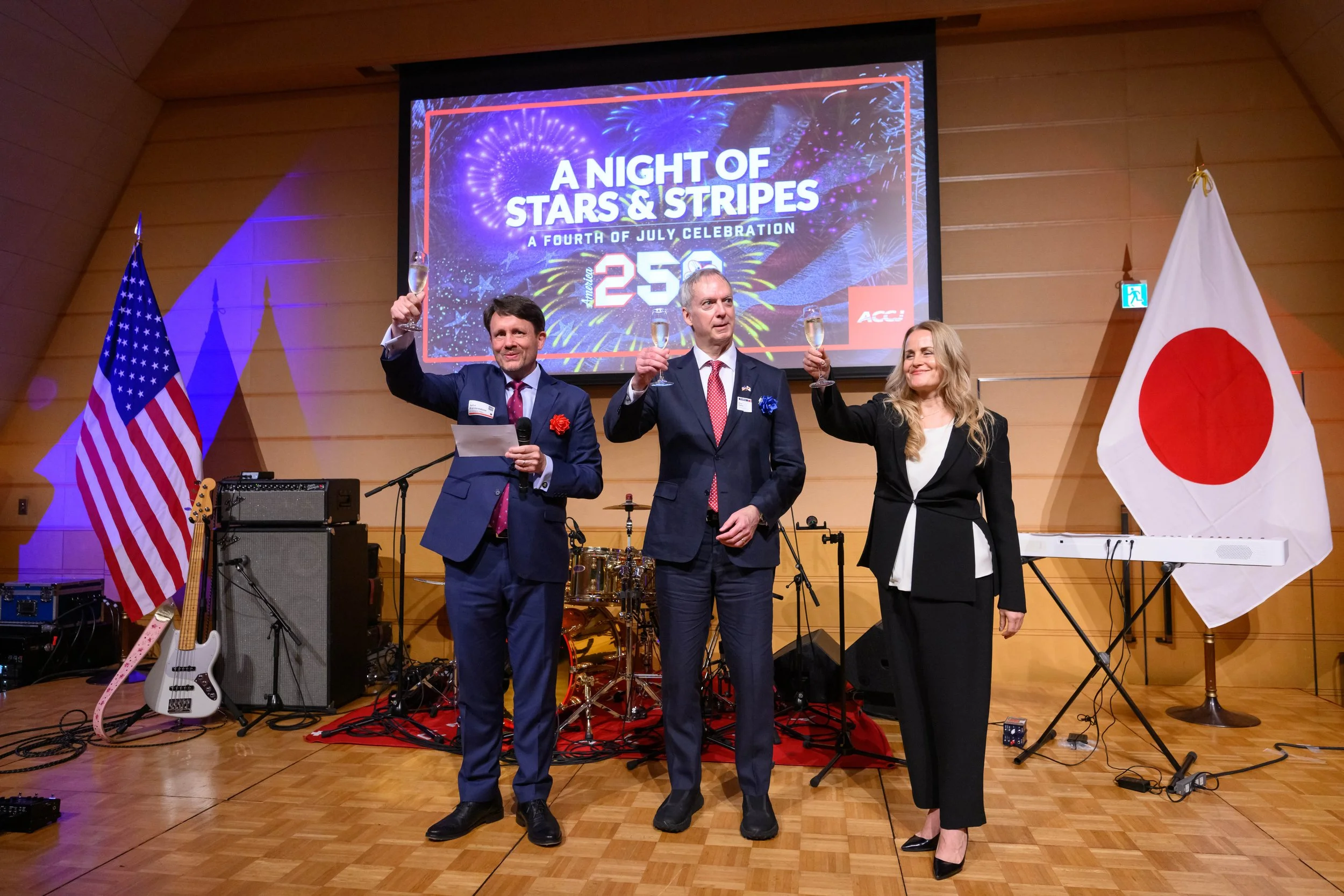
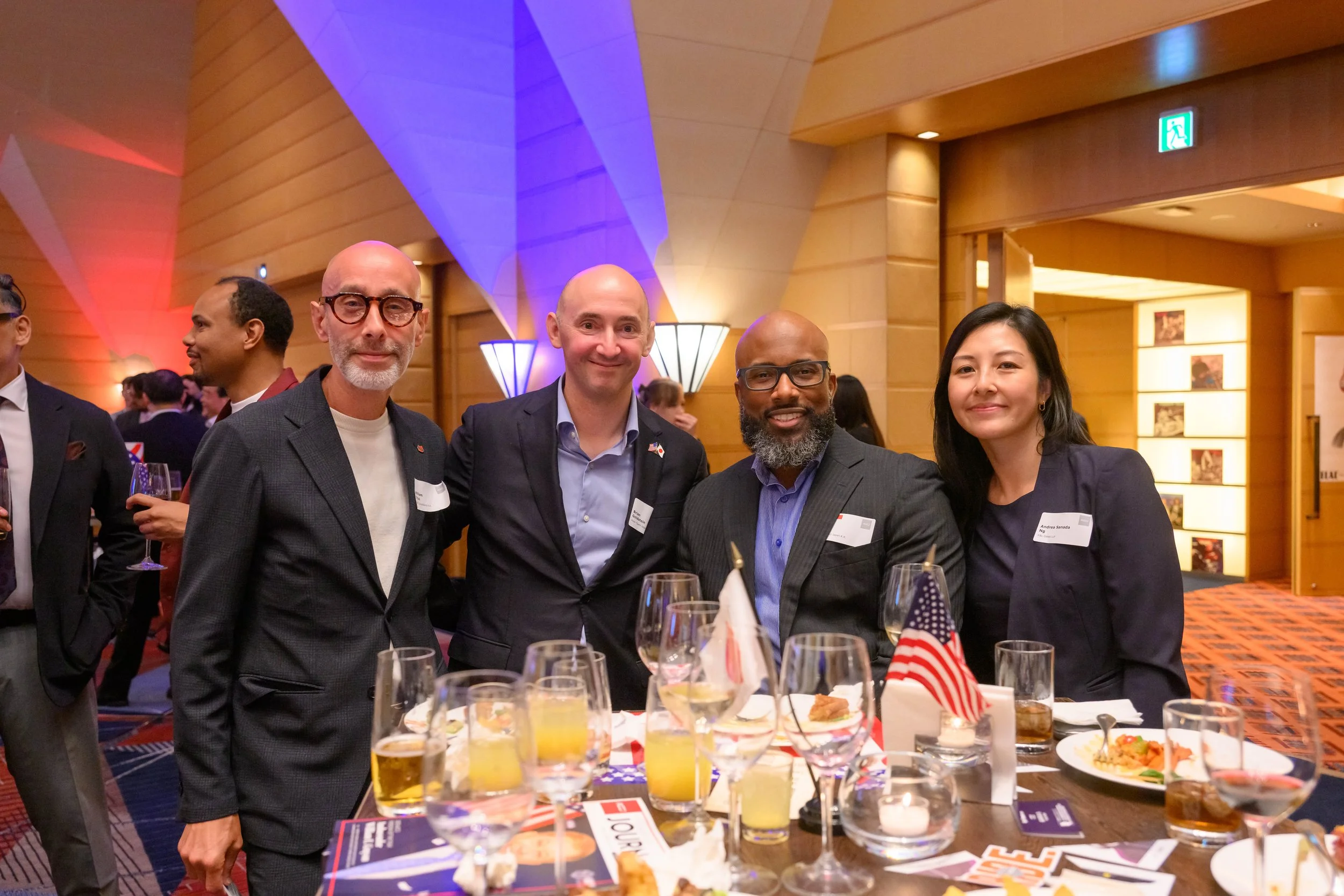
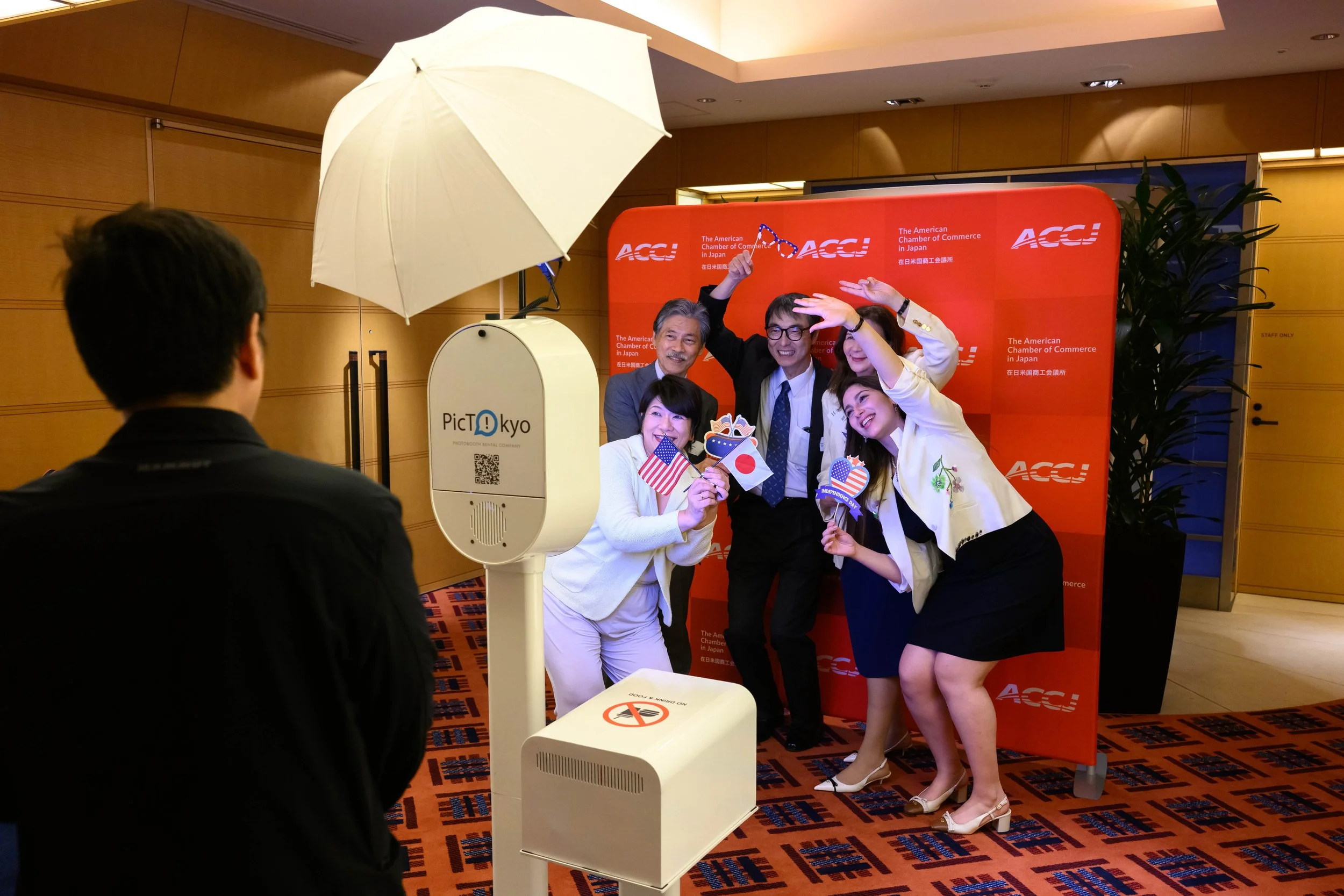
The American Chamber of Commerce in Japan (ACCJ) hosted its annual Independence Day celebration on July 1 at Tokyo American Club to mark a huge milestone: the United States’ 250th birthday.
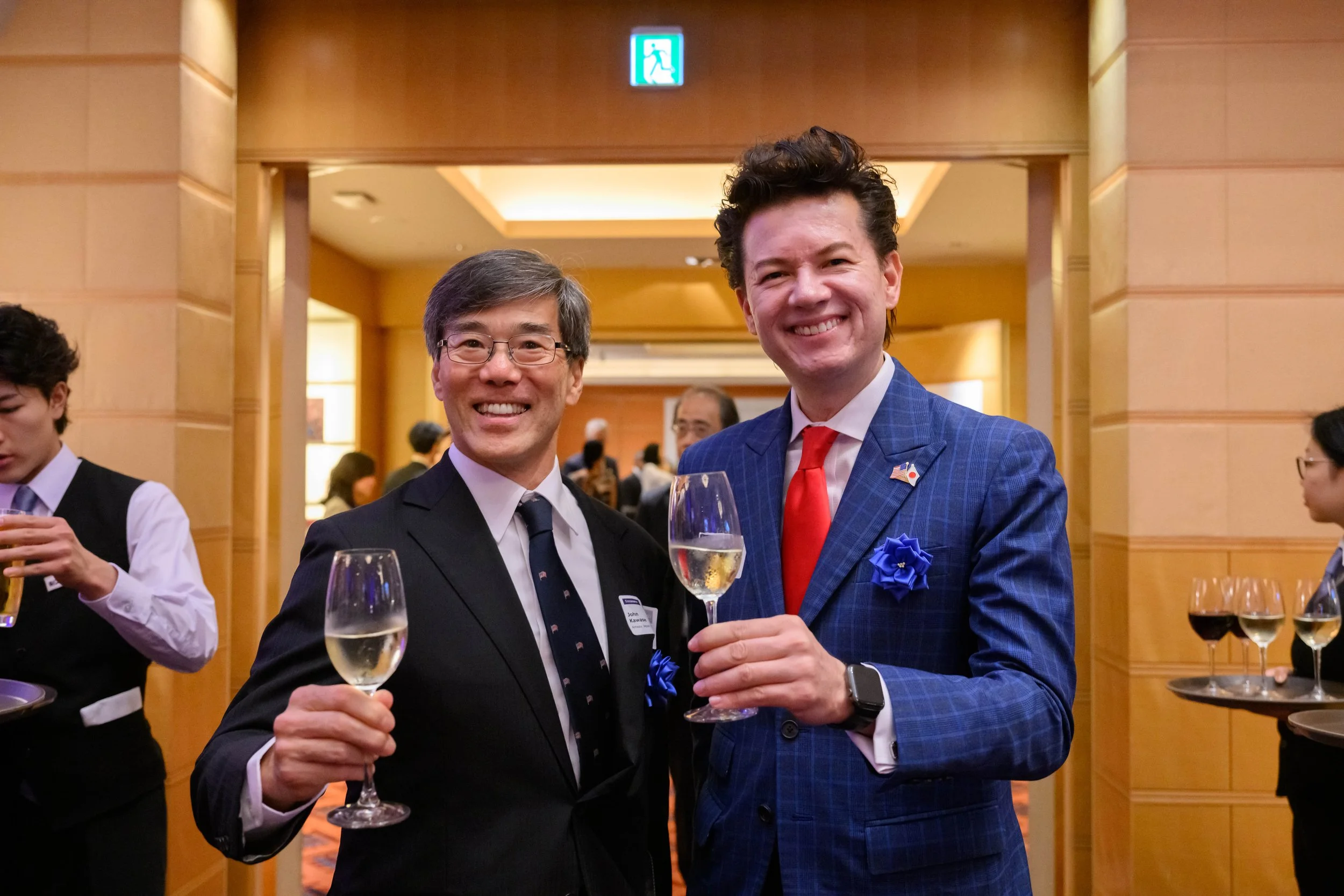
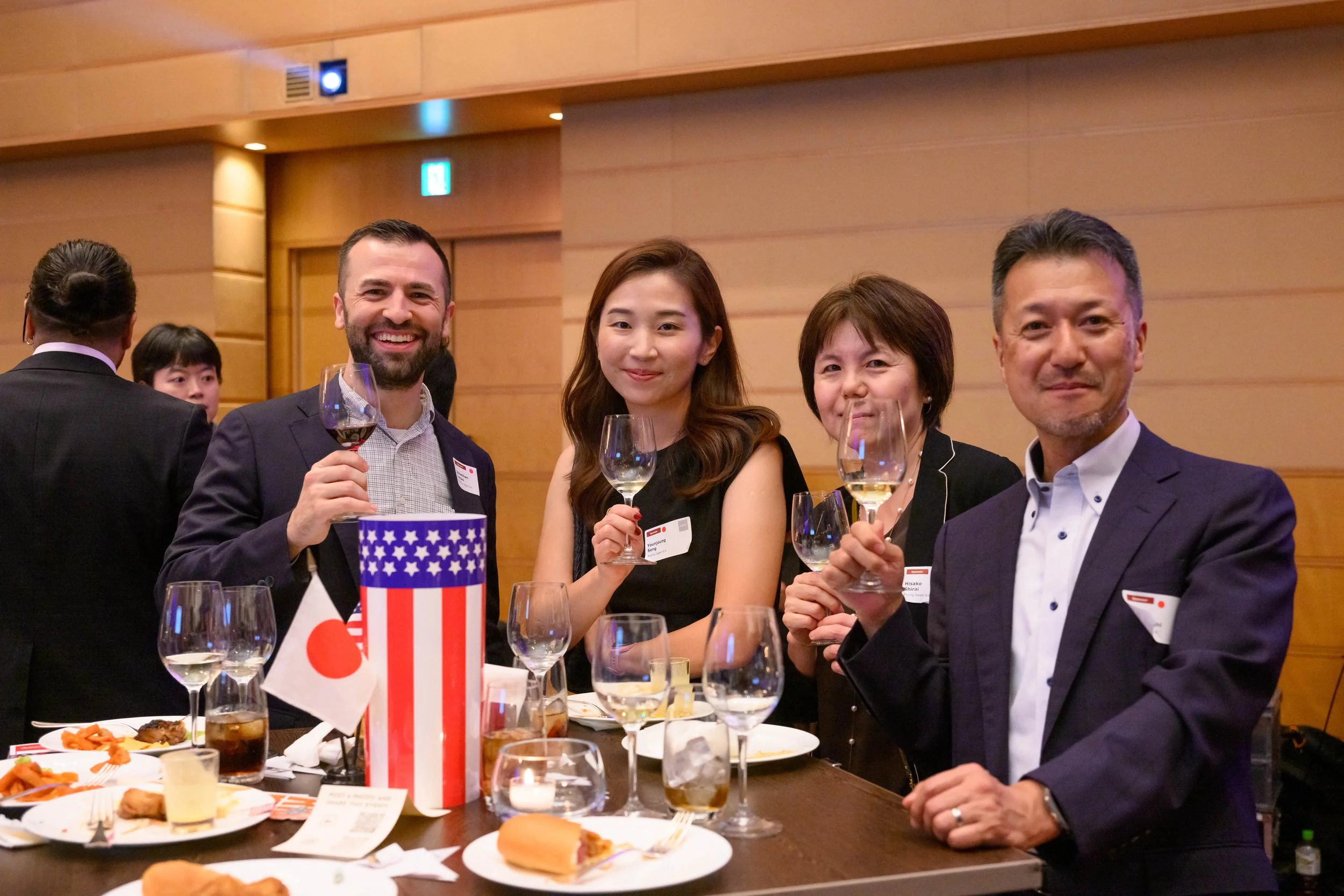
More than 430 members, guests, and partners from the US and Japanese governments gathered for a night of delicious food, inspiring music, and meaningful networking.
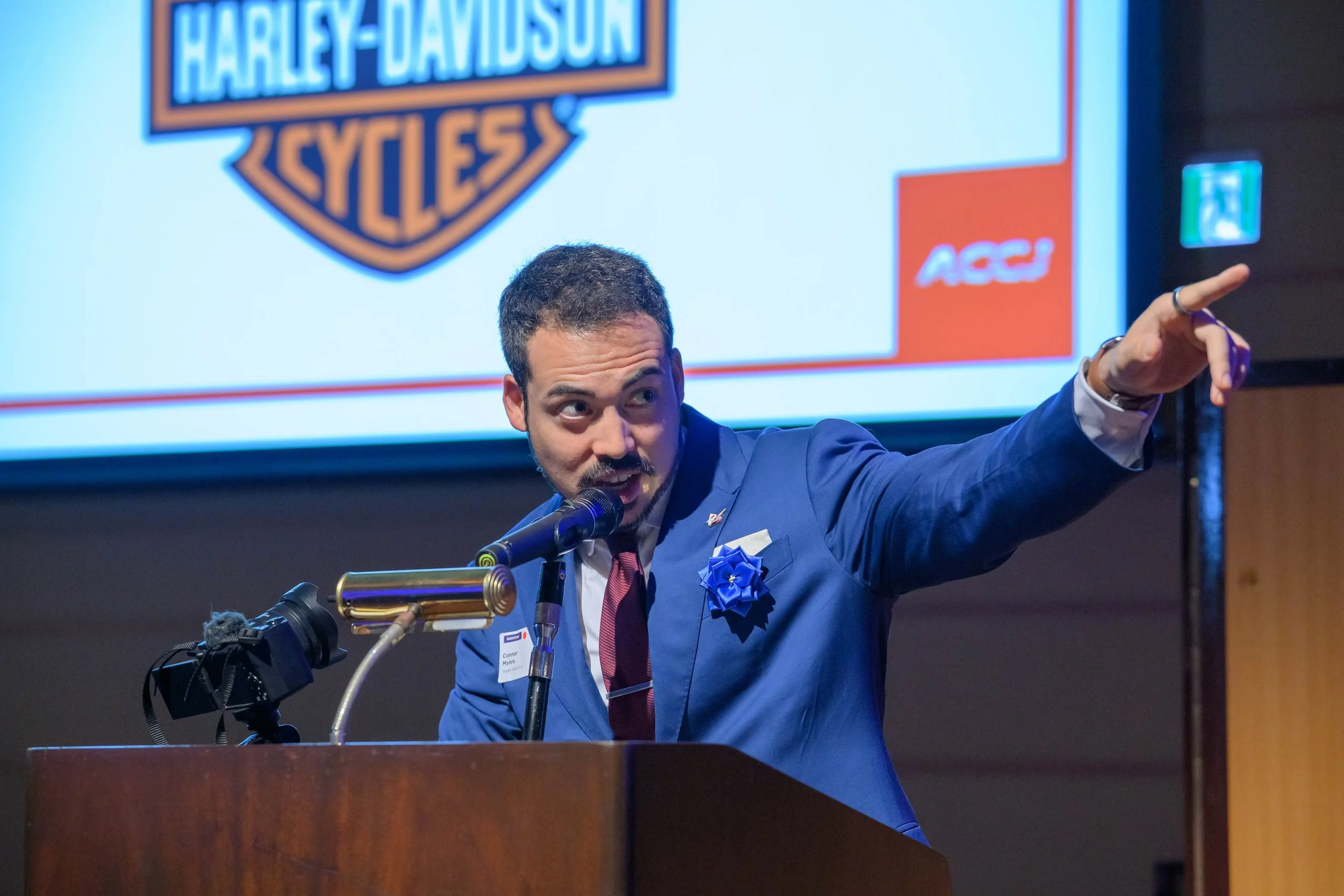
After emcee Connor Myers’s opening remarks and Japanese American recording artist Aisha’s rousing rendition of “The Star-Spangled Banner,” ACCJ President Eric John welcomed everyone to the special evening.
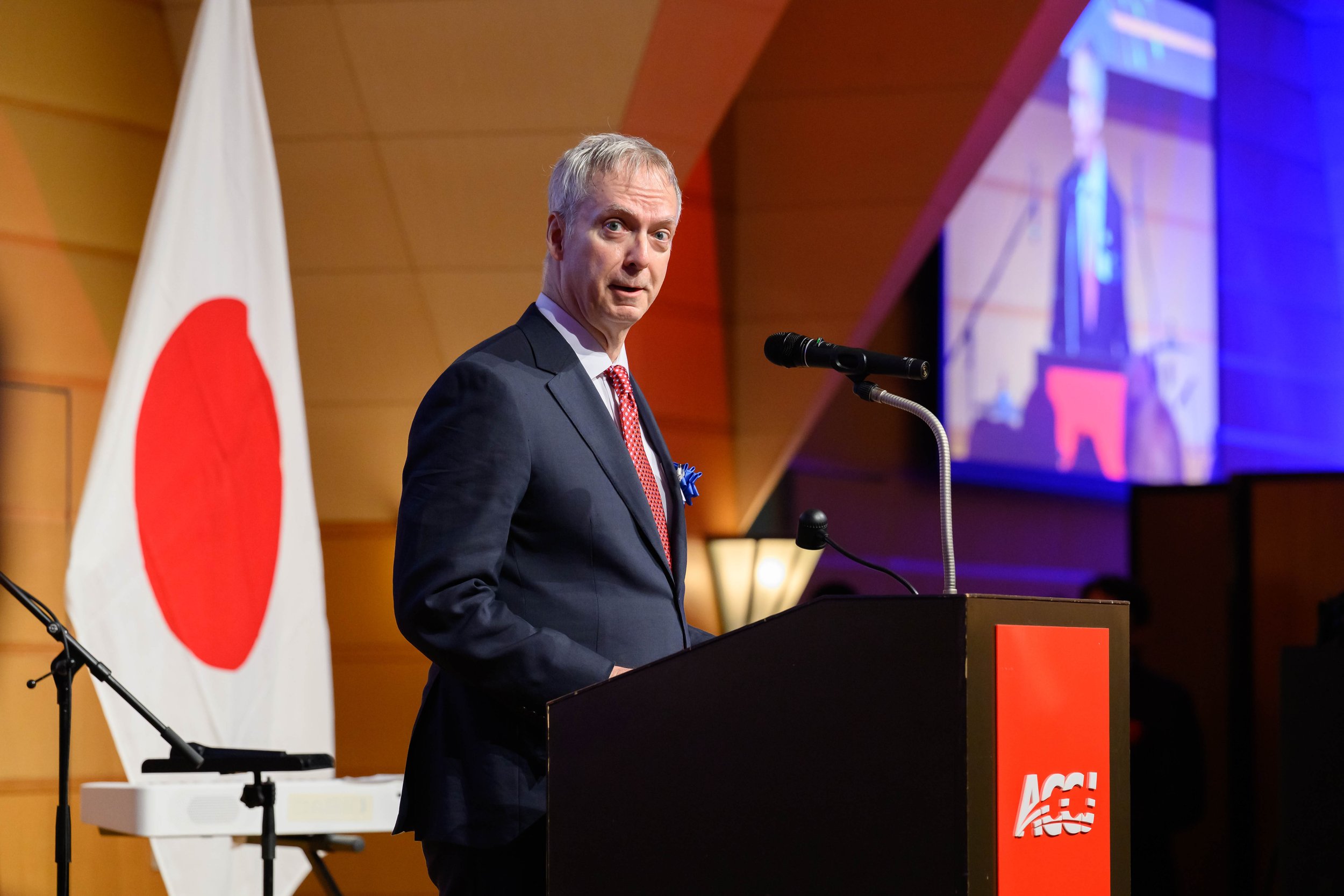
“We are fortunate to be living and working in Japan in a period where US–Japan bilateral ties are the strongest they have ever been, and our relationship is also the most important alliance in the world,” said John, a retired US ambassador. “At the same time, our business ties are the healthiest they have been. In part, that is due to the tireless work of the US embassy in collaborating with our chamber and advocating on behalf of our incredible member companies.”
He also noted that the power of the ACCJ comes from its 3,000-plus members, including those who volunteer their time to serve on the Board of Governors and as committee leaders. “Our success is entirely due to the dedication of all of you. Now is the time to rethink and act together on what the business community can do to shape our shared future and strengthen our resilience.”
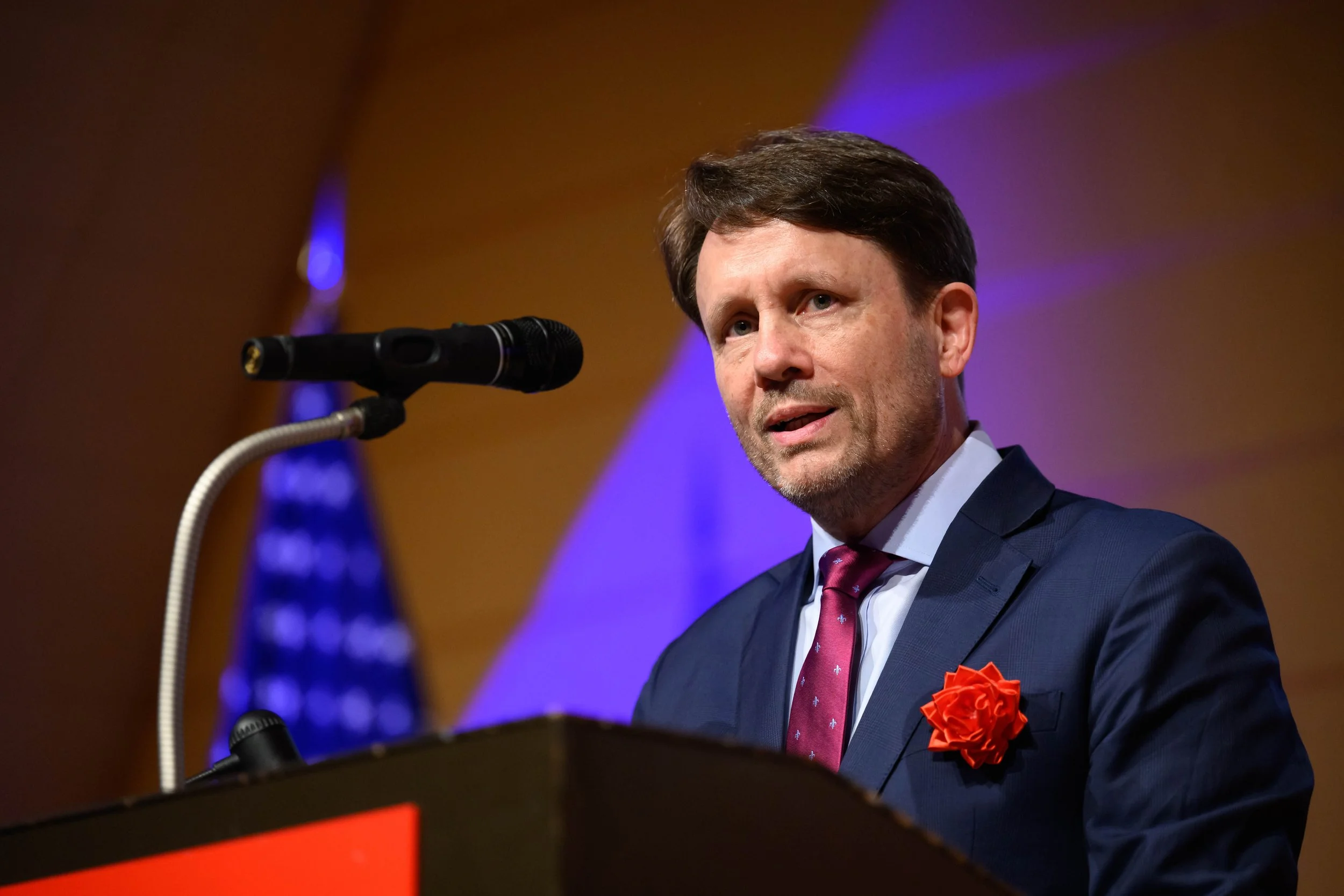
Minister-Counselor John Breidenstine from the commercial affairs section of the US Embassy, Tokyo gave the Independence Day address.
“Two hundred and fifty years ago, a group of extraordinarily troublesome men gathered in Philadelphia and did something the world had never seen before. They argued, they debated, they exasperated one another, and in the end, they changed history,” he said. “America has never been a finished project. It is an ongoing argument, a continuing experiment, a promise being renewed in every generation. Tonight, in the company of friends, allies, and partners, both American and Japanese, we renew it again.”
Breidenstine then raised a glass and led everyone in a celebratory kampai, toasting not only America’s birthday but the bilateral partnerships, friendships, and collaborations represented in the room.
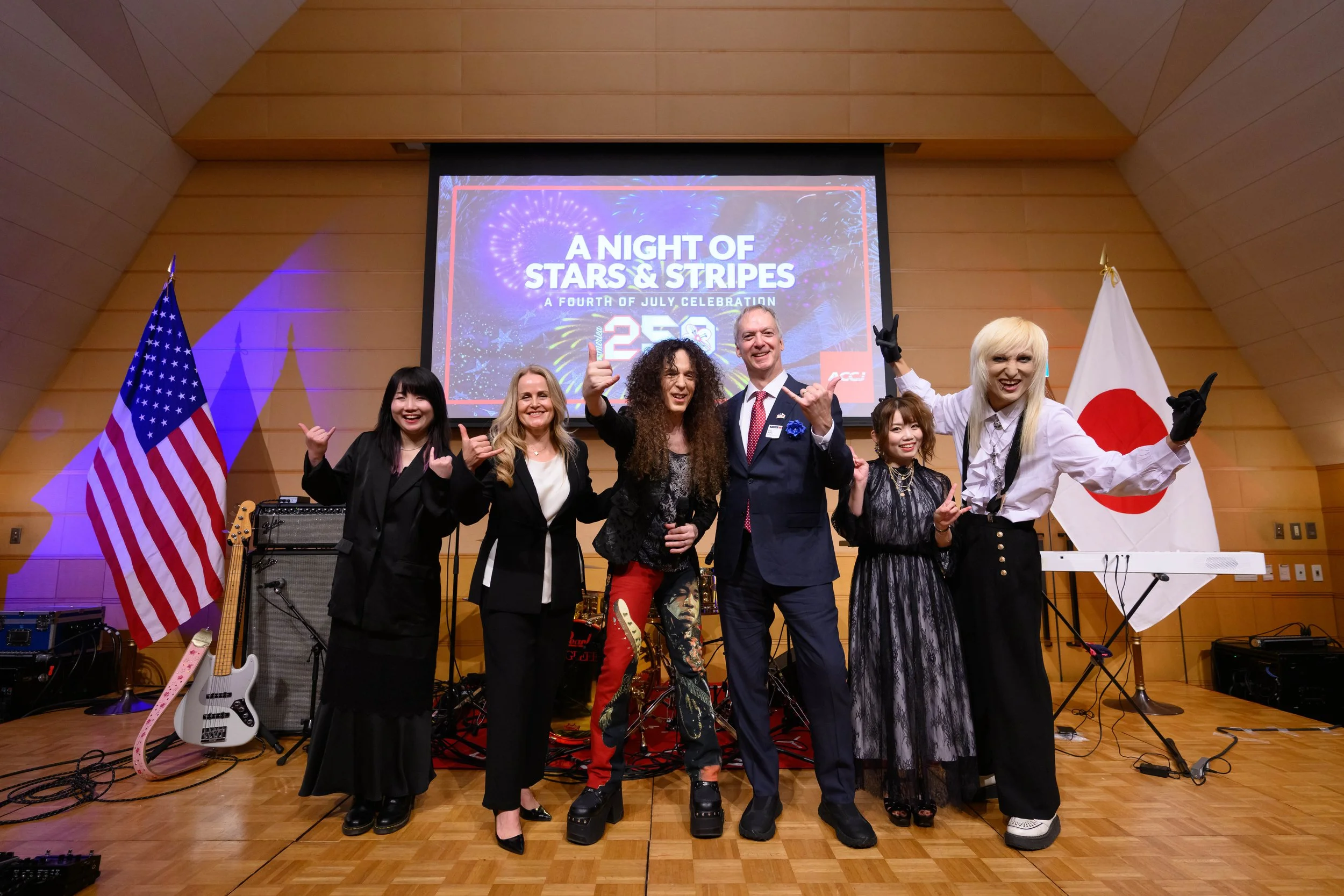
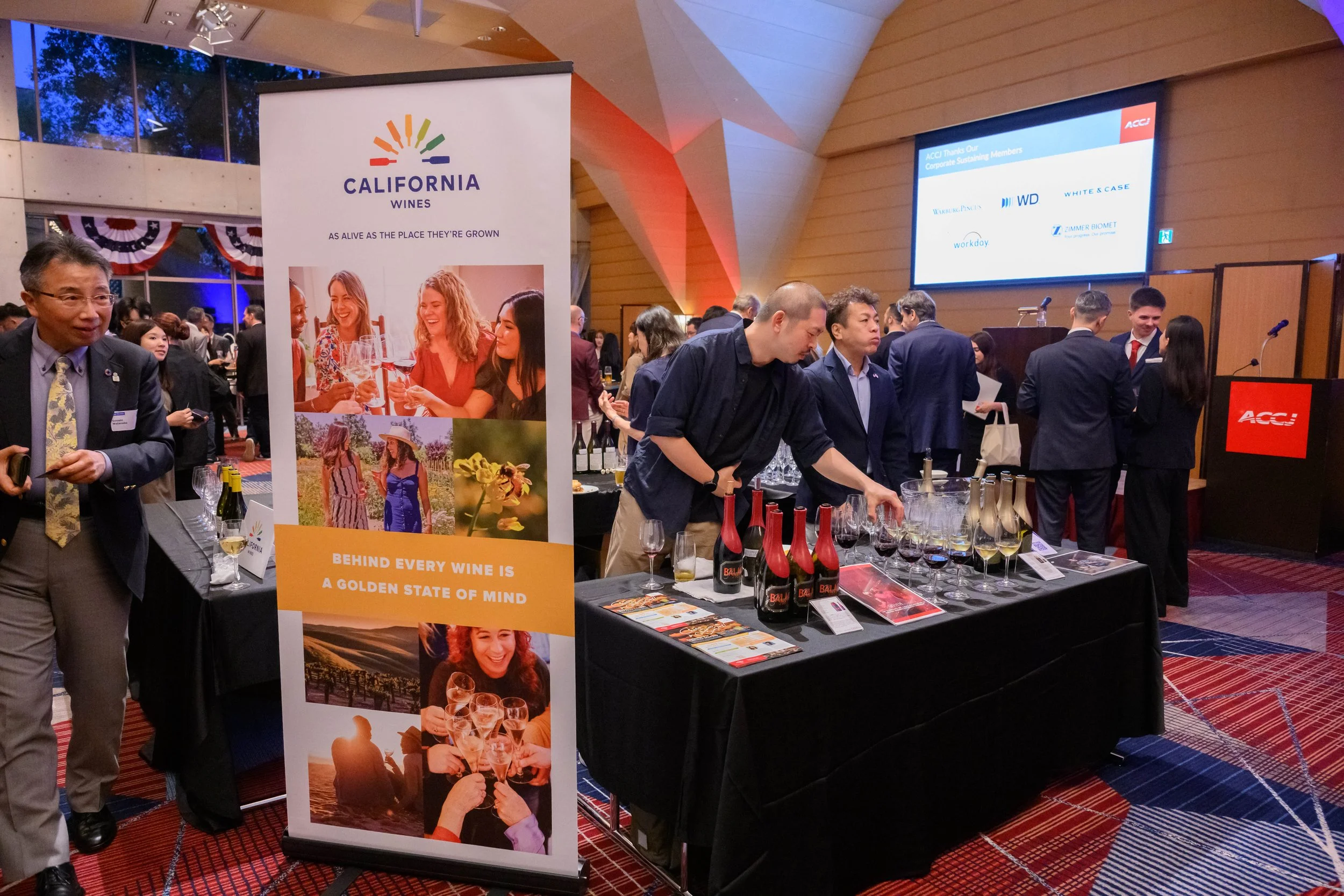
As food service opened up with a classic American barbecue-inspired menu paired with wine from the California Wine Institute, Fender Japan Director of Regional Sales Yasuhiko Yajima introduced the night’s headline performer, legendary American guitarist Marty Friedman. Well known as the lead guitarist of American thrash metal band Megadeth, Friedman moved to Japan in 2004 to pursue his love of the country, language, and a desire to perform with Japanese musicians. He was named an ambassador of Japanese heritage by the Agency for Cultural Affairs in 2016.
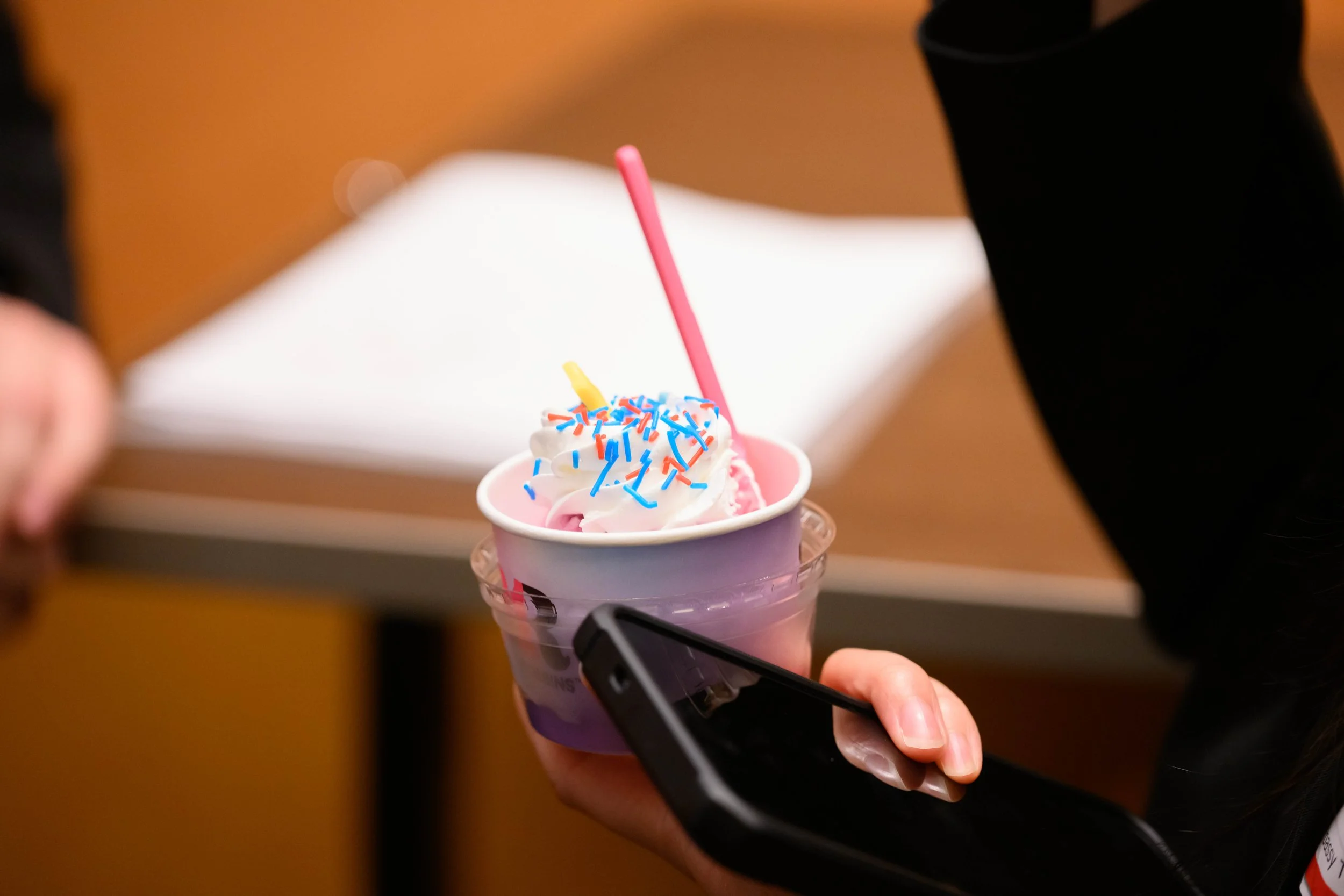
Following a spectacular performance by Friedman and his band, members and guests continued networking in the New York Ballroom and across the way in the RGA Music and Dessert Lounge, where Baskin-Robbins served up a special Fourth of July-themed ice cream sundae.
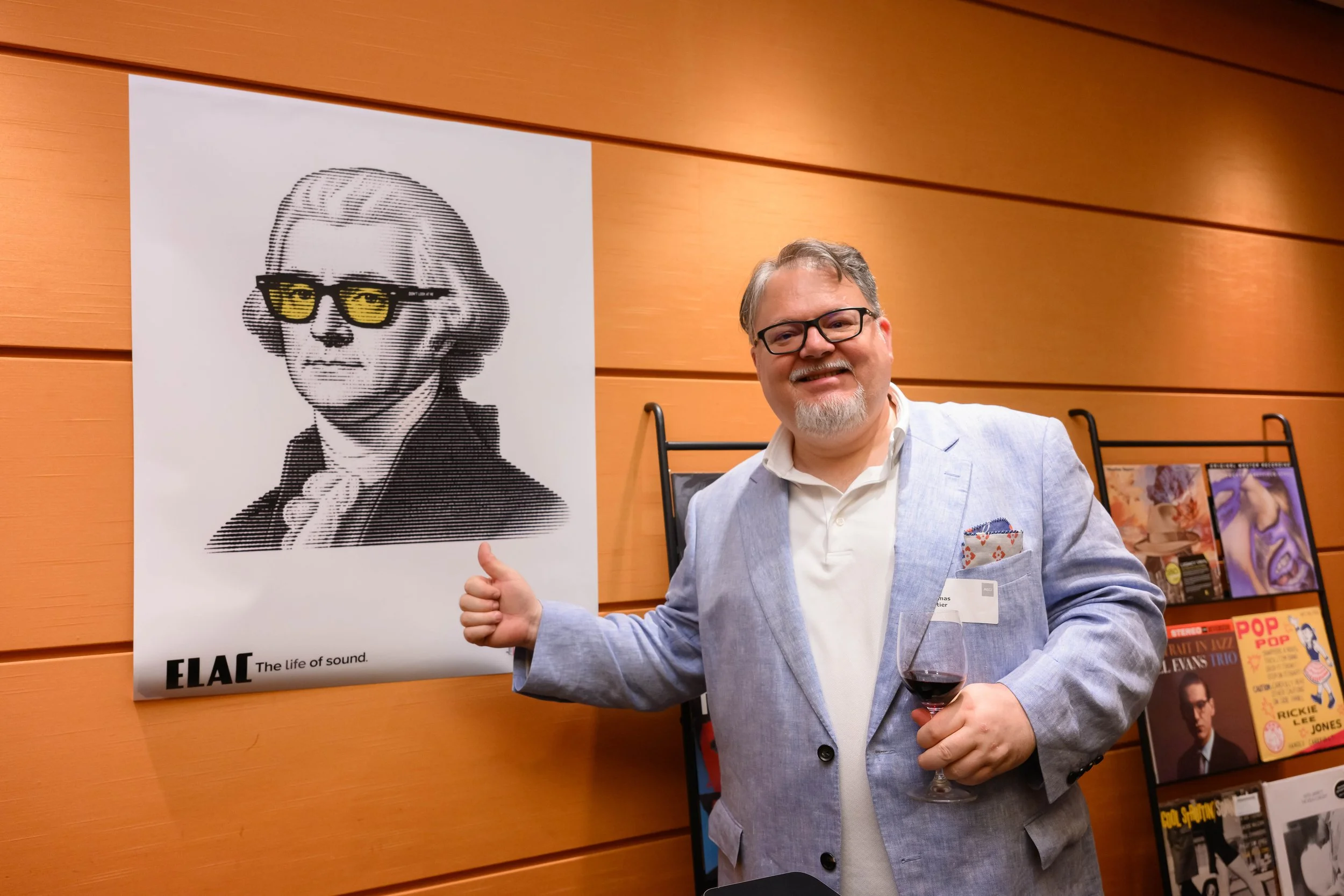
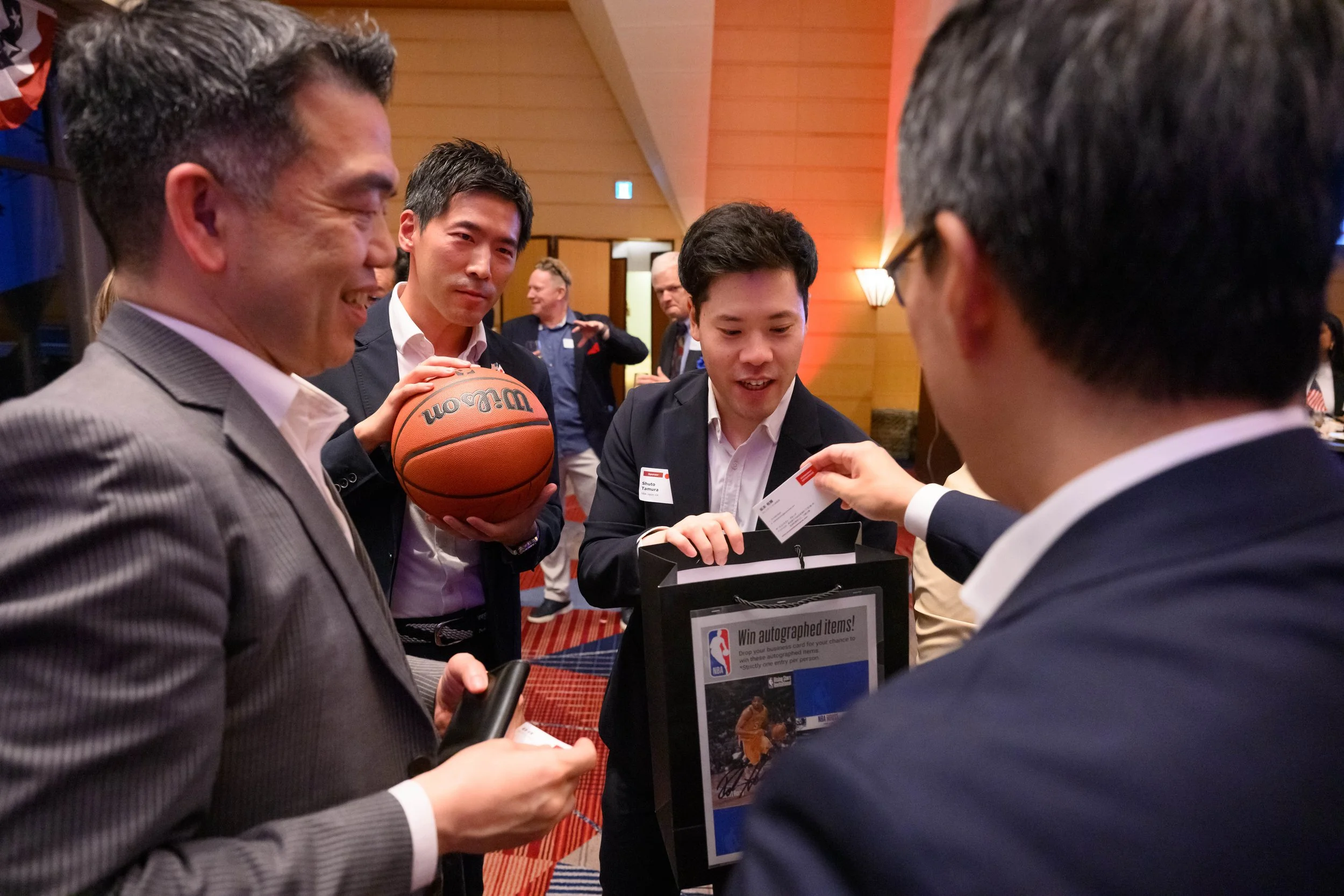
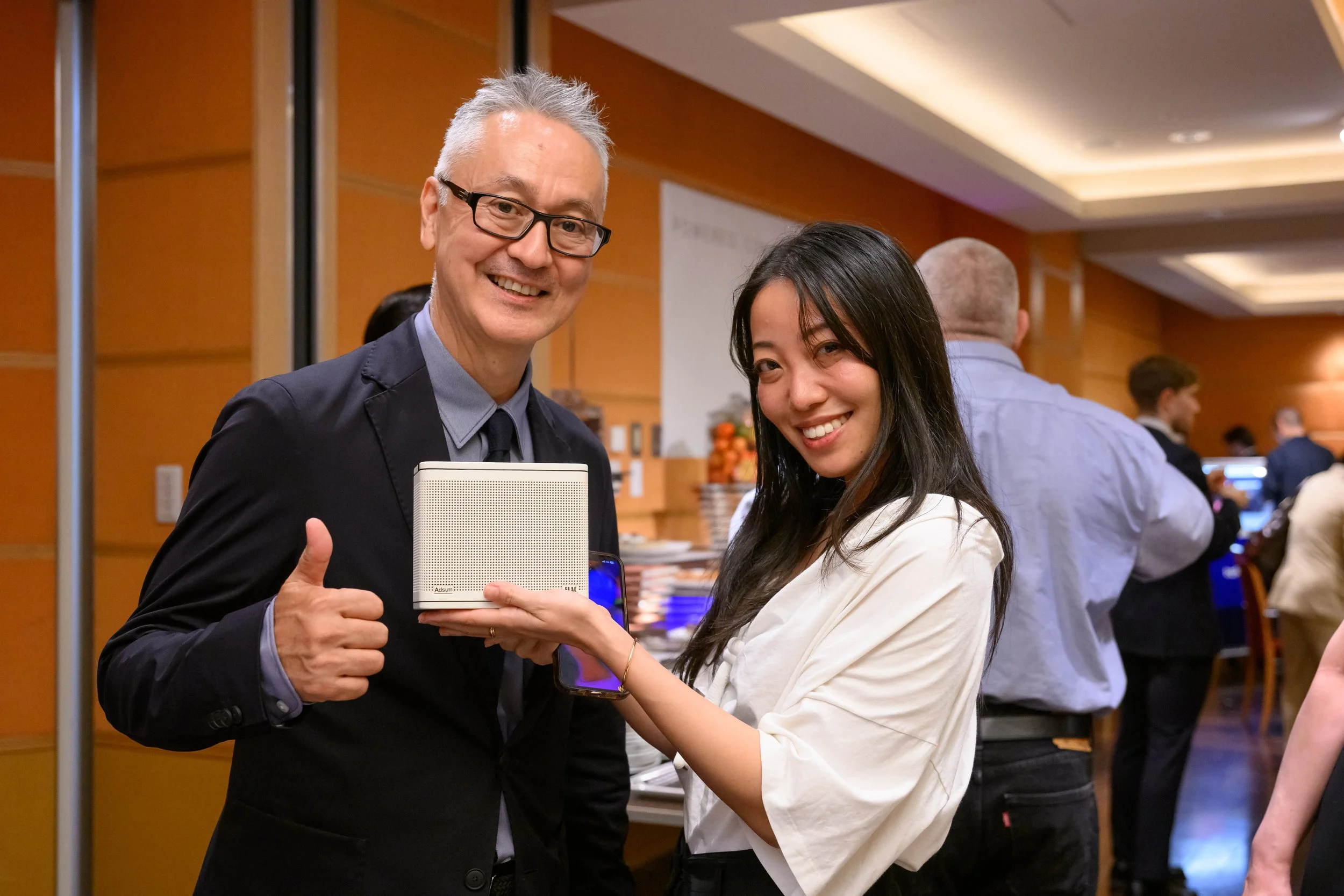
Also on display in the lounge were limited-edition commemorative Bluetooth speakers created by event partner ELAC exclusively for the ACCJ. Inspired by 250 years of American innovation, creativity, and entrepreneurial spirit and limited to 100 units, the collectible, which combines bold sound, timeless design, and a touch of patriotic flair, was part of the evening’s lucky draw giveaway.
Made possible by the generous support of Aflac, Boeing Japan, and Harley-Davidson, which contributed at the highest level as Stars and Stripes sponsors, along with Liberty Bell sponsors Uber for Business and the National Basketball Association, as well as Red, White, and Blue sponsors Seibu Prince Hotels and Resorts, the evening was a fitting tribute to the enduring nature not only of the United States, but also to the dedication of the ACCJ and its members to ensuring that the country’s relationship with Japan continues to flourish for centuries to come.







Strategic Dialogue
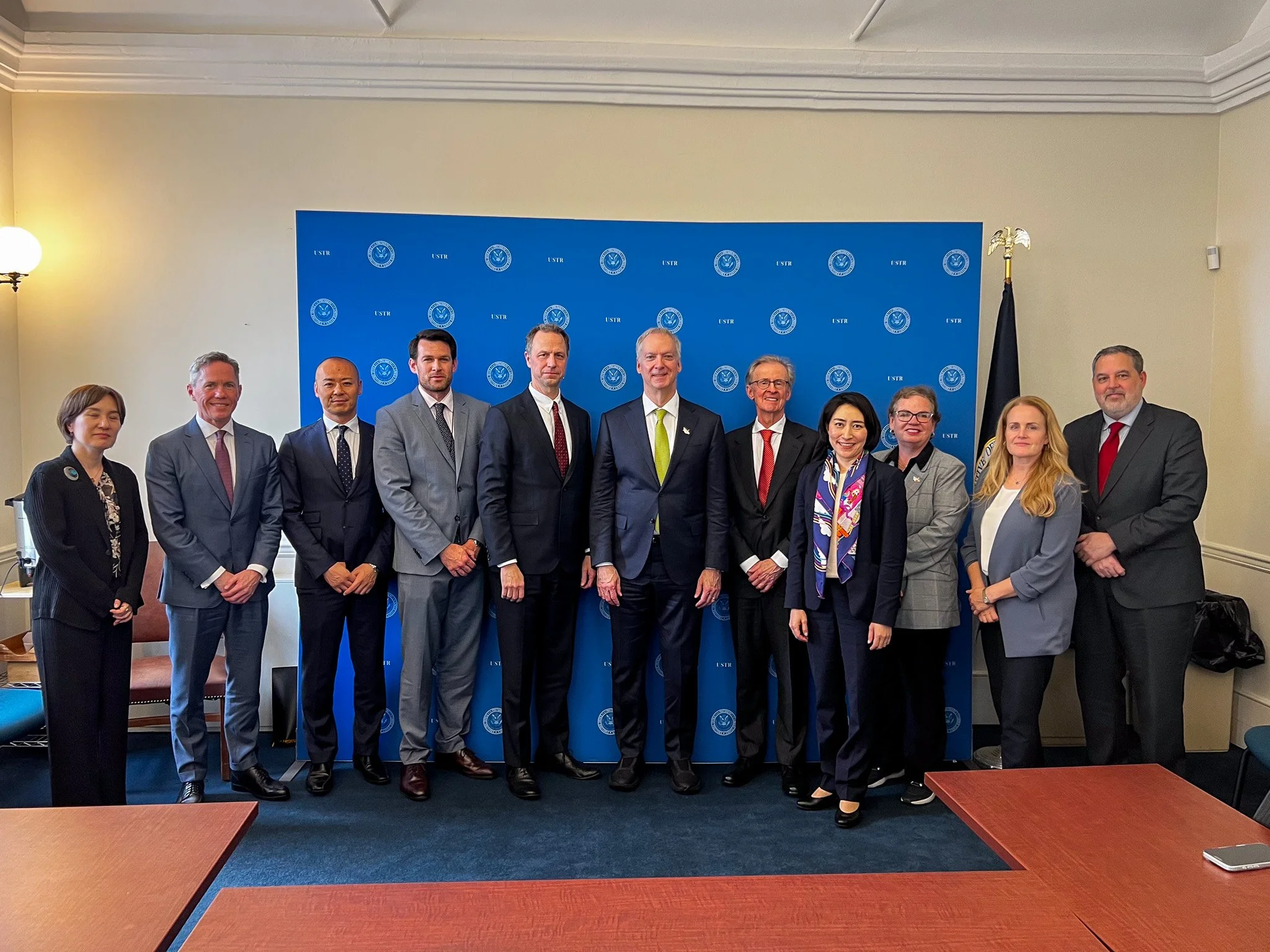
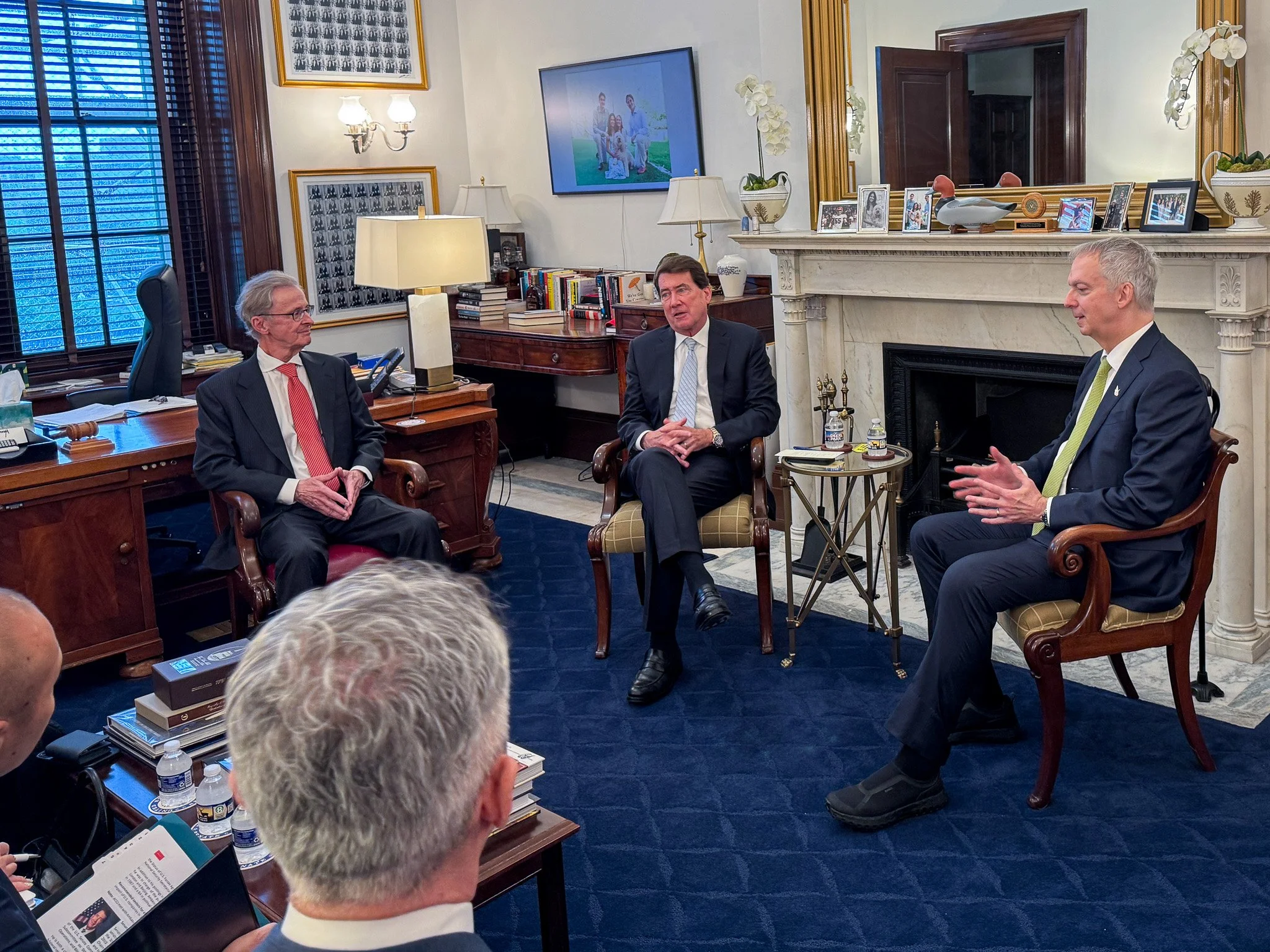
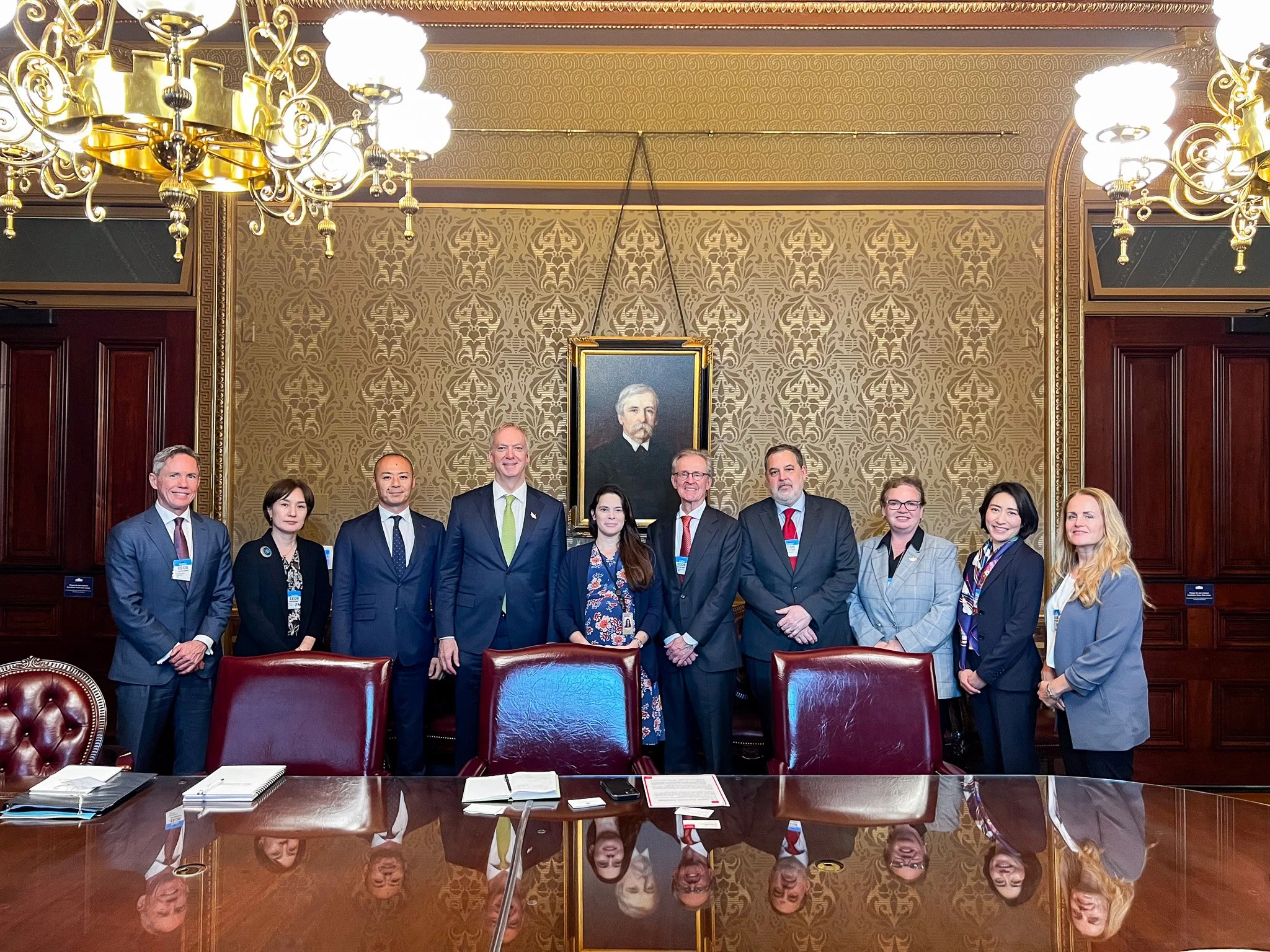
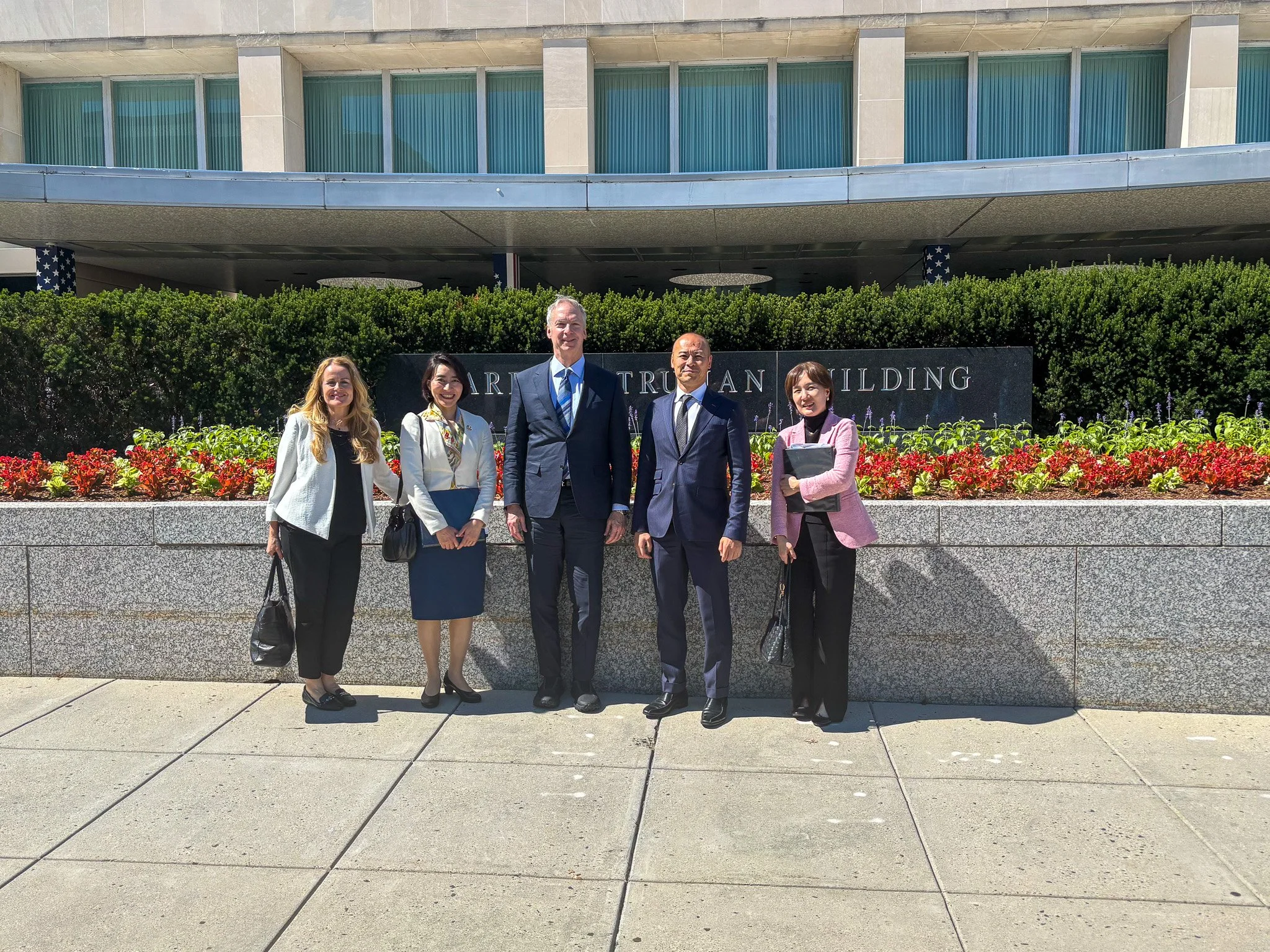
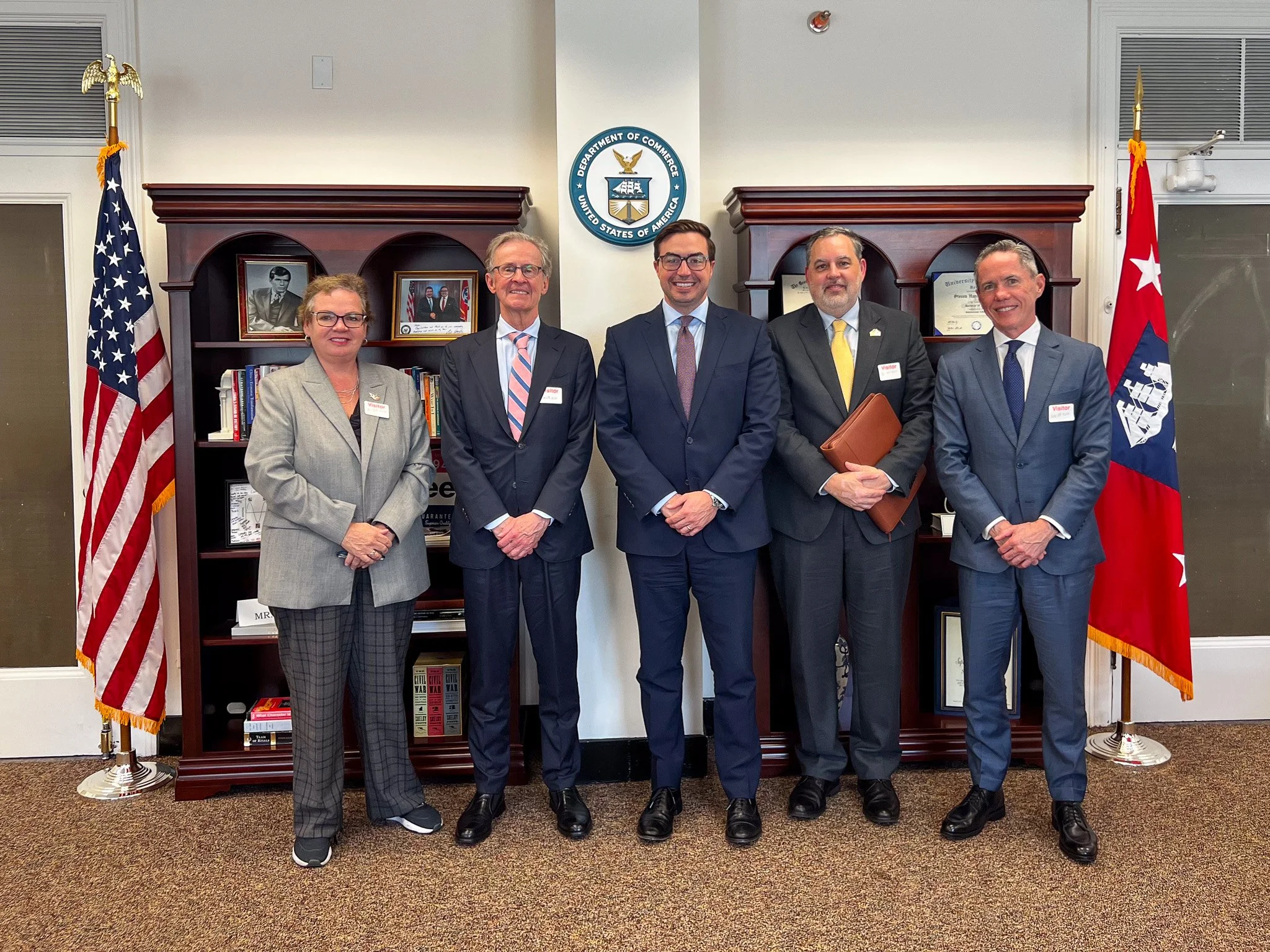
ACCJ leaders visited Washington in June to discuss security, economic, and strategic partnerships.
ACCJ leaders visit Washington to discuss security, economic ties, and shared challenges.
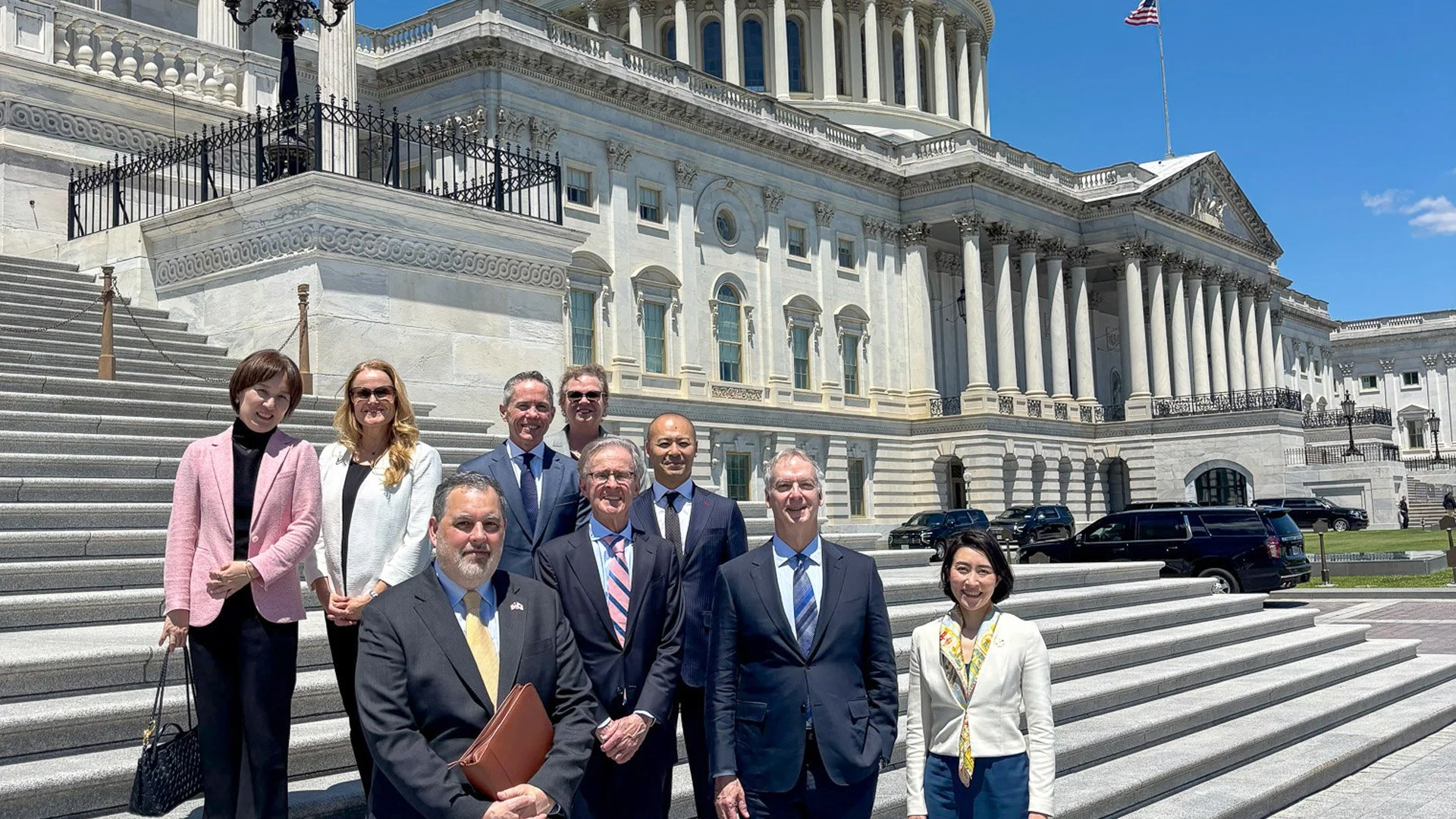
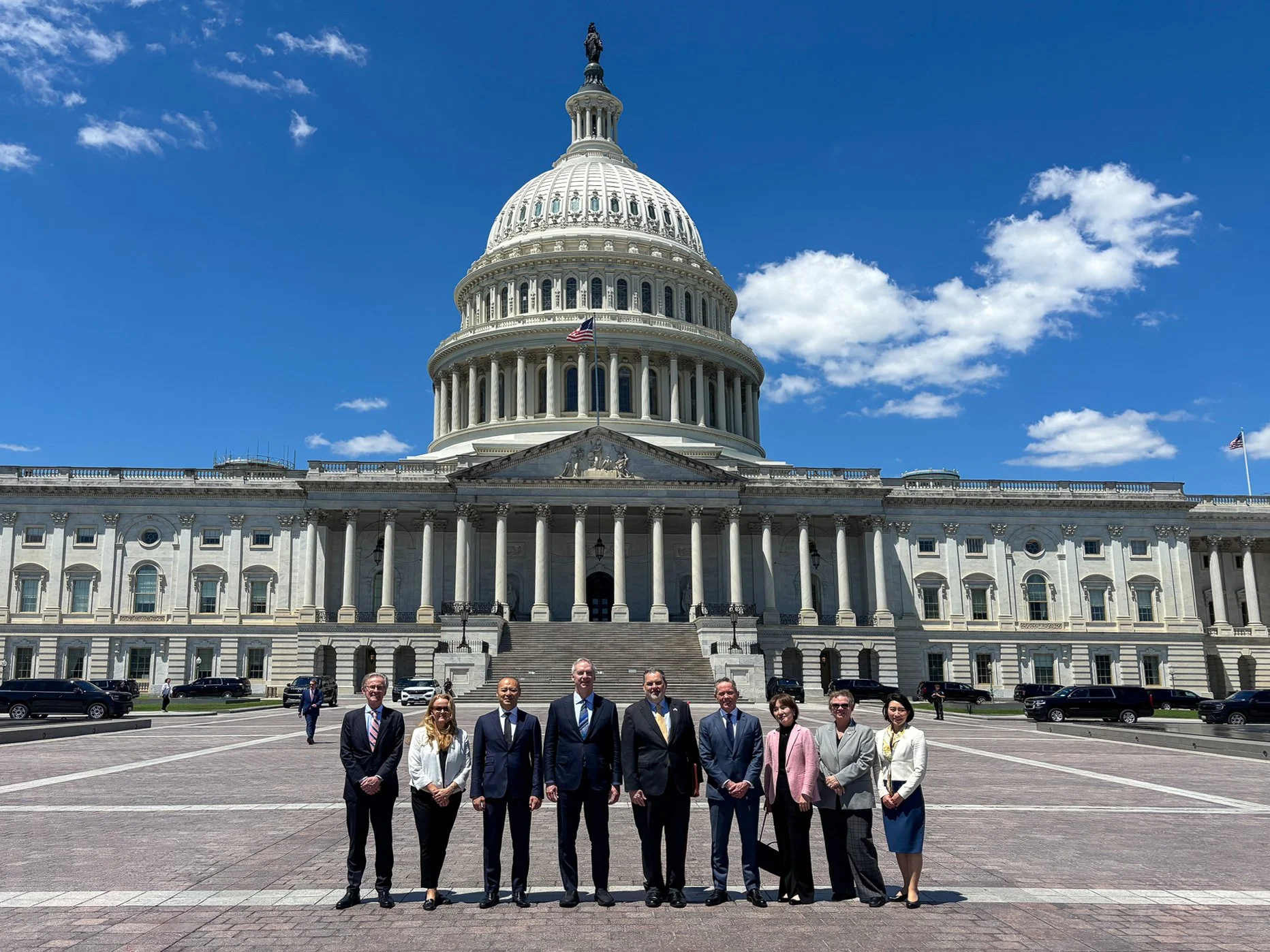
The 2026 ACCJ DC Doorknock delegates gather in front of the US Capitol.
On June 23 and 24, a delegation of nine executives representing the American Chamber of Commerce in Japan (ACCJ) visited Washington, DC, for the chamber’s annual DC Doorknock. The trip is an important part of the ACCJ’s advocacy efforts and strengthens US–Japan relations.
ACCJ President Eric John was joined by Chairman Christopher LaFleur, Executive Director Laura Younger, members of the Board of Governors, and Japan-based chief executives and country heads of US corporations.
As the voice of global business in Japan, the ACCJ provided strategic recommendations to address critical issues impacting US companies and outlined measures to expand the strong US–Japan economic alliance.
The delegation met with members of Congress and the administration for discussions on a range of topics, including the bilateral trade agreement, Japan’s $550 billion investment pledge, and ways to shape trade and economic policy outcomes in both the United States and Japan.
While welcoming progress under the 2025 US–Japan trade agreements to expand market access, the delegation emphasized that persistent nontariff barriers continue
to impede growth and innovation. The chamber reaffirmed its support for reducing these barriers, boosting investment, and enhancing regulatory transparency to strengthen bilateral trade and create shared economic benefits.
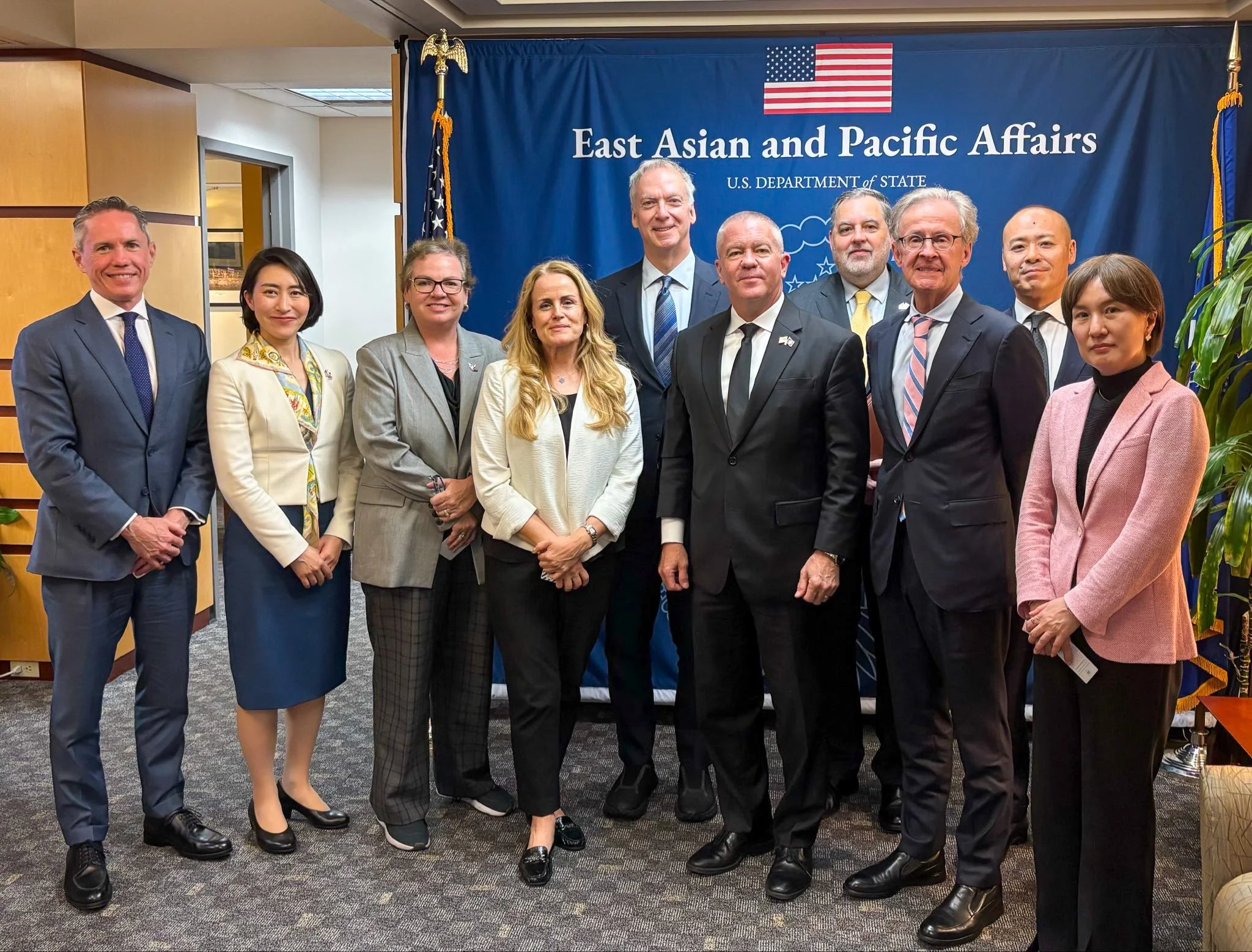
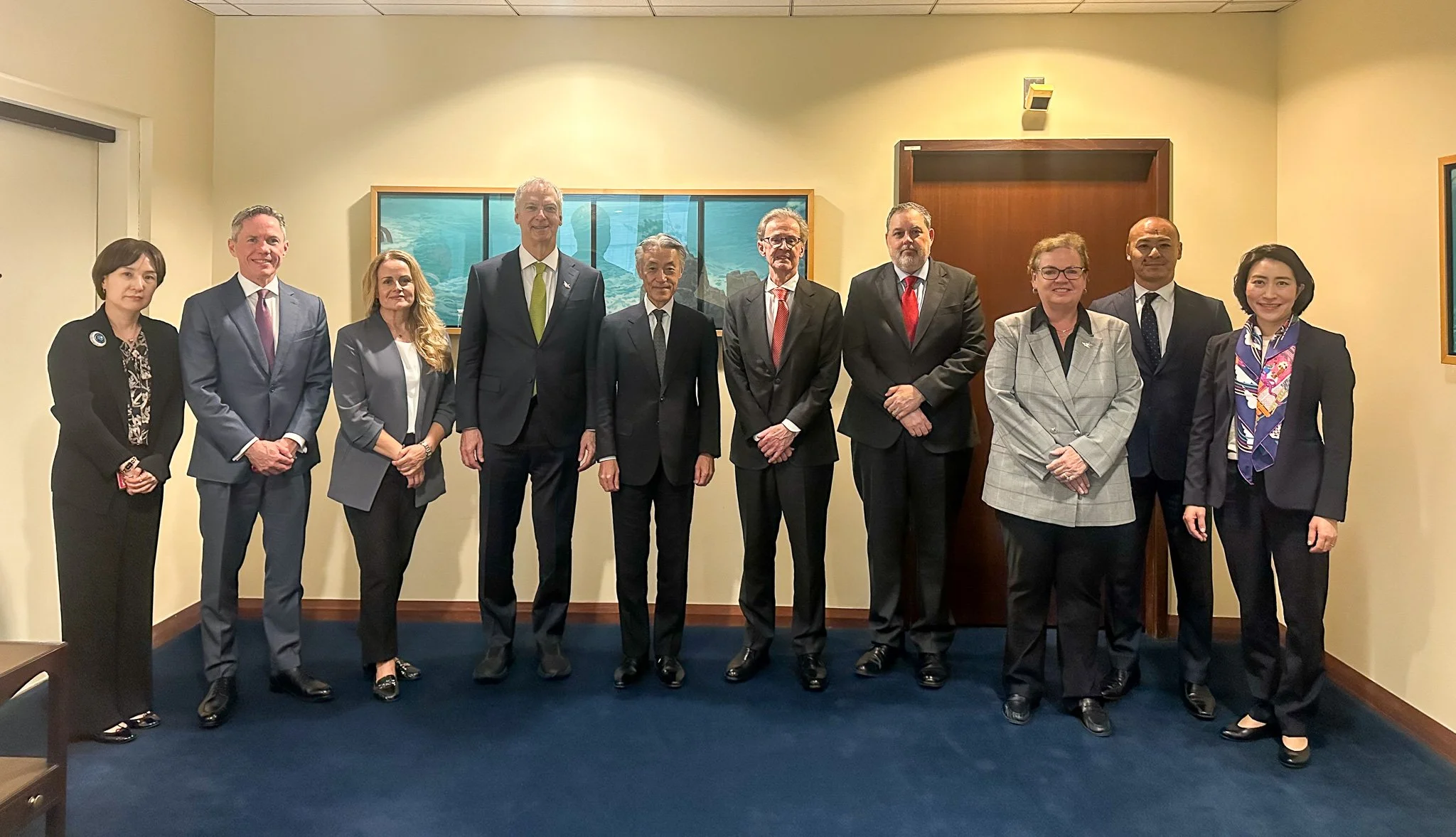
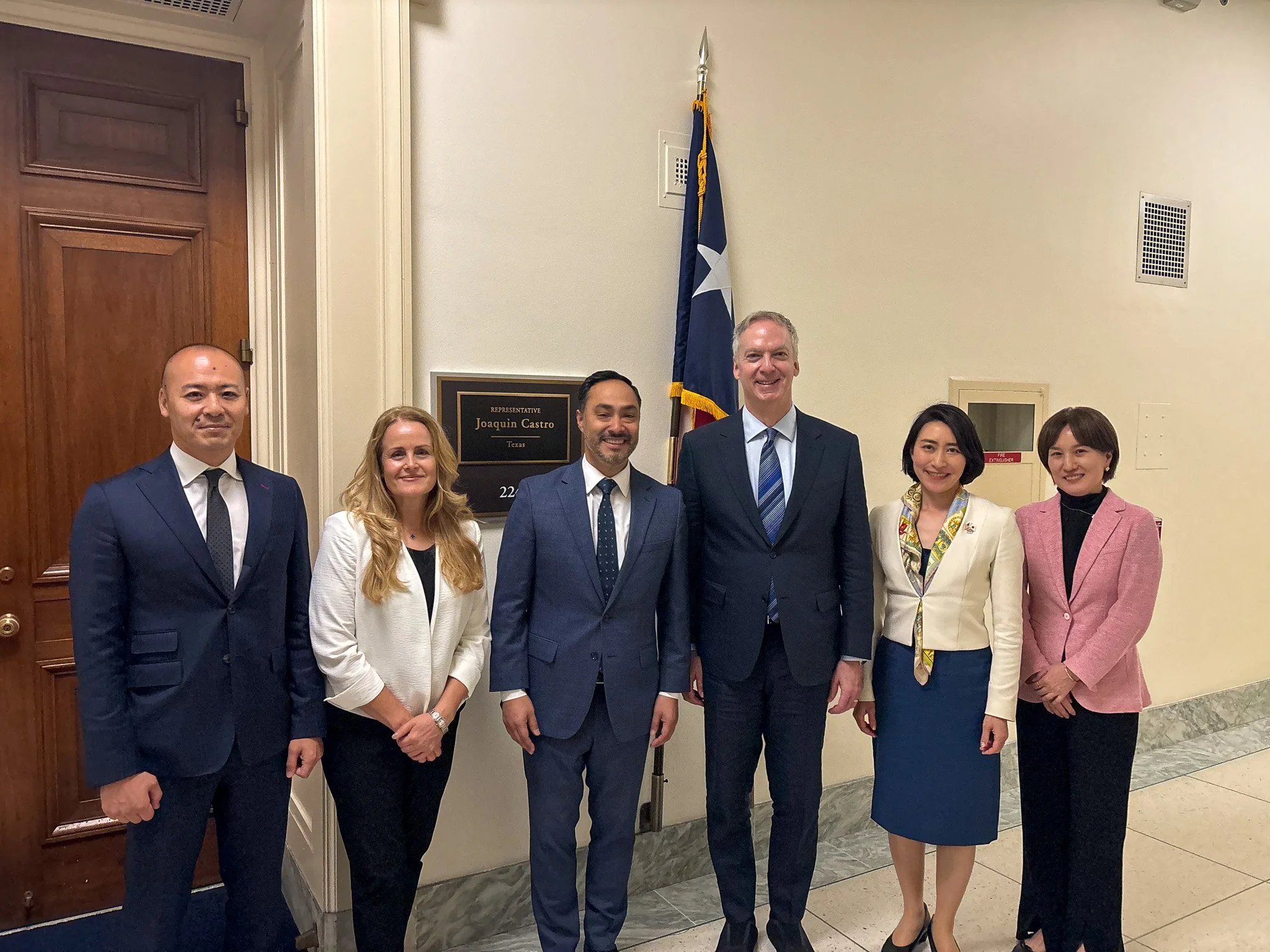
Over two days they met with Senators Bill Hagerty and Tammy Duckworth, Representative Joaquin Castro, and officials from key US government agencies, including the Department of Commerce, the Office of the US Trade Representative, the Department of State, and others.
The ACCJ’s recommendations target six critical sectors shaping the US–Japan economic alliance: healthcare, digital economy, aerospace and defense, financial services, energy, and automotive. The ACCJ urges both governments to address remaining trade barriers in these industries to strengthen a bilateral partnership that supported $324 billion in goods and services traded in 2025.
“This year’s DC Doorknock highlighted the continued strength and momentum of the US–Japan economic partnership and provided an important opportunity for the ACCJ to advance key priorities across our advocacy focus sectors,” said John. “We were encouraged by the strong recognition throughout the US government of the strategic importance of the US–Japan relationship and by the continued progress being made to deepen investment, strengthen economic ties, and address shared challenges.”
For more about the meetings, read the official press release in English or Japanese.

Creative Cures
Twelve innovators share their solutions at the ACCJ’s Healthcare x Digital Pitch Day Event.
Twelve innovators share their solutions at the ACCJ’s Healthcare x Digital Pitch Day Event.
Startups convened once again in Osaka on February 13 for a chance to get Japan’s healthcare research to the people who need it through the American Chamber of Commerce in Japan (ACCJ) Healthcare x Digital (HxD) initiative. Now in its sixth year, the program spearheaded by the ACCJ Kansai chapter connects startups, academics, corporations, and government to develop ideas for community healthcare and individual patient care.
The 2026 HxD Pitch Event took place at Osaka’s Nakanoshima Qross and featured a panel discussion followed by two rounds of pitches from healthcare startups competing for five awards.
The event was cohosted by Nakanoshima Qross and supported by the US Commercial Service, part of the US Consulate General Osaka-Kobe. The top prize was a complimentary trip to the 2026 SelectUSA Investment Summit, a US Department of Commerce program that has generated more than $250 billion in new investment to date. This year’s summit ran May 3–6 in National Harbor, Maryland.
“The startups pitching today represent the best of Japan’s healthcare innovation,” Consul General Richard N. Larsen told the room at the opening of the event. “Your solutions address real challenges, and your willingness to compete on this stage demonstrates the entrepreneurial spirit driving progress in this sector.”
Hirokazu Shimoda, senior director at the Japan Agency for Medical Research and Development (AMED), previously worked at the Ministry of Economy, Trade and Industry and the Japan External Trade Organization’s San Francisco office. Leading the pre-event roundtable, he said that working groups are now operating across 17 fields to determine where Japan should concentrate its resources.
At the J.P. Morgan Healthcare Conference earlier this year, US investors kept asking him the same question: how AMED’s own subsidies could be used to coinvest in Japanese companies. He also pointed to Japan’s supporting industries—manufacturing, materials, robotics—as a real strength once paired with artificial intelligence (AI) and Japanese data, later noting that AMED’s funding is now extending to top-tier venture capital as well.
Japanese Healthcare: A Future Up for Debate
A panel discussion, moderated by Zimmer Biomet Director of Government Affairs Makoto Kawai, brought together Yasuhiko Iida, then of ACCJ President’s Circle member Eli Lilly Japan K.K., Dr. Okechi Oduori of Nakanoshima Qross, and Marisa Watanabe of the University of New South Wales, who joined remotely from Australia.
The conversation fell within HxD’s three standing focus areas: overcoming Japan’s urban–rural healthcare divide, reimagining the hospital of the future, and empowering patients to own their healthcare. As the discussion progressed, the topic turned to whether Japanese healthcare technology has to prove itself abroad before Japan’s own system will accept it.
Japan has strong basic research, Oduori said, but it isn’t as “gifted when it comes to social implementation,” which he described as getting high-quality research to the patients themselves.
Watanabe described a validation trap: Japanese corporate partners want proof of value before investing in technologies that first of all need investment to be tested.
“A lot of technologies worldwide are being lost because we just can’t get over that initial hurdle,” she said. One advantage, she noted, is already available: Australia’s approval process aligns closely with that of the US Food and Drug Administration (FDA), giving startups a faster on-ramp than the US process alone.
Japan’s acceptable margin of risk, Kawai argued, is effectively zero, which is why he told startups to prove themselves in other markets first.
Watanabe raised a second fix of her own for lower-risk categories. “[We need] a sandbox system where we can actually try to speed up approval processes for certain types of technologies that are less [of a] health risk,” she said, as an example pointing to fall-prevention technology that could be validated safely, given available countermeasures if something goes wrong, and processed faster as a result.
Oduori differed slightly, arguing that startups should work with regulators from day one. “There is always an opportunity that we can work closely with the regulatory authorities at the very beginning, incorporating them as you do your studies,” he said.
Kawai added: “It’s just easier for people to go outside, prove it, and come back with that proof. To get Japanese to jump off the boat, you tell them that everybody already has jumped off.”
The conversation ranged further, with L.E.K. Consulting Partner Christian Boettcher raising the long-standing tension between Japan’s Ministry of Health, Labour and Welfare and the Ministry of Economy, Trade and Industry over how fast to move on approvals. Eli Lilly Japan’s Iida argued that patients increasingly want quality of life rather than a fix for a disease, pointing to Asics as an example of a wellness-adjacent company with few avenues for talking to doctors or pharmaceutical companies.
A question from the floor turned to whether Japanese universities still favor publishing research over patenting it. Oduori said the situation has improved, with more universities now advising on intellectual property, but that patents held inside university walls still complicate industry collaboration.
By the end of the discussion, when an audience member asked who should actually guide a startup from concept to market, Oduori said that getting a startup to commercialization takes the same kind of cooperation that your fingers require when you eat with chopsticks.
“Know who is more important than know-how,” Kawai said, closing the panel.
ACCJ–Kansai Governor Kevin Yamaga-Karns, associate vice president of legal affairs at Eli Lilly Japan, then presented the panelists with certificates of appreciation.
Let the Games Begin
The pitch competition’s 12 healthcare startups presented their solutions to an expert panel of judges: Mari Ogihara of AstraZeneca K.K., Yasuhiko Iida of Eli Lilly Japan, Dr. Robert Brand of EY, Dr. Yu Moriguchi of Osaka University and Nakanoshima Qross, Akira Omae of The Kobe Shimbun and Anchor Kobe, and L.E.K. Consulting’s Boettcher. Competing this year were:
- SalivaTech Co., Ltd.
- Nonat Inc.
- I.W.G. Inc.
- PurinoScience
- Craif, Inc.
- MIG Inc.
- Heliex Inc.
- Quadlytics Inc.
- Ekei Labs
- Aman Wellness Solutions (AWS LLC)
- VisionPath
- Xupra
SalivaTech’s SalivaChecker, an AI-powered saliva test that screens for six cancers from a single sample, already serves more than 110,000 users. Chief Executive Officer Dr. Makoto Sunamura, a pancreatic surgeon at Tohoku University Hospital, framed the product as screening rather than diagnosis, with the company’s US launch built around CLIA-certified labs ahead of full FDA approval.
According to World Health Organization data cited by Nonat Inc., just 18 percent of high-risk pregnant women worldwide receive proper treatment. With that in mind, the company pitched a wearable device and an AI system for remote pregnancy monitoring.
I.W.G. Inc., founded by a team that previously scaled a medical AI startup to unicorn status—meaning a valuation of more than $1 billion—pitched two products: AI Referral, which standardizes referral and discharge data across formats, and DOCloud, a workflow and communications platform that the company said has already cut client data transfer time from four days to 40 seconds, alongside a 90 percent drop in human error. I.W.G. said it has been selected by the Mayo Clinic as the first and only Japanese company in that ecosystem.
No approved drug exists anywhere for sarcopenia, the natural loss of muscle tissue due to age, according to PurinoScience Chief Executive Officer Kotaro Hisamoto. He pitched an oral combination therapy built on a repurposed gout medication that Japanese research already links to lower sarcopenia rates combined with a marketed adenosine triphosphate, or ATP. According to cofounder Ken Okamoto, of the University of Tokyo, the precursor restores muscle energy through the body’s own purine salvage pathway.
Craif, Inc. brought a related pitch built on an already-proven distribution network: its urine-microRNA platform serves more than 50,000 users through some 2,000 clinics and 4,000 pharmacies, and its new product, miSignal Age, estimates biological age and cardiometabolic risk from the same single sample.
Half the people in their forties and fifties, MIG Inc. President and Chief Executive Officer Hidetaka Kai told judges, already show the first brain-cell changes of Alzheimer’s disease, with no symptoms at all. The startup’s solution to this is a six- to eight-minute virtual reality test. The results, Kai said, correlate closely with p-tau181, a blood biomarker for the disease. New Alzheimer’s drugs from companies such as Eisai, Biogen, and Eli Lilly exist, but patients often arrive at the hospital too late to use them, he said.
Heliex Inc., based in Akita Prefecture, pitched “health intelligence” based on CT scans for personal trainers and nutritionists.
Quadlytics Inc. built its pitch around the fact that an epilepsy diagnosis in Japan often means immediate loss of a driver’s license. The company’s development, the Epilepsy Alarm, is a wearable that reads heart-rate variability to predict a seizure one to 20 minutes before it occurs. The company cited more than $10 billion in annual US emergency costs tied to epilepsy hospitalizations.
Ekei Labs, based at the Okinawa Institute of Science and Technology, pitched epigenetics chemistry paired with AI to predict drug trial success before a trial runs, claiming a 30 percent cut in trial costs, a 50 percent cut in trial failures, and 55 times more data per dollar spent than conventional methods.
Aman Wellness Solutions pitched a cross-border second-opinion platform connecting Japanese and US medical care. Founder Sahiora Nurujai was candid about a barrier few others mentioned, saying many Japanese hospitals are running deficits and so remain reluctant to devote domestic resources to foreign patients.
VisionPath Chief Executive Officer Jake Smith, a first-year student at Ritsumeikan University, pitched a smart walker inspired by his grandmother’s difficulty crossing a room for a glass of water. The company has not yet incorporated, but it has already secured a spring clinical trial with the city of Minoh.
Xupra closed the pitches with a foundational AI model built for pharmaceutical data, pitched through the story of a fictional drug rep, Yamada-san, coached before doctor visits and corrected after them. The company said it already runs a paid pilot with more than 400 users at a major pharmaceutical company.
And the Winners Are …
After deliberation, the judges announced five awards:
- SelectUSA Investment Summit Award: SalivaTech Co., Ltd.
- Anchor Kobe Award (Kobe City): Aman Wellness Solutions
- Nakanoshima Qross Award: PurinoScience
- Osaka Bio Headquarters Award (Osaka Prefecture): Quadlytics Inc.
- Osaka LifeScience Nexus Award: VisionPath
SalivaTech’s win secured its trip to the SelectUSA Investment Summit, following the path of past HxD winners such as Anaut Inc. and AMI Inc., both of which used their trips to Maryland to build connections with US investors and partners.
An Ongoing Effort
“This is not the last event,” Boettcher told the startups after announcing the results. “We had companies in the past that reapplied and then won. So, thank you for everybody’s efforts today, and congratulations to the winners.”
The next HxD event—Connected by Data, Powered by AI, Enabled by Technology: Reimagining People-Centered Care—is scheduled for October 30 at Nakanoshima Qross.
University Briefings
Through custom sessions, the chamber helps professors and students navigate the US–Japan business landscape.
Through custom sessions, the chamber helps professors and students navigate the US–Japan business landscape.
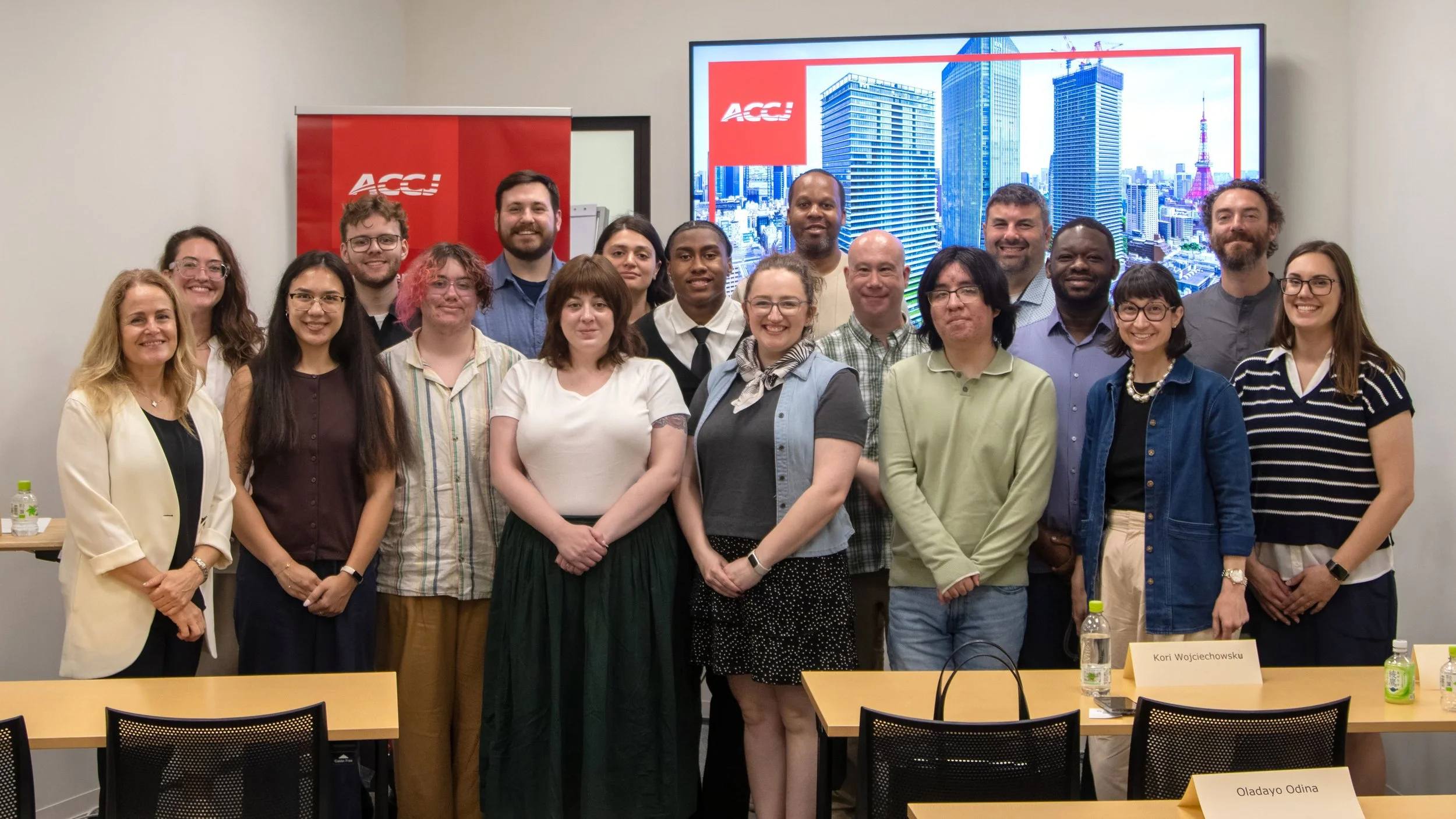
A delegation from the University of Michigan–Flint
Through tailored sessions, the American Chamber of Commerce in Japan (ACCJ) gives emerging US business leaders a direct view of Japan’s economy and the US–Japan commercial relationship.
For US students preparing for careers in global business, the ACCJ University Briefings program offers an executive-level perspective on Japan’s business environment and the bilateral relationship. The sessions examine the opportunities and challenges companies face in Japan and the role of the business community in strengthening economic ties between the two countries.
ACCJ Executive Director Laura Younger personally leads each briefing and tailors the discussion to the needs of the visiting group. The sessions connect Japan’s business environment to the wider bilateral agenda. Discussions have covered Japan’s regulatory and business environment, US–Japan economic relations, technology and artificial intelligence policy, demographic and workforce challenges, healthcare, and the importance of professional networks and long-term relationships in Japanese business.
To date, the ACCJ has conducted 50 briefings and reached more than 1,400 students from US universities. The program gives these emerging leaders an opportunity to test their classroom learning against practical perspectives from the ACCJ’s executive director.
The program also contributes to the wider US–Japan relationship. Educational exchange is an important form of soft diplomacy because it gives future US leaders a more informed understanding of Japan and encourages sustained bilateral engagement. By giving US students a more nuanced understanding of Japan’s economy, institutions, and business environment, the briefings prepare them to engage more effectively with Japan throughout their careers and strengthen the human foundations of bilateral commercial and policy cooperation.
Selahattin Imrohoroglu, a professor of finance and business economics at the University of Southern California’s Marshall School of Business, is among the educators who have brought their students to the ACCJ University Briefings program.
“Visiting the ACCJ was an excellent experience that gave our group a deeper appreciation of Japan’s business environment, professional culture, and the important role of international organizations in connecting business leaders, policymakers, and students,” he explained. “The briefing helped us better understand Japan’s current economic and demographic challenges, the opportunities for foreign companies, and the importance of cross-cultural communication and long-term relationship building in doing business in Japan.”
“The briefing helped us better understand Japan’s current economic and demographic challenges, the opportunities for foreign companies, and the importance of cross-cultural communication and long-term relationship building in doing business in Japan.”
The University of Arizona’s Justin Jarvis brought his executive MBA candidates to the ACCJ to learn how international companies navigate regulatory, cultural, and market differences. “I also hoped they would see how organizations like the ACCJ play a role in shaping dialogue between the private sector and government,” said the director of the school’s master’s studies. “The experience exceeded expectations. One of the biggest takeaways for me was just how different Japanese business culture is from that in the United States. While both countries are highly developed economies, the business environment, as well as the interpersonal and social dynamics of doing business, are meaningfully different.”
For Greg Laurence, 2026 marked the seventh time he has led a study-abroad group to Japan. As a professor of organizational behavior and human resources management, as well as chair of the University of Michigan-Flint Department of Management and Marketing, Laurence teaches a course on design thinking, namely, how organizations and the people in them solve problems.
“Many of our site visits are with very focused organizations,” he explained. “We wanted students to get a broad picture of business in Japan and how it relates to them in the United States. Japan can feel very far away. When visiting with boutique ceramics makers in Bizen [Okayama Prefecture], it is easy to lose sight of the US–Japan relationship, which matters to boutique ceramics makers in Bizen even if they don’t talk about it. The goal was to get that 10,000-meter view and to think about central design-thinking questions: Why does the ACCJ exist? What problems does it aim to solve and how?”
At least one student from each of Laurence’s past trips has made the move to Japan. “I think that is a pretty impressive testament to their experience there. Japan opens our students’ eyes to what is possible for them.”
Professor Arup Varma of Loyola University Chicago’s Quinlan School of Business has been leading students on trips to various parts of the world for the past two decades. “In 2026, the students were keen on visiting Japan, and I must say we had an absolutely outstanding trip,” he explained. “We visited both Tokyo and Kyoto. One of the highlights was the initial visit to the ACCJ, which helped set the framework and the context. I was very excited because [chambers] typically have deep experience in a country, and their breadth of knowledge of the intricacies of doing business in that country helps set the stage for subsequent visits.”
Quinlan student Przemek Thomas Krydka said the visit gave him confidence that, should he ever seek to establish a business presence in Japan, the ACCJ would be an invaluable resource and trusted partner. “I came away from our meeting with a strong impression that the ACCJ can provide American businesses with the relationships, knowledge, and support needed to successfully establish a foothold in the Japanese market.”
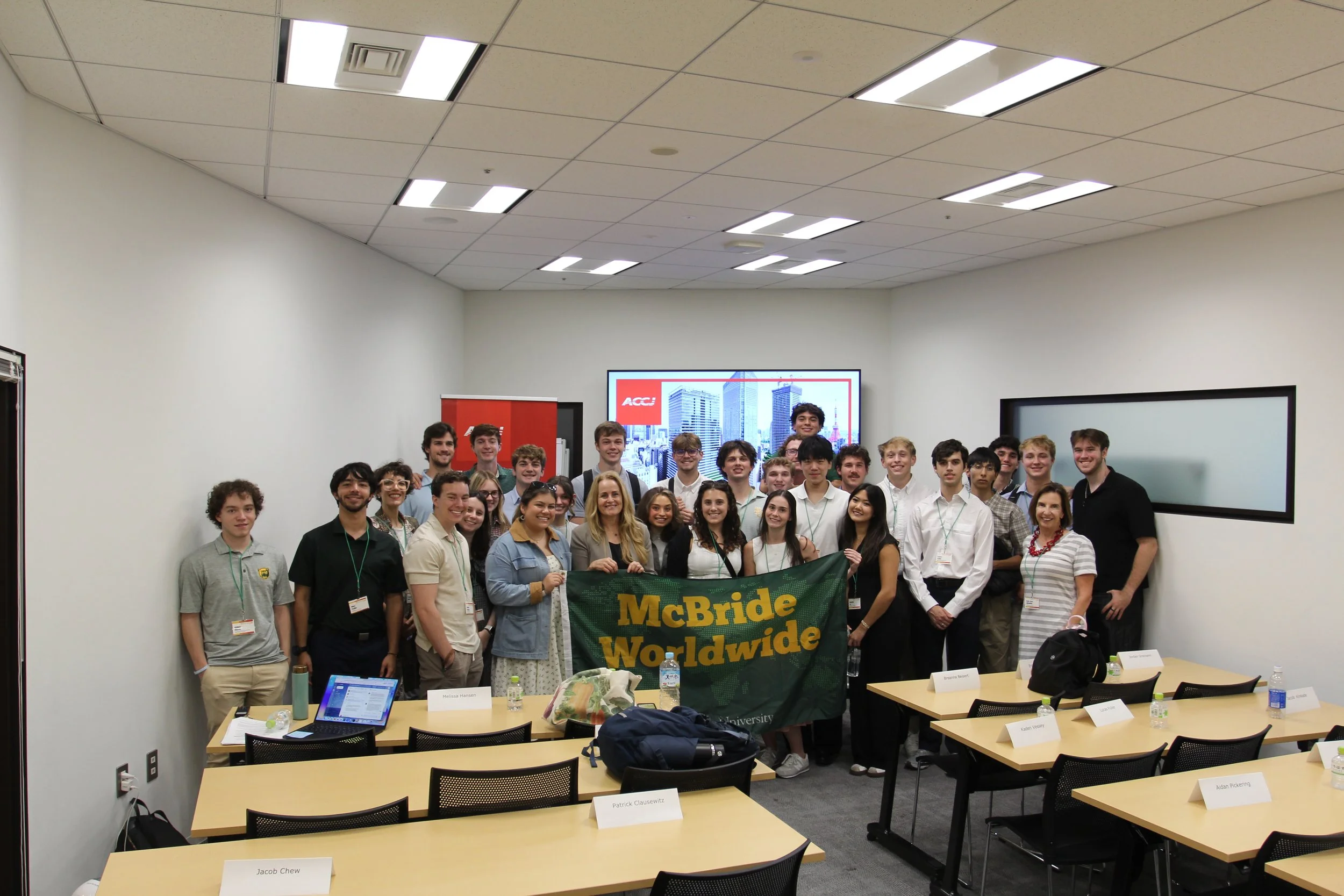
Students from Baylor University’s McBride Worldwide program visit the ACCJ
Another student who found the University Briefing inspiring is Rhiannon Noel, who visited as part of Lynn University’s undergraduate delegation. Apart from business insights, she found her post-university vision energized. “Seeing interns who came from backgrounds other than Japanese gave me peace of mind that I would fit in if I decided to come back and also do an internship,” she said.
Since returning to Florida, Noel has given presentations and worked on projects related to Japan’s need for immigration, discussing topics such as the declining birth rate, the Highly Skilled Professional program, and the Specified Skilled Worker program, which is designed to address labor shortages in key sectors. “Japan remains one of my favorite places I’ve traveled to, and I am still planning to come and do an internship eventually after the conclusion of my degree.”
Baylor University undergraduate Max Fuller said he came to the University Briefing hoping to learn more about how businesses from outside Japan are able to succeed and adapt to Japan’s different culture.
“After meeting with Executive Director Laura Younger, I actually understand that it is not easy due to tax laws and regulations, and also how people interact,” he explained. “Laura used real-world examples. Through visiting the ACCJ, I have been able to hear firsthand experiences that you usually wouldn’t in a normal classroom setting.”
Younger’s deep experience and insights were also appreciated by Shizuka Modica, a lecturer at the University of Virginia’s Darden School of Business. Modica brought a delegation of MBA students to the ACCJ University Briefing as part of the school’s course titled Japan: Where Tradition Meets Innovation.
“Laura introduced ACCJ’s role in strengthening the US–Japan business environment and offered grounded, practical perspectives on how business is conducted in Japan,” she said. “Her lively, highly interactive presentation wove together economic and regulatory data with firsthand stories about pain points American executives commonly encounter and how the ACCJ helps them navigate those challenges. This brief but rich visit helped students process their new experiences and articulate deeper insights into Japan’s political, economic, and social challenges. We are deeply grateful to Laura and the ACCJ for their generosity and impact on our students’ learning.”
Walk of Ages
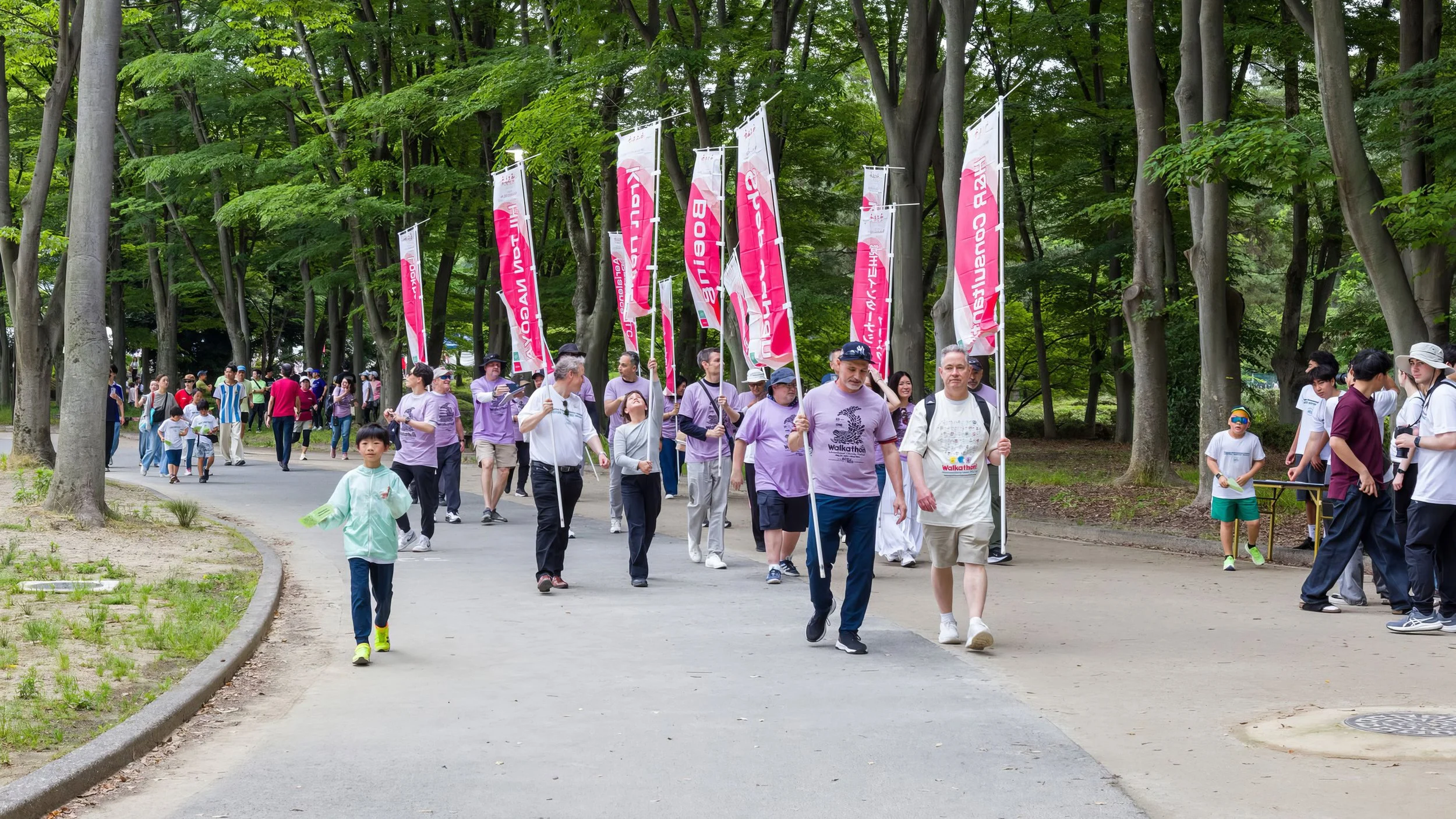
The Chubu Walkathon’s 35th anniversary event raised the bar for community support.
The Chubu Walkathon’s 35th anniversary event raised the bar for community support.
“It’s a beautiful day to make a change. Gonna lace up my shoes and be on my way. We’ll gather at Meijo Park, alright. And be home before the stars light up the night.”
Those are the opening words of the Chubu Walkathon 35th anniversary song, written by James Havens, and they perfectly sum up an event that has been making a difference in the local community for three and a half decades.
What began in 1992 as a small, collaborative effort between US businesses and local partners has grown into the region’s most visible international charity event—uniting thousands each year for a day of walking, food, entertainment, and community support. The annual event, cohosted by Nagoya International School (NIS), is supported or endorsed by the Aichi Prefectural Government, the City of Nagoya, the Nagoya City Board of Education, the Aichi America-Japan Society, and the Greater Nagoya Initiative Center.
Cofounder Robert Roche, now American Chamber of Commerce in Japan (ACCJ) vice president–Chubu and executive chairman of Oak Lawn Marketing, Inc., still remembers the first event. “Large corporations were coming to Nagoya saying, ‘It’s our culture in America to give back to the local community.’ They were the ones who showed us how to do business the right way. Their guidance in those early years gave us a solid foundation, and the relationships we built—with orphanages, schools, and local charities, as well as sponsors like Kondo Sanko—are the reason the Walkathon is still going strong 35 years later.”
Since then, the Walkathon has contributed more than ¥200 million to organizations across the Chubu region, supporting children in foster care, individuals with illnesses or disabilities, families affected by domestic violence, Tohoku earthquake and tsunami relief, and many others. Money is raised through corporate sponsorships, individual donations, and ticket sales for activities on the day of the event.
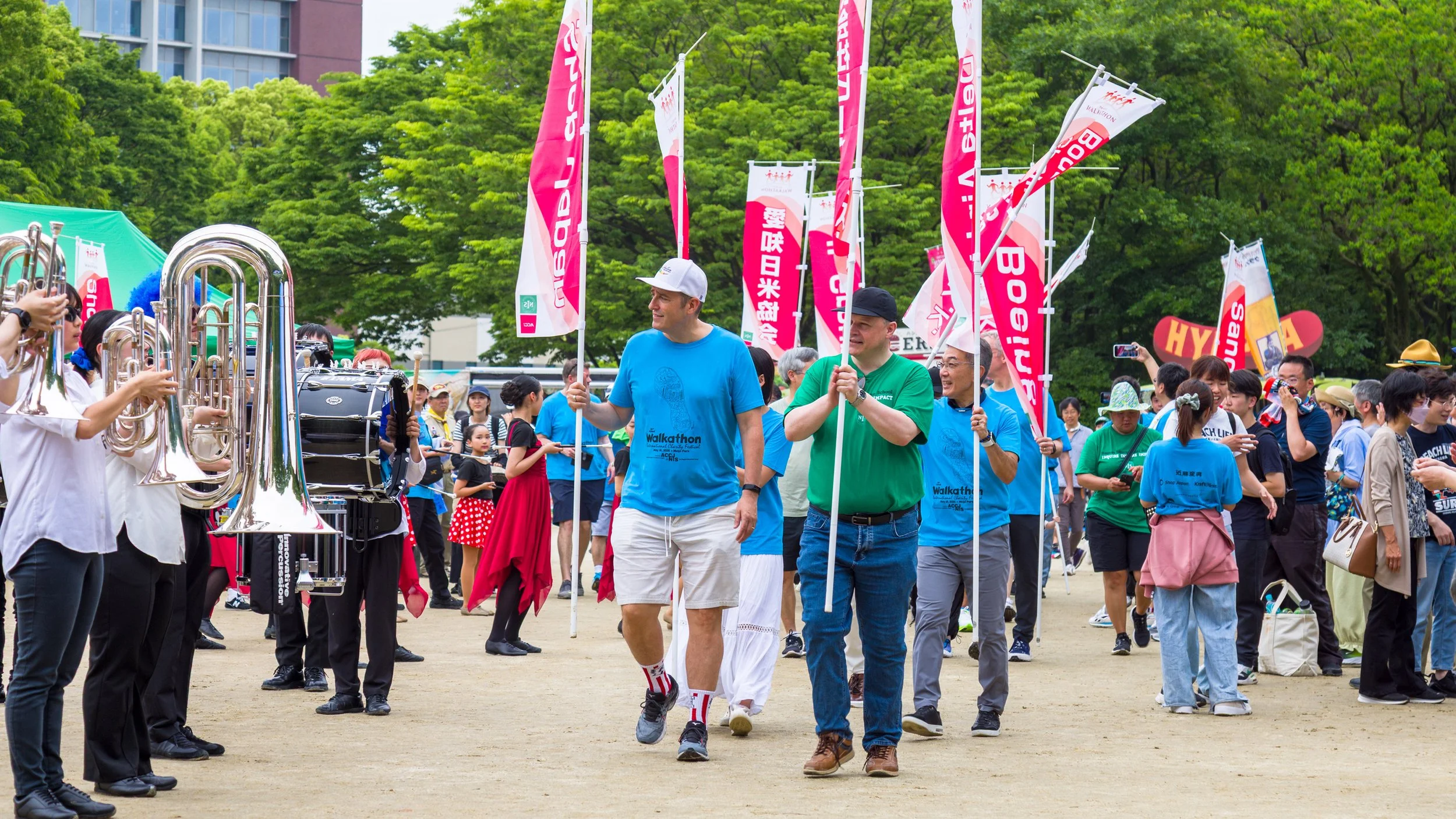
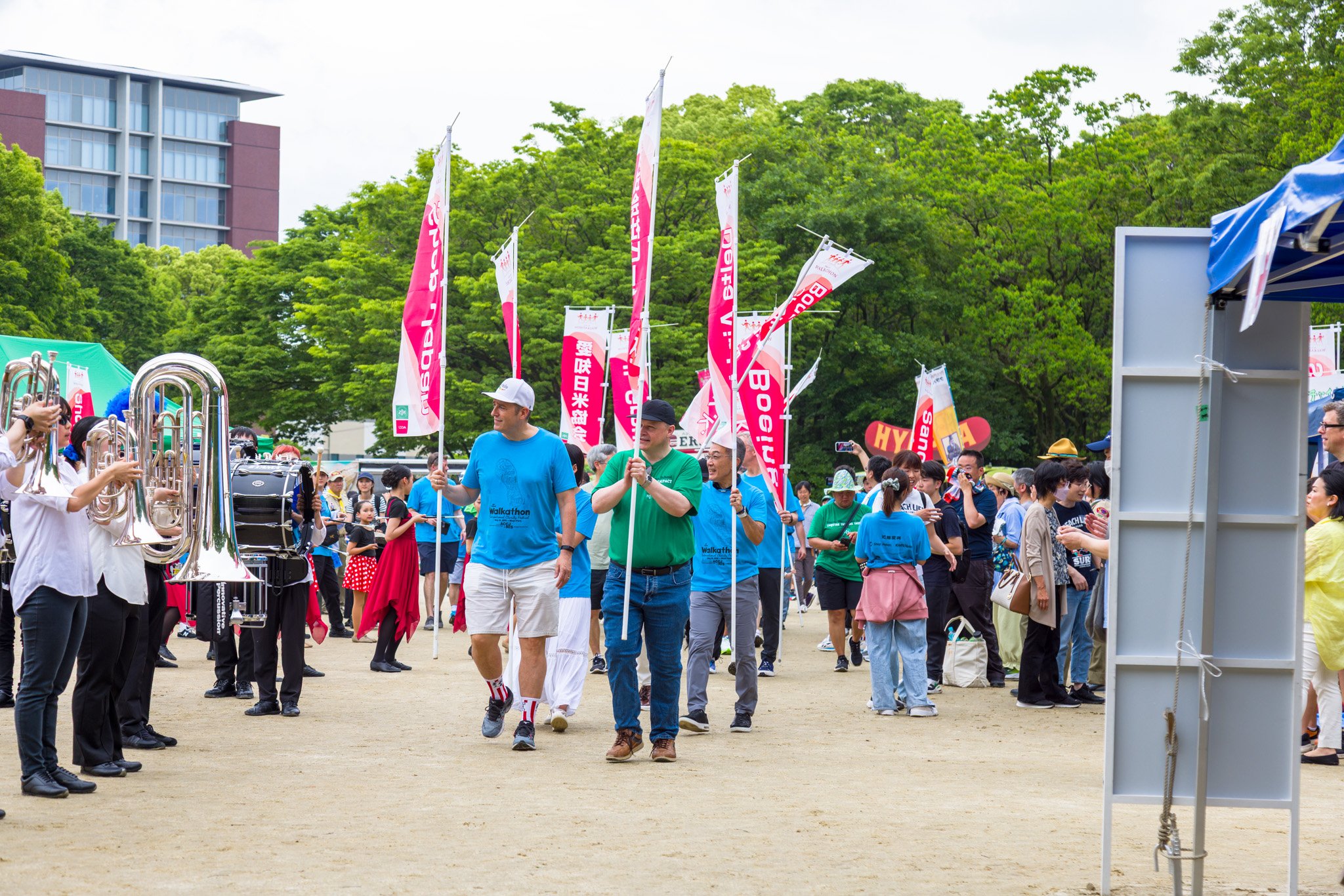
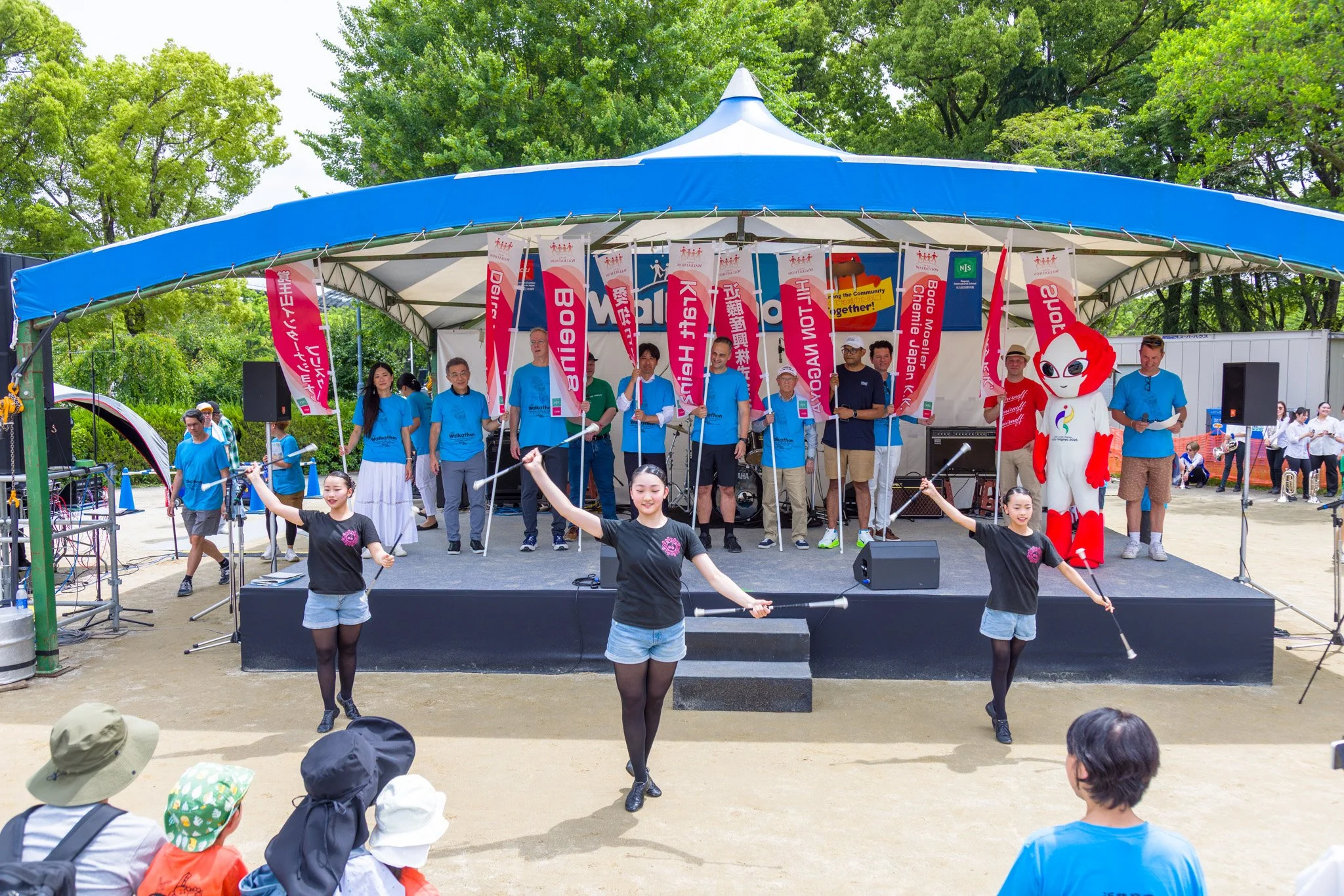
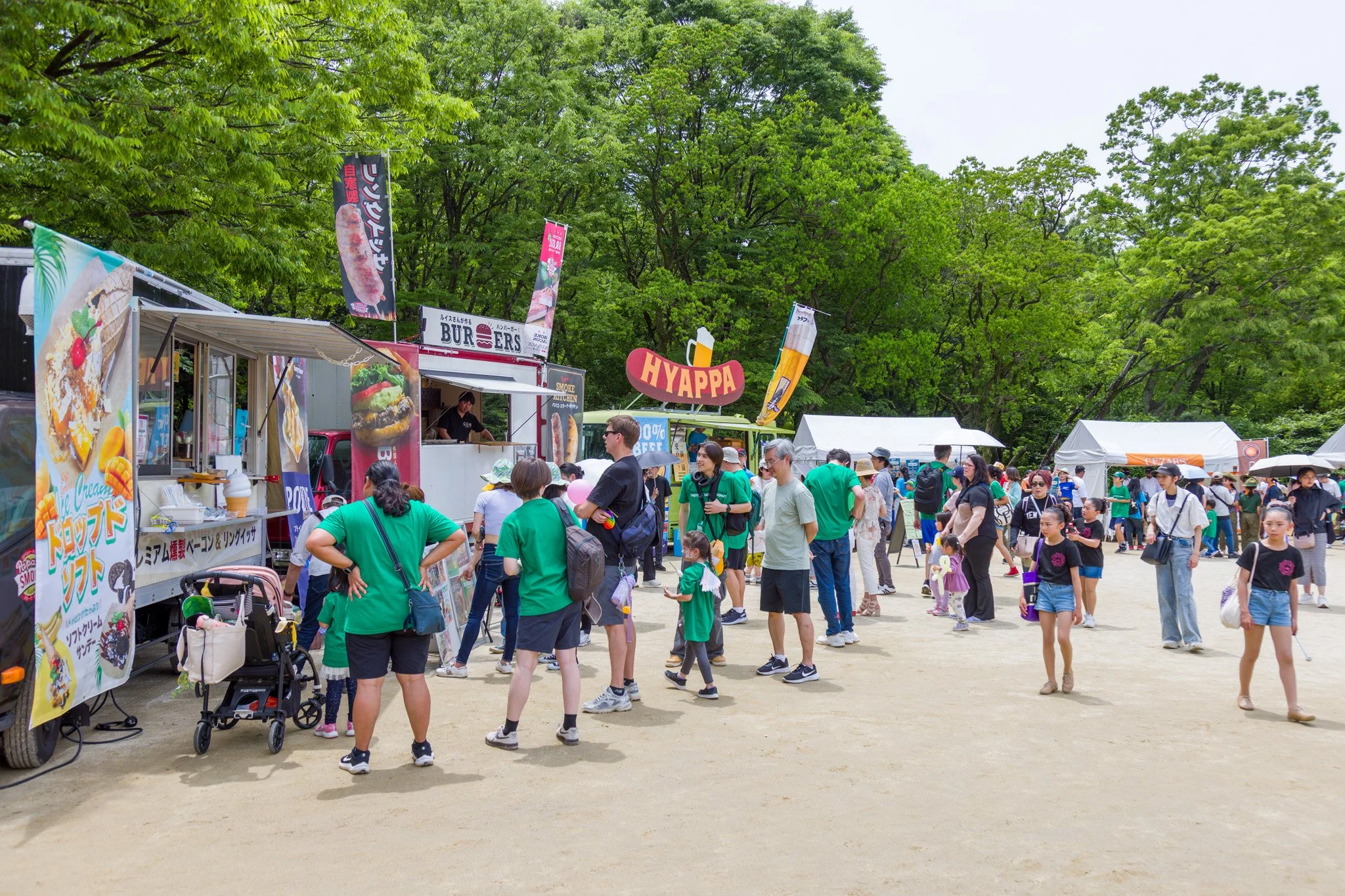
ACCJ members and the wider community descended on Nagoya’s Meijo Park on May 24 for a day of music, dance, international food, and nearly two dozen activities for kids and adults. After an opening ceremony featuring the Imperial Sound marching band and Cherry Blooming baton twirlers, walkers set out on a winding course through the park. Student volunteers greeted them at each of the nine way stations. Back at the stage, attendees enjoyed performances by NIS preschool and kindergarten students, the NIS high school choir, and more.
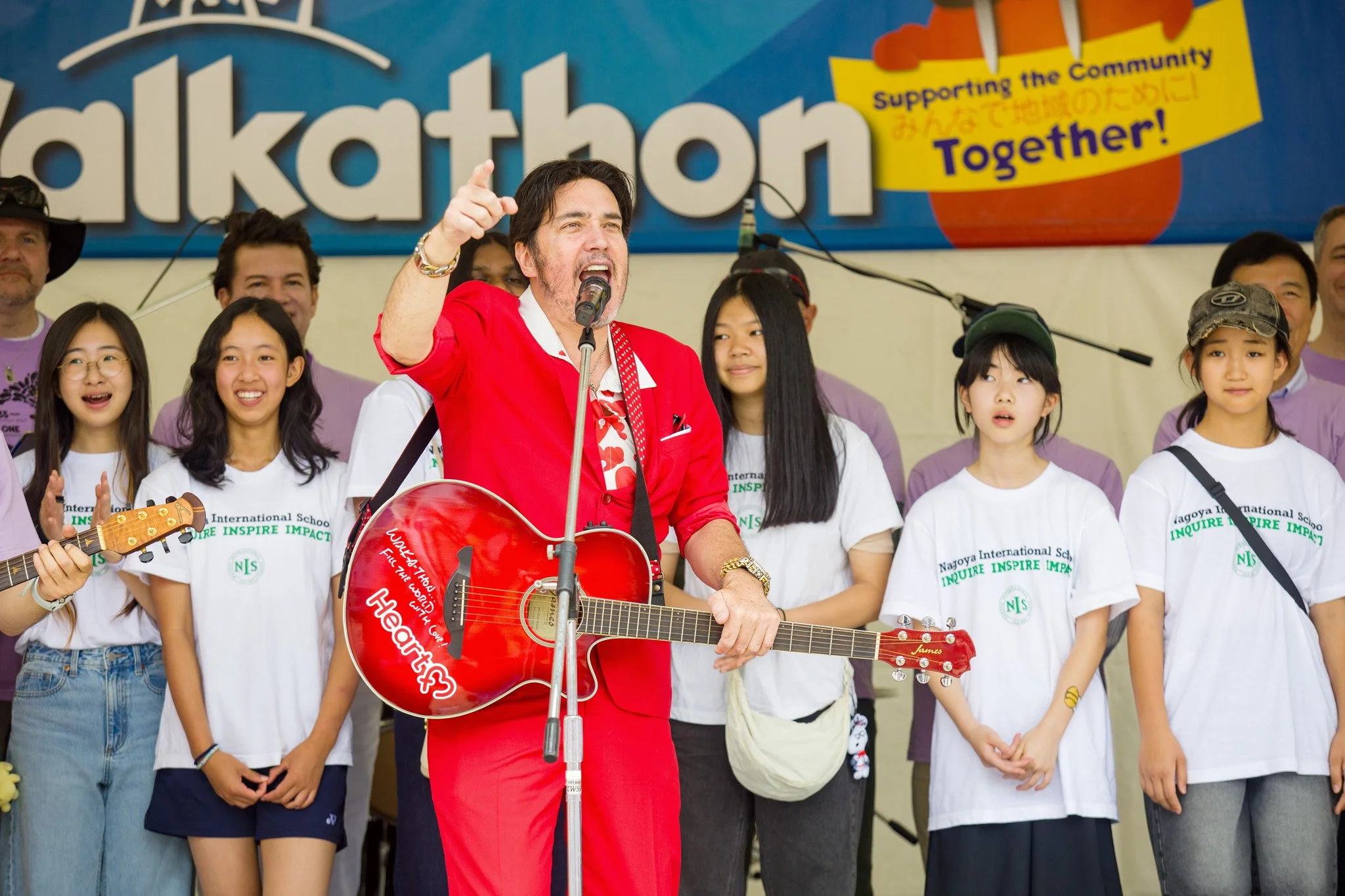

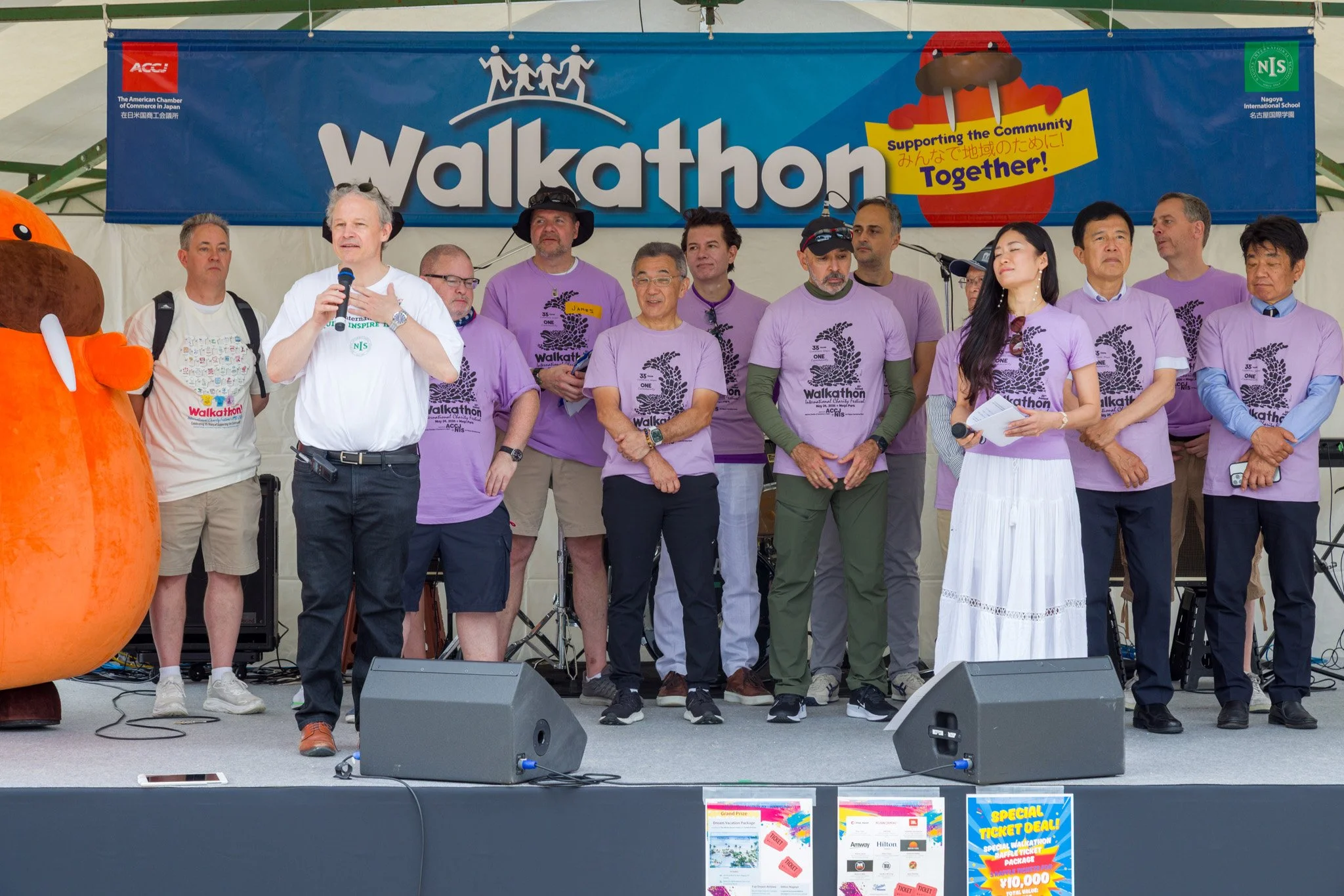
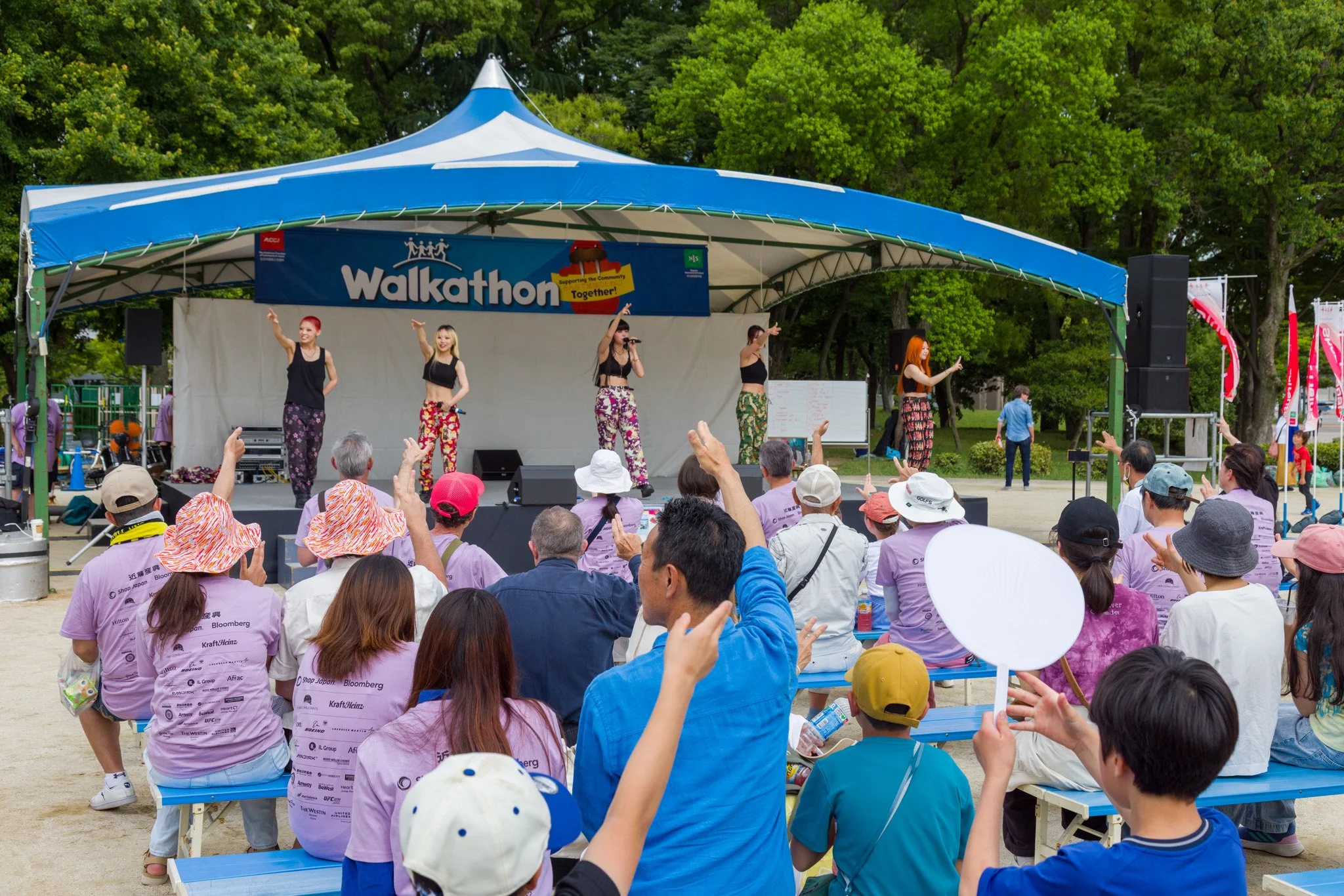

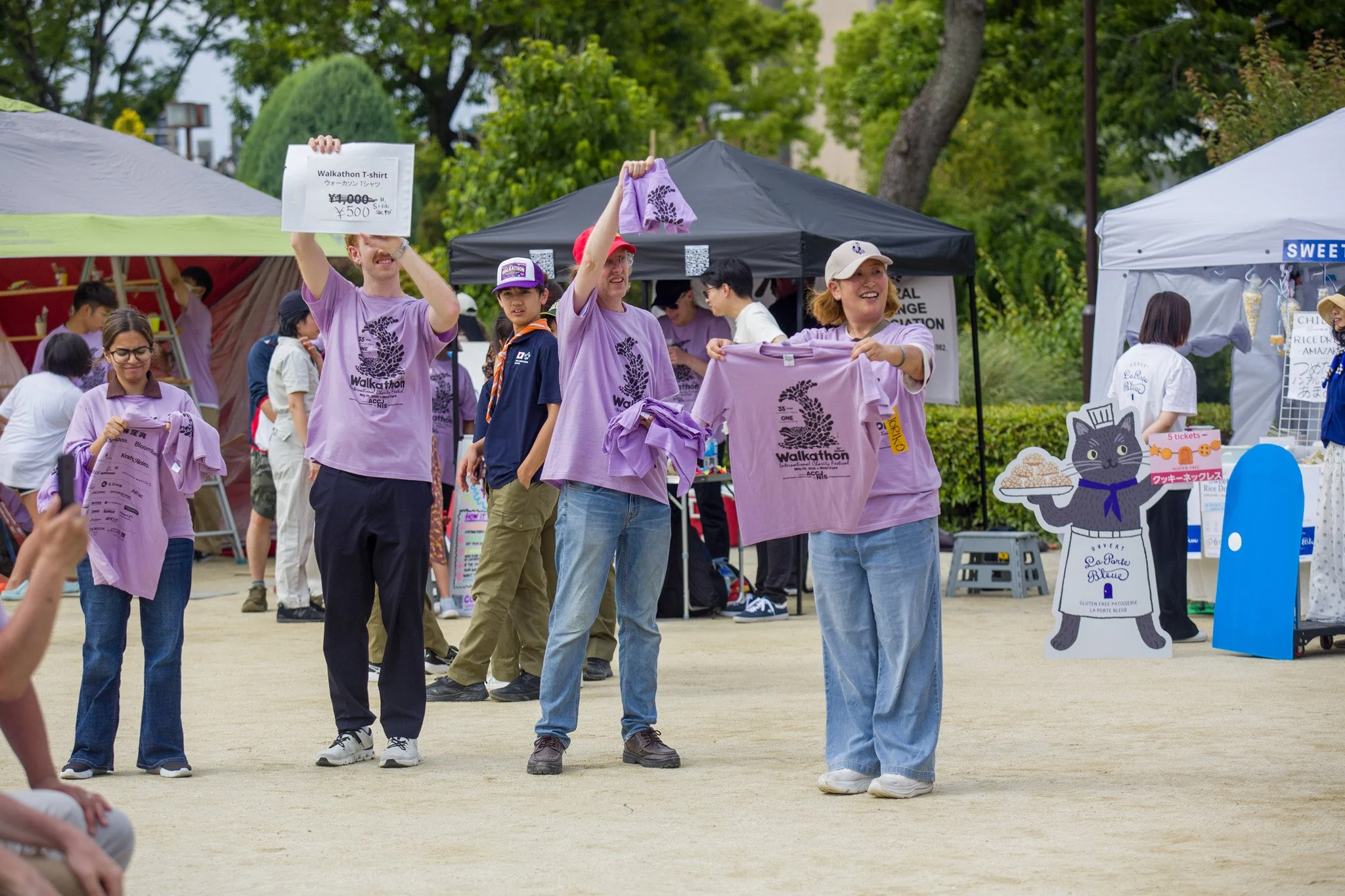


Over the years, the Walkathon has weathered many challenges—the Lehman shock of 2008, the Great East Japan Earthquake and Tsunami of March 11, 2011, and Covid-19. During the pandemic that saw everyone huddled at home, organizers found a way to keep an event defined by in-person interaction going through creative thinking and hybrid approaches that incorporated virtual participation. Over the five years from 2019 to 2023, donations averaged more than ¥5 million per year.
This year’s 35th anniversary Walkathon marked not only a milestone in longevity but also a notable increase in the amount of money raised, making it the most successful outing since 2016’s astounding ¥25 million result that helped set the stage for the creation of the Chubu Children’s Fund.
“On behalf of the Chubu Walkathon Committee, we would like to sincerely thank you all for your continued support and invaluable contributions to this year’s event,” said Nao Geisler, chair of the ACCJ–Chubu Community Service Committee. “The 35th anniversary celebration was a tremendous success. We were delighted to welcome an increased number of participants, enjoy perfect weather, and showcase many charitable organizations and outstanding performances on stage. None of this would have been possible without your dedication and partnership.”
Vice-chair Bryce Conlan extended his gratitude to everyone who committed their time, energy, and resources. “Your generous support helps us make a meaningful impact in the lives of many individuals through the local charity organizations we support. We are deeply grateful for your commitment to this cause.”
On October 27, ¥7.7 million in proceeds from this year’s event will be presented at a ceremony hosted by Grade 10 Japanese language and literature students from NIS in the school’s 247-seat auditorium. The money will be distributed among 14 charitable organizations supported by the Walkathon, including ¥500,000 for International School Projects in Tokyo, Kansai, and Nagoya.
“Thank you once again for being part of this milestone event,” said Geisler. “We look forward to your continued support and hope to work together again for the 36th Chubu Walkathon!”
As we look ahead to another year of this enduring signature event, anniversary song composer Havens calls on everyone to continue their support: “Walkathon is here to stay. Sure was good to see you out here today! Let’s walk under the sun. Every step we take is for everyone!”

June and July 2026 Event Highlights
View a collection of photos from the ACCJ’s June and July 2026 events.

ACCJ leaders met with Federal Reserve Bank of San Francisco President & CEO Mary Daly on August 5 .
The American Chamber of Commerce in Japan hosted a wide variety of events in June and July. Among these were:
- Navigating Labor Regulations and Evolving HR Practices
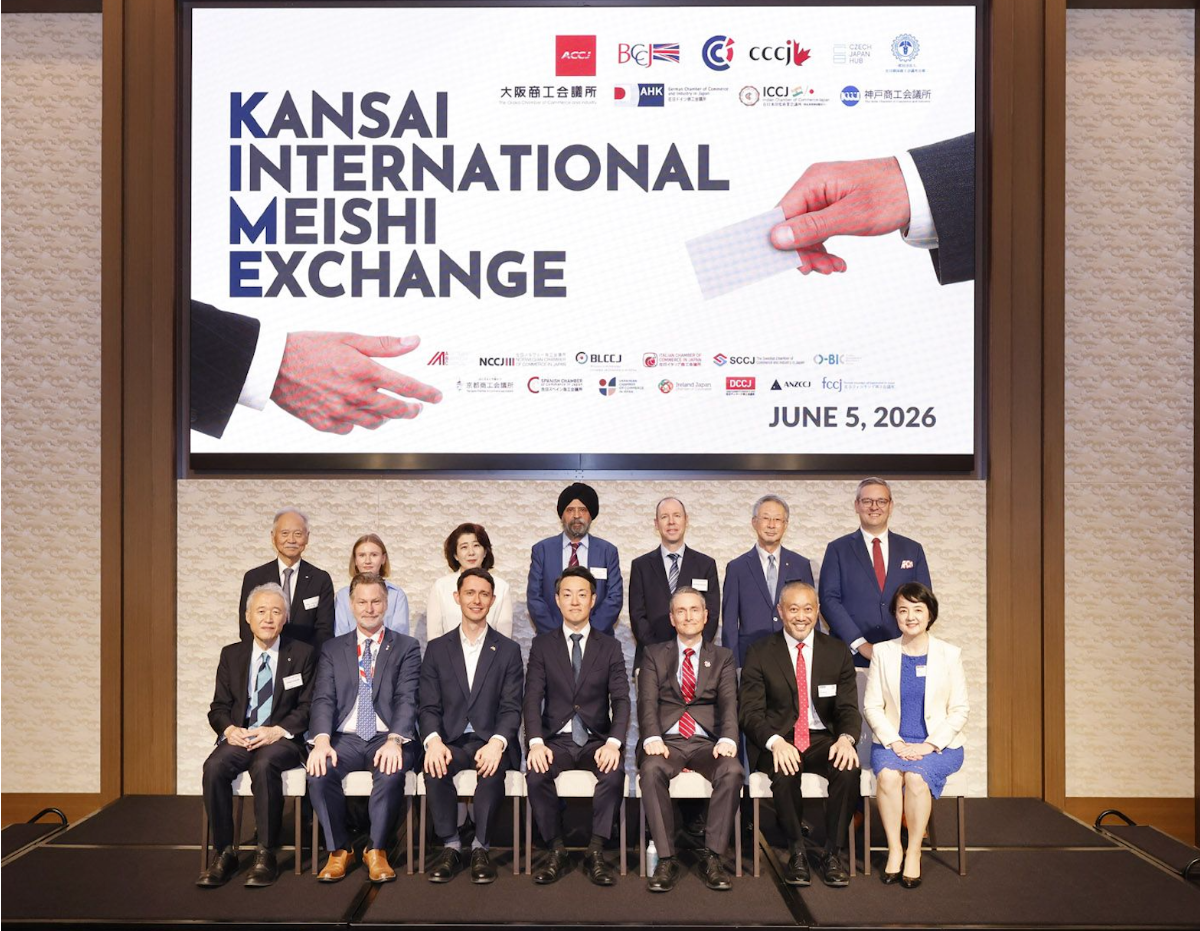
- Kansai International Meishi Exchange
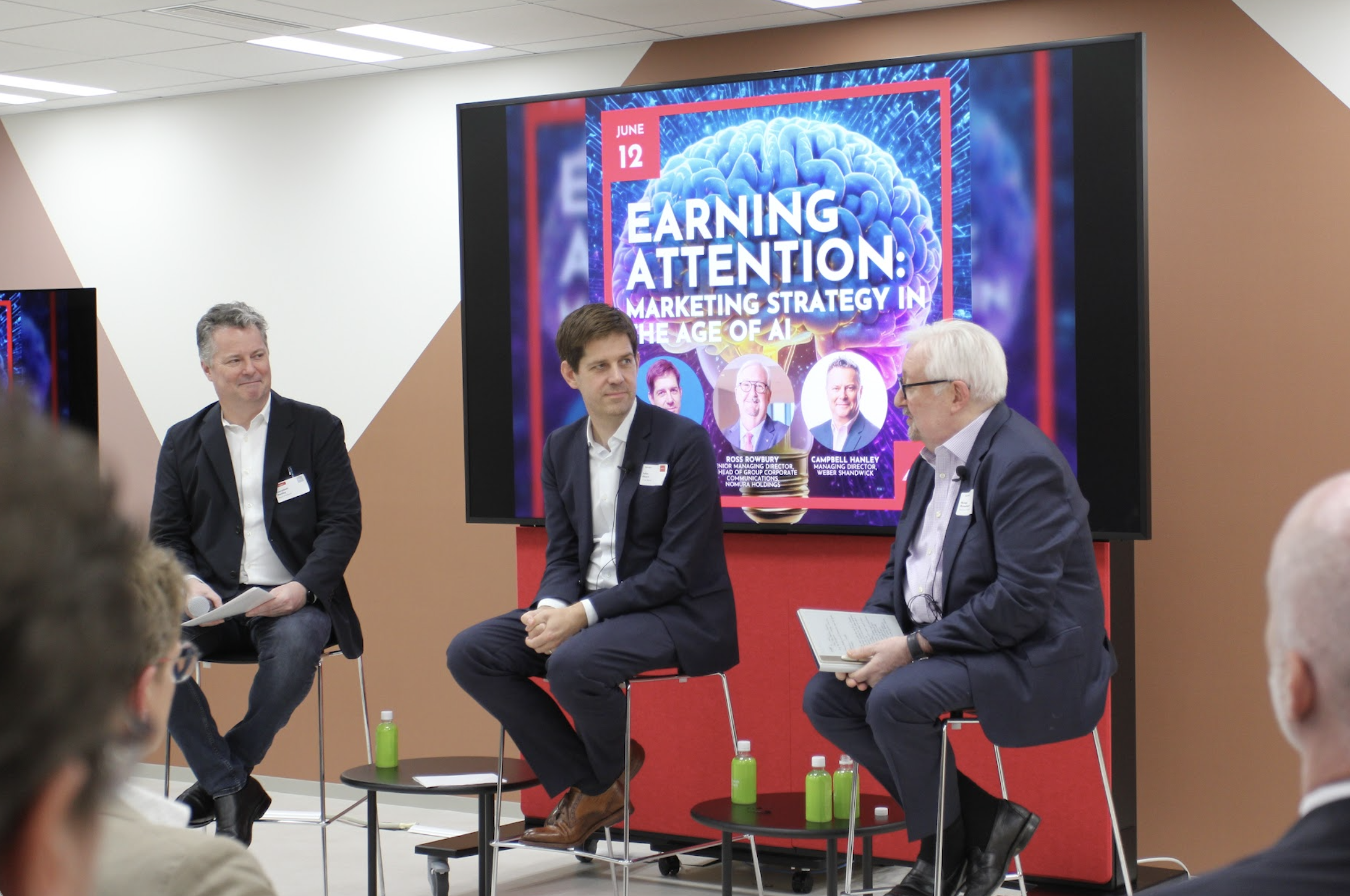
- Earning Attention: Marketing Strategy in the Age of AI
- The Business of Creativity: How Art Shapes Space, Brand, and Experience in Japan
- How AI and Geopolitics Are Changing M&A
- Japan Tourism Trends and Challenges
- What’s Next for Japanese Stocks in 2026?
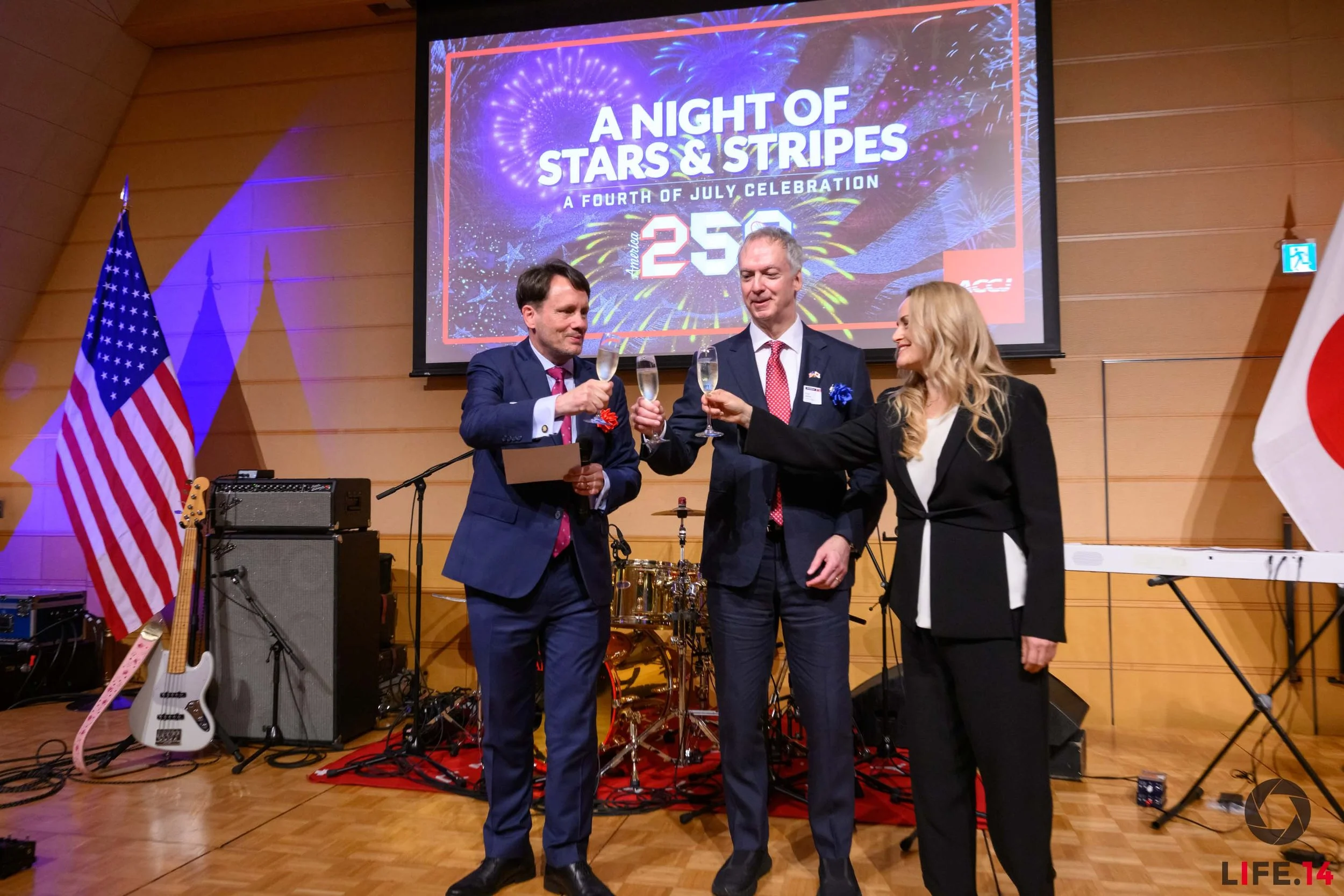
- A Night of Stars and Stripes: A Fourth of July Celebration
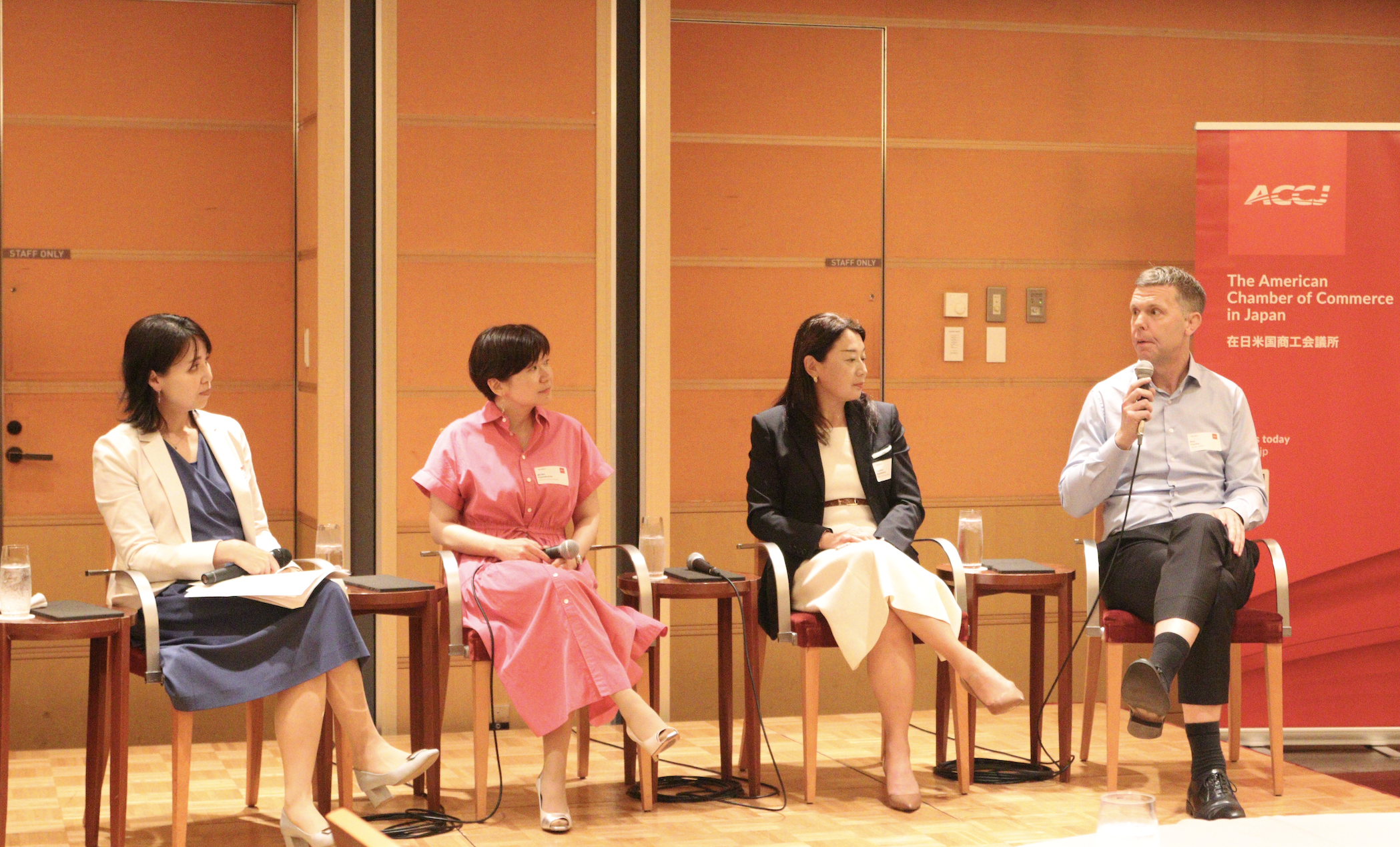
- Women in Business Open Forum and Networking
- Exploring Japan's Startup Ecosystem: Founder Pitches and Policy Perspectives
- The Science of Sports: Data, Performance, and the Future of Athlete Optimization
- Governing AI: A Global Conversation with KPMG’s Dean Grandy
Here are some of our favorite highlights.
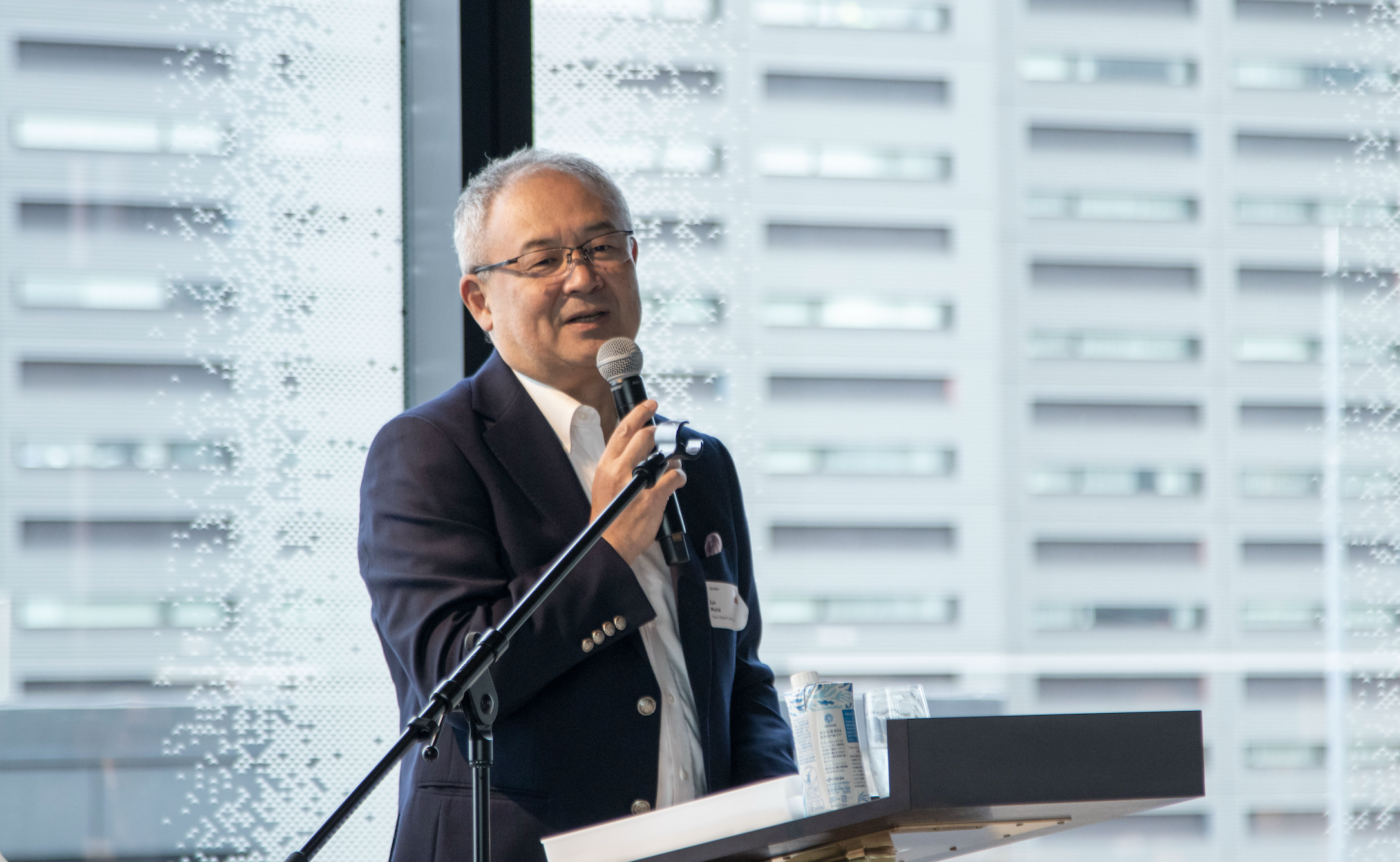
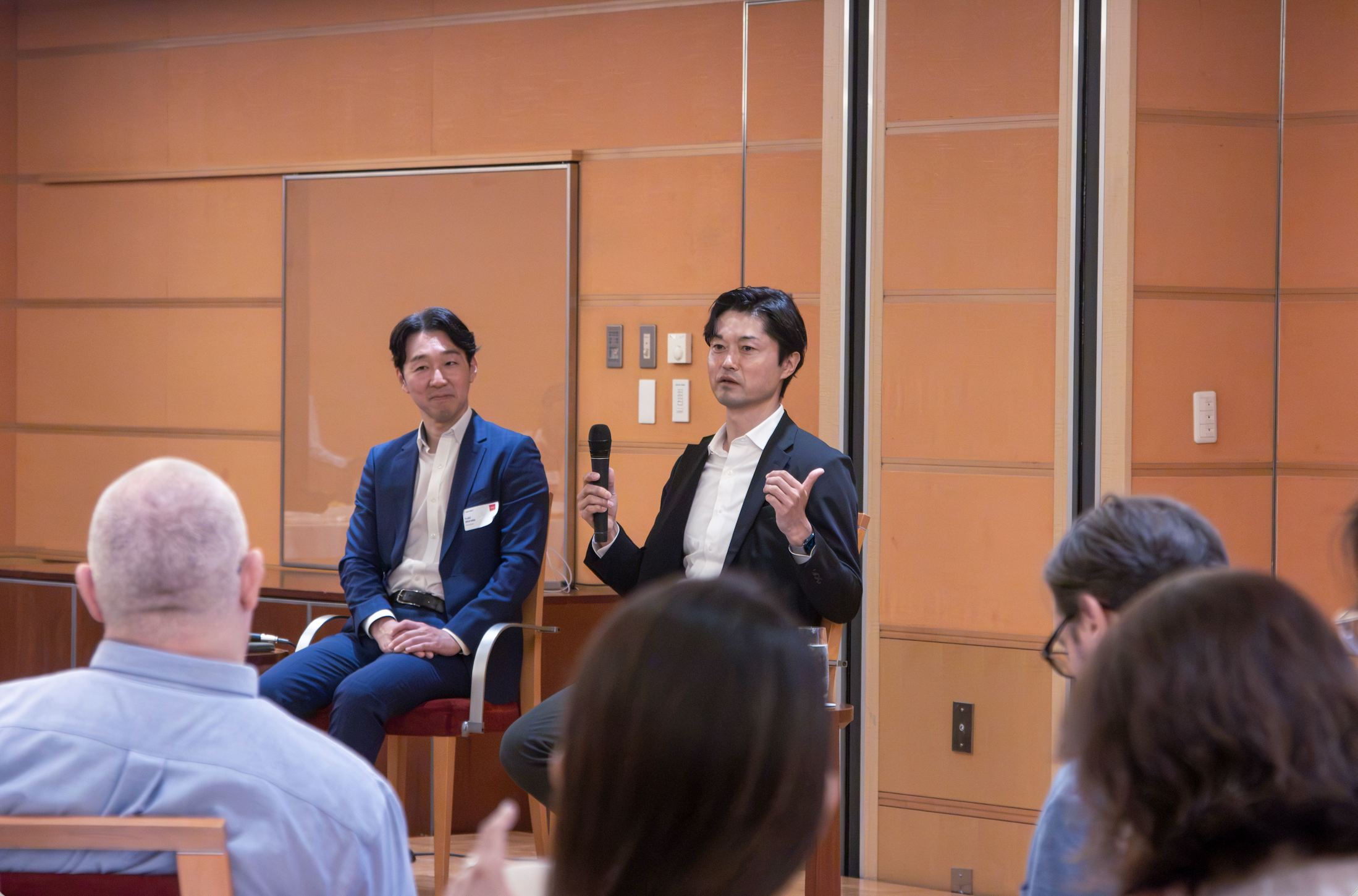
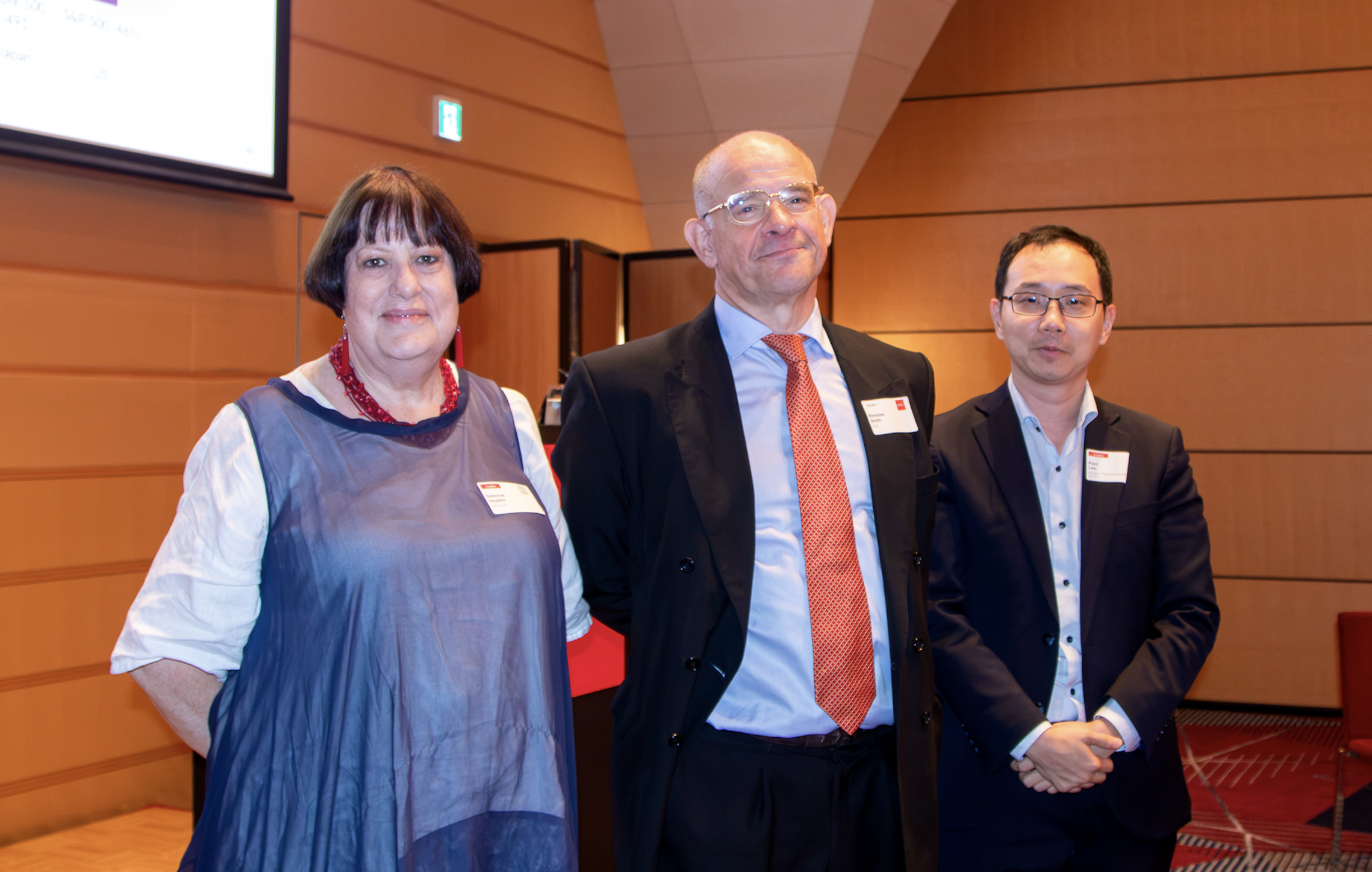
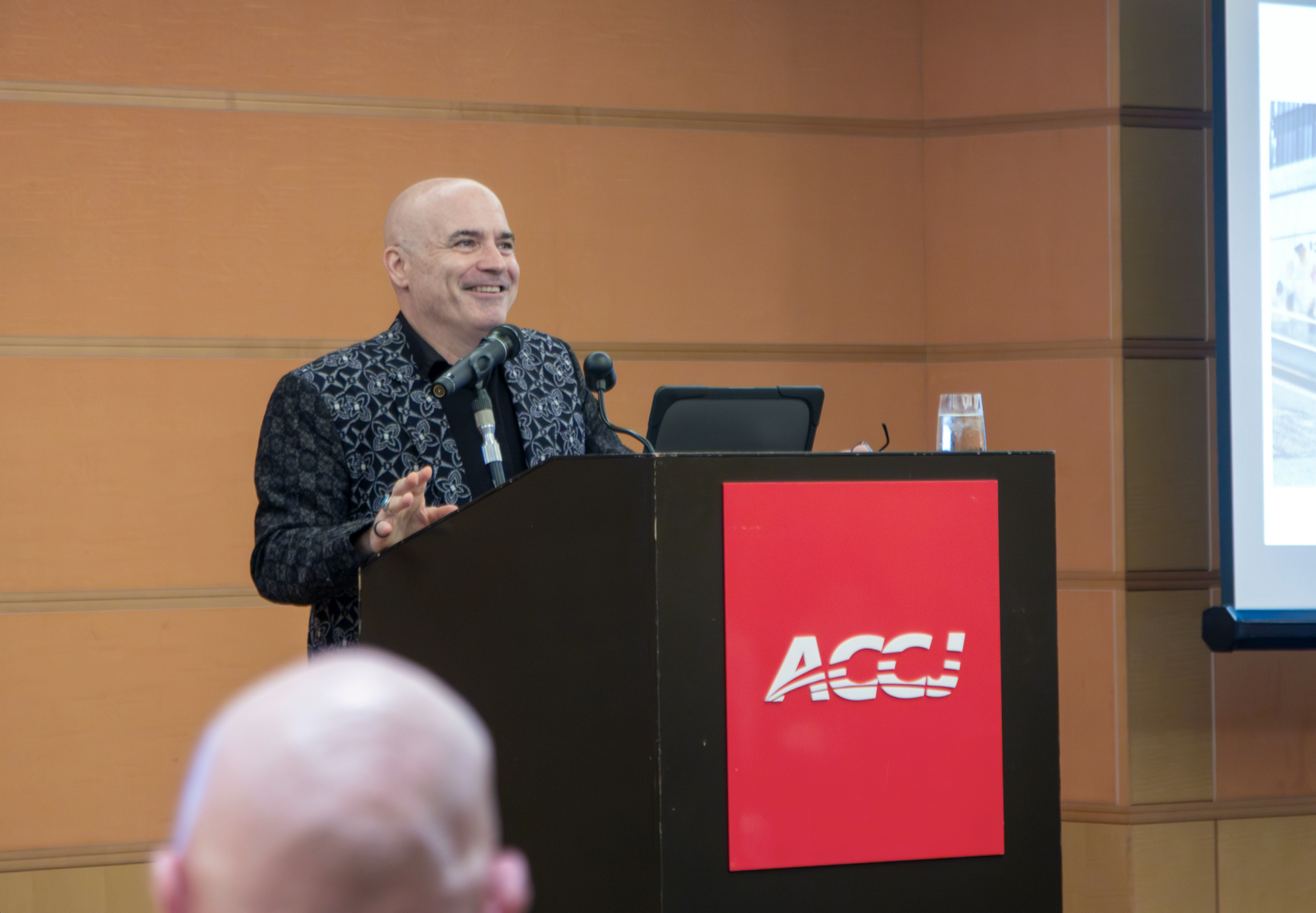
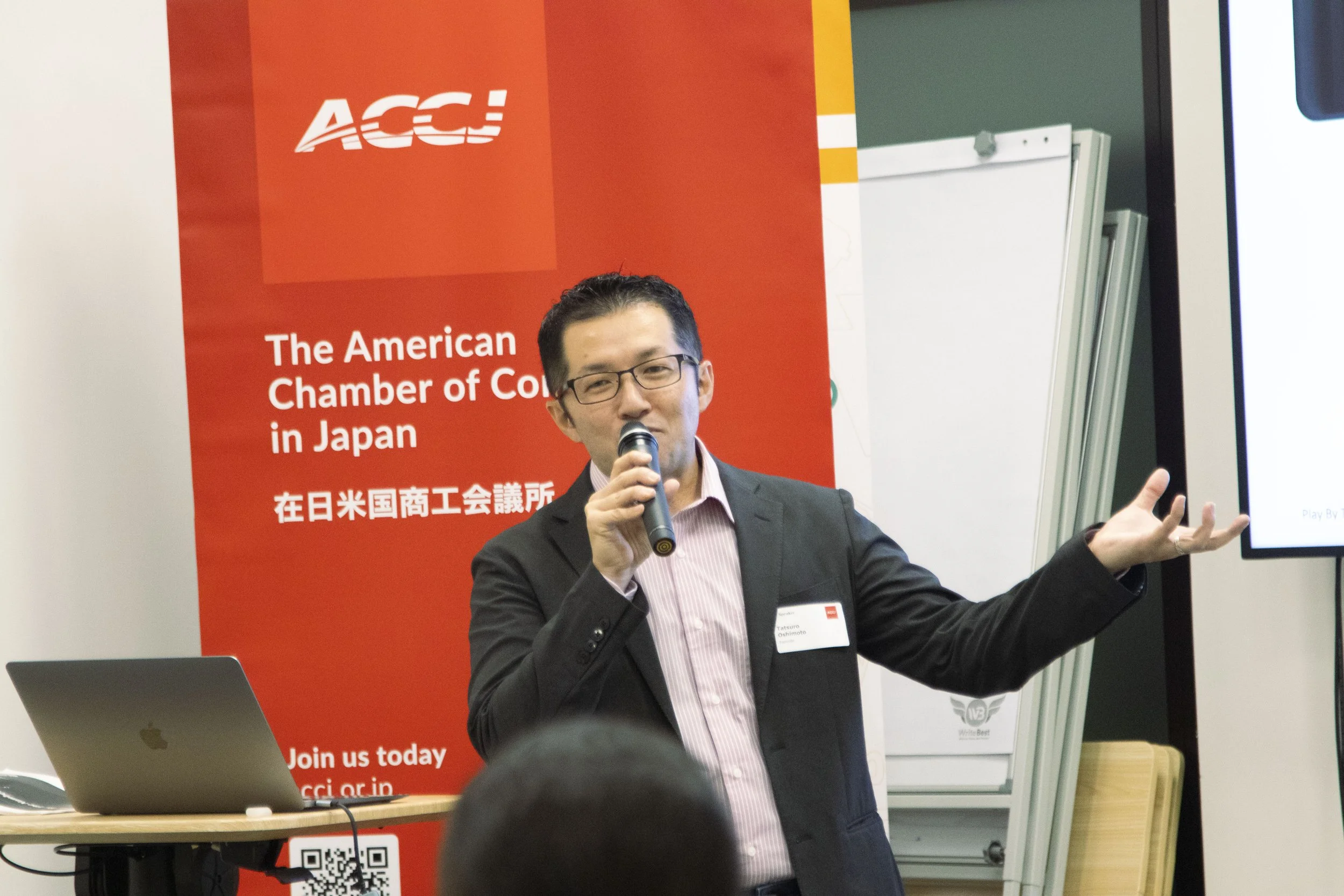
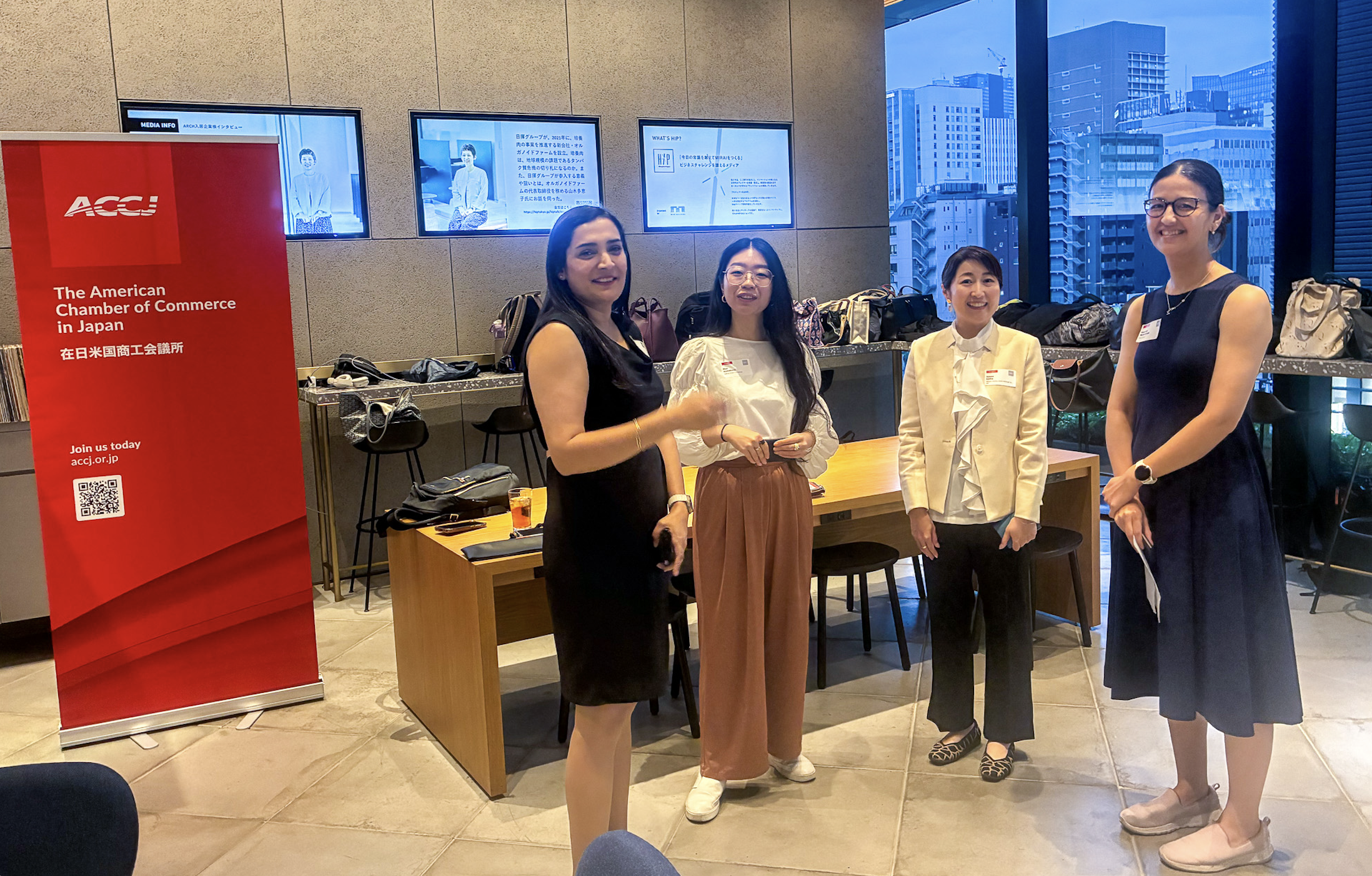
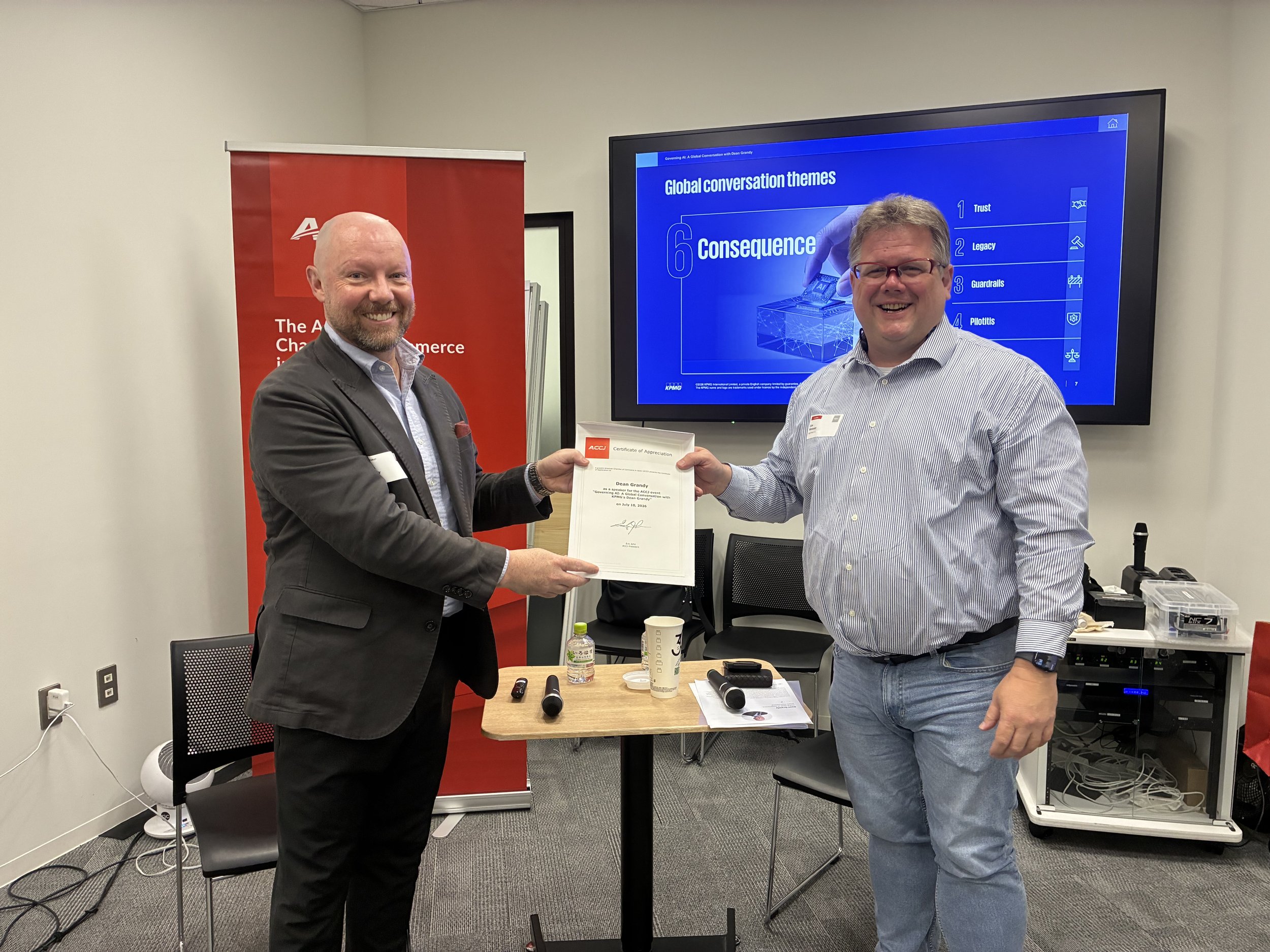
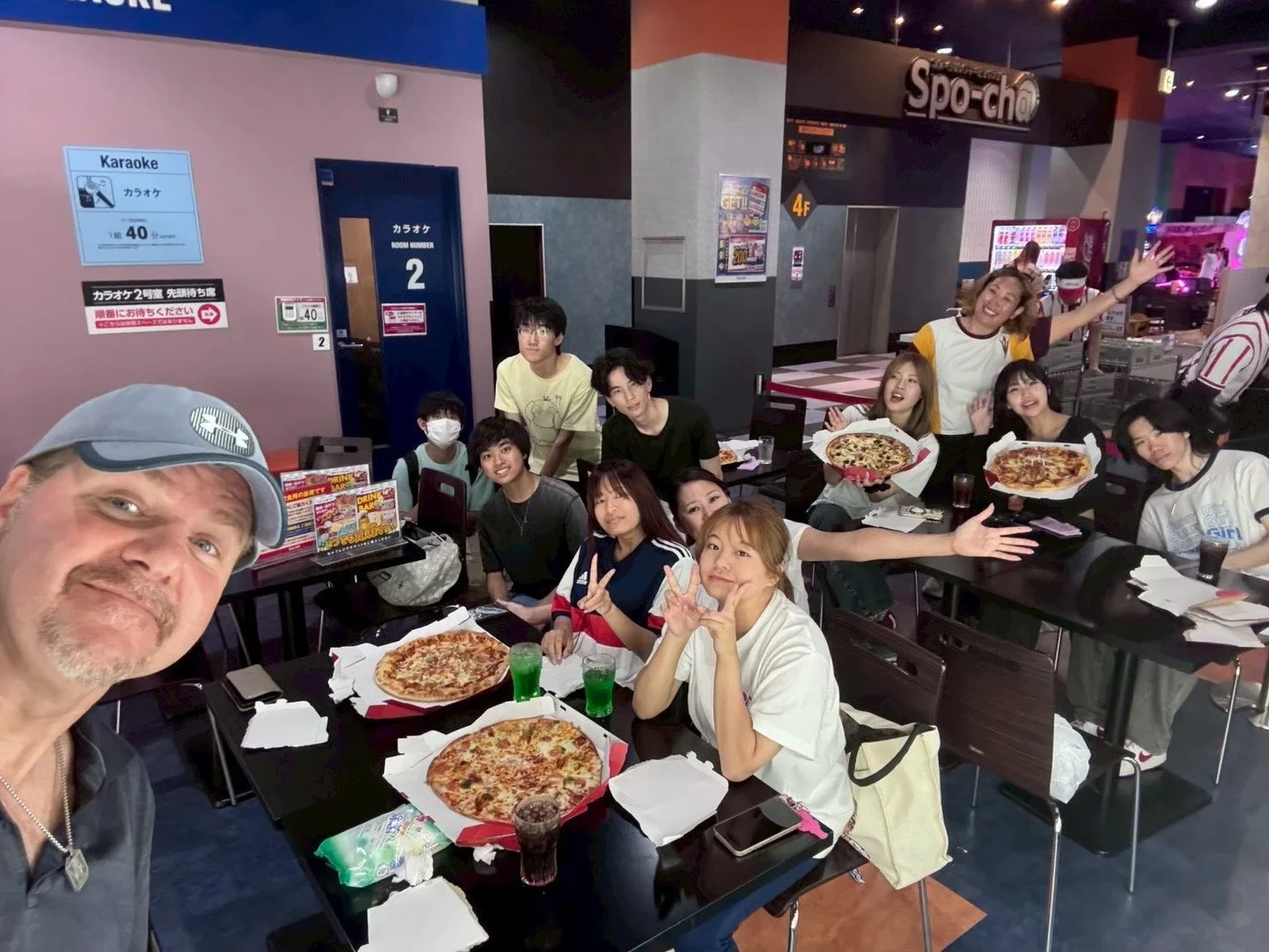
April and May 2026 Event Highlights
View a collection of photos from the ACCJ’s April and May 2026 events.
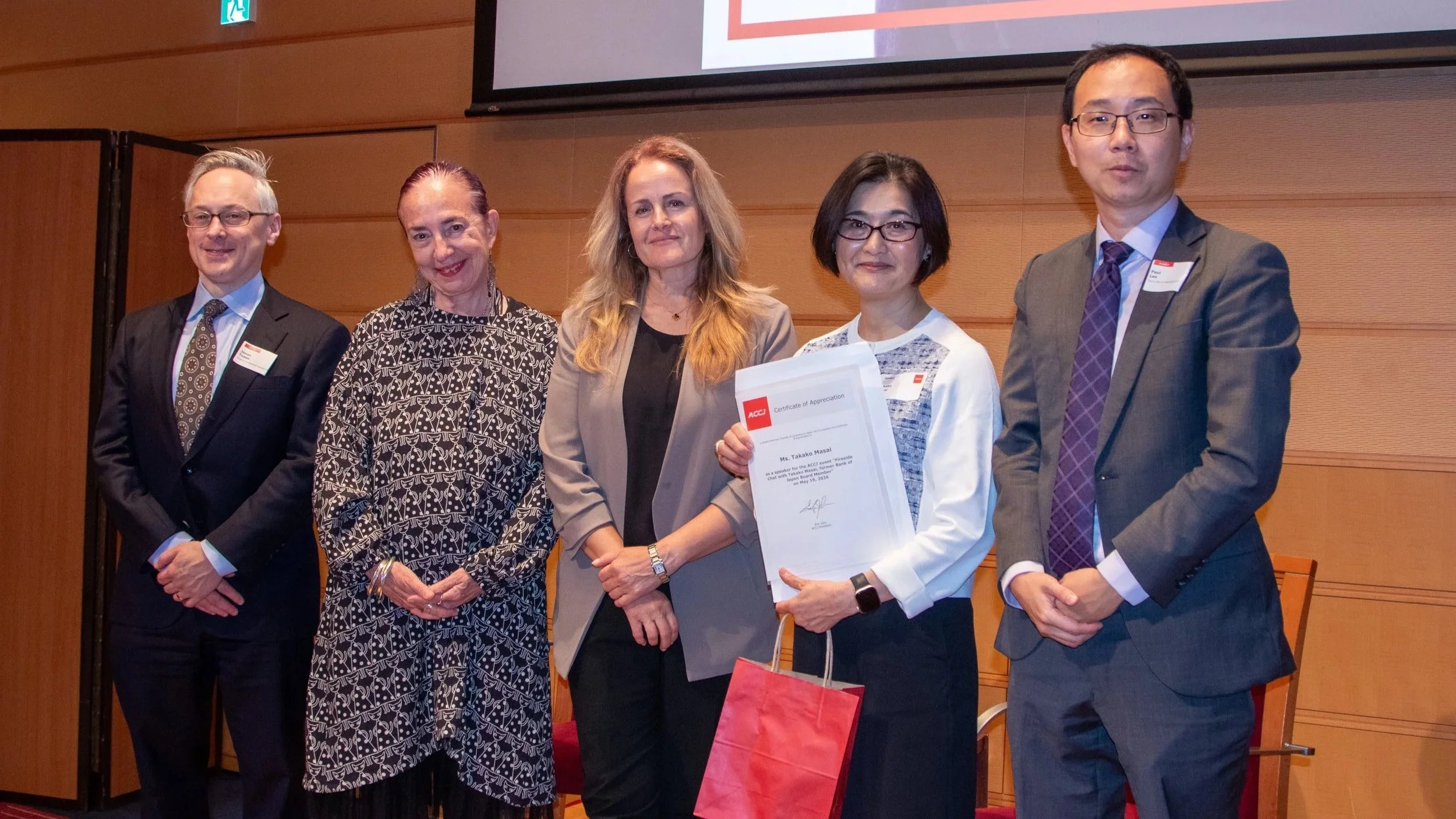
Masai Takako, member of the board of directors and chairperson of the Research Institute Board at the SBI Financial and Economic Research Institute (second right) with (from left) ACCJ Alternative and Foreign Direct Investment Committee (AFDIC) Vice-chair Jason Topaz, CEO Forum Co-chair Sarah Bader, Executive Director Laura Younger; and Alternative and Foreign Direct Investment Committee Chair Paul Lee at an AFDIC event on May 19 at Tokyo American Club.
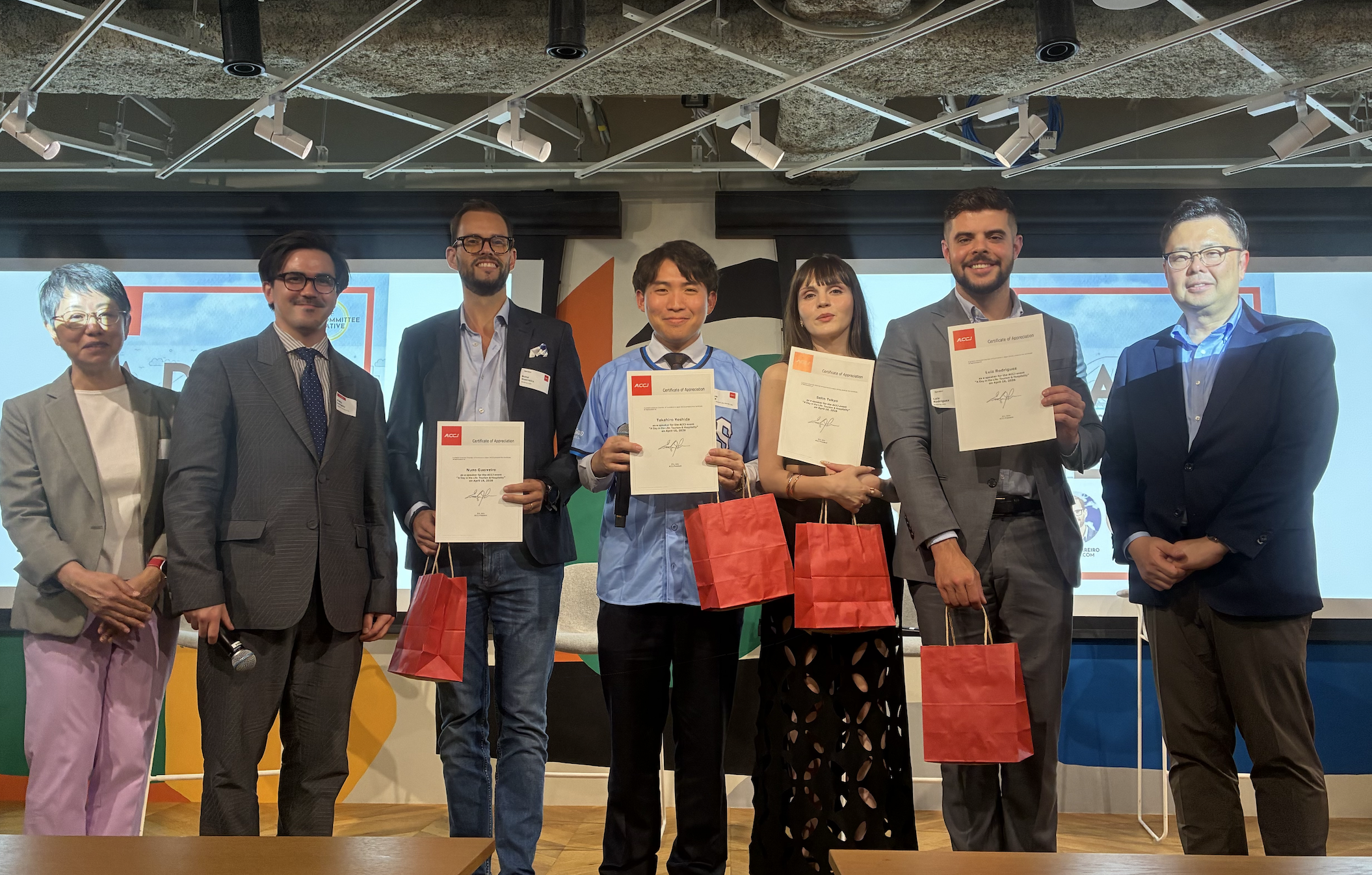
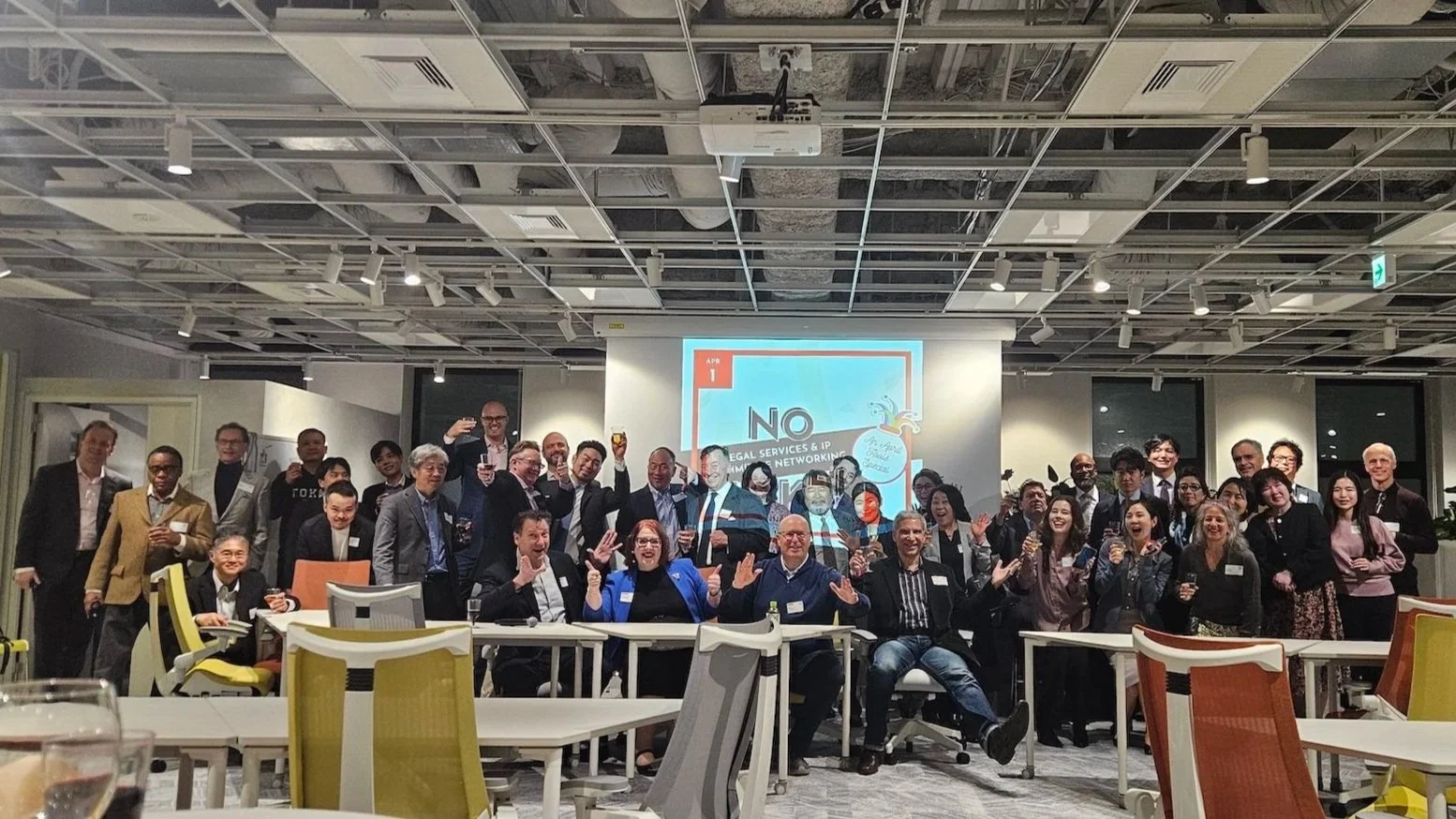
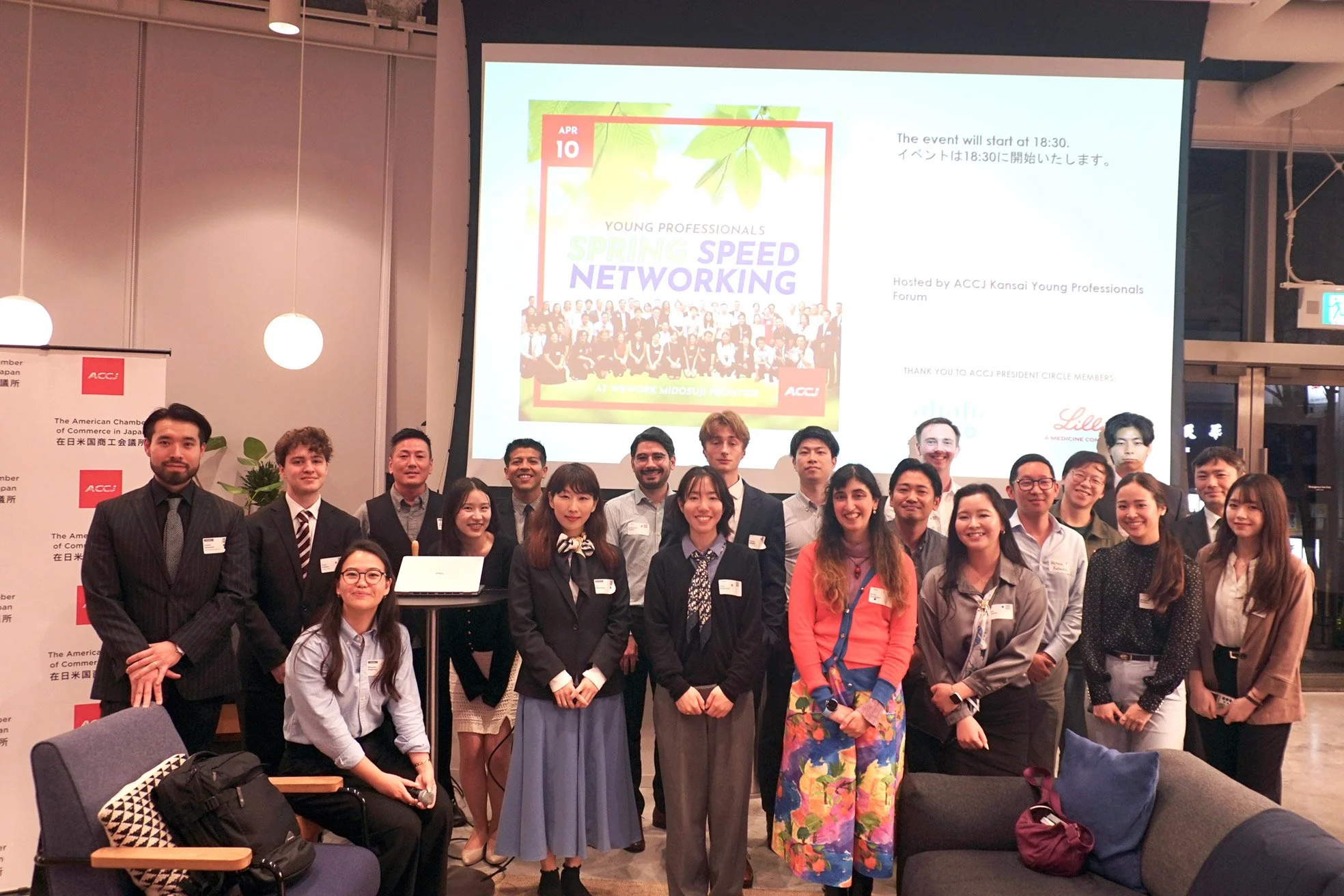
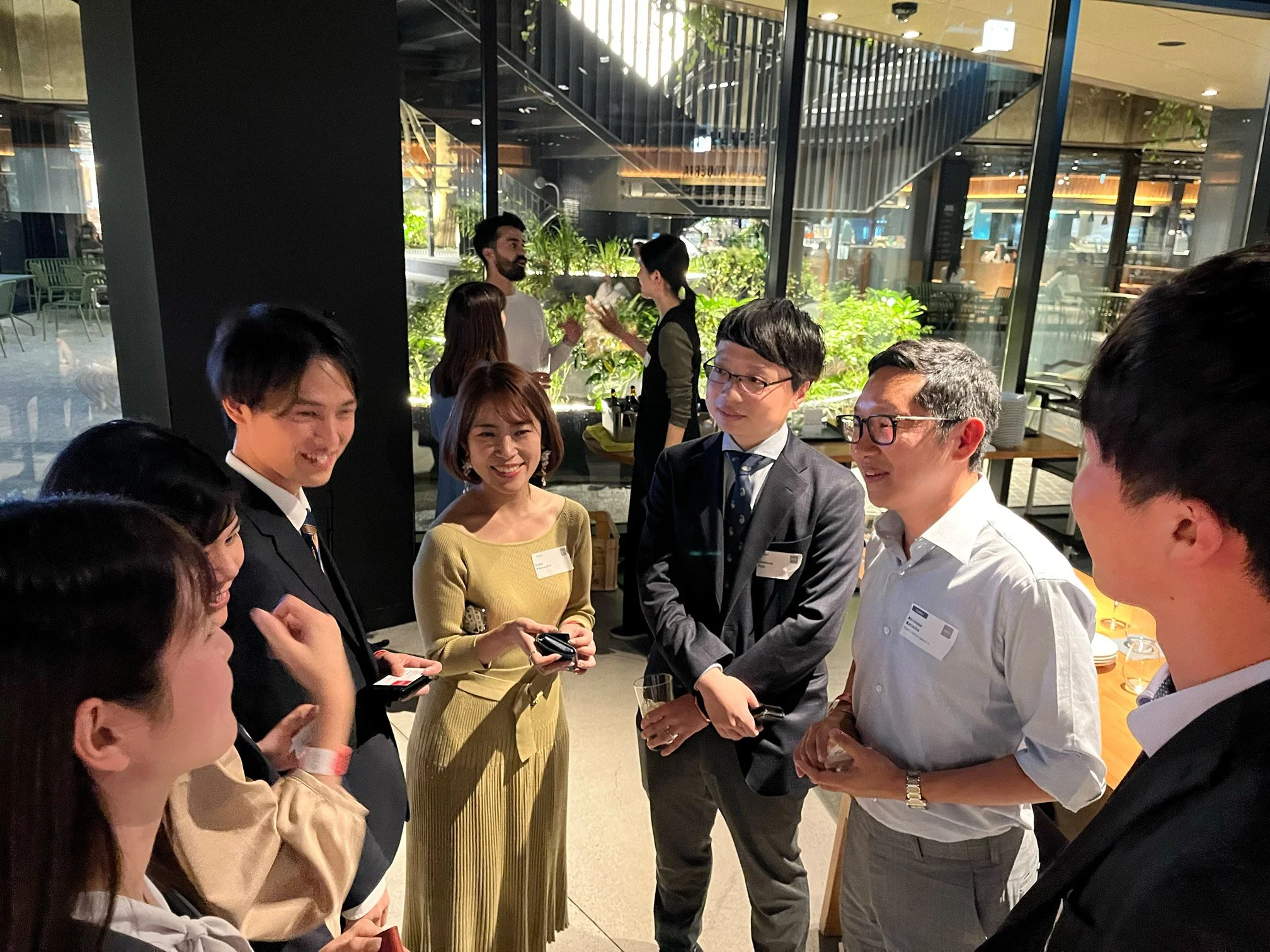
The American Chamber of Commerce in Japan hosted a wide variety of events in April and May. Among these were:
- Spring Meet and Greet at the Mandarin Oriental, Tokyo
- Legal Services and IP Committee Networking: An April Fools’ Special! No Joke!
- A Day in the Life: Tourism and Hospitality
- Trends in Venture Capital in Japan and the United States
- Destination Management Best Practices
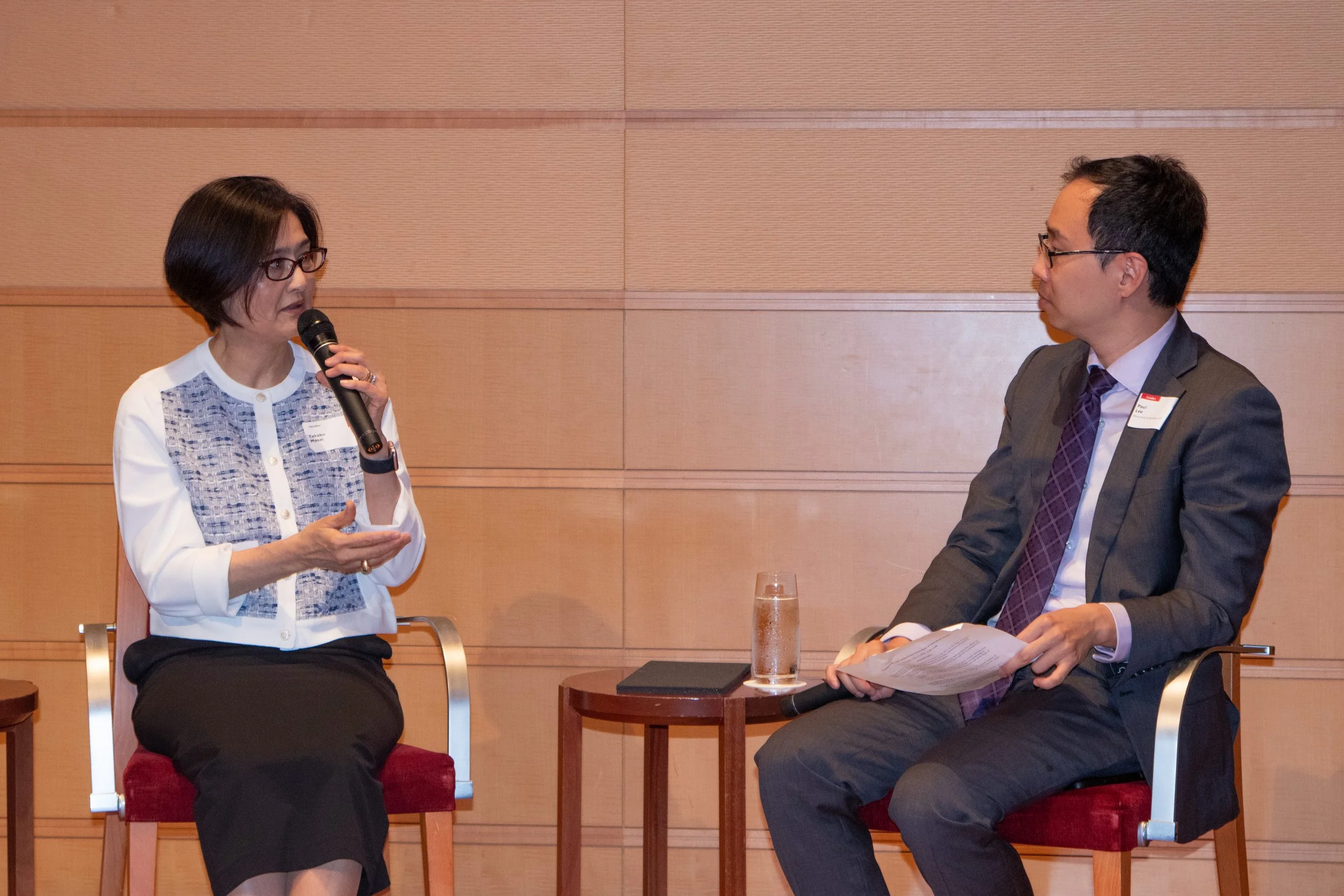
- Fireside Chat with Takako Masai, former Bank of Japan Board Member
- Now You Know Your GHIs
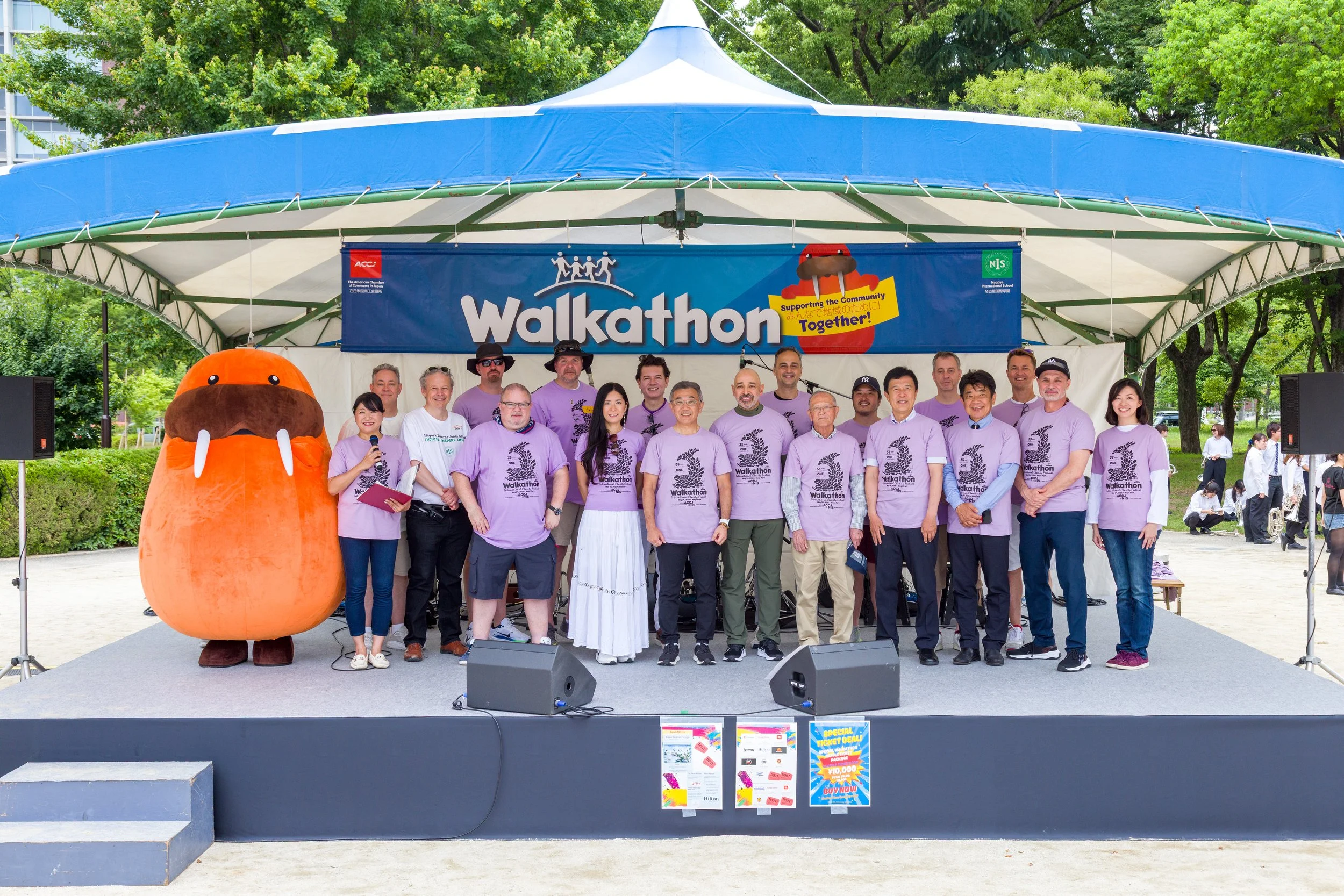
- The 35th ACCJ/NIS Chubu Walkathon
- Women’s Health in the Workplace: How Life-Stage Understanding Drives Performance, Career, and Culture
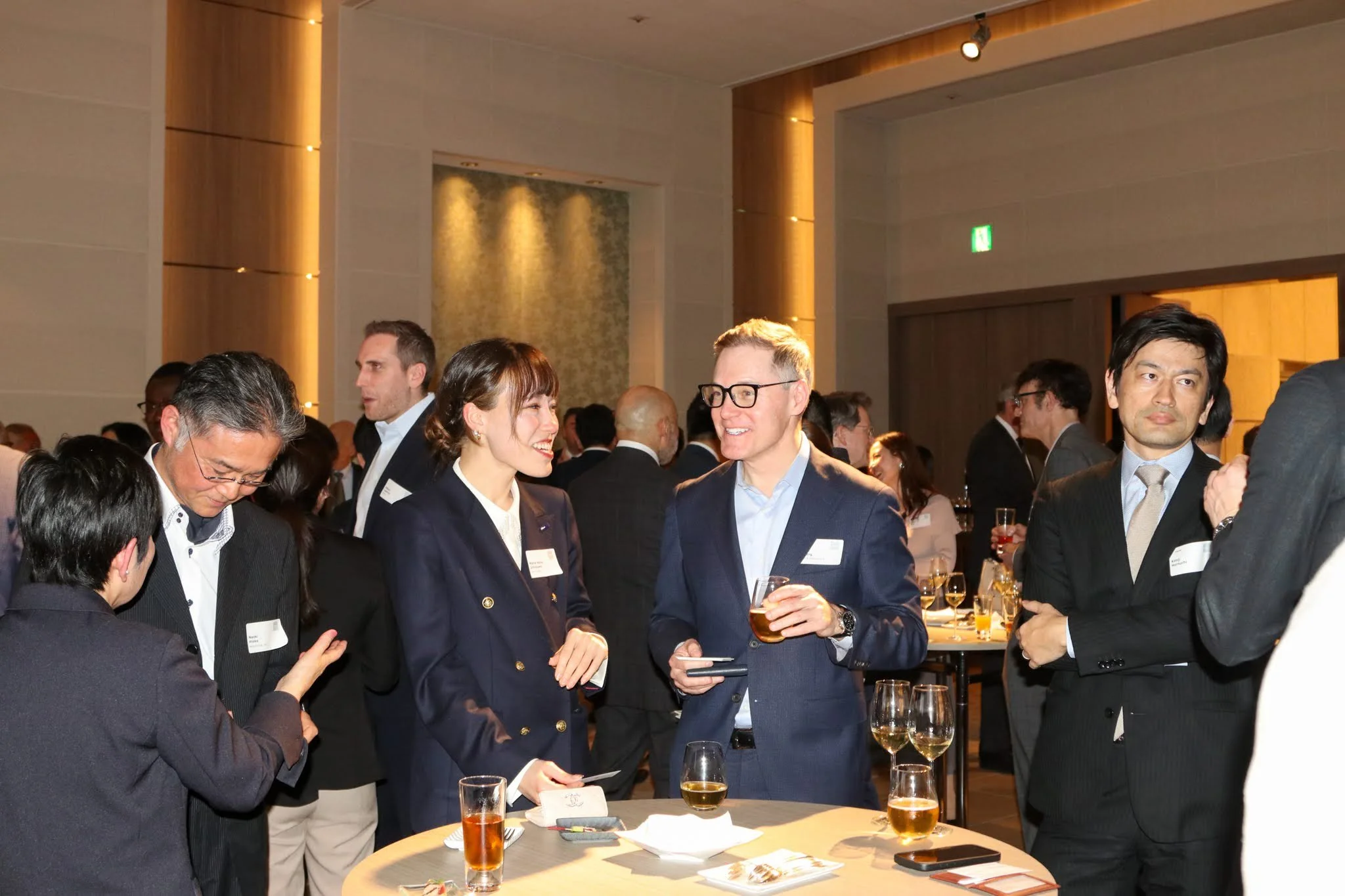
Here are some memorable moments from these events …
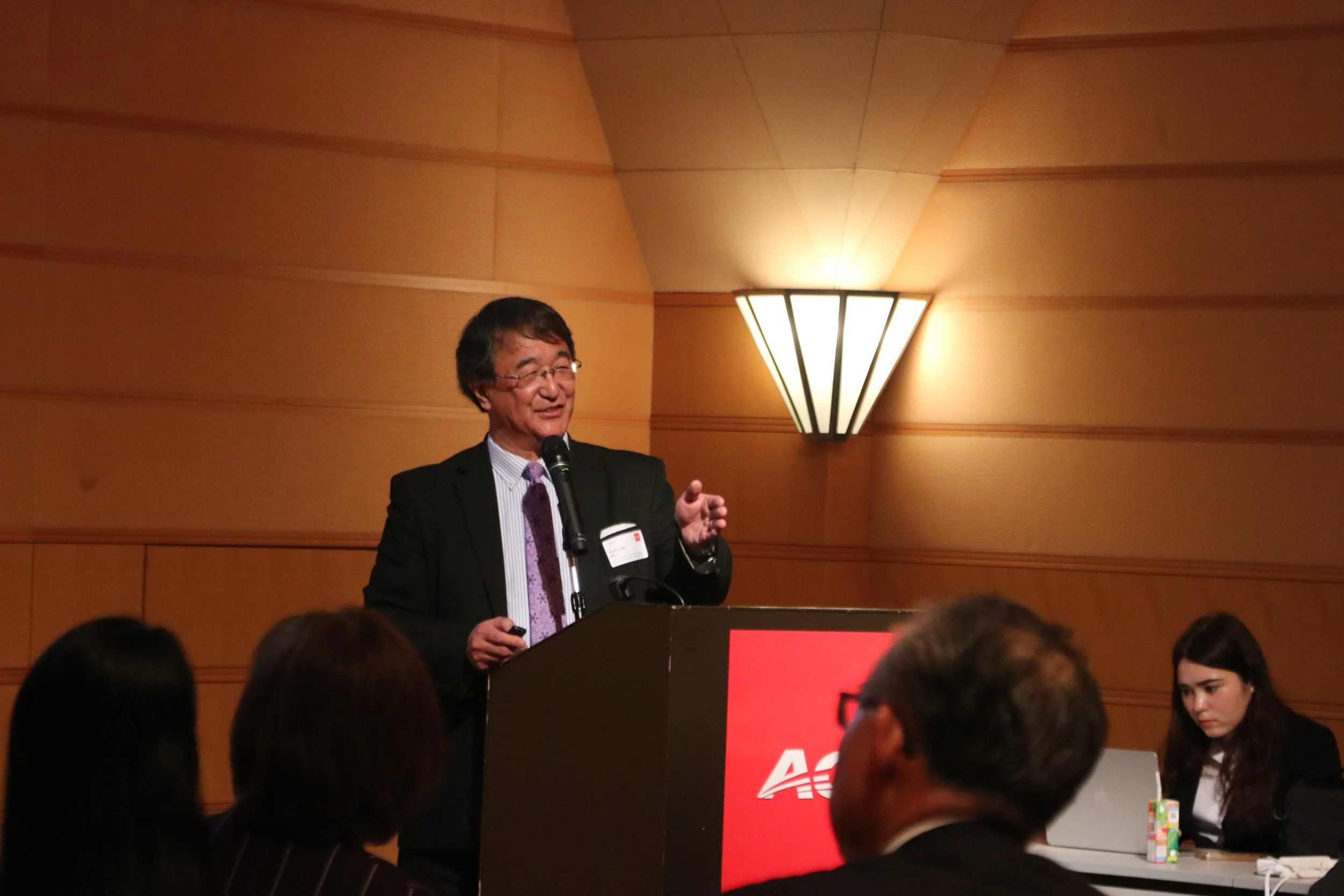
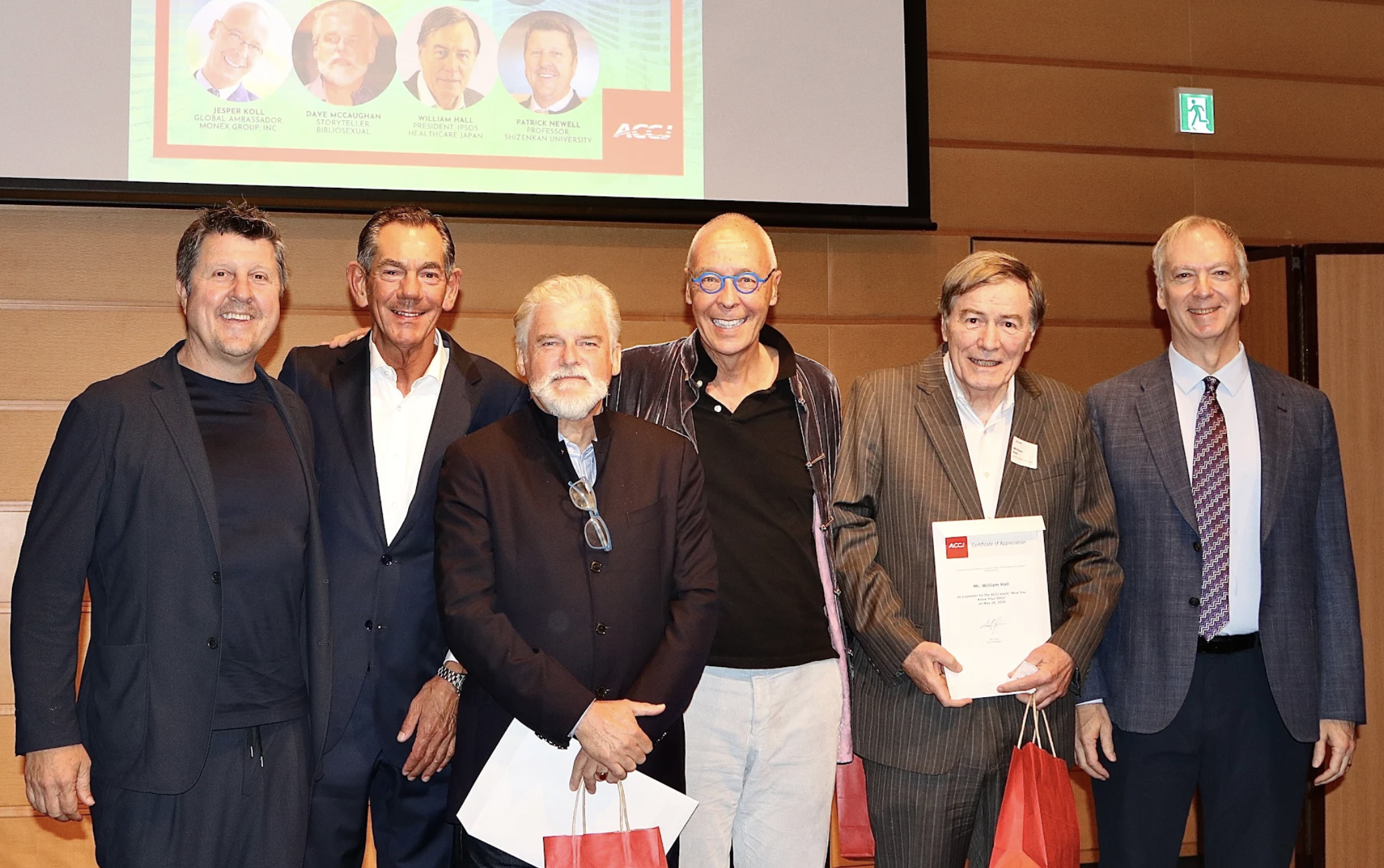
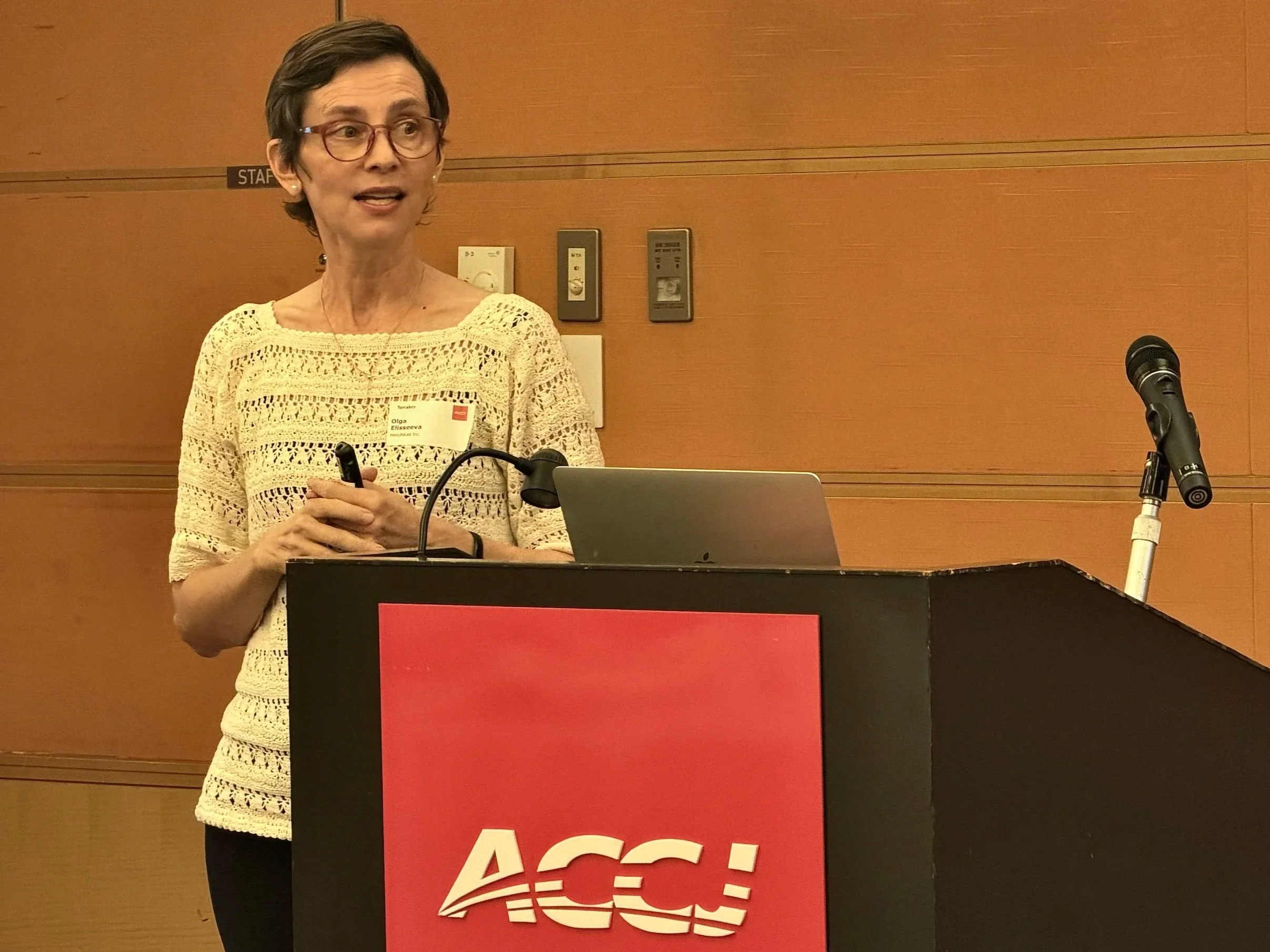
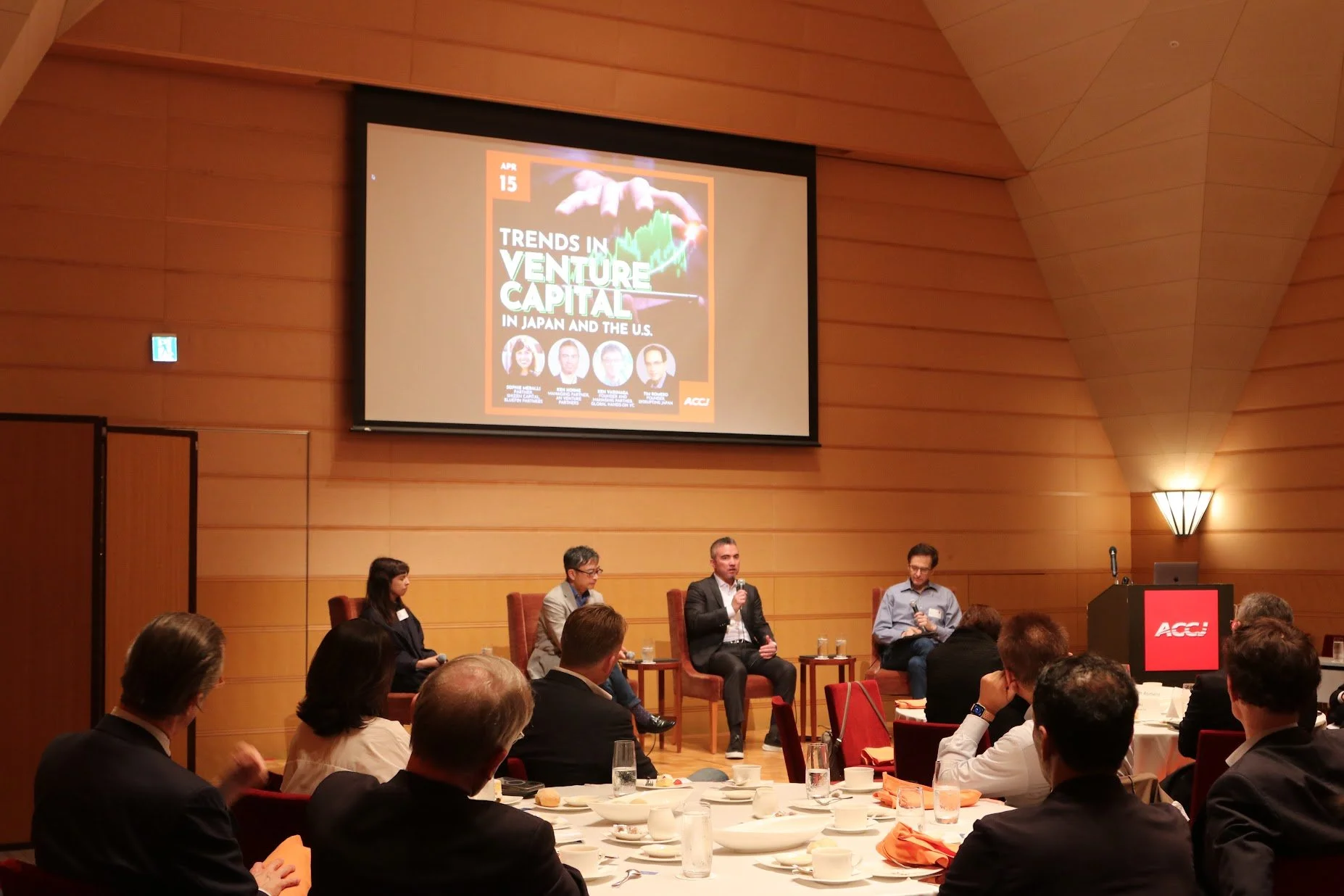

Dive into Kansai’s Economic Core
ACCJ members got a unique inside look at the country’s most important financial institution on March 24 as the ACCJ–Kansai Business Programs Committee hosted an event titled Dive into Kansai’s Economic Core.
The Bank of Japan welcomed ACCJ members for a behind-the-scenes look at its historic Kobe branch.
Members of the American Chamber of Commerce in Japan (ACCJ) got a unique look into the country’s most important financial institution, the Bank of Japan (BOJ), and a rare glimpse at its office building, on March 24 as the ACCJ–Kansai Business Programs Committee hosted an event titled Dive into Kansai’s Economic Core.
Following a short video explaining the BOJ’s functions and Japan’s current banknotes, which went into circulation with a new design in July 2024, attendees toured the Kobe branch. The visit included a peek inside the old vault with its display representing ¥4 billion (about $25 million) in ¥10,000 notes.
The BOJ’s Kobe branch, which celebrates its 100th anniversary in 2027, played a critical role in the immediate aftermath of the January 1995 Great Hanshin-Awaji Earthquake, including the replacement of banknotes that were burned or damaged by water and mud. There were also temporary branches of commercial banks quickly set up in the BOJ building to help survivors access their accounts and begin the recovery process.
Masaki Bessho, general manager of the BOJ’s Kobe branch, discussed the Kansai economic outlook and monetary policy in a presentation at the Kobe Bankers’ Association Building. After an active Q&A session, the event concluded with a networking reception for Bessho and fellow attendees, including:
- British Consul-General Michael Blyth
- Philippine Consul-General Donna Rodriguez
- Thai Acting Consul-General Pakprapai Kumbunlue
- Hungarian Consul and Head of Mission Andras Kerekes
- German Head of Economic Affairs Johannes Schweizer
“The event provided a really useful insight into the role Central Bank branches in Japan continue to play and a great discussion on the Japanese economy,” said Blyth.
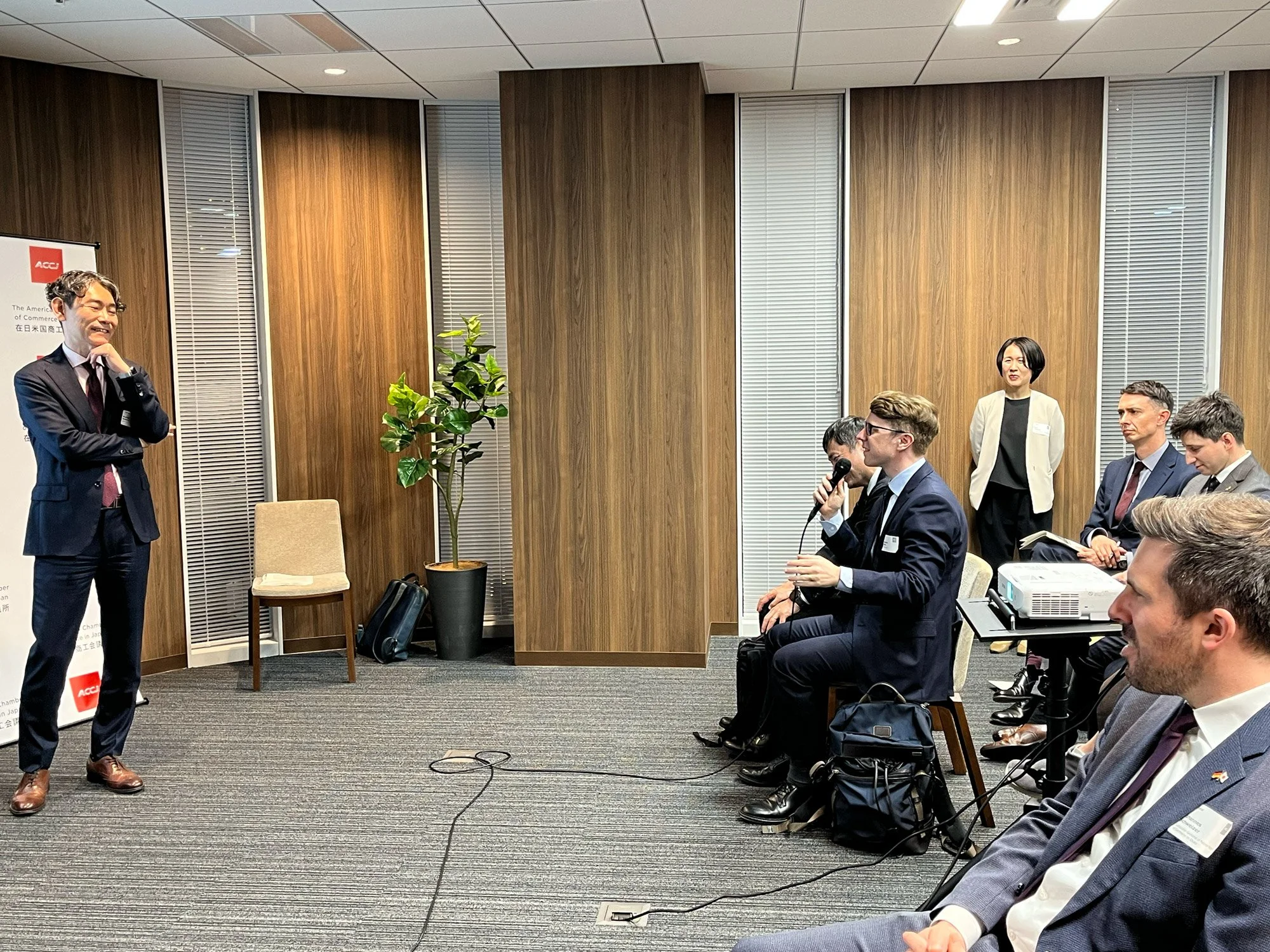
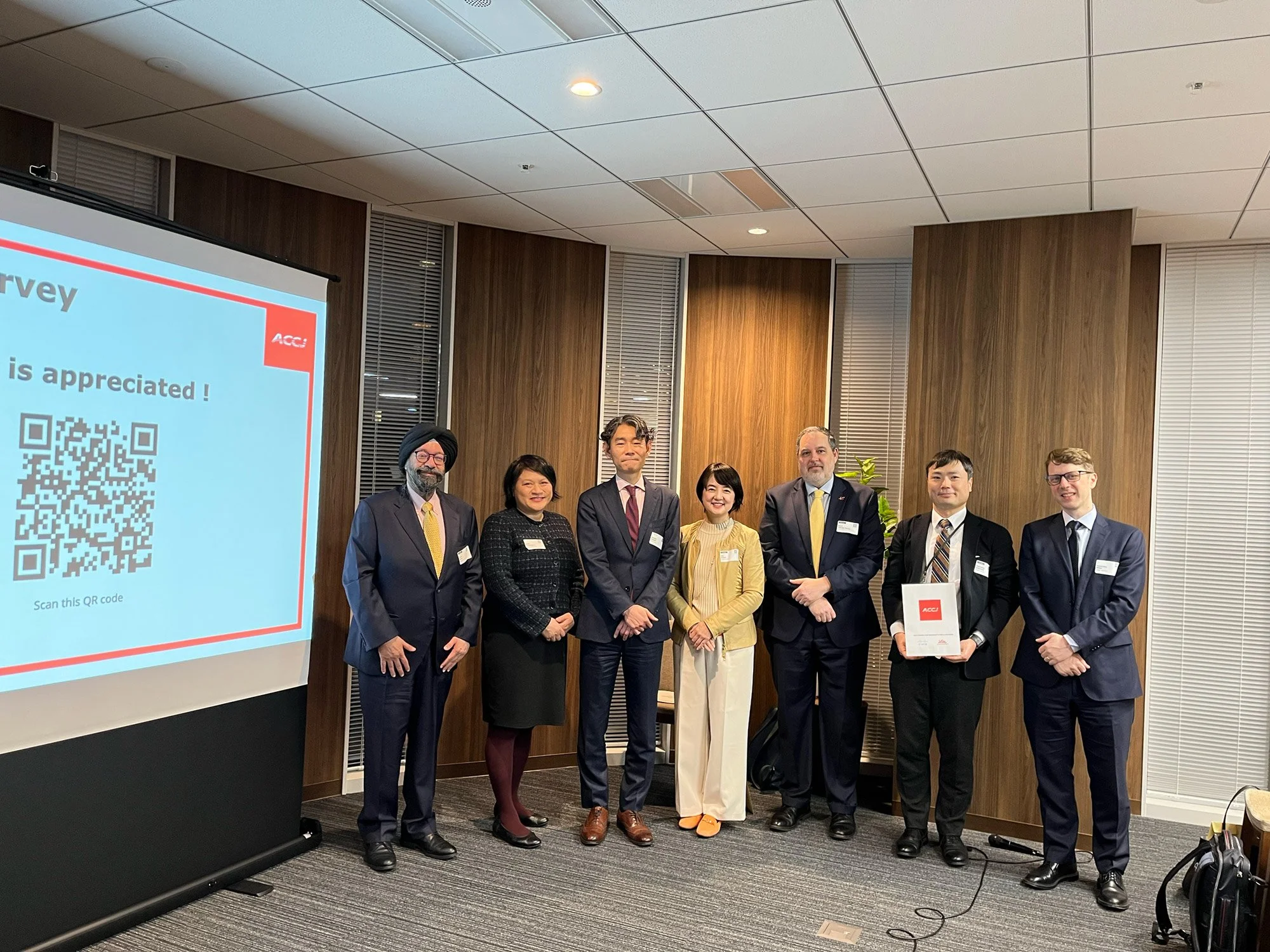
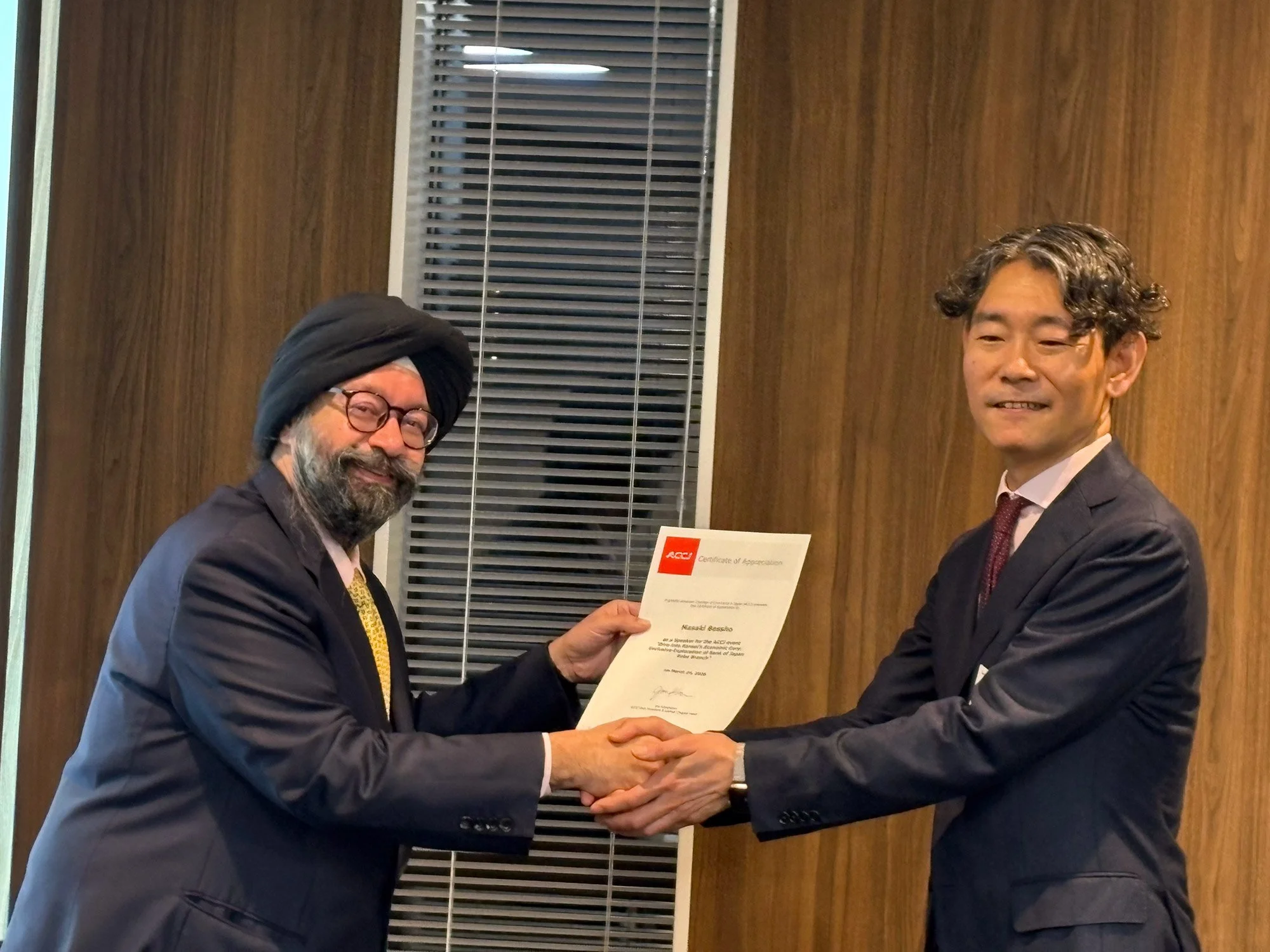
Bessho remarked: “I am absolutely delighted that we could successfully host the guided exploration of the Bank of Japan Kobe Branch and the subsequent briefing on the Kansai economic outlook for the ACCJ–Kansai chapter. During the site visit, it was deeply encouraging to receive such warm words of praise regarding the Bank’s tireless efforts during the Great Hanshin-Awaji Earthquake.”
The questions raised during the briefing, Bessho noted, were exceptionally sharp and insightful, making the dialogue both stimulating and genuinely enjoyable. “Furthermore, the networking session provided a valuable window into the diverse activities of global corporations operating right here in Kansai. This event served as an outstanding opportunity to strengthen our ties with foreign business leaders and diplomats based in the region. I truly look forward to deepening our engagement with the ACCJ and continuing this meaningful collaboration in the years to come.”
ACCJ–Kansai Lead Aiko Baba added: “I am grateful for the interaction we had. My hope is to foster deeper friendships that will serve as a foundation for new opportunities and growth for our beloved Kansai.”
2026 ACCJ Shinnenkai
Members and guests ushered in the Year of the Horse at celebrations in Kansai on January 23 and Tokyo on the 27th.
Members and guests ushered in the Year of the Horse at celebrations in Tokyo and Kansai.
Photos by Yuuki Ide (Tokyo) and Ayah Helalat (Kansai)
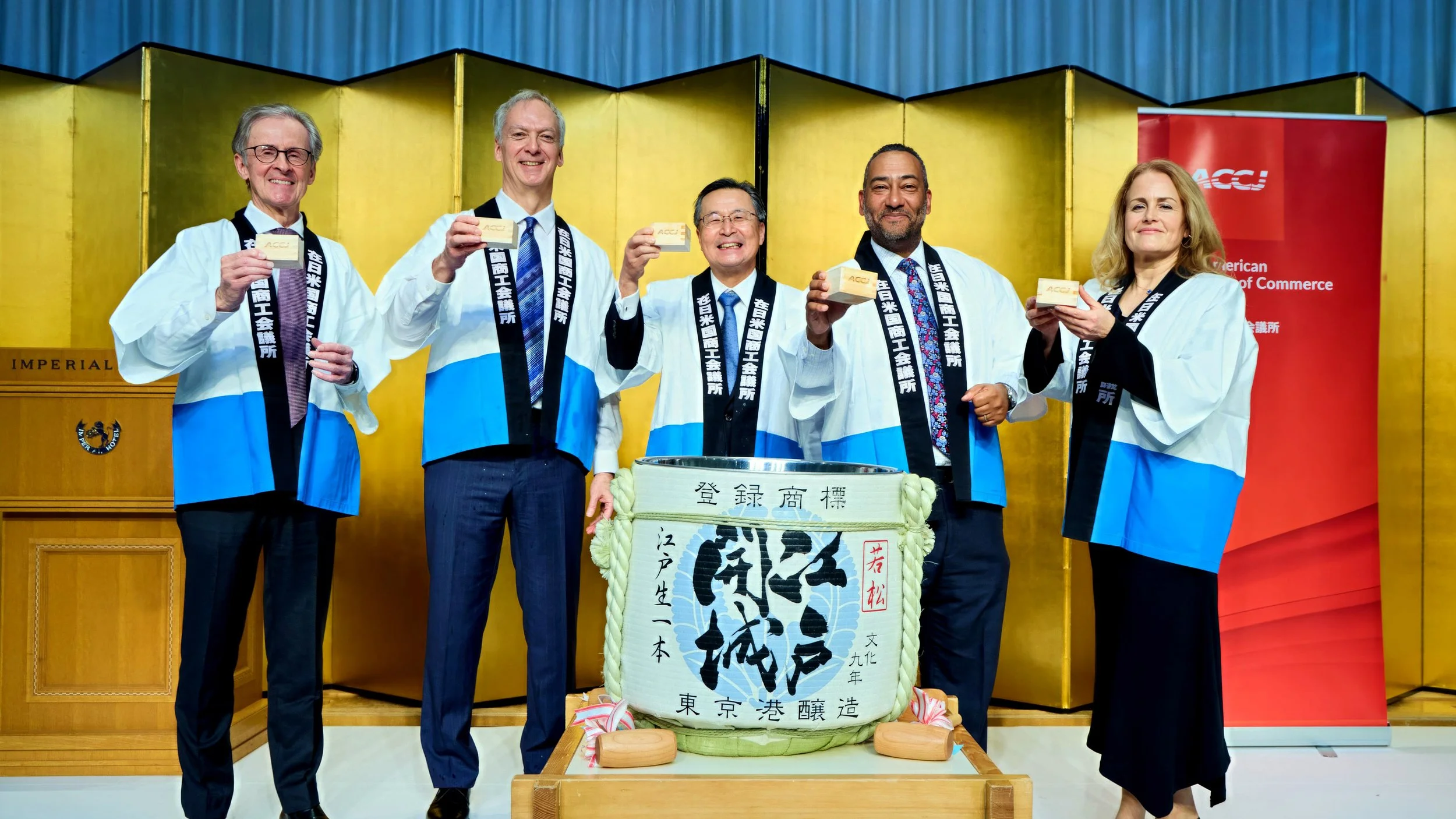
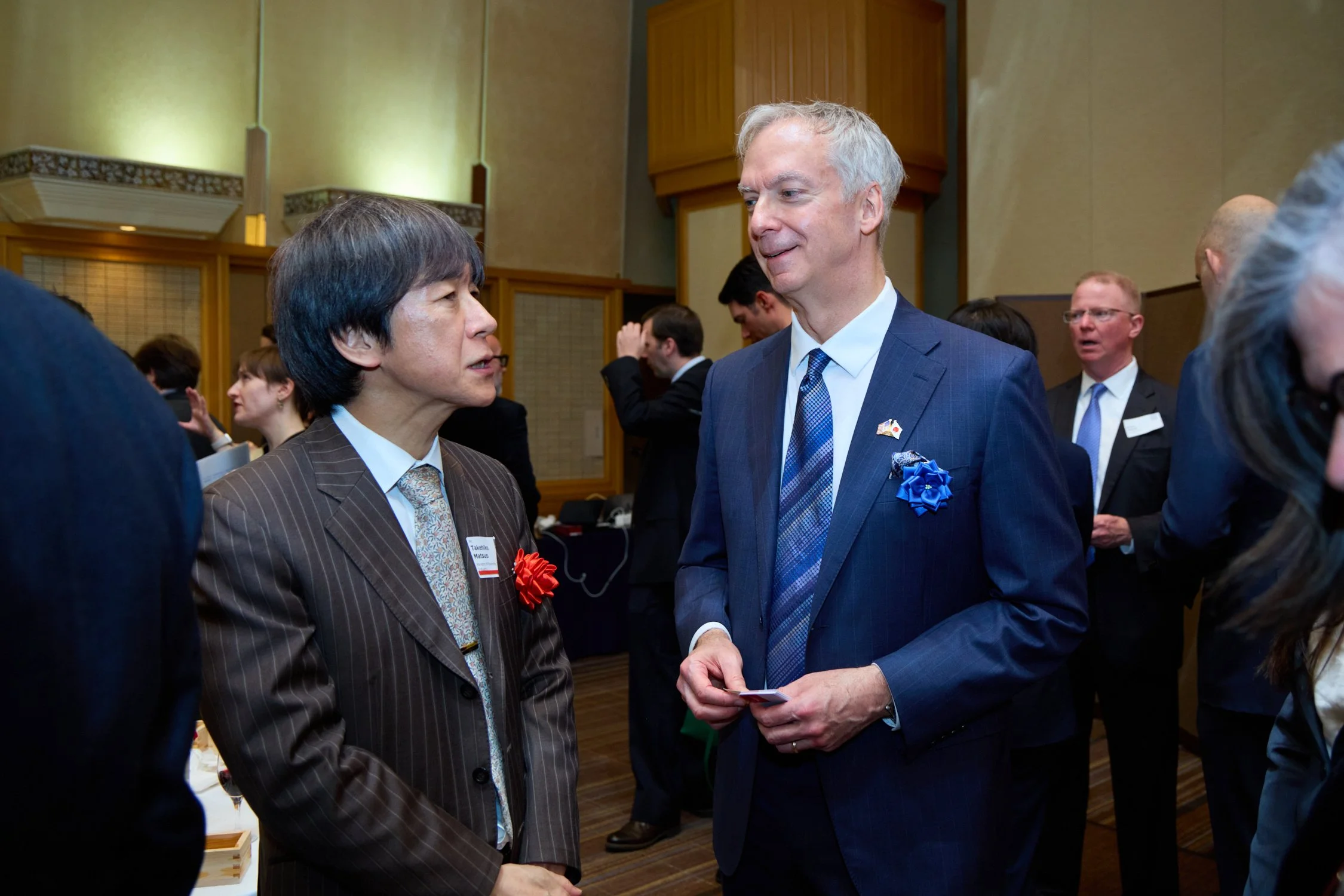
The American Chamber of Commerce in Japan (ACCJ) ushered in the Year of the Horse with two shinnenkai celebrations, one at the W Osaka on January 23 and another at the Imperial Hotel in Tokyo on January 27.
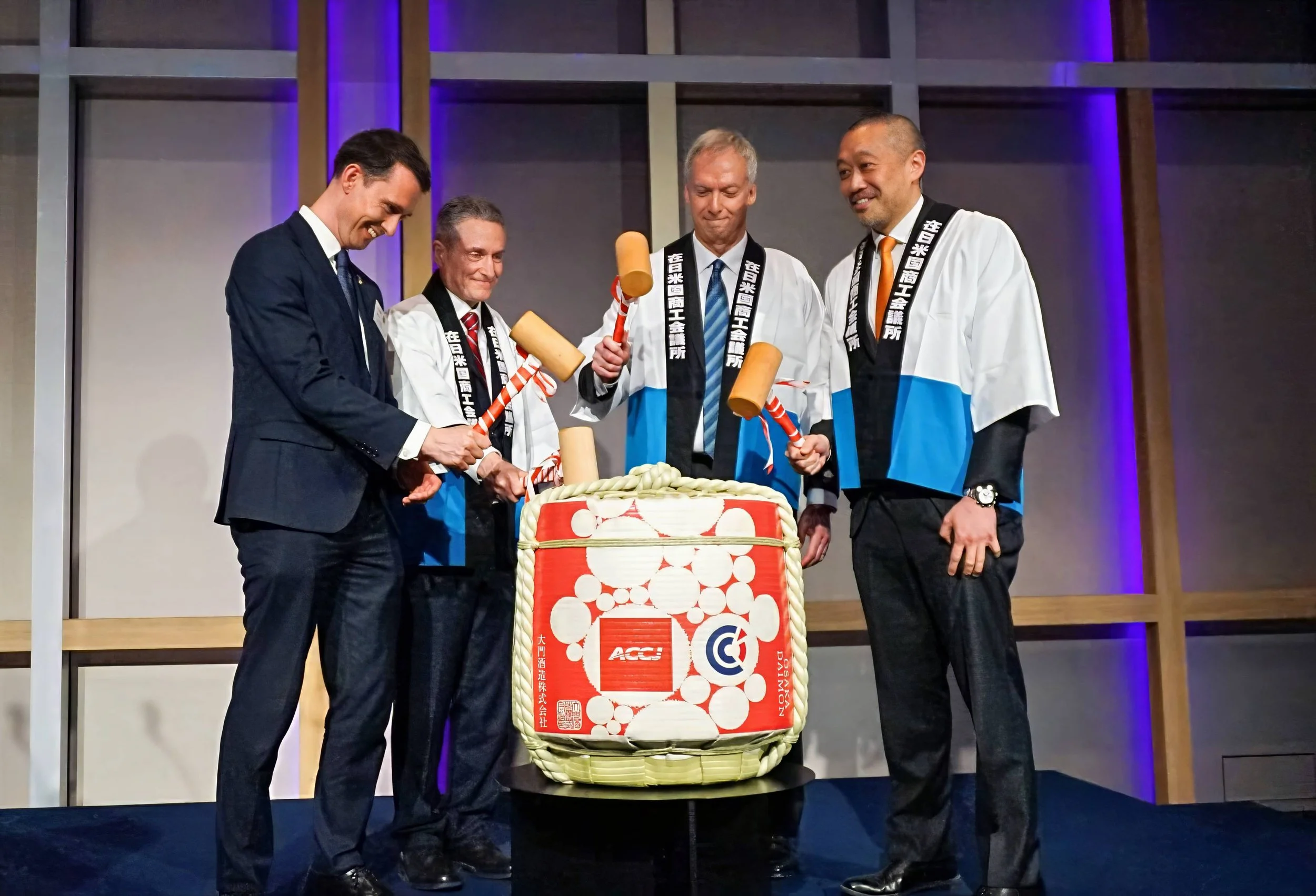
The events kicked off the New Year with the traditional kagami-biraki—the ceremonial cracking open of a sake barrel—followed by networking with fellow members, friends, and officials from the US and Japanese governments.
In Tokyo, a record 370 attendees filled the Imperial Hotel’s Hikari Room for an event emceed by Secure Digital Infrastructure Committee Vice-Chair David Parker that not only kicked off another year of business and networking but also the celebration of America’s 250th birthday.
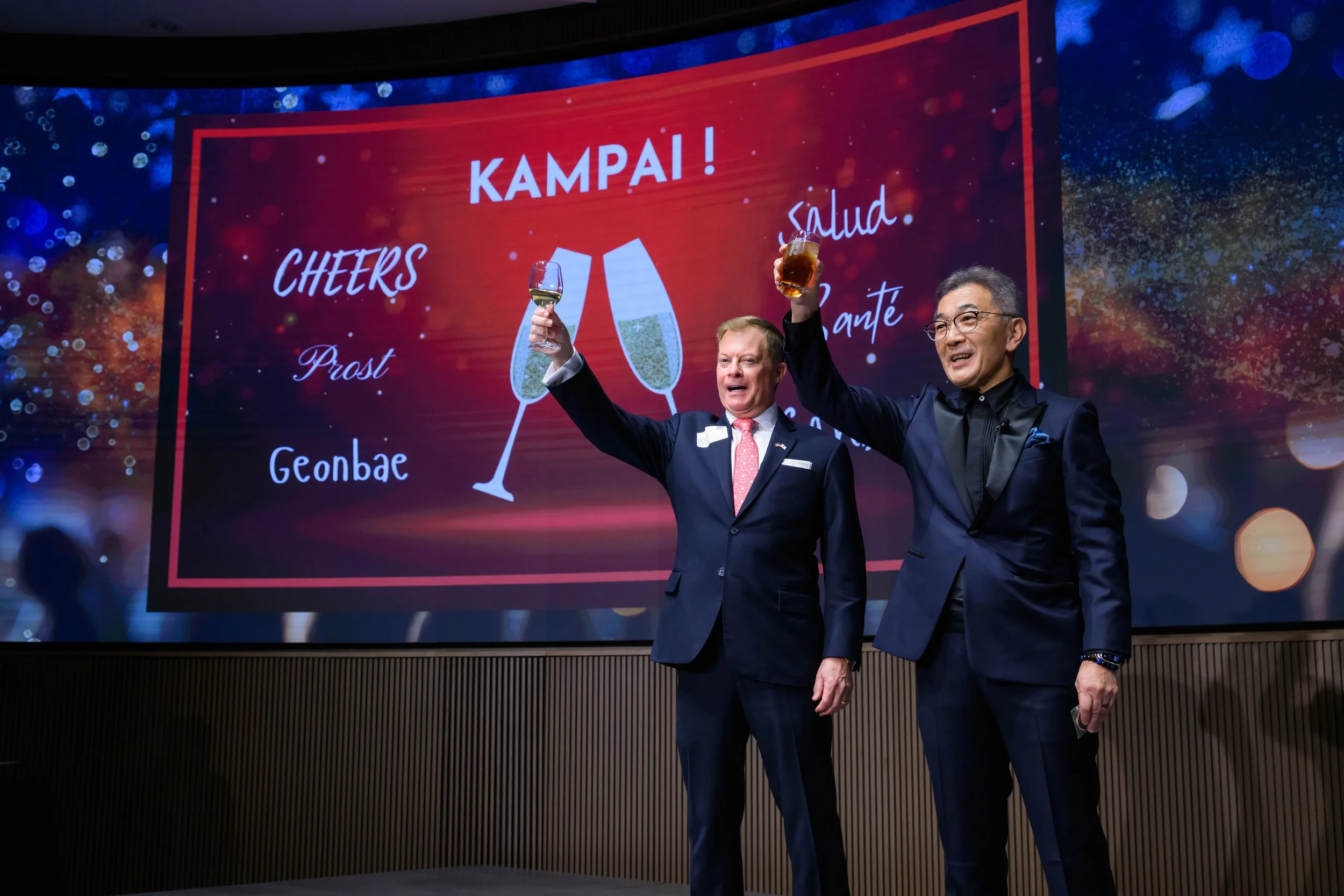
After ACCJ President Eric John’s opening remarks, US Embassy Deputy Chief of Mission Aaron D. Snipe shared an inspiring view of the enduring US–Japan alliance. They were then joined by ACCJ Chairman Christopher LaFleur and Executive Director Laura Younger as well as Norihiko Ishiguro, chairman and chief executive officer of the Japan External Trade Organization, for the kagami-biraki and a kampai with sake generously provided by Tokyo Port Brewery.
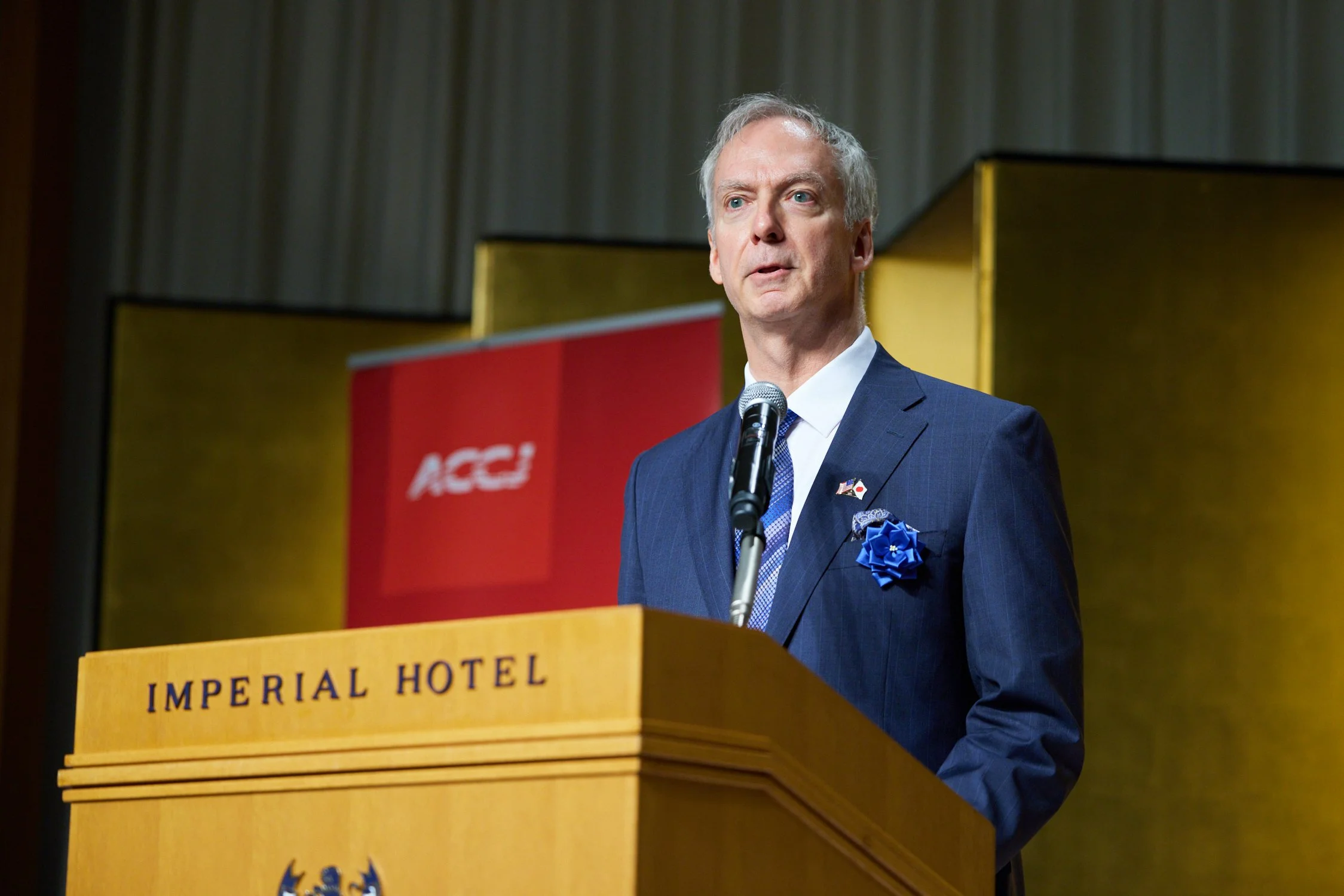
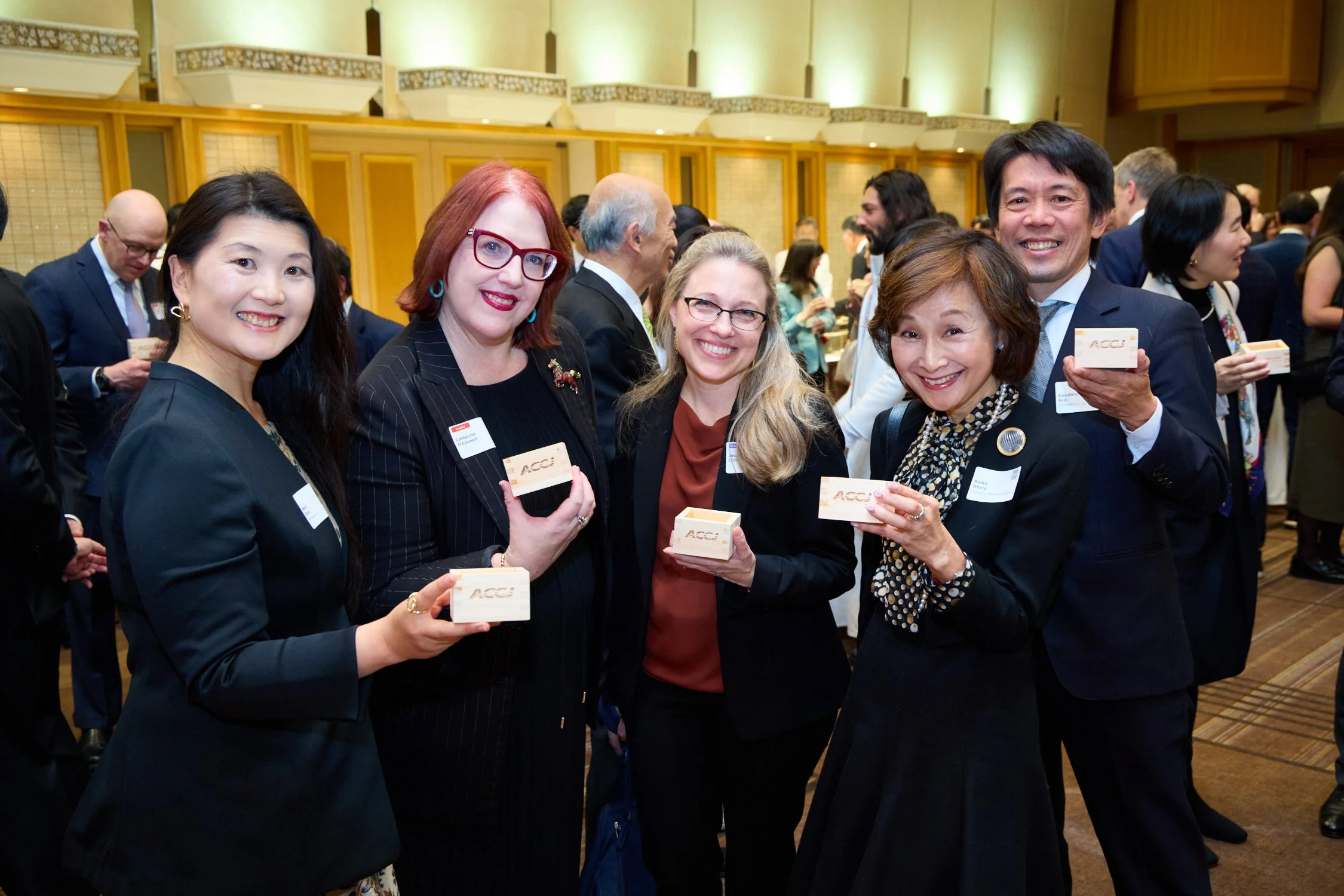
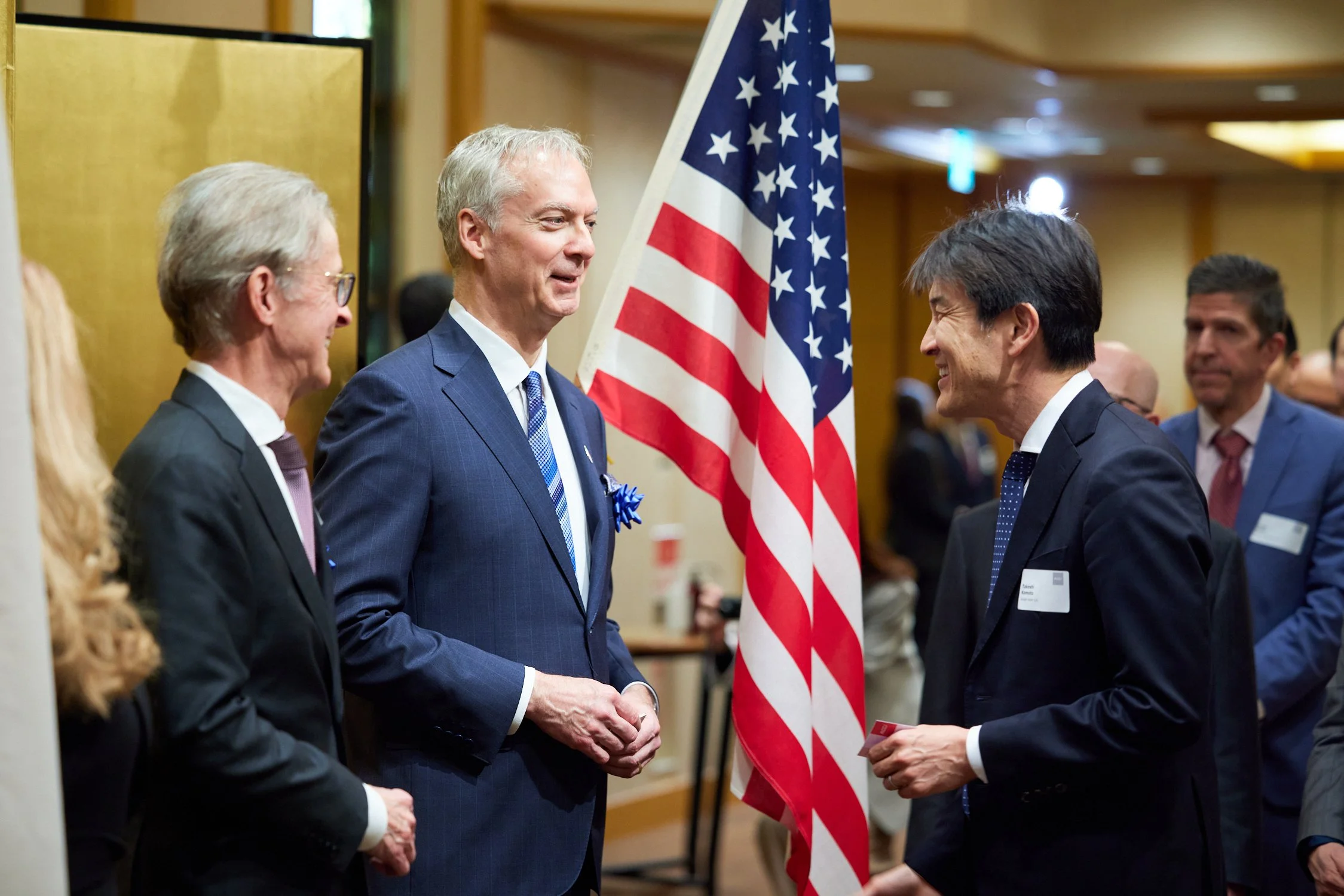
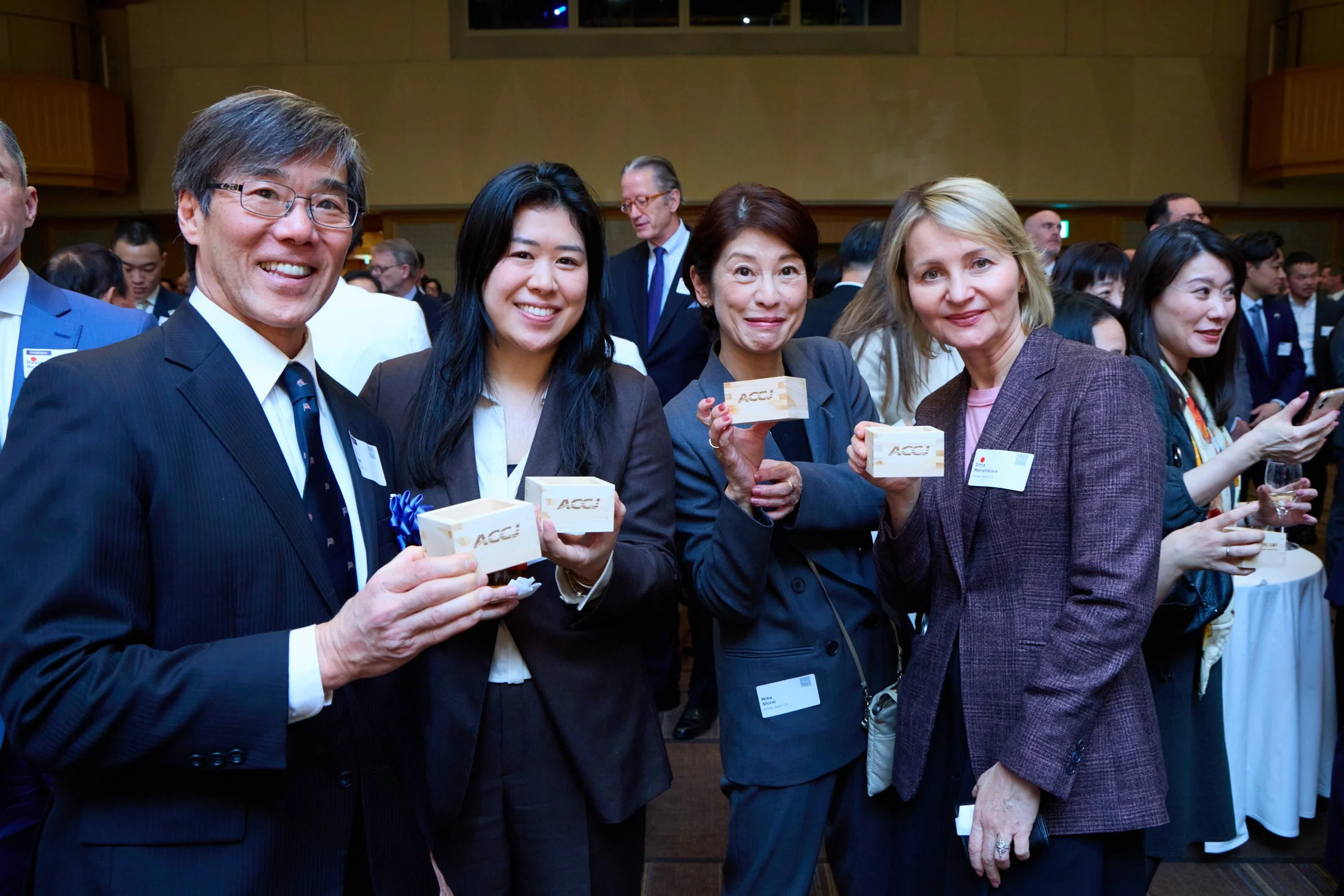
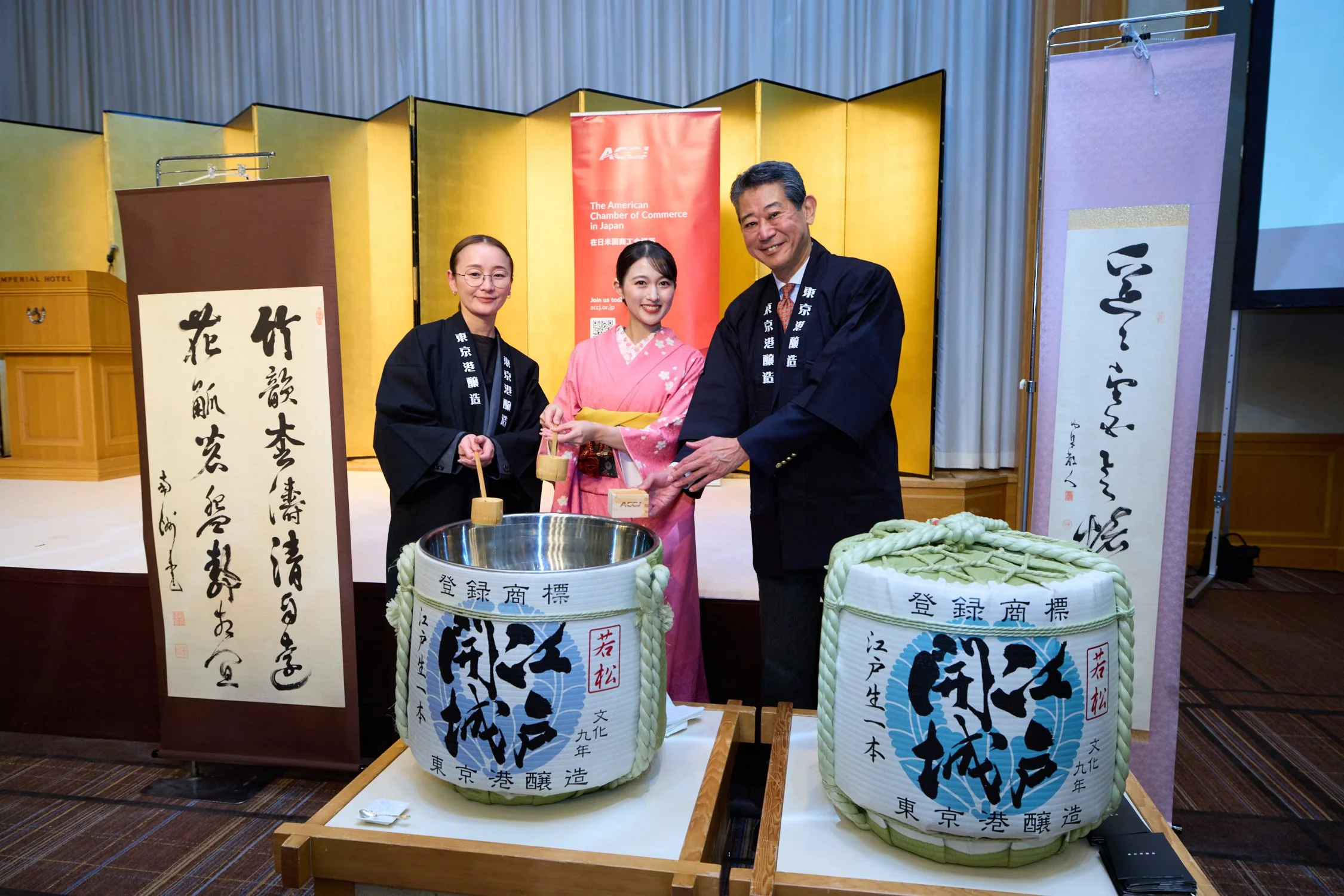
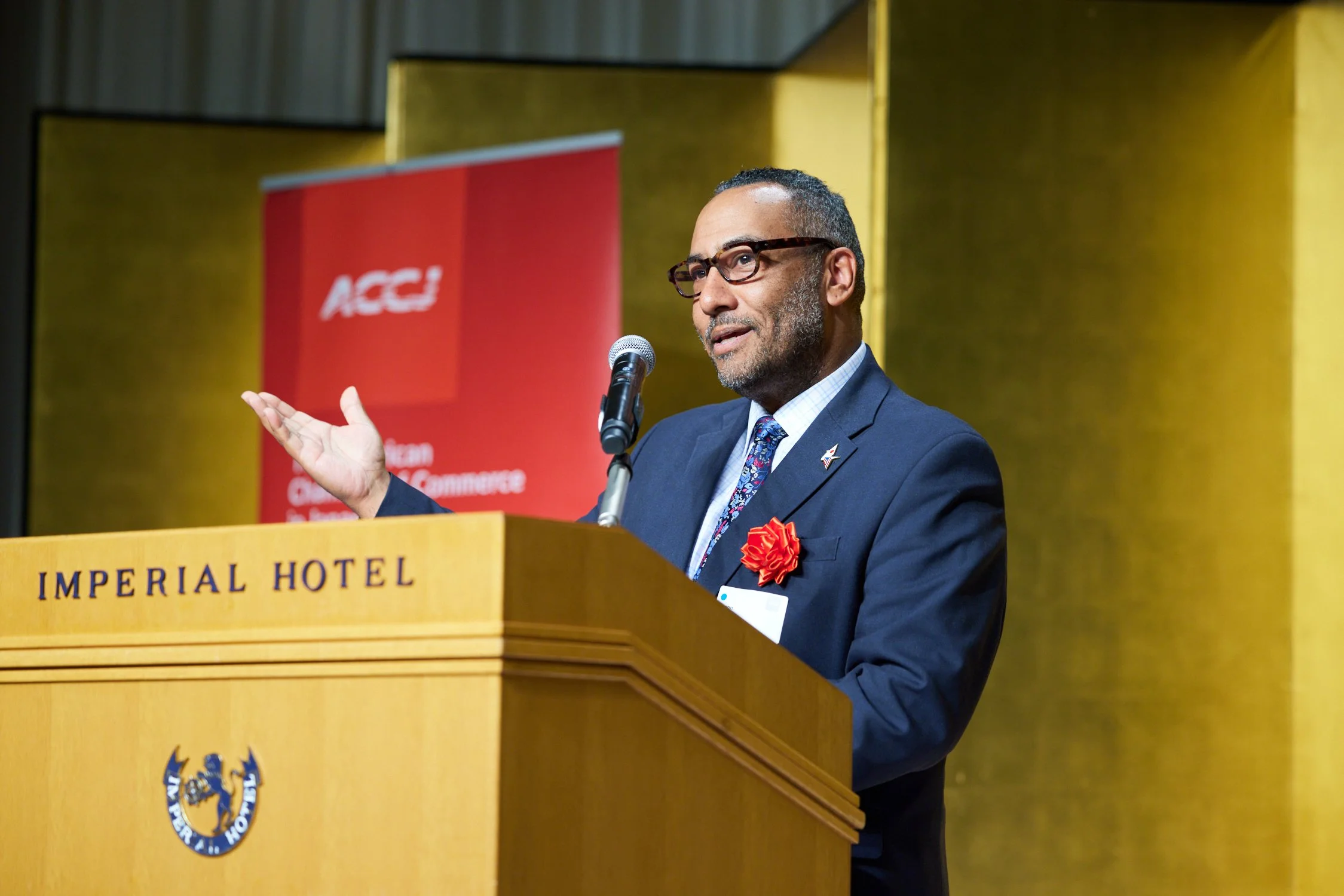
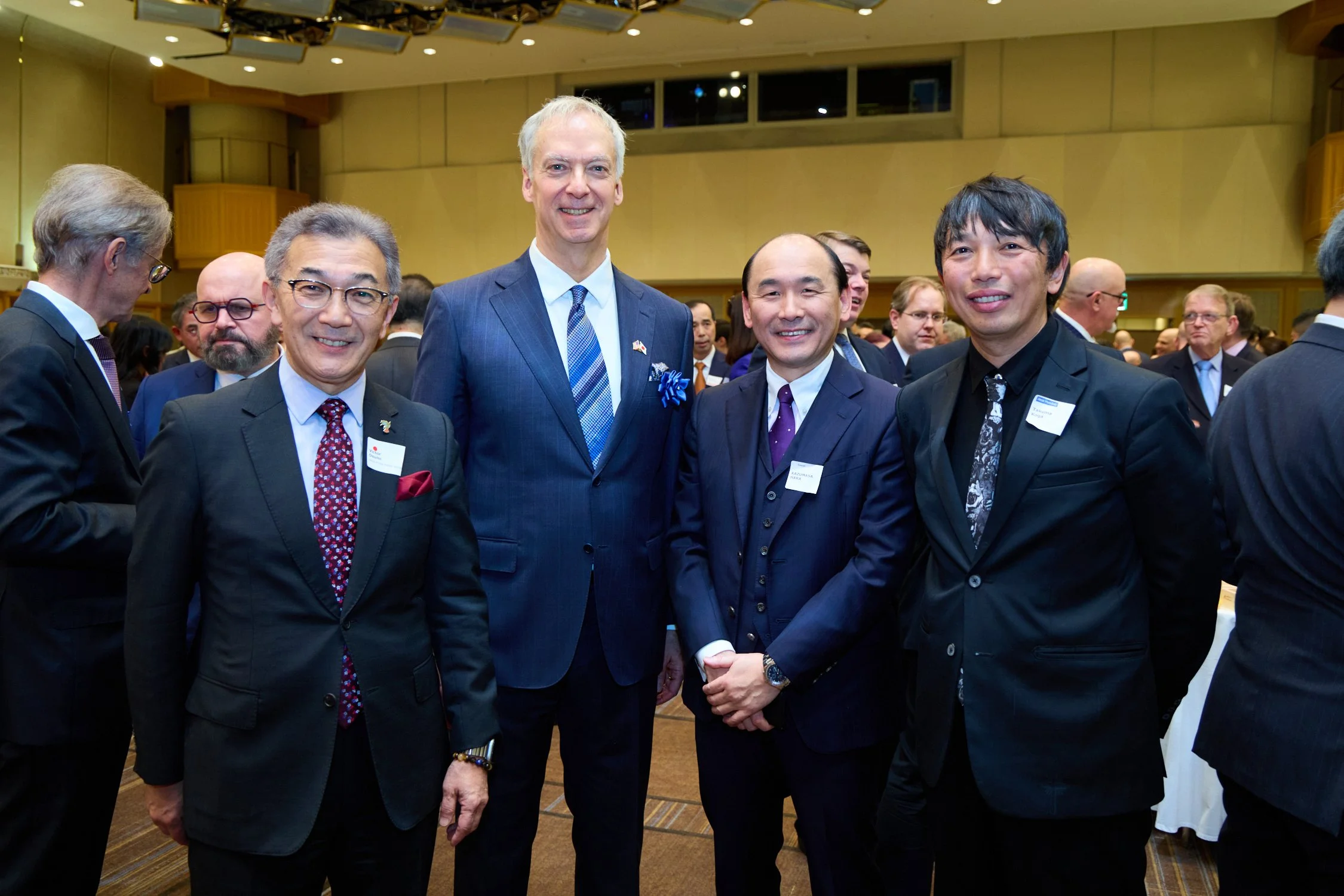
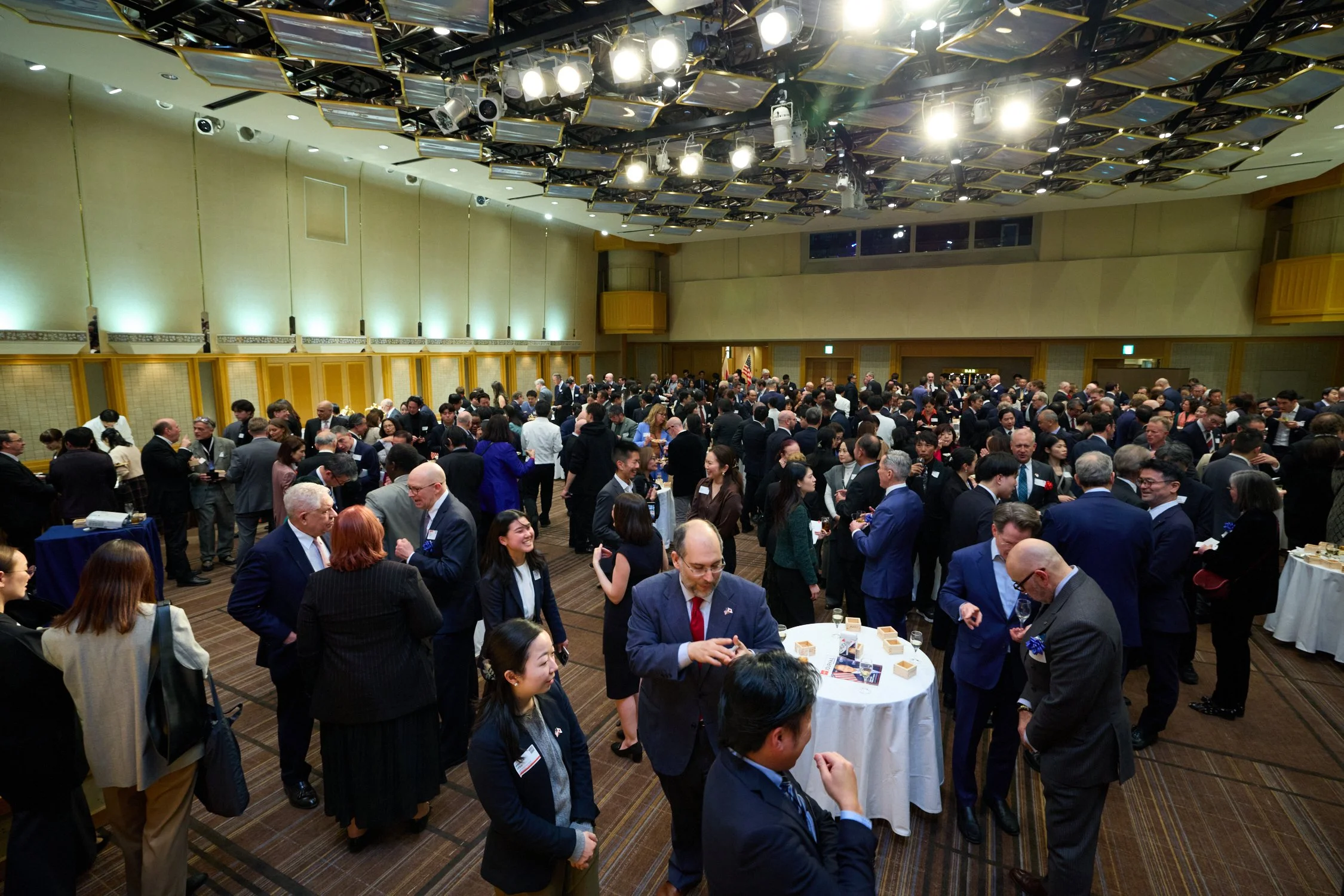
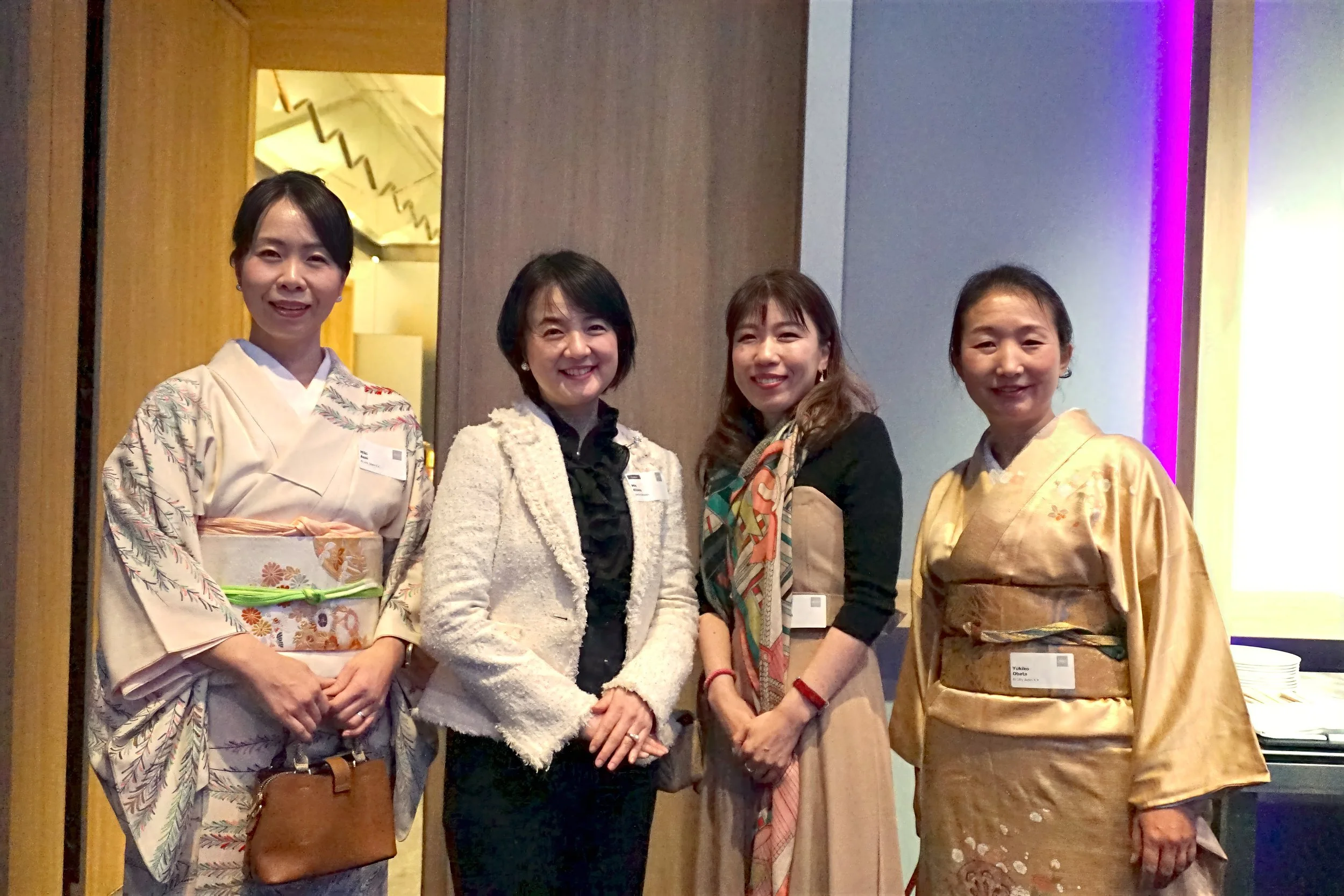
In Kansai, members and guests gathered for an evening of international connections co-hosted by the French Chamber of Commerce in Japan and officially endorsed by the British Chamber of Commerce in Japan.
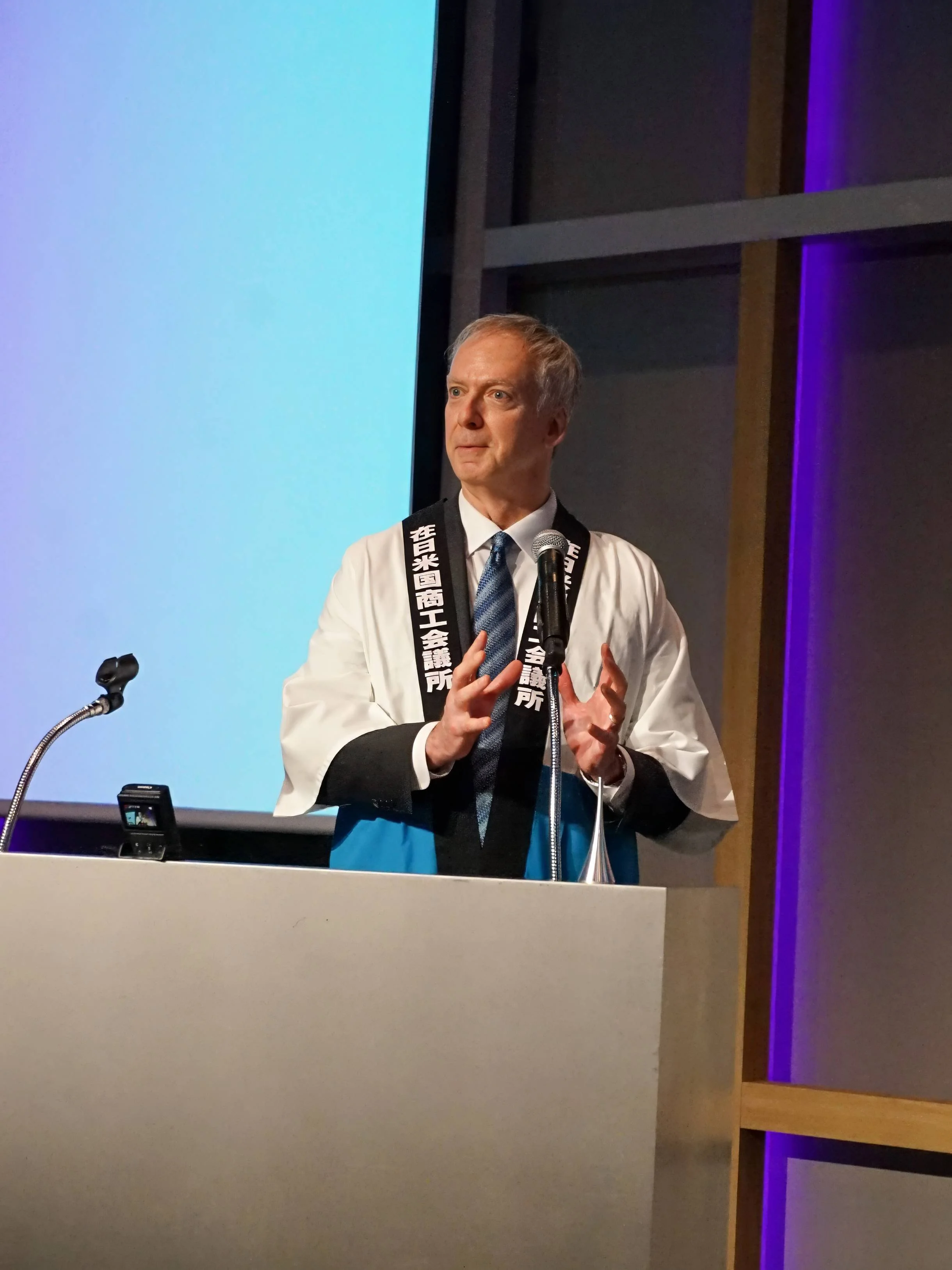
ACCJ Vice President–Kansai Jiro Kawakami welcomed everyone before special remarks from Richard N. Larsen, consul general at the US Consulate General Osaka-Kobe. This was Larsen’s first ACCJ event. ACCJ President Eric John gave a kampai speech and was then joined by Larsen, UK consul general Michael Blyth, and ACCJ-Kansai leaders for the kagami-biraki as the room erupted with cheers.
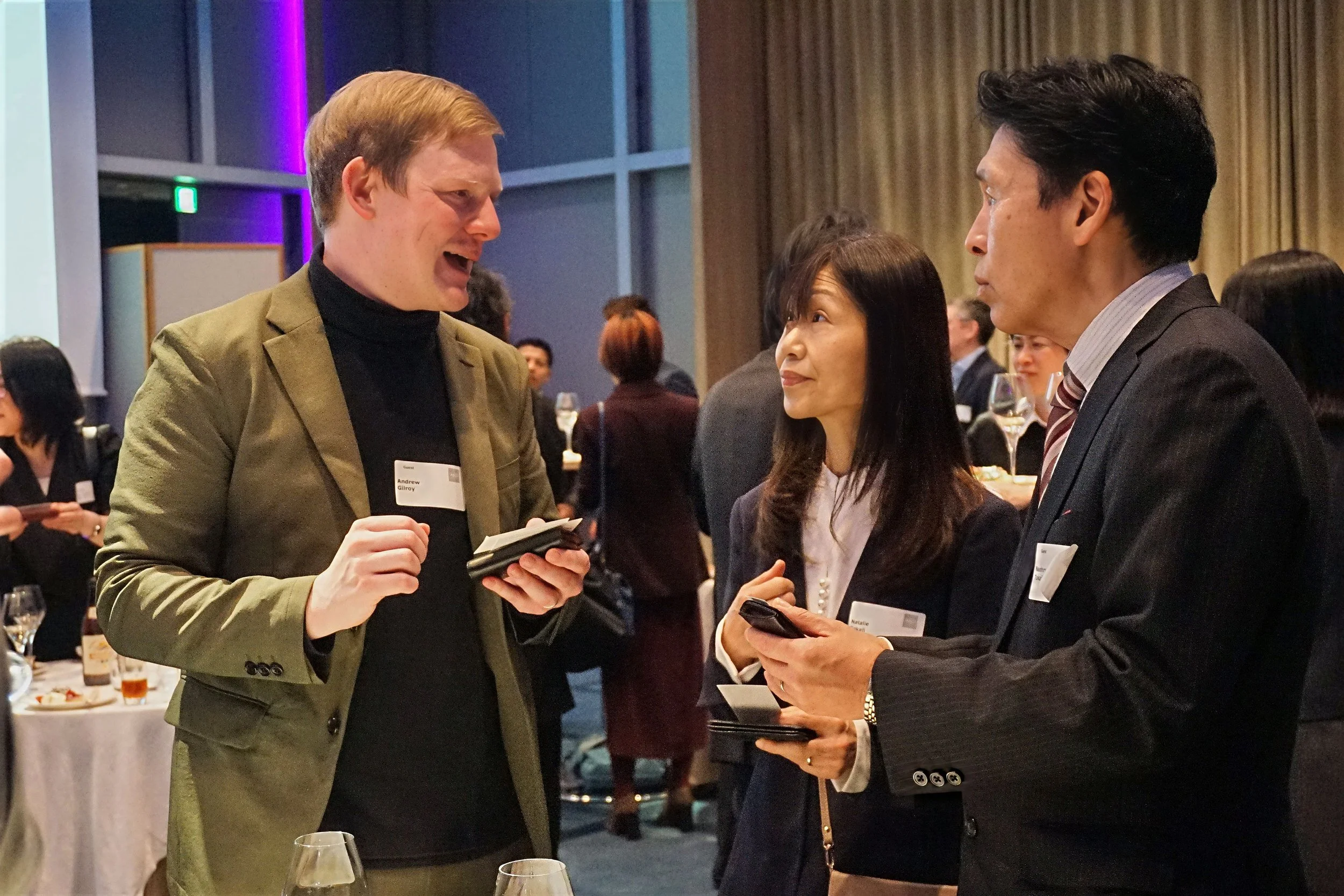
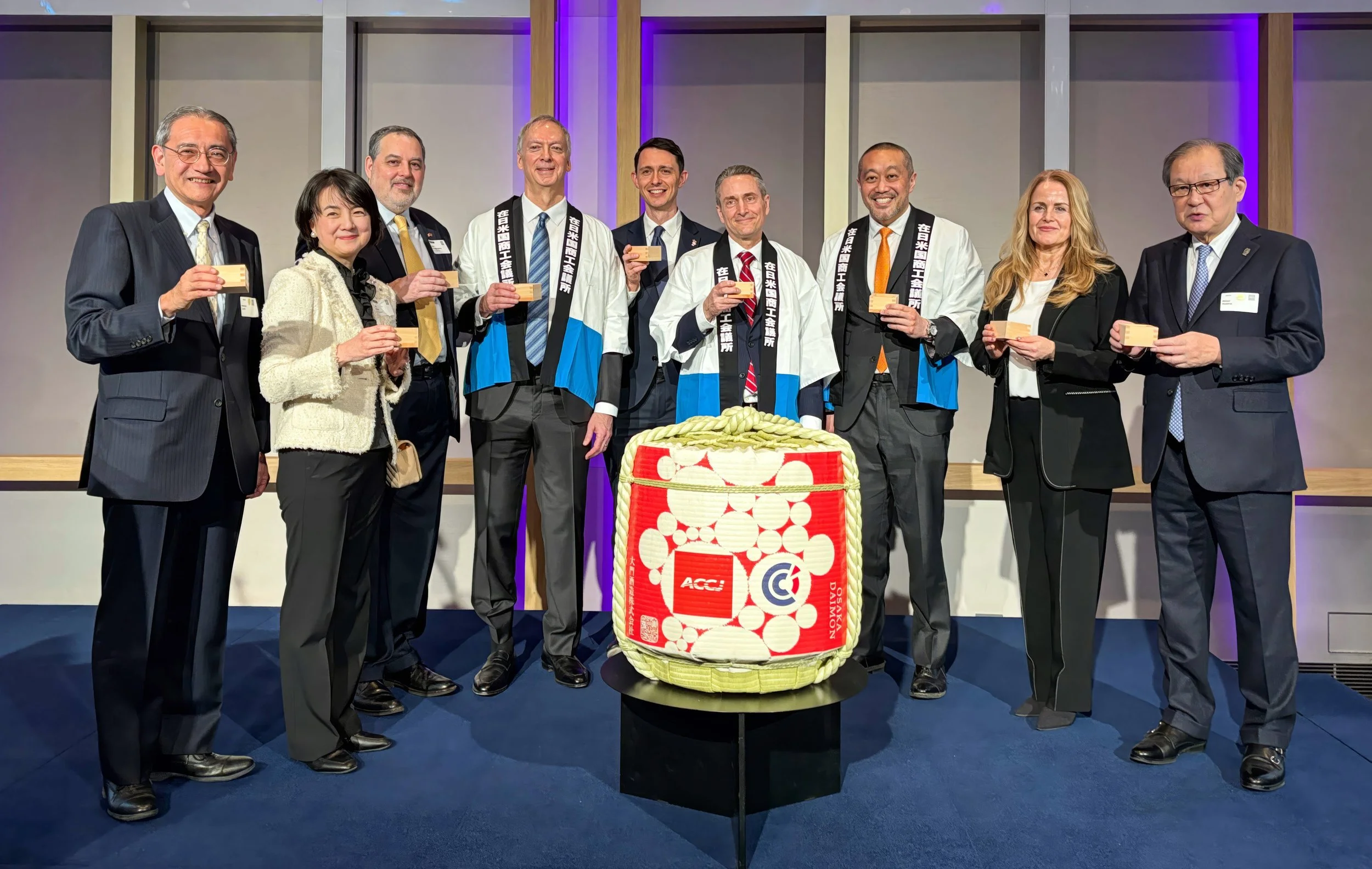
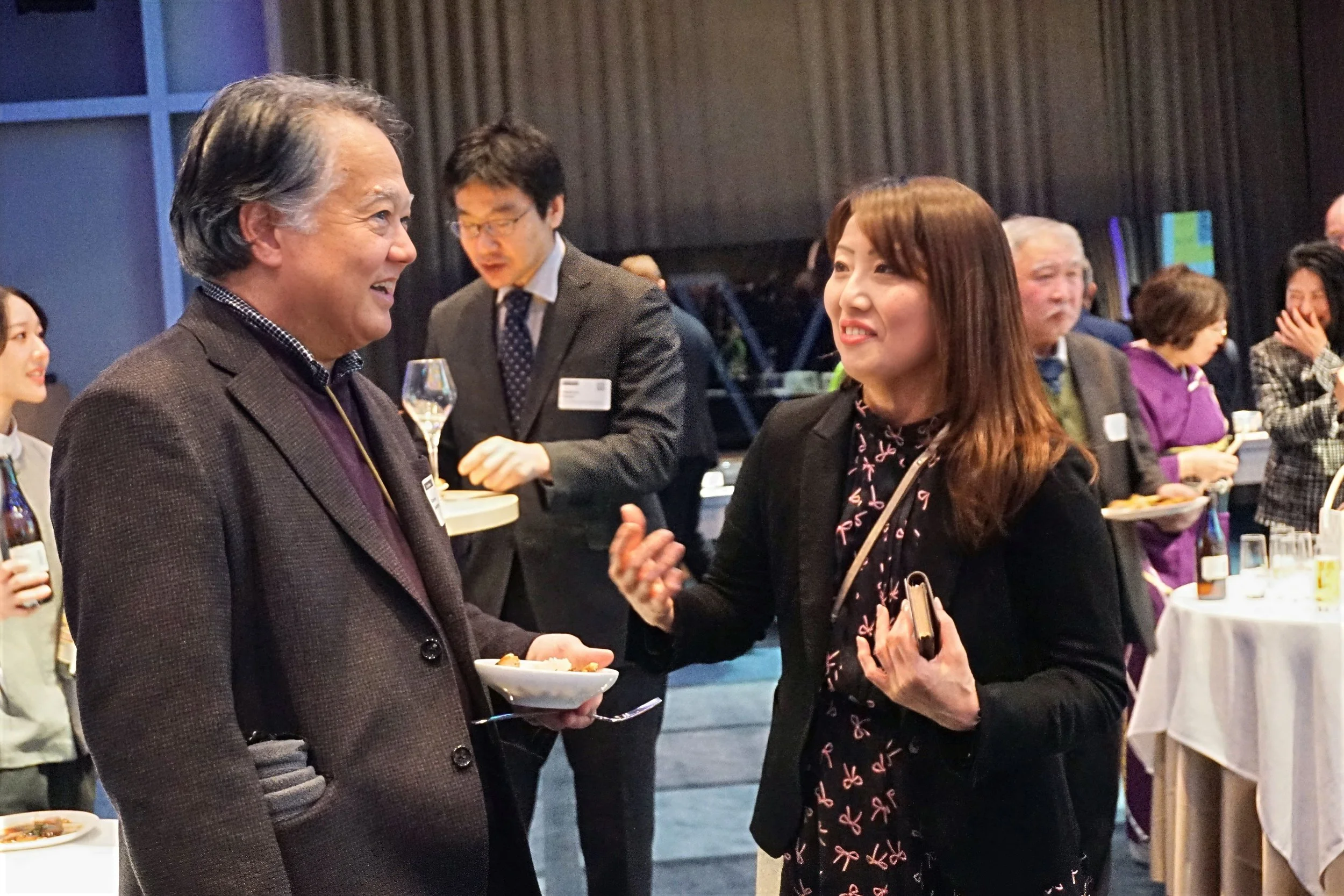
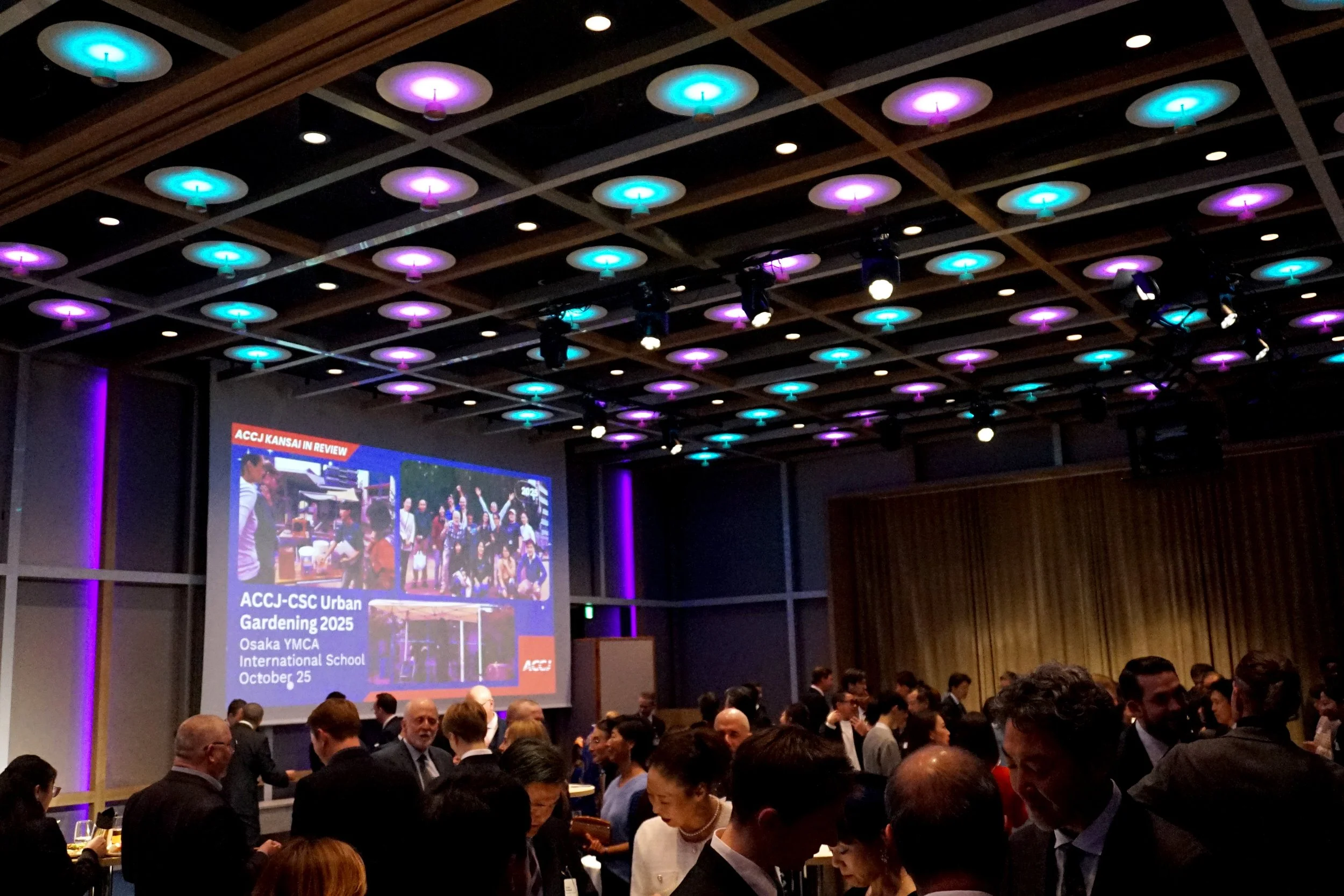
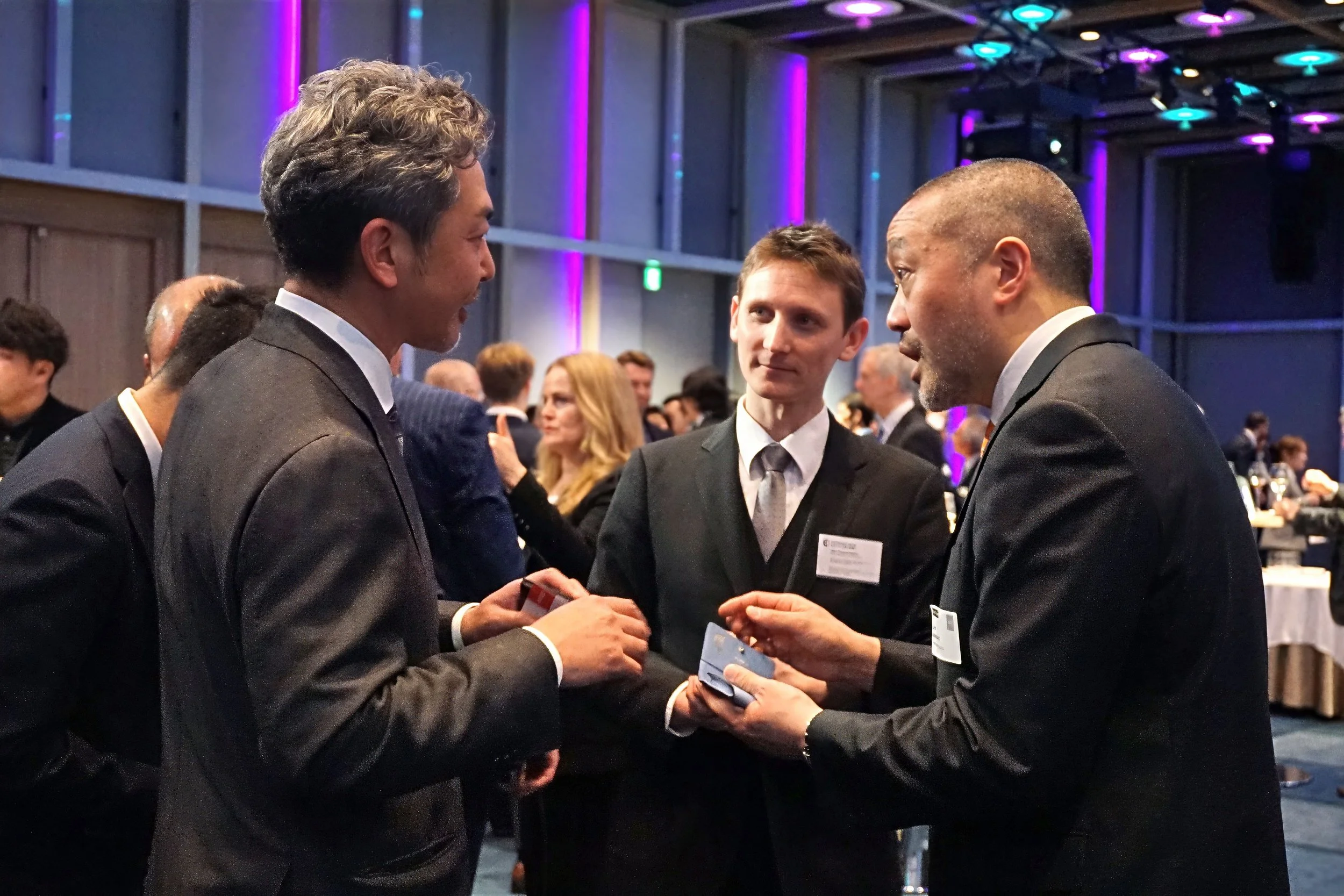

Here’s to a year of collaboration with our members and partners as we continue the strong and vibrant US–Japan partnership in 2026 and beyond!
2025 Kansai D&I Summit
Diversity and inclusion (D&I) is a noble cause. Over the past decade, many positive changes have been achieved, but there is still a long way to go on the journey to true D&I. But good intentions don’t always guarantee good results. How do we get D&I back on track?
What D&I is missing … and how to get back on track through dialogue.
Photos by Rie Watson • Artwork by Kanna Yoshikawa
Diversity and inclusion (D&I) is a noble cause. For years, companies in Japan have pursued diversity in the workplace with the support of the American Chamber of Commerce in Japan (ACCJ). And over the past decade, many positive changes have been achieved, but there is still a long way to go on the journey to true D&I.
Good intentions don’t always guarantee good results, which may be a factor in the strengthening headwinds pushing back on efforts for greater equality. Without the right approach, the most well-meaning D&I initiatives can stall, misfire, or even harm the movement itself.
So how do we get D&I back on track?
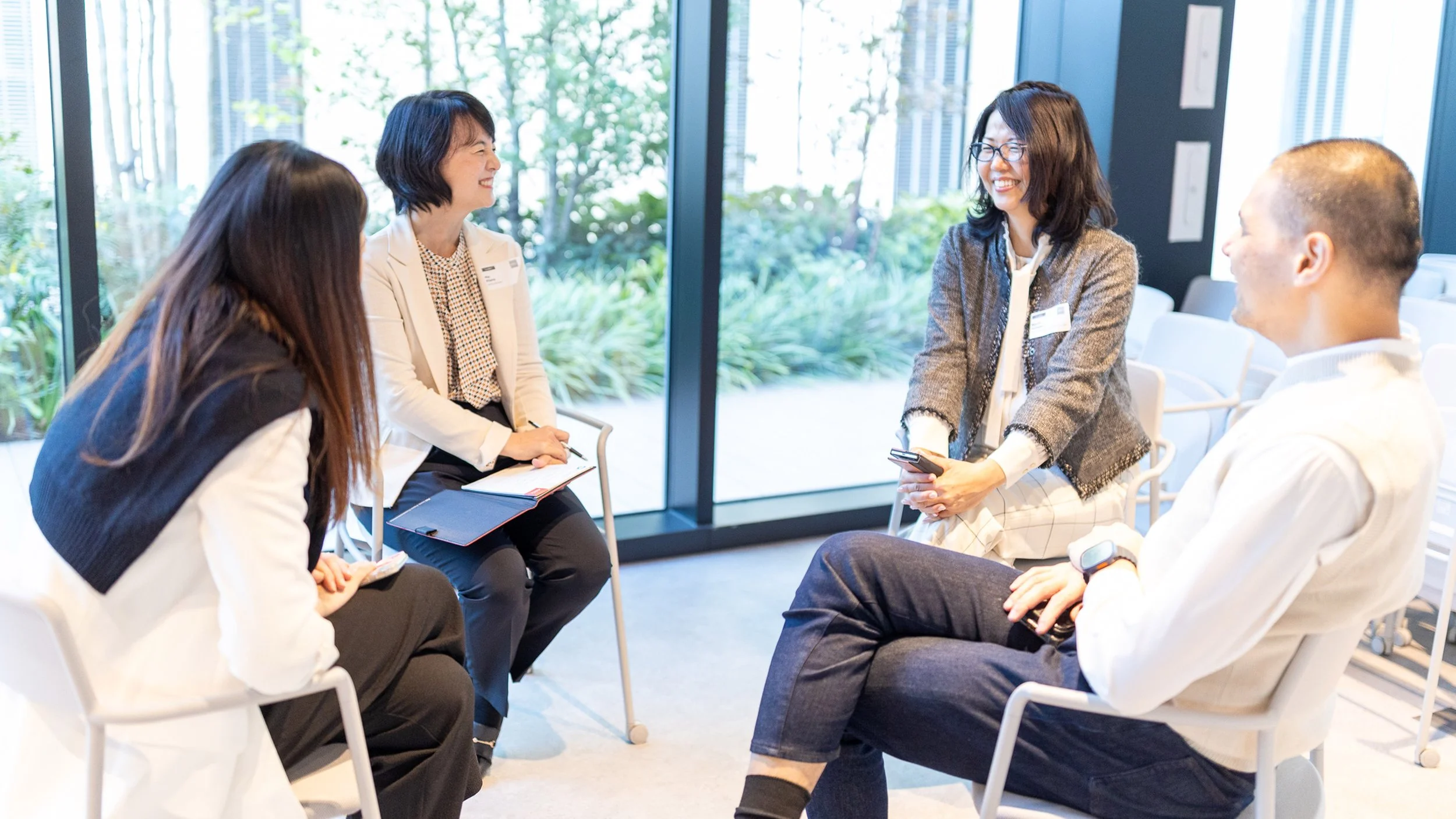
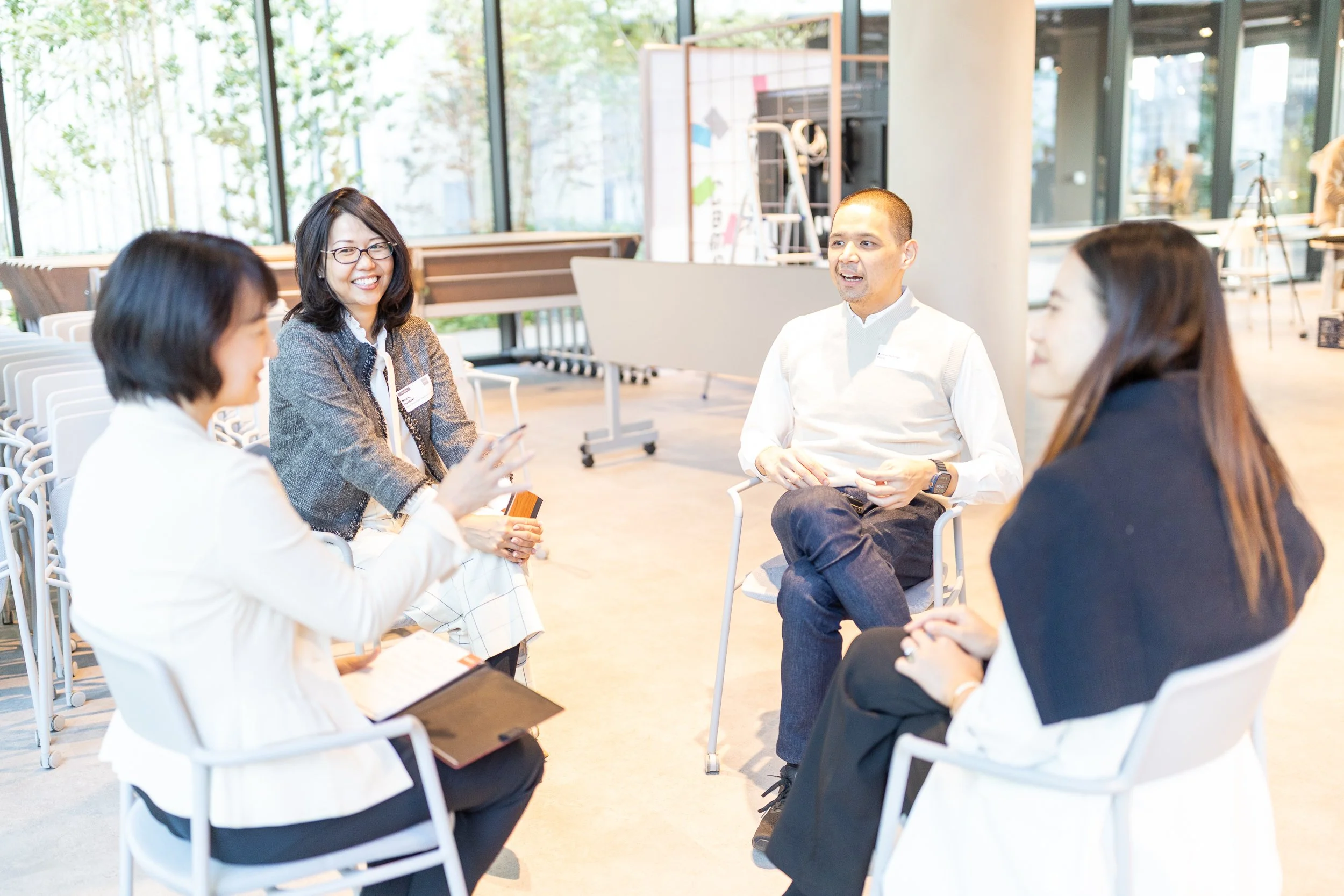
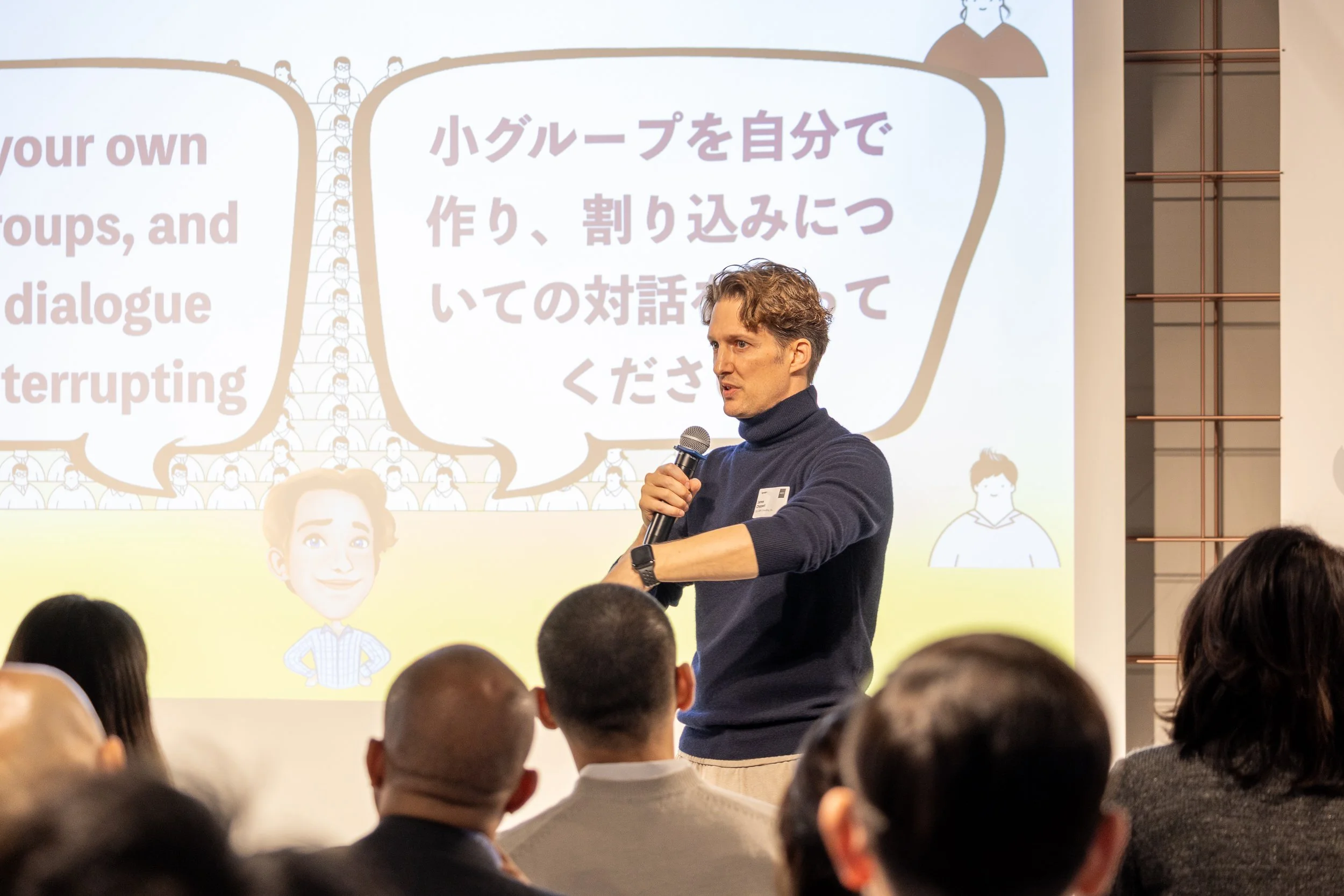
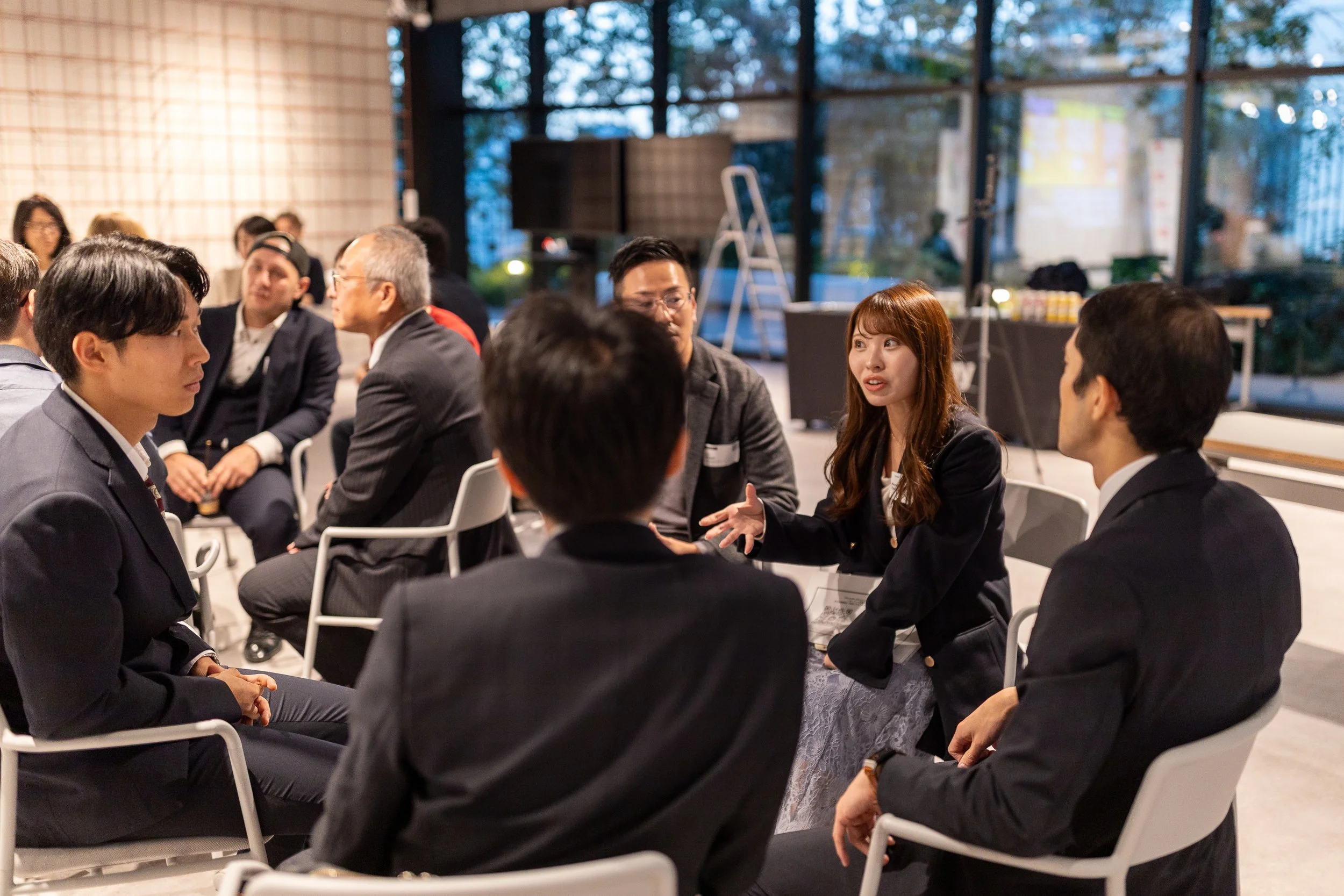
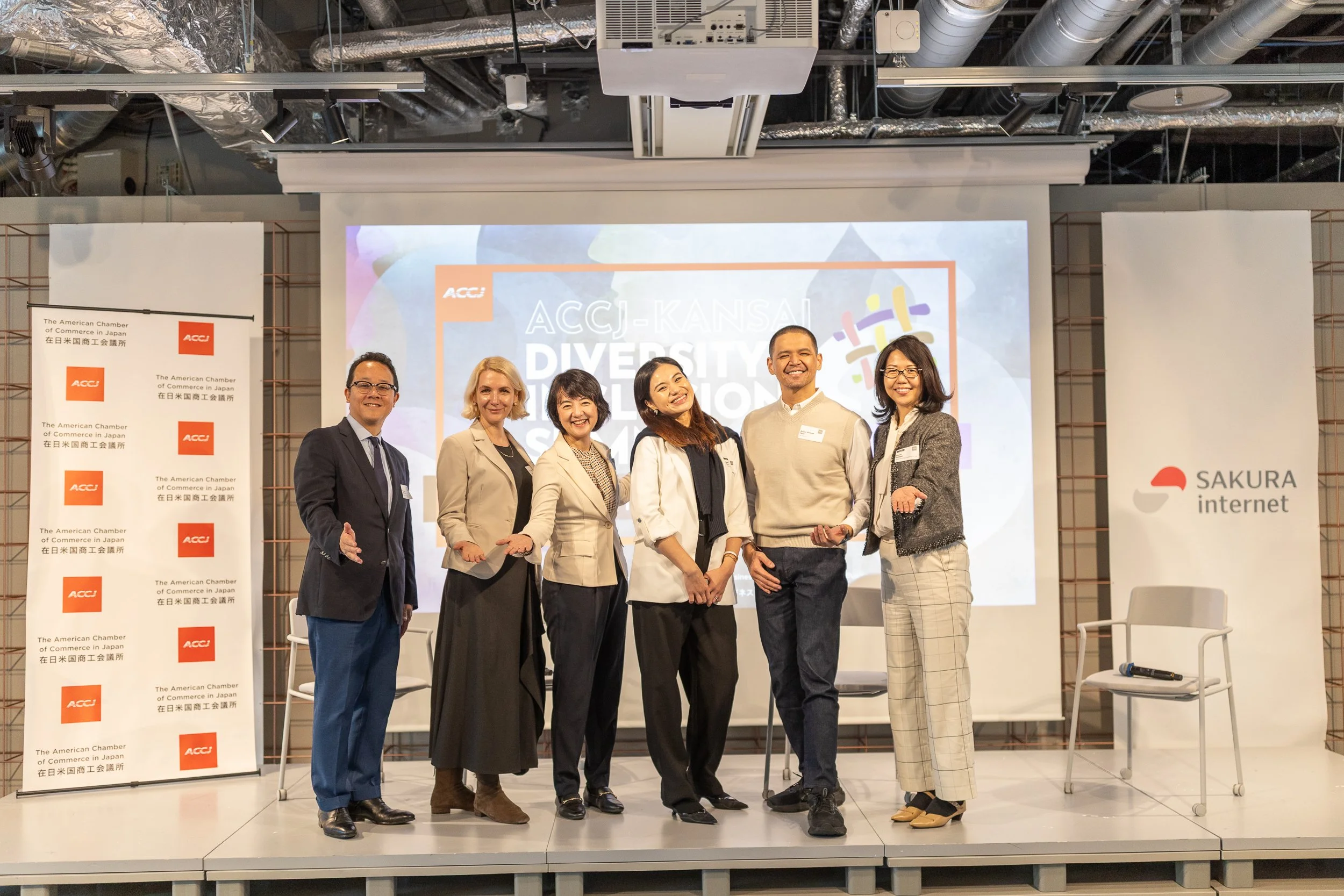
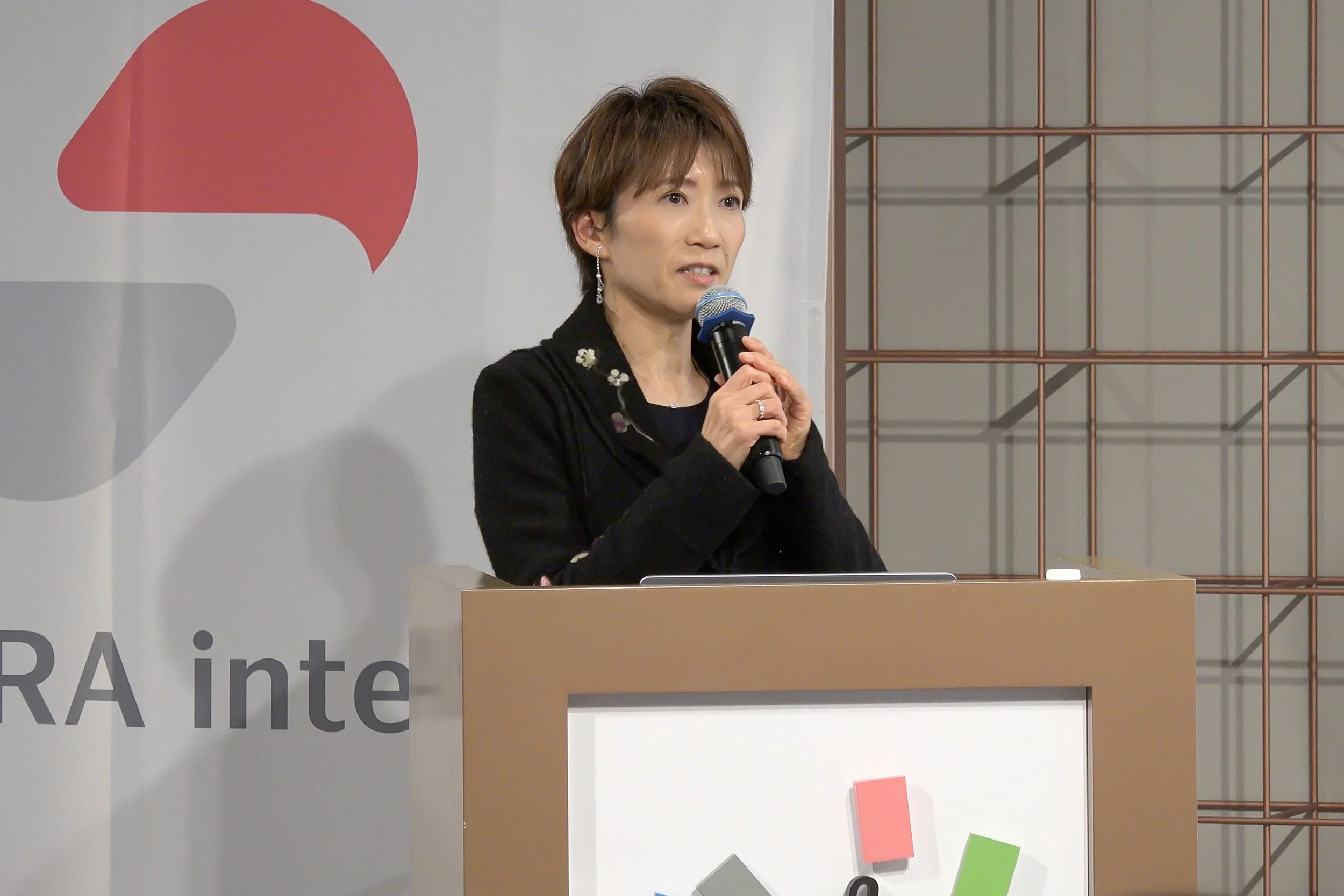
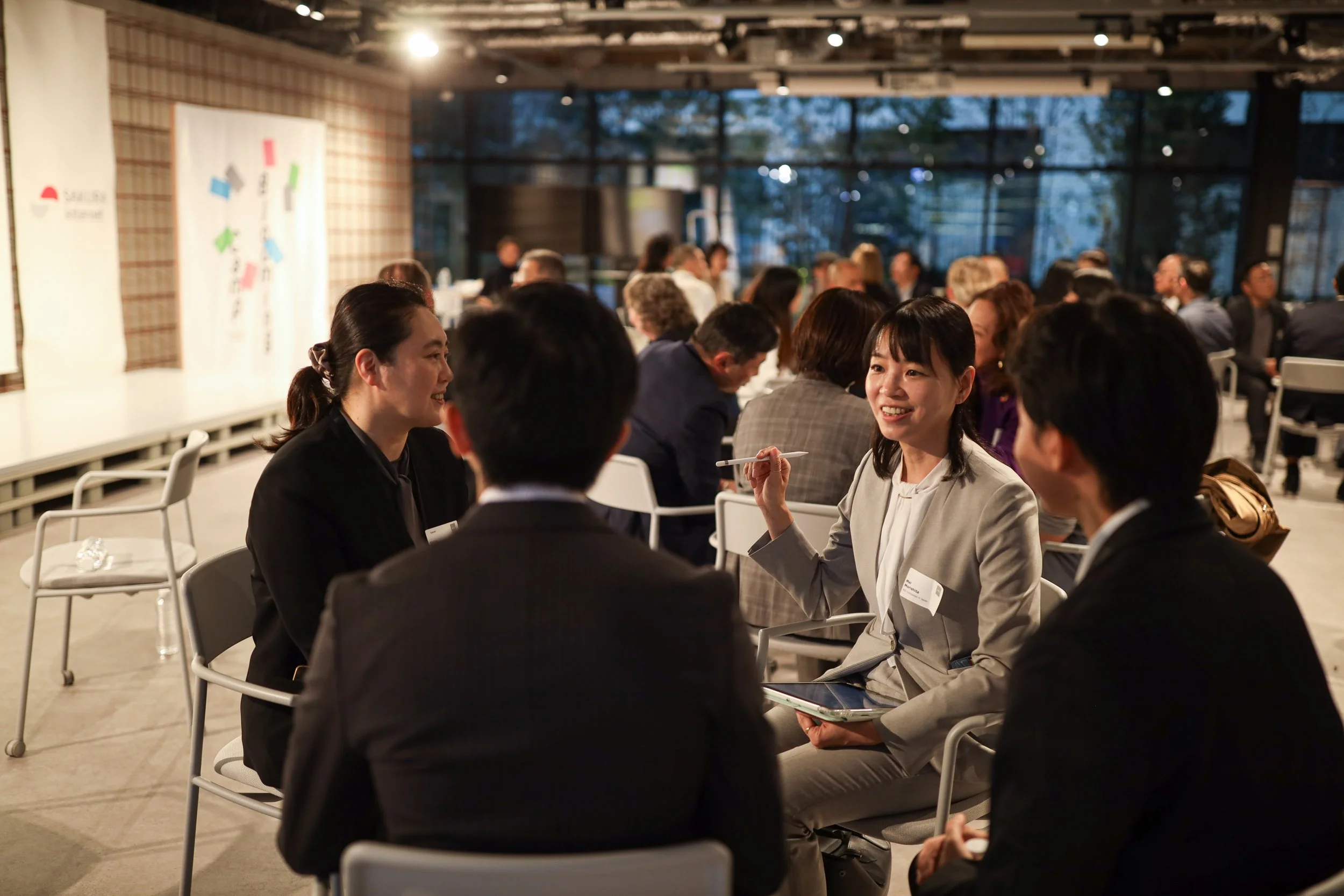
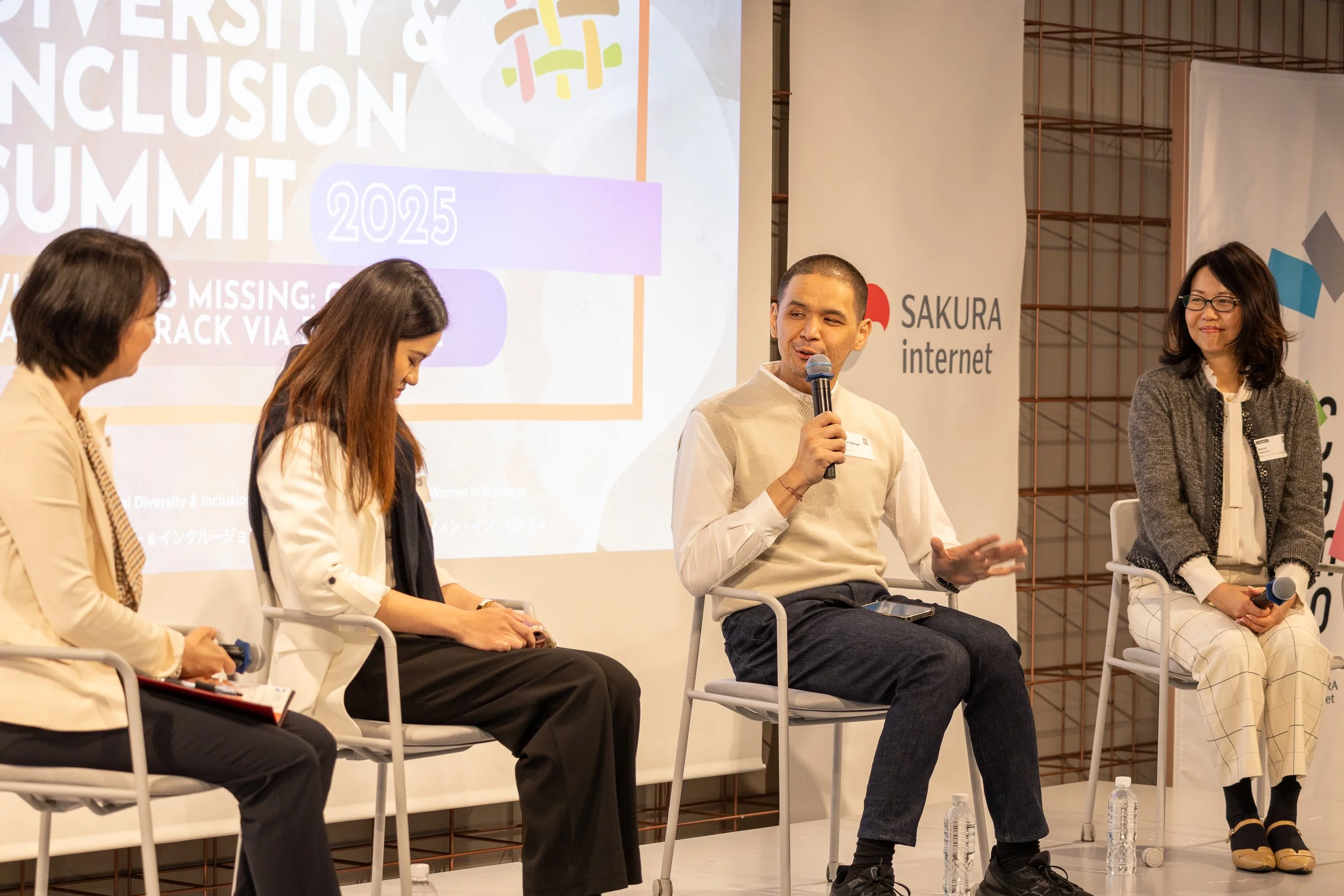
That is the question that was at the heart of this year’s Kansai D&I Summit, held at Blooming Camp inside Grand Green Osaka on November 11. Hosted by the ACCJ–Kansai Diversity & Inclusion and Business Programs Committees, along with the ACCJ Women in Business Forum, the gathering featured a workshop led by James Chappell, a communications trainer who is chief executive officer of BEMi Consulting, Inc., and a “prep session” discussion moderated by ACCJ–Kansai Diversity & Inclusion Committee Co-chair Mie Kitano.
The discussion featured three diverse voices sharing their views on the importance of D&I.
- Arthur Pena, group director for Media at P&G Japan
- Alison Chen, associate director in marketing at Eli Lilly Japan
- Naomi Iwasaki, manager in finance at Nippon Boehringer Ingelheim
Chen and Iwasaki are vice-chairs of the ACCJ–Kansai Diversity & Inclusion Committee.
Kitano explained that the approach to this year’s summit was to share stories from middle managers rather than top executives to shed light on challenges that many of us face in our everyday work, and how those managers are handling situations and creating better working environments.
During the networking that followed, attendees were able to further explore what they had learned from the workshop and prep session, and consider how they could carry these insights back to their companies and begin getting D&I back on track. And the whole evening was captured in the moment by Kanna Yoshikawa through her graphic recordings, shown on the opposite page.



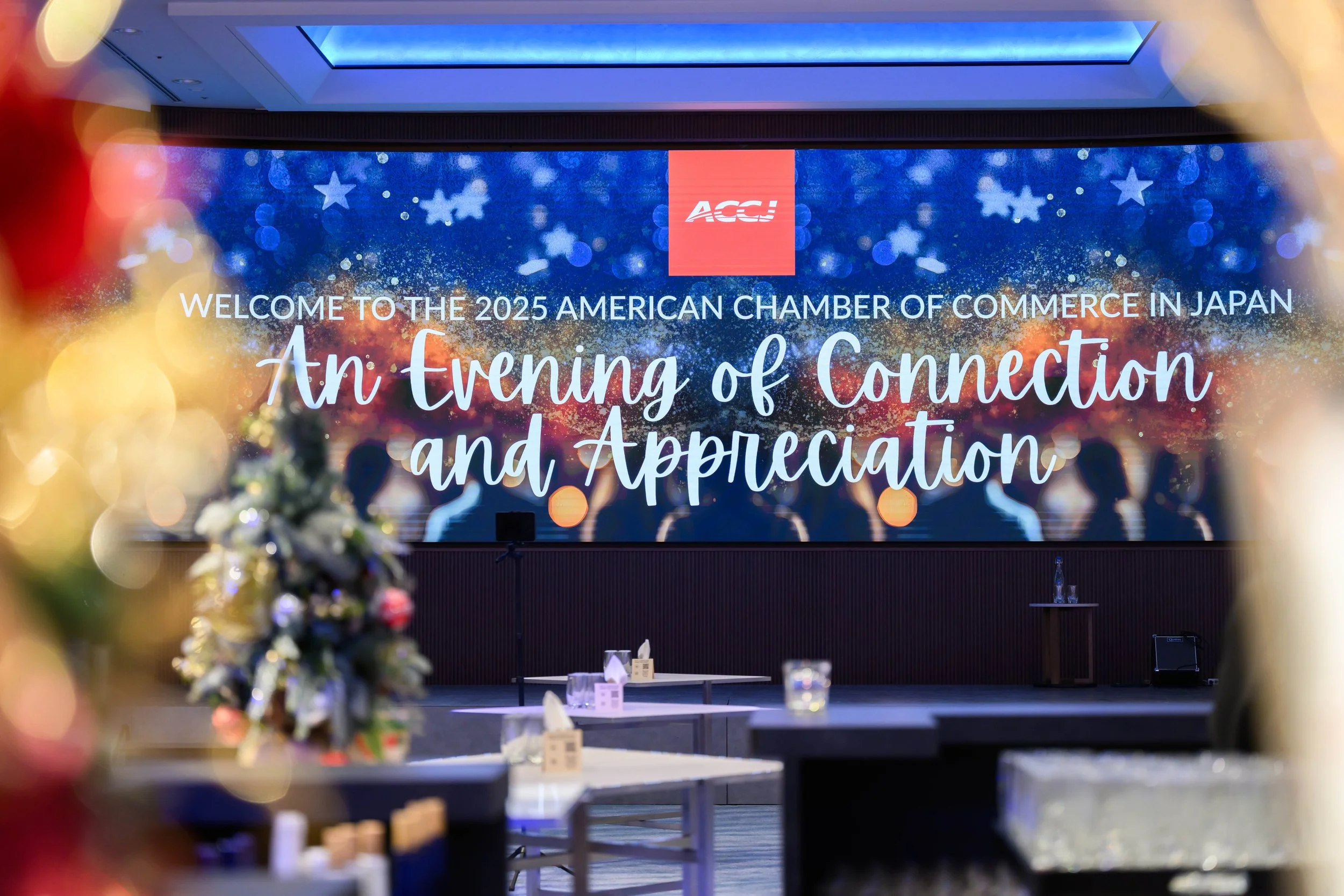
An Evening of Connection and Appreciation
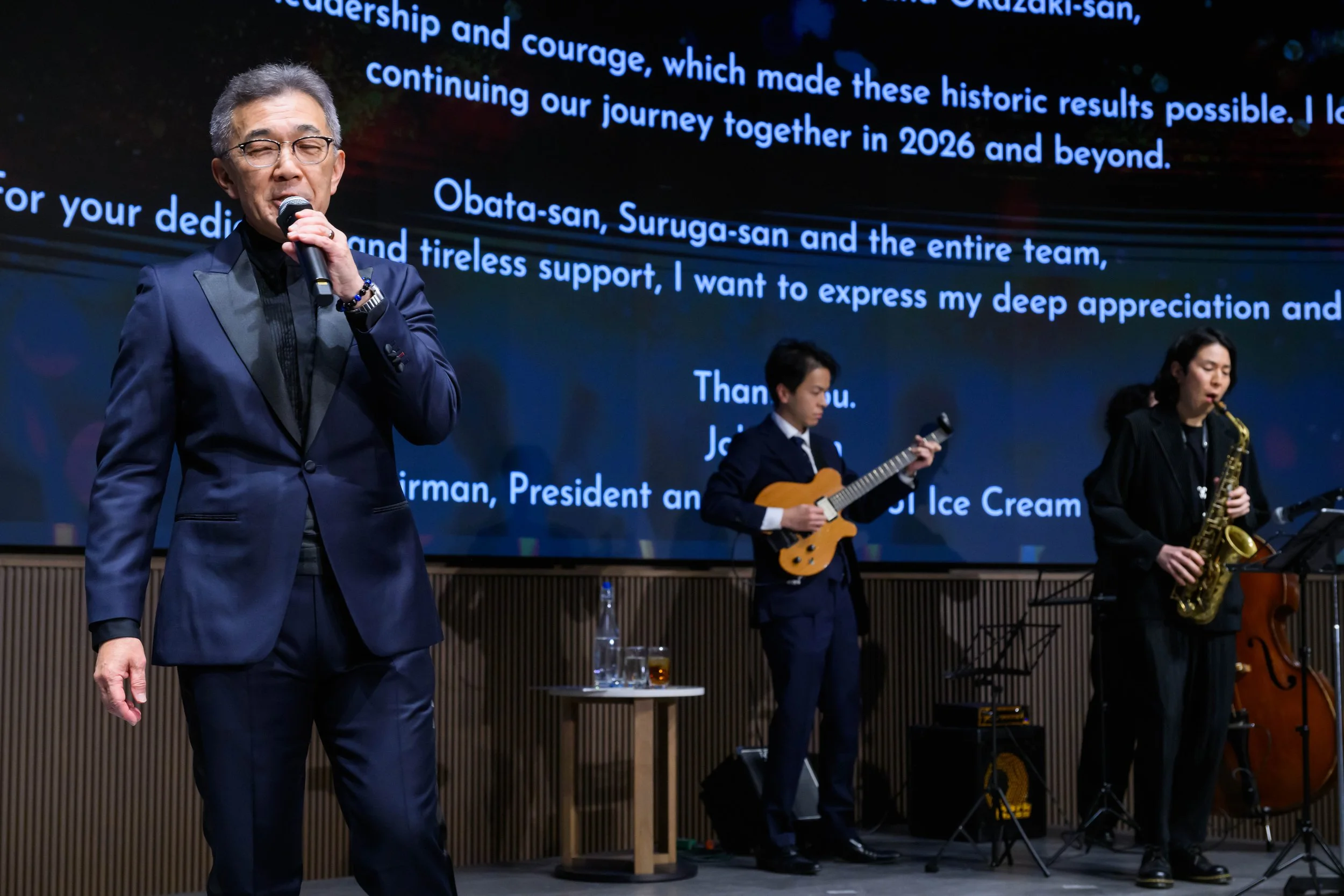
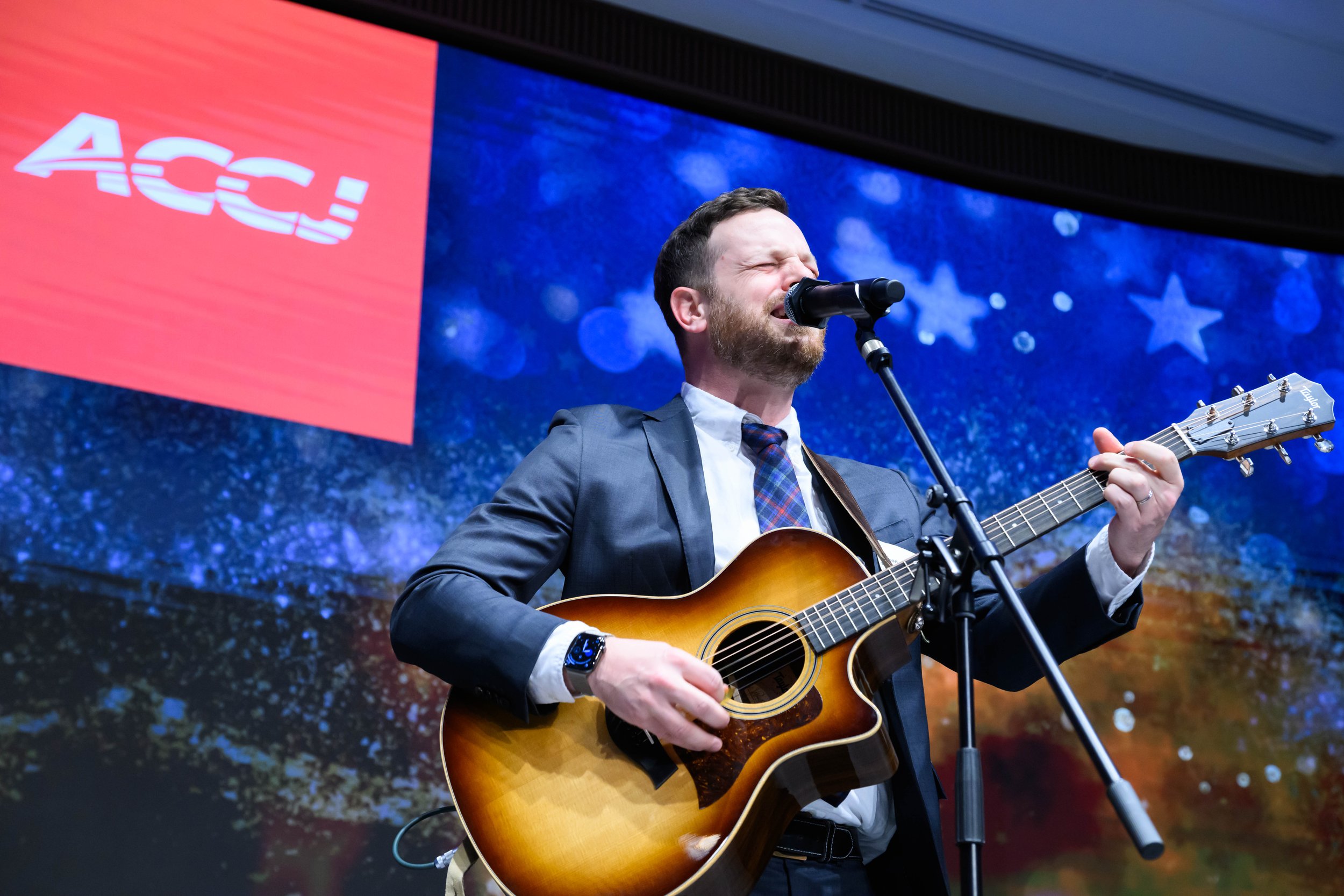
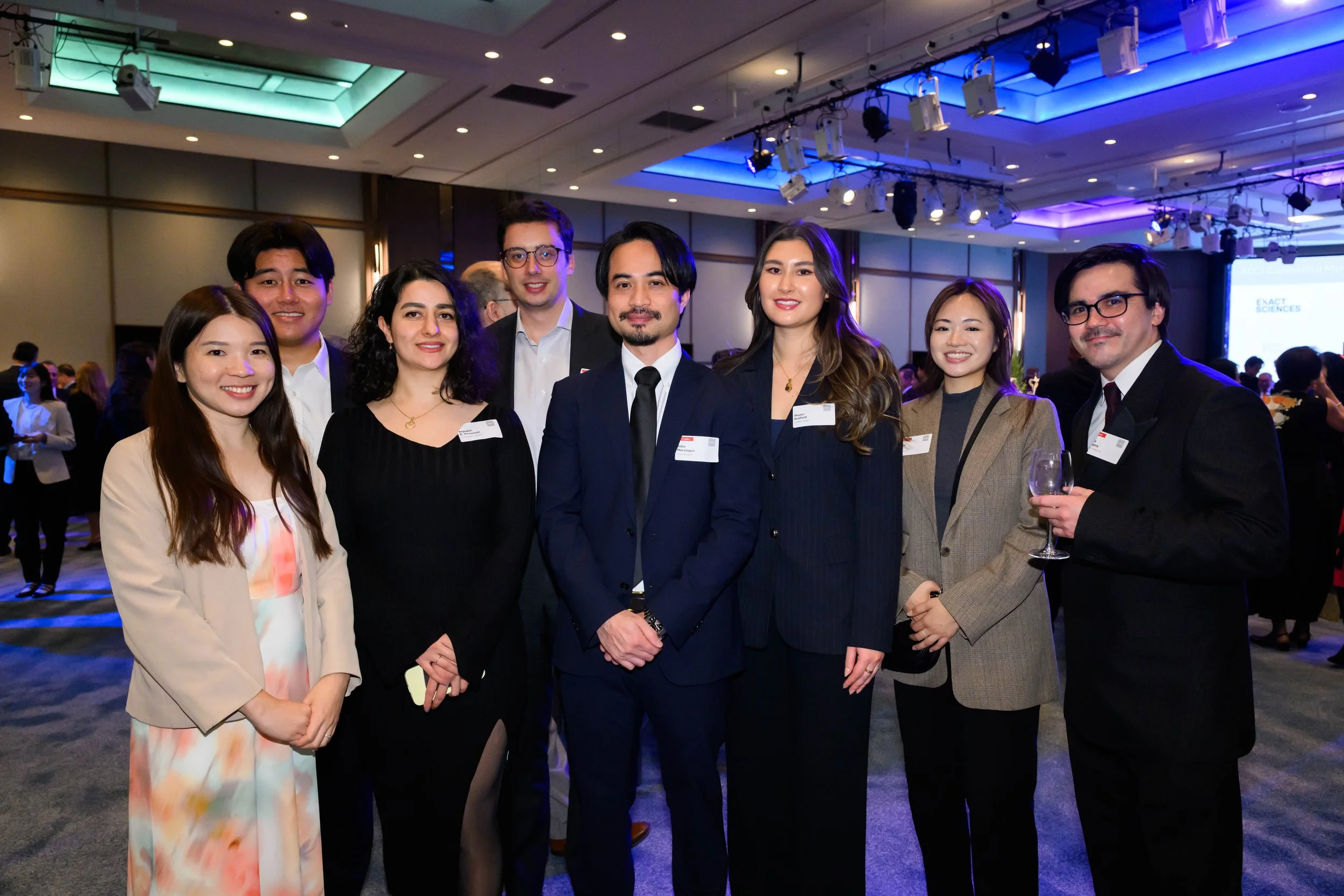
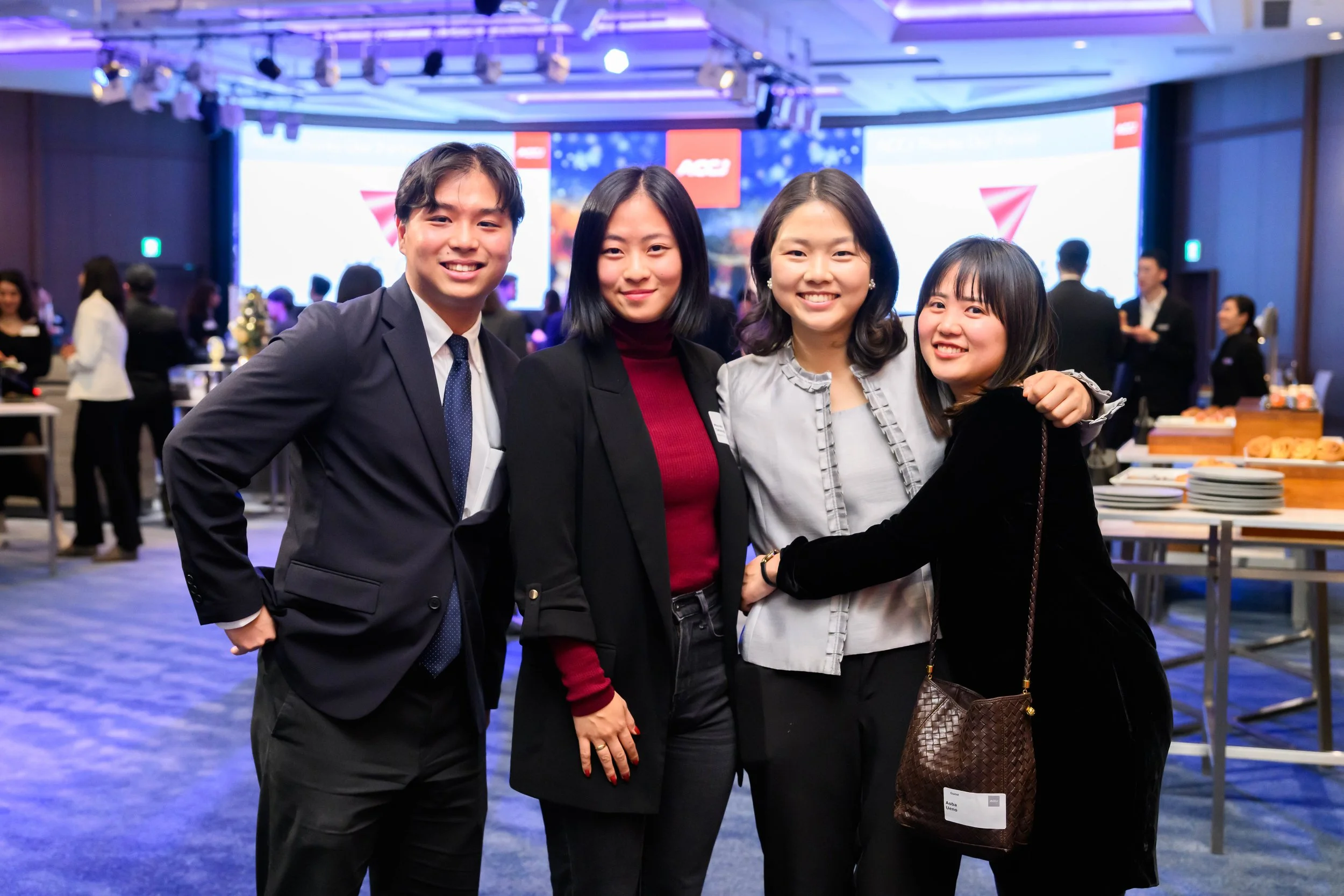
Members of the American Chamber of Commerce in Japan (ACCJ) and their guests gathered in the Hilton Tokyo’s Kiku Ballroom on December 11 to close out 2025 with its final signature event of the year.
The ACCJ closes out 2025 with a festive night of networking and honors.
Photos by Miki Kawaguchi/LIFE.14
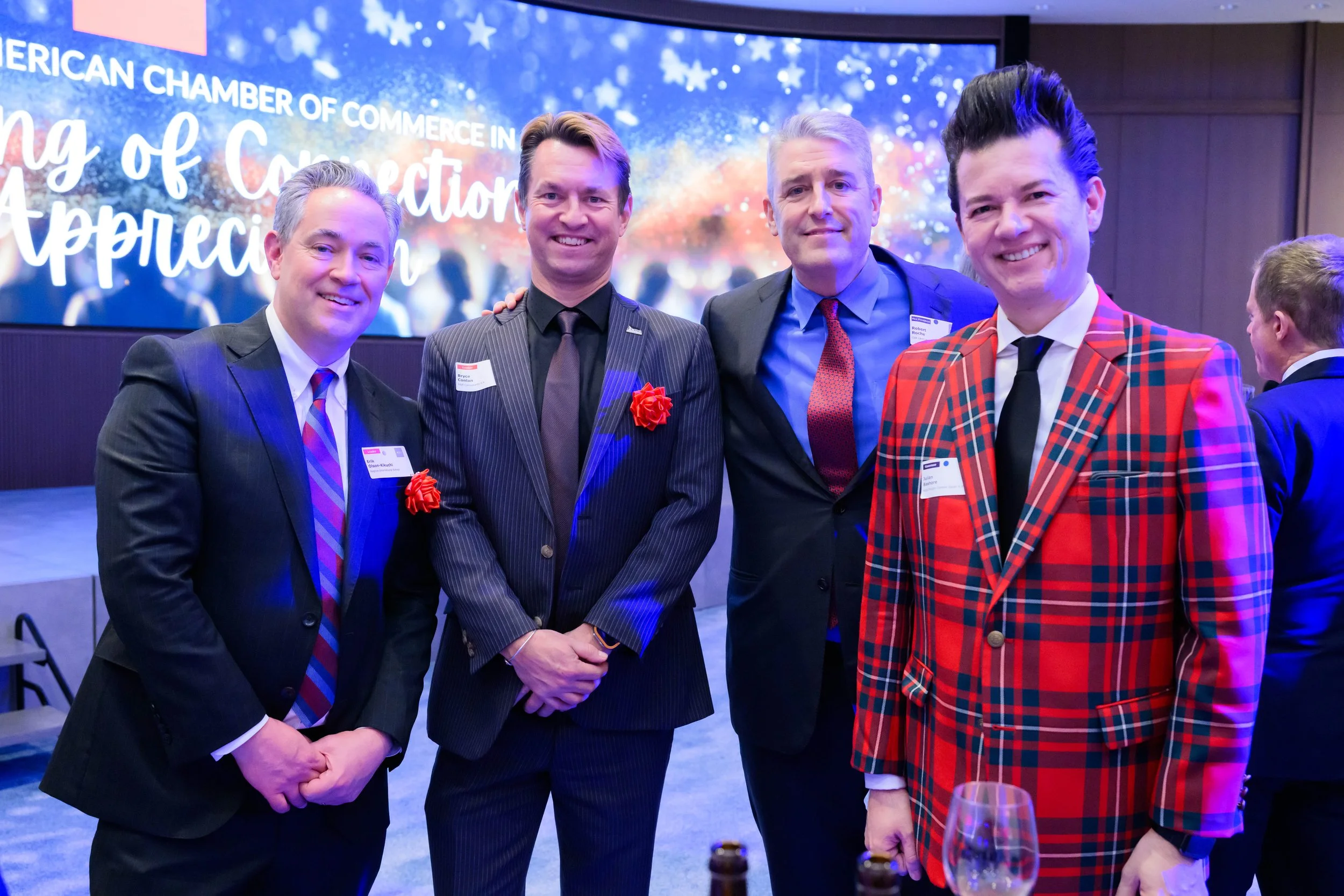
Members of the American Chamber of Commerce in Japan (ACCJ) and their guests gathered in the Hilton Tokyo’s Kiku Ballroom on December 11 to close out 2025 with its final signature event of the year.
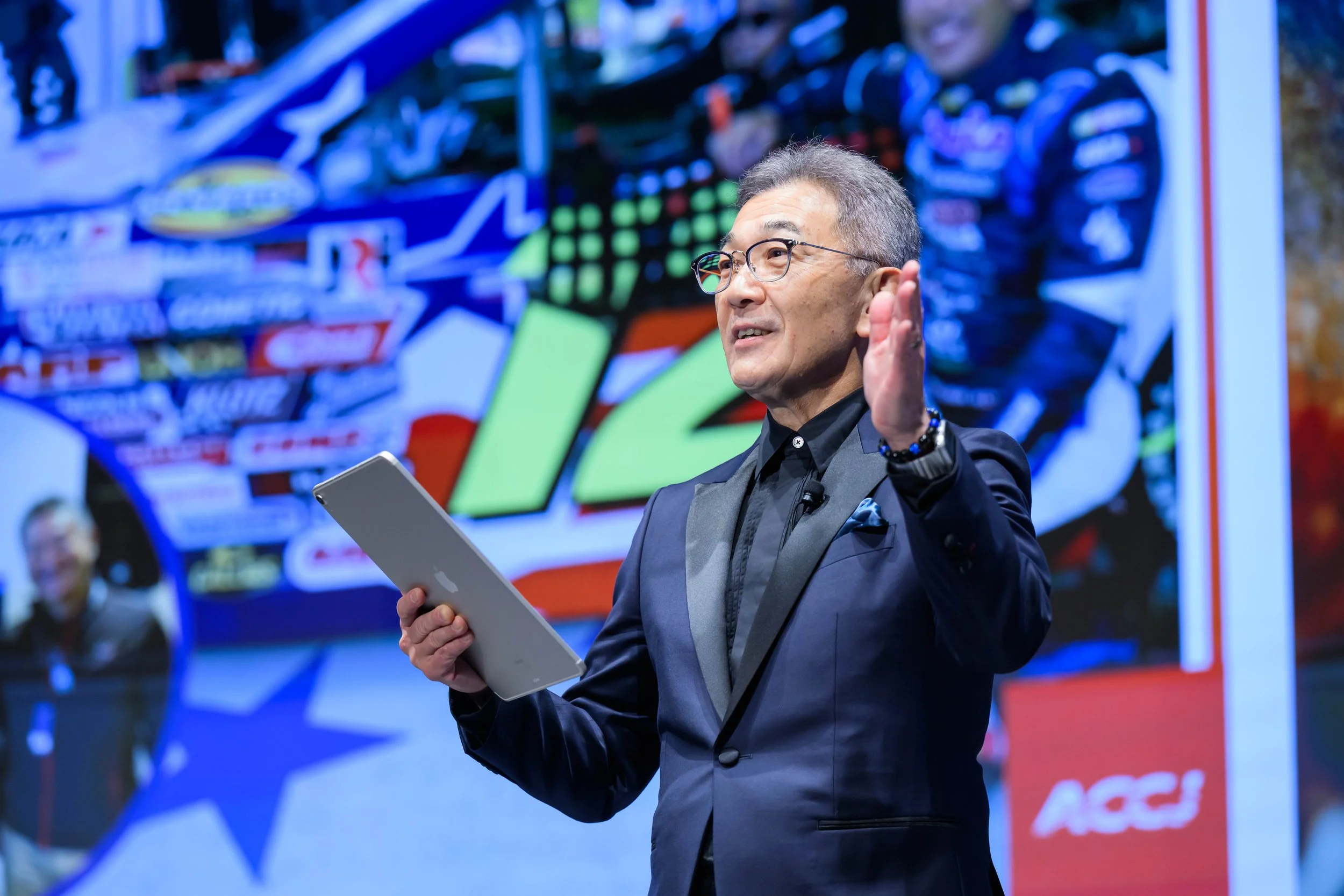
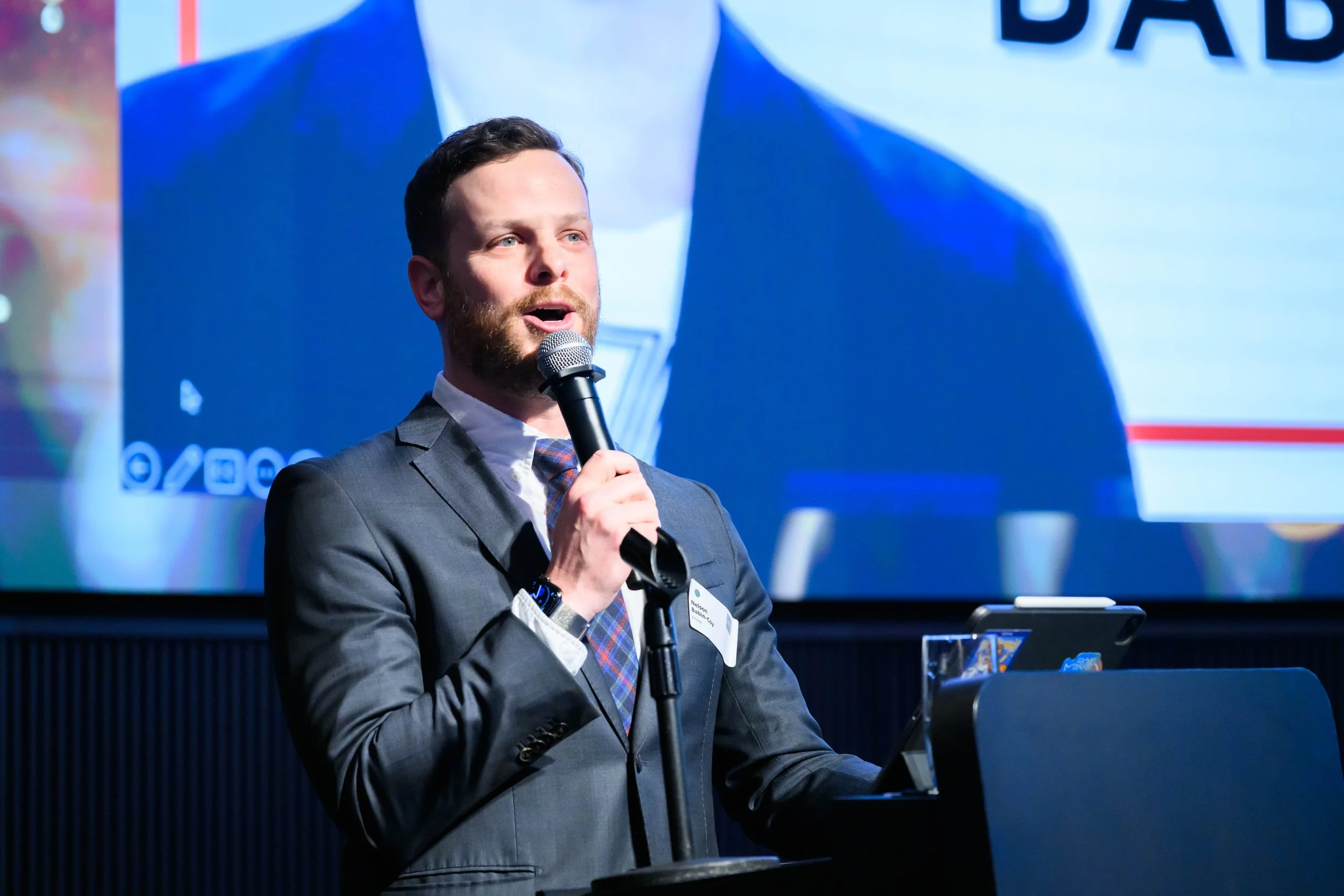
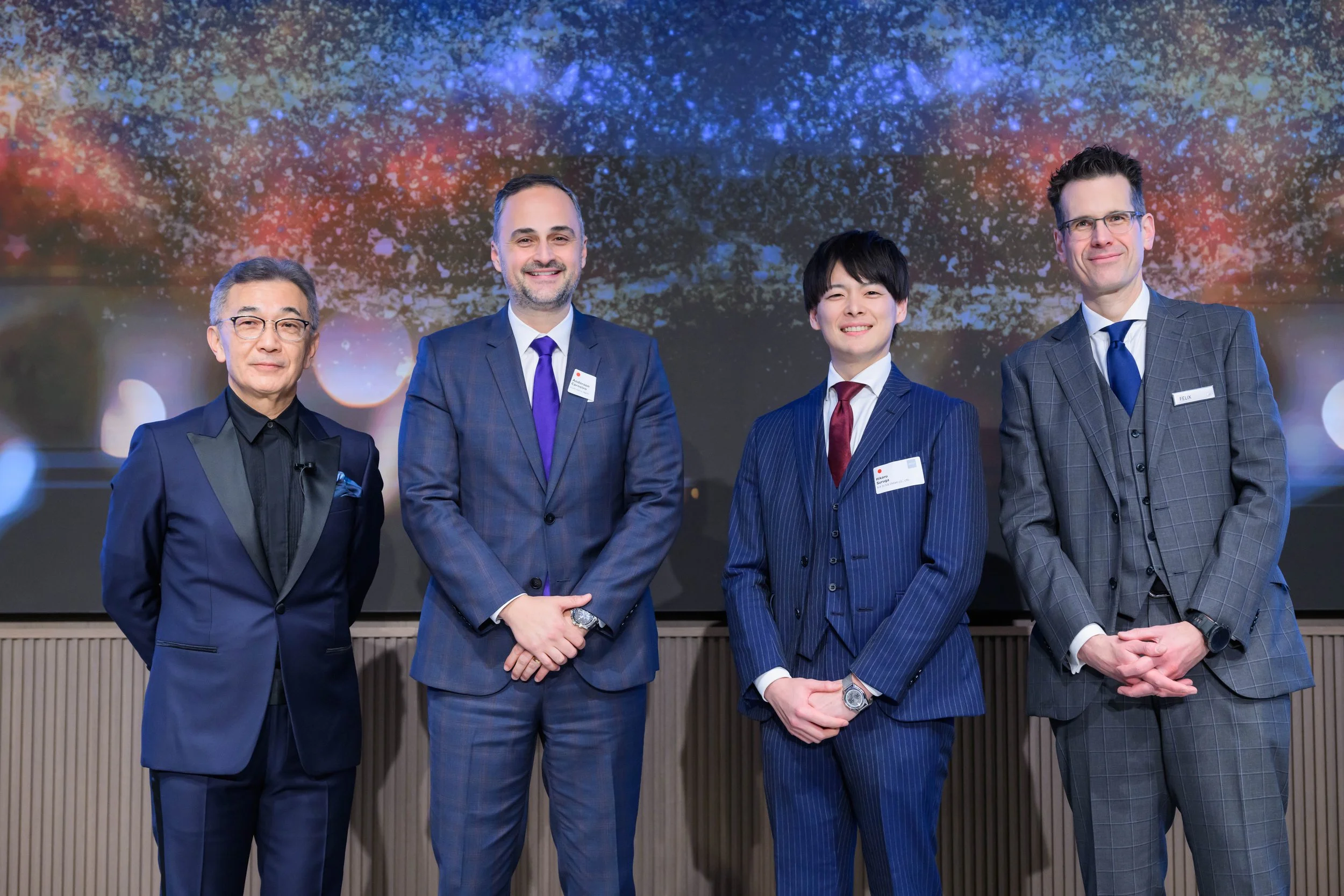
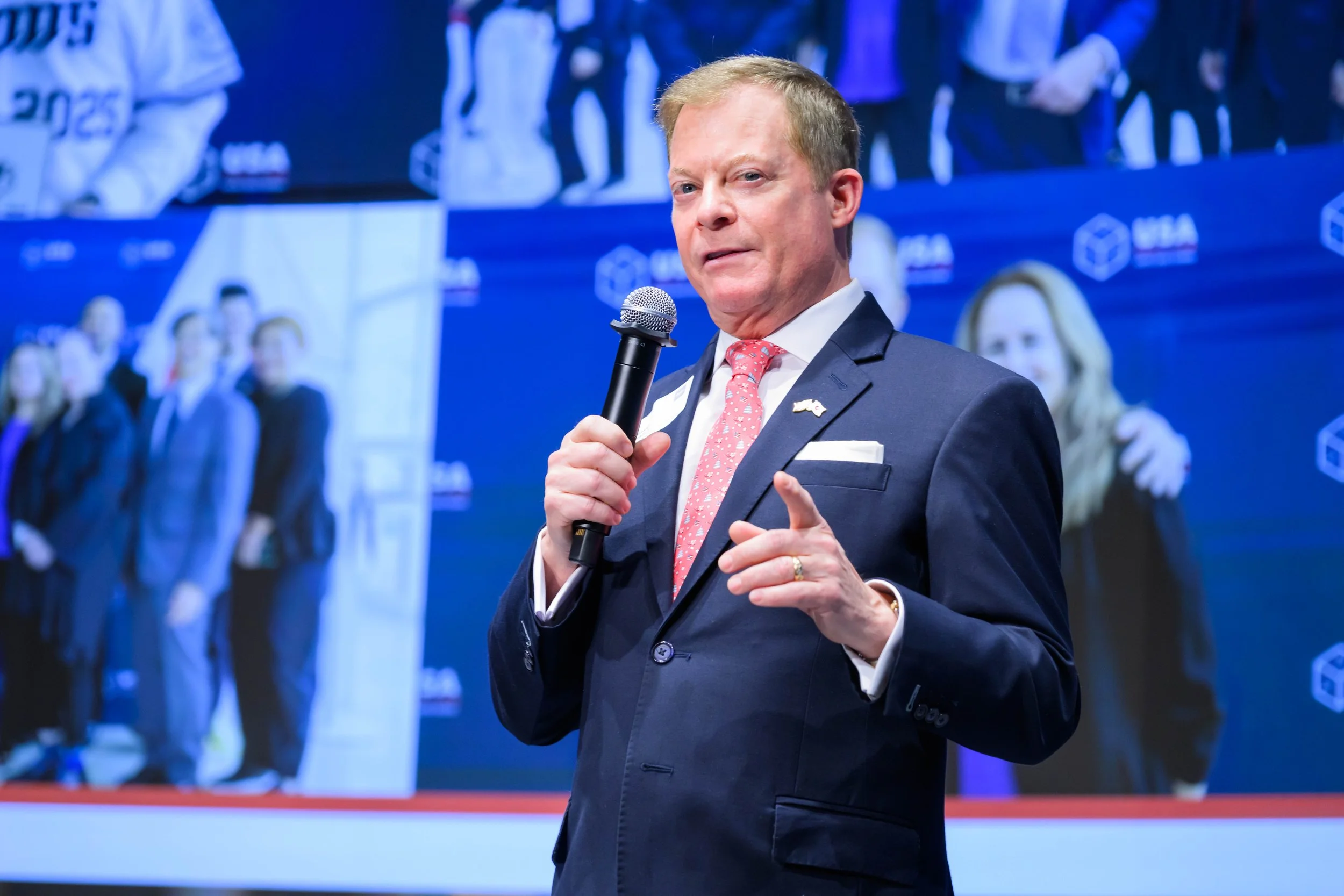
ACCJ President Victor Osumi took to the stage against a starry backdrop to welcome everyone to An Evening of Connection and Appreciation, a formal cocktail-style reception that brought together nearly 300 ACCJ members and guests.
“As we gather tonight, it is an opportunity to reflect on a year filled with remarkable achievements,” Osumi said. “It is a chance to reflect on a tremendous year of activity at the chamber, thanks to the support of our members’ collective efforts. We want to celebrate this spirit of collaboration and excellence.”
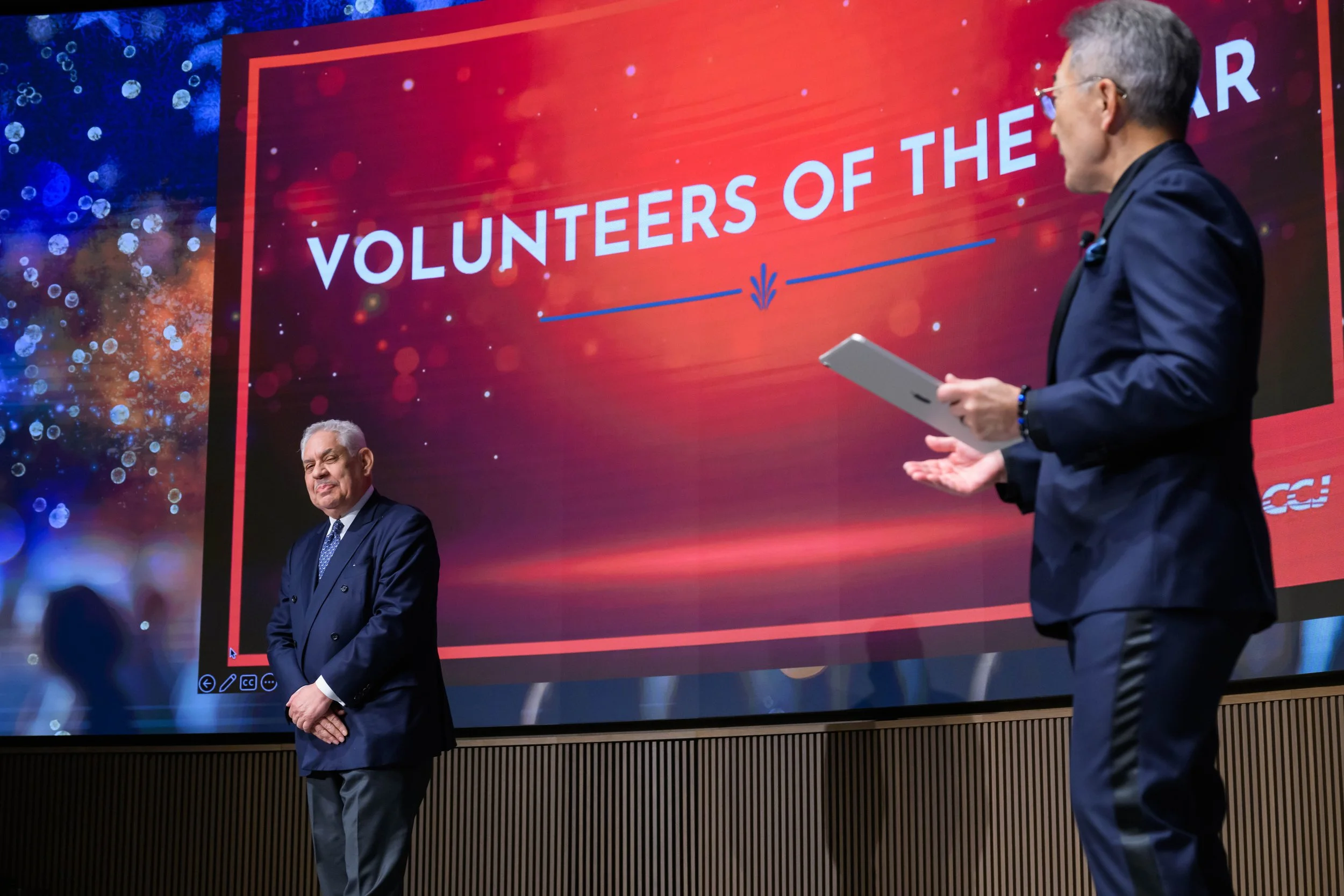
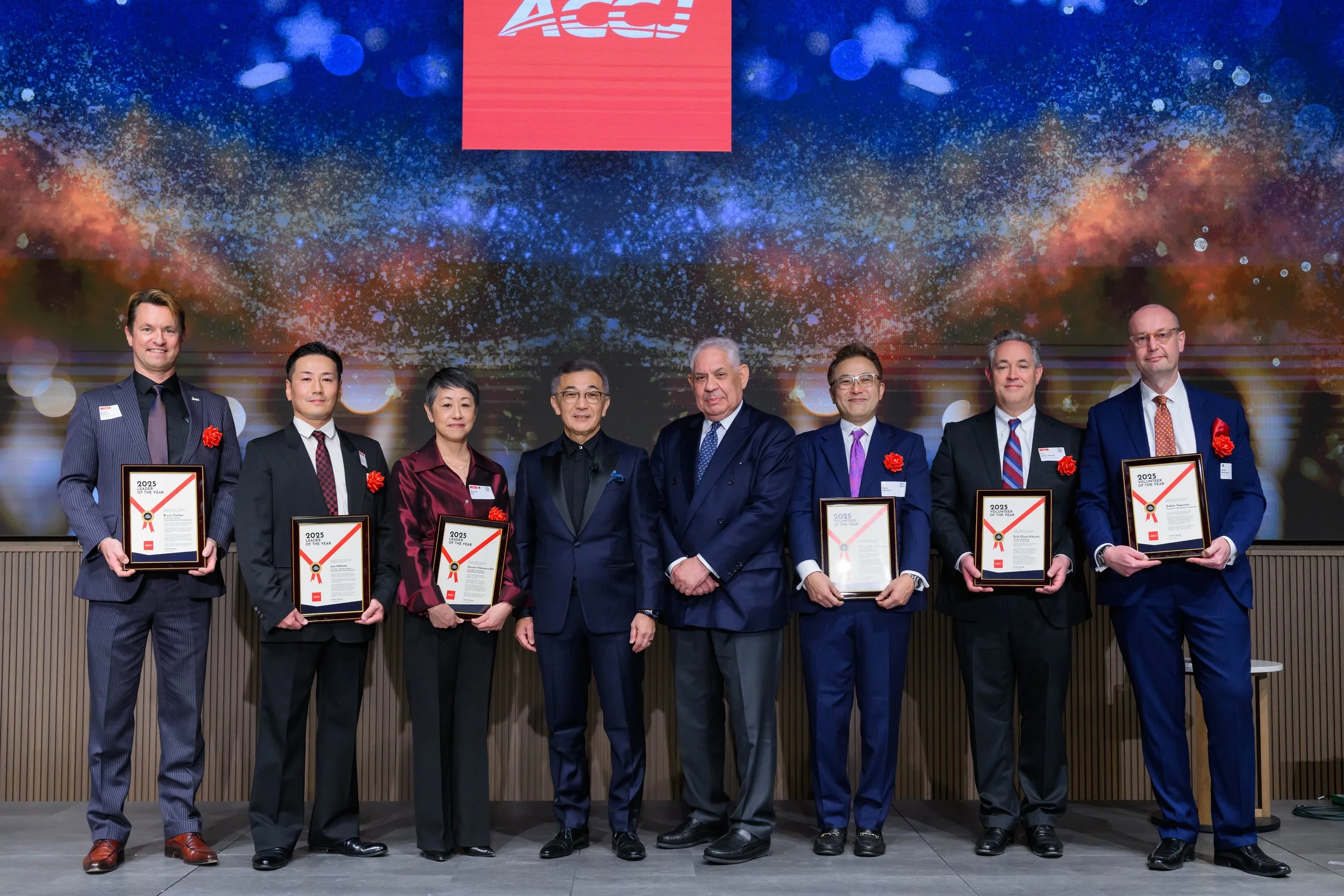
Next, to mark the incredible dedication of chamber members, ACCJ Vice President Arthur Mitchell joined Osumi on stage to present the 2025 ACCJ Leaders and Volunteers of the Year awards.
Also joining the festivities was 2025 ACCJ Person of the Year Ambassador William E. Grayson. He was honored for his leadership in advancing the US–Japan partnership as commissioner general of the USA Pavilion at Expo 2025 Osaka, Kansai.
“To receive this award from all of you brings an incredible amount of joy and happiness,” said Grayson, who shares more about the six-month experience of welcoming visitors to the USA Pavilion.
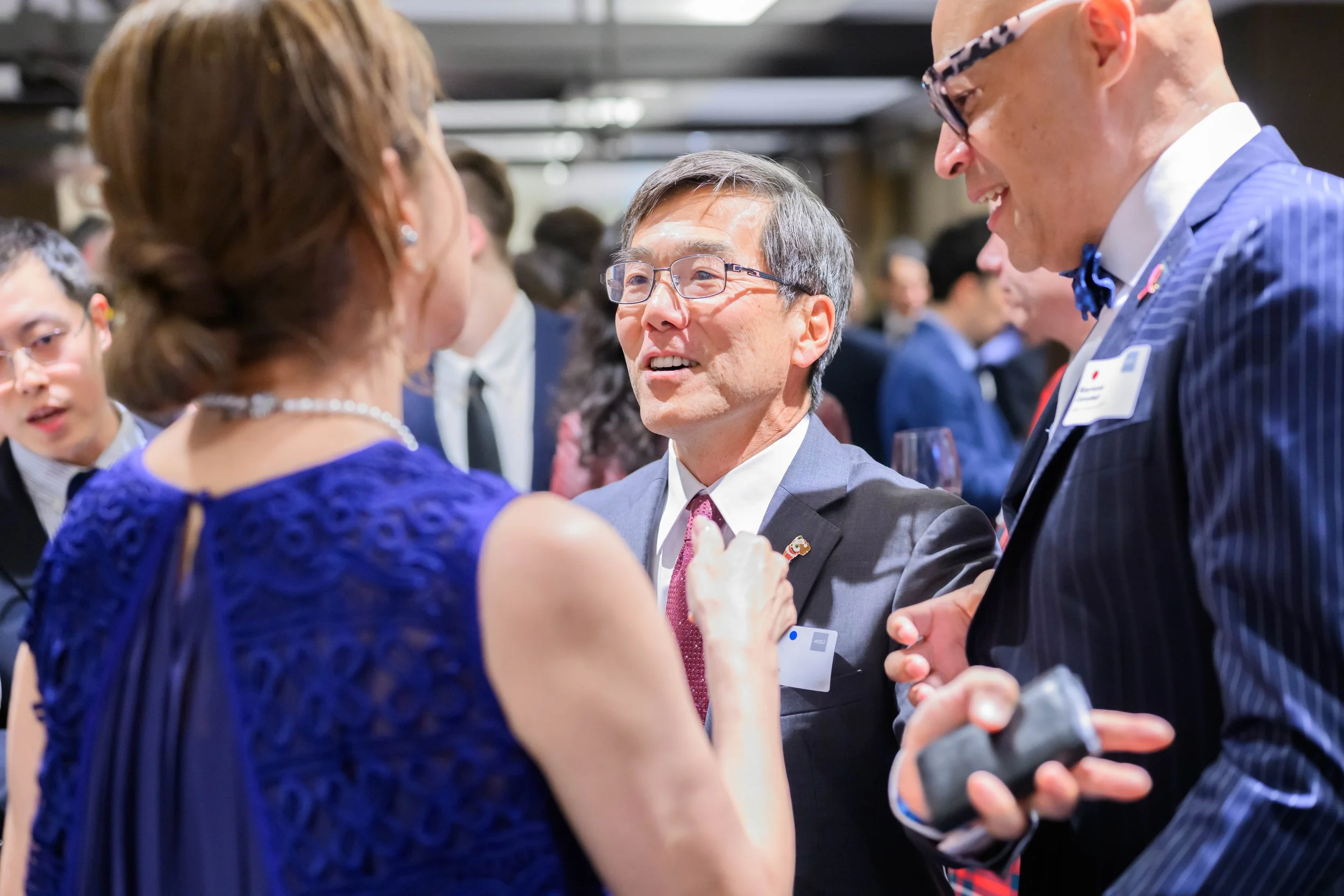
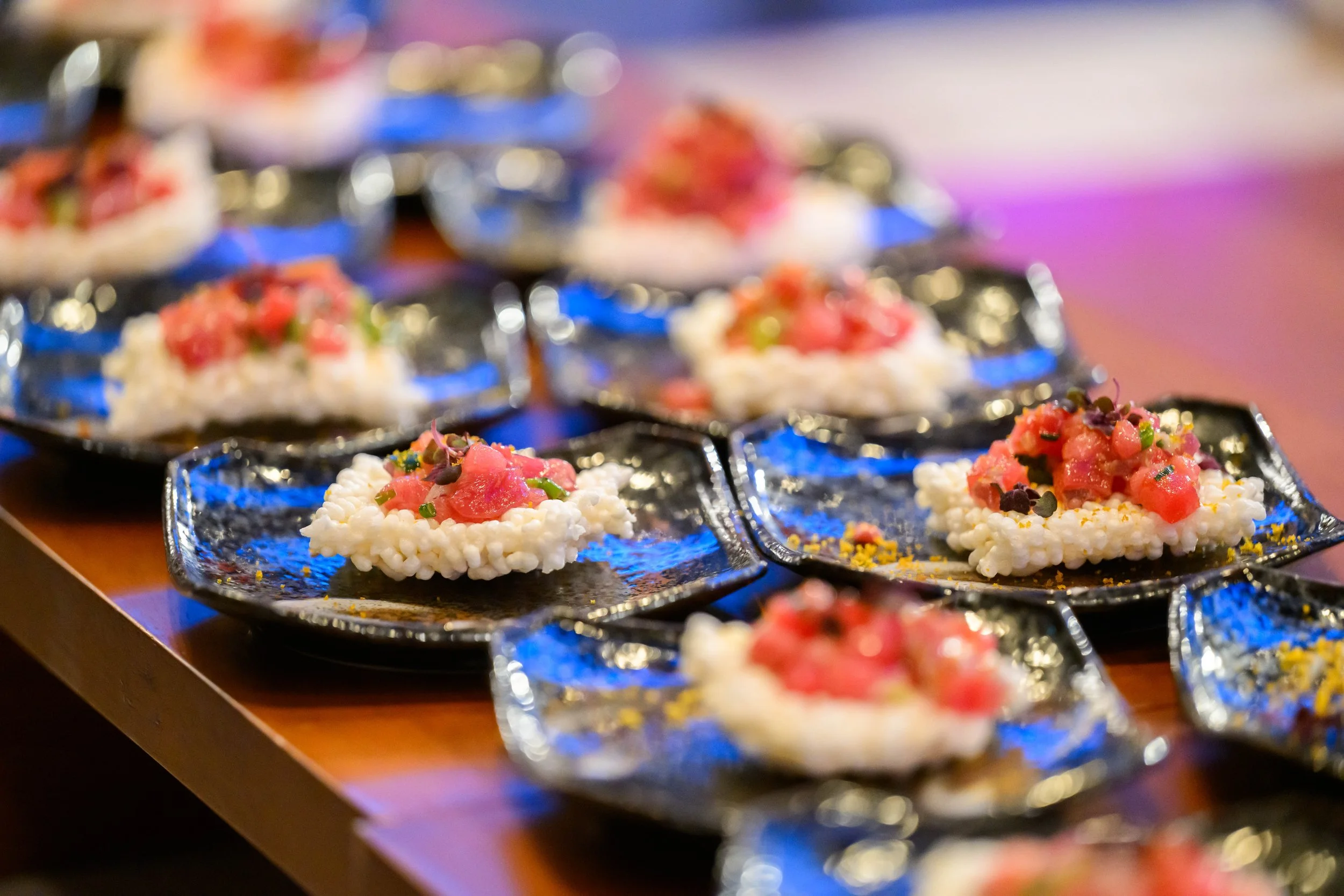
With formalities concluded, attendees indulged in the Hilton Tokyo’s culinary artistry and smooth jazz while making new connections for 2026.





Sharpening the Story
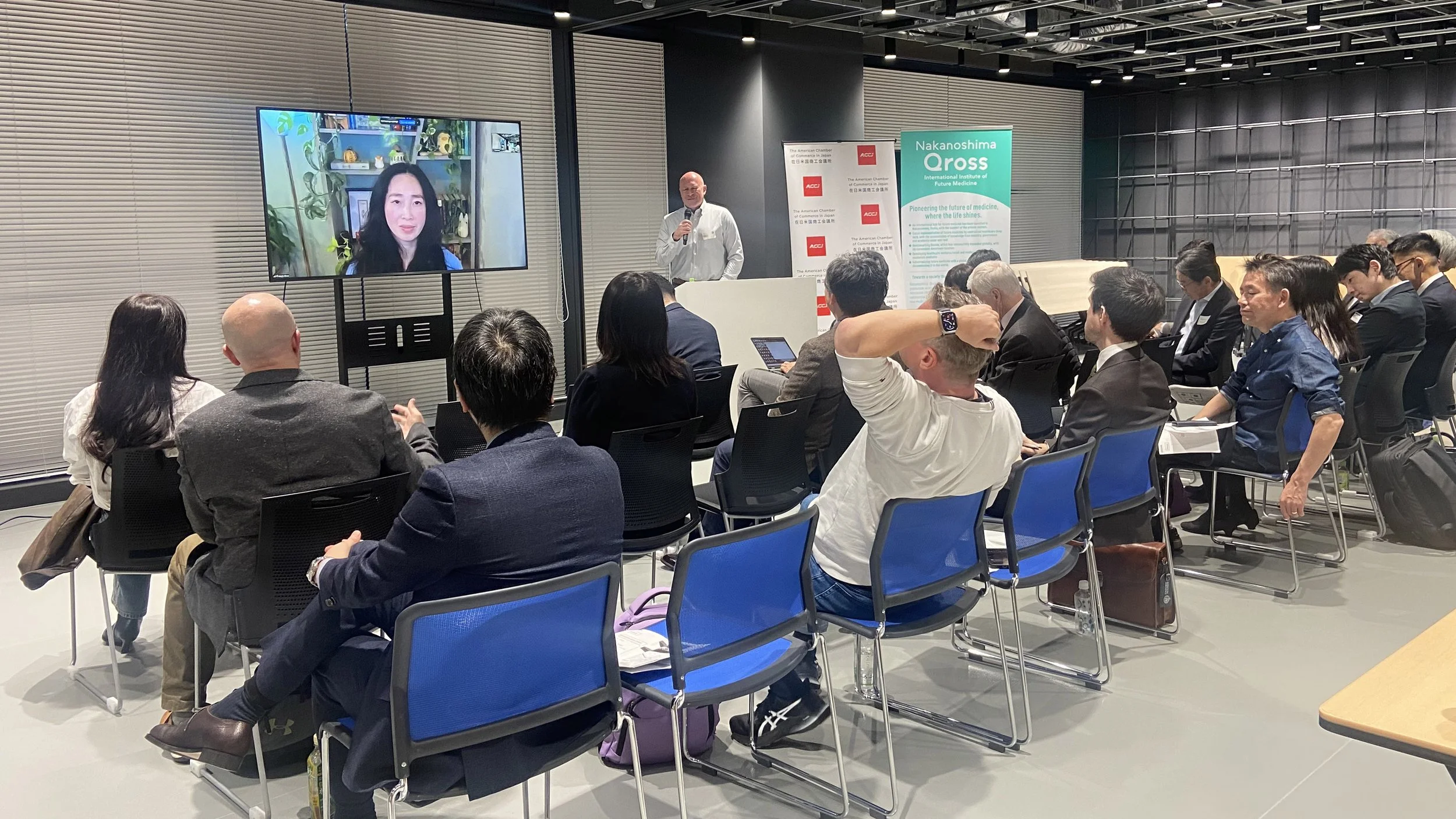
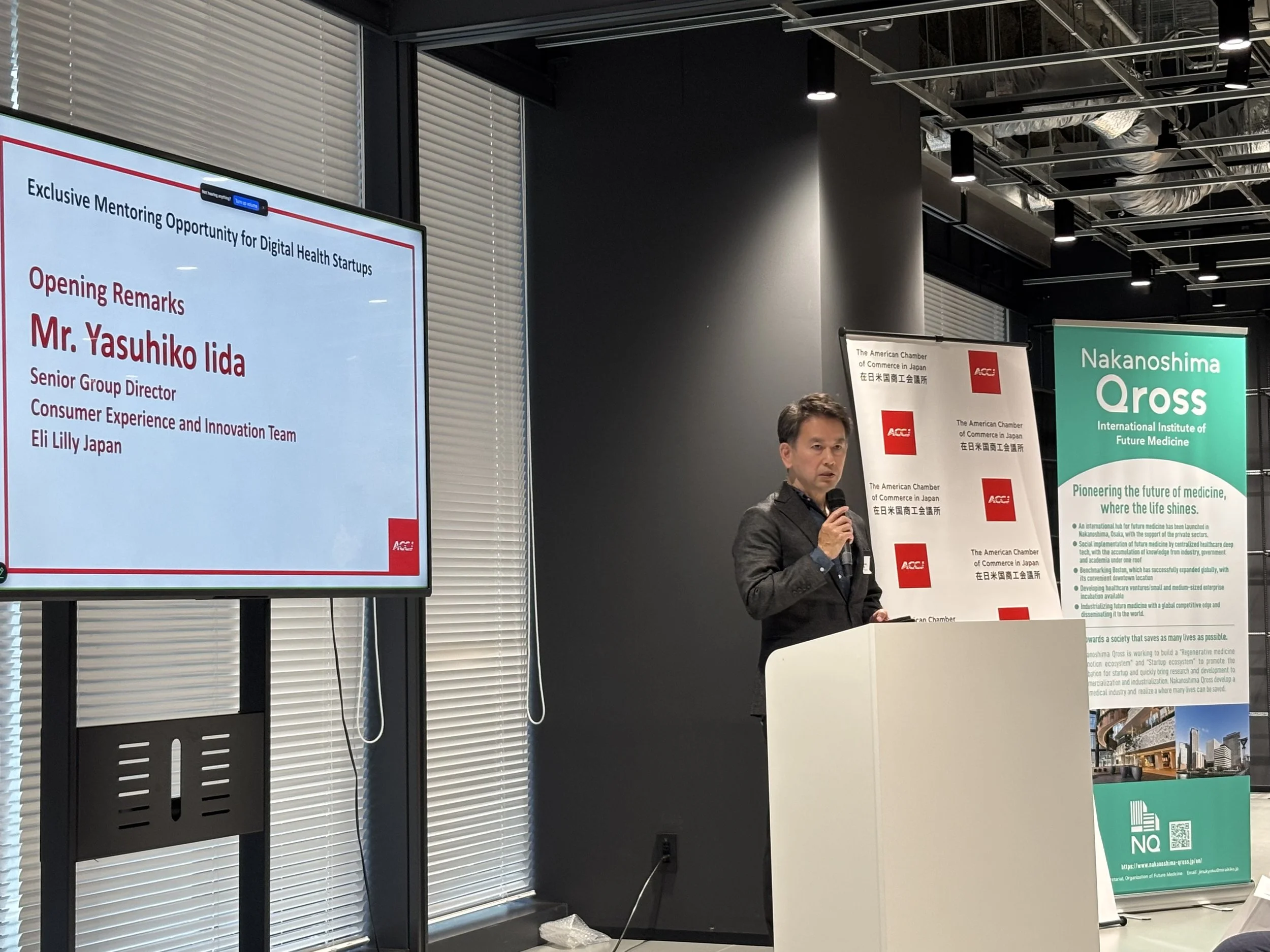
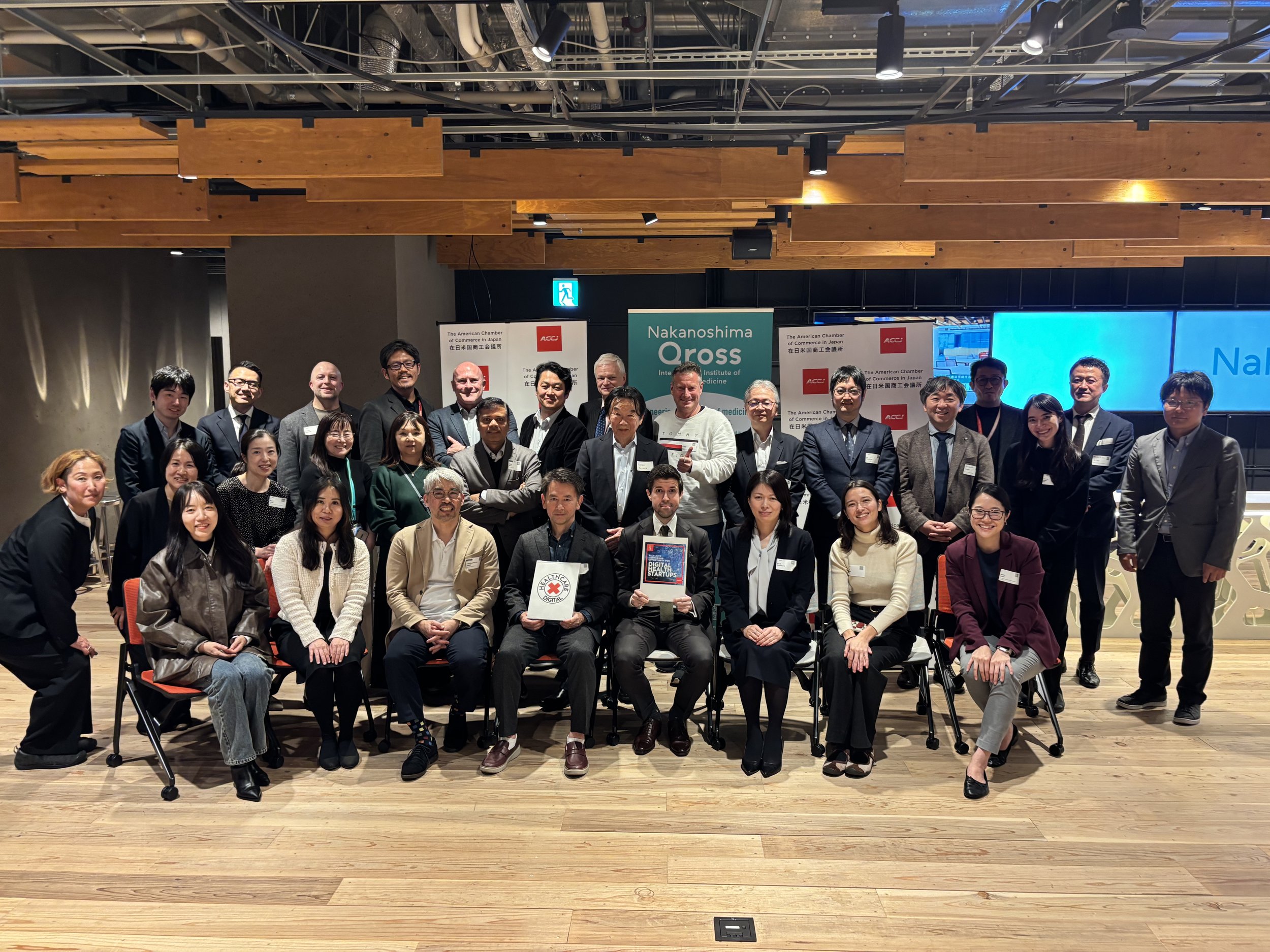
The ACCJ Healthcare x Digital (HxD) initiative reached a new milestone on December 2 with its first-ever exclusive mentorship event for healthcare startups at Nakanoshima Qross in Osaka.
HxD Mentor Day helps healthcare startups perfect their pitch for 2026.
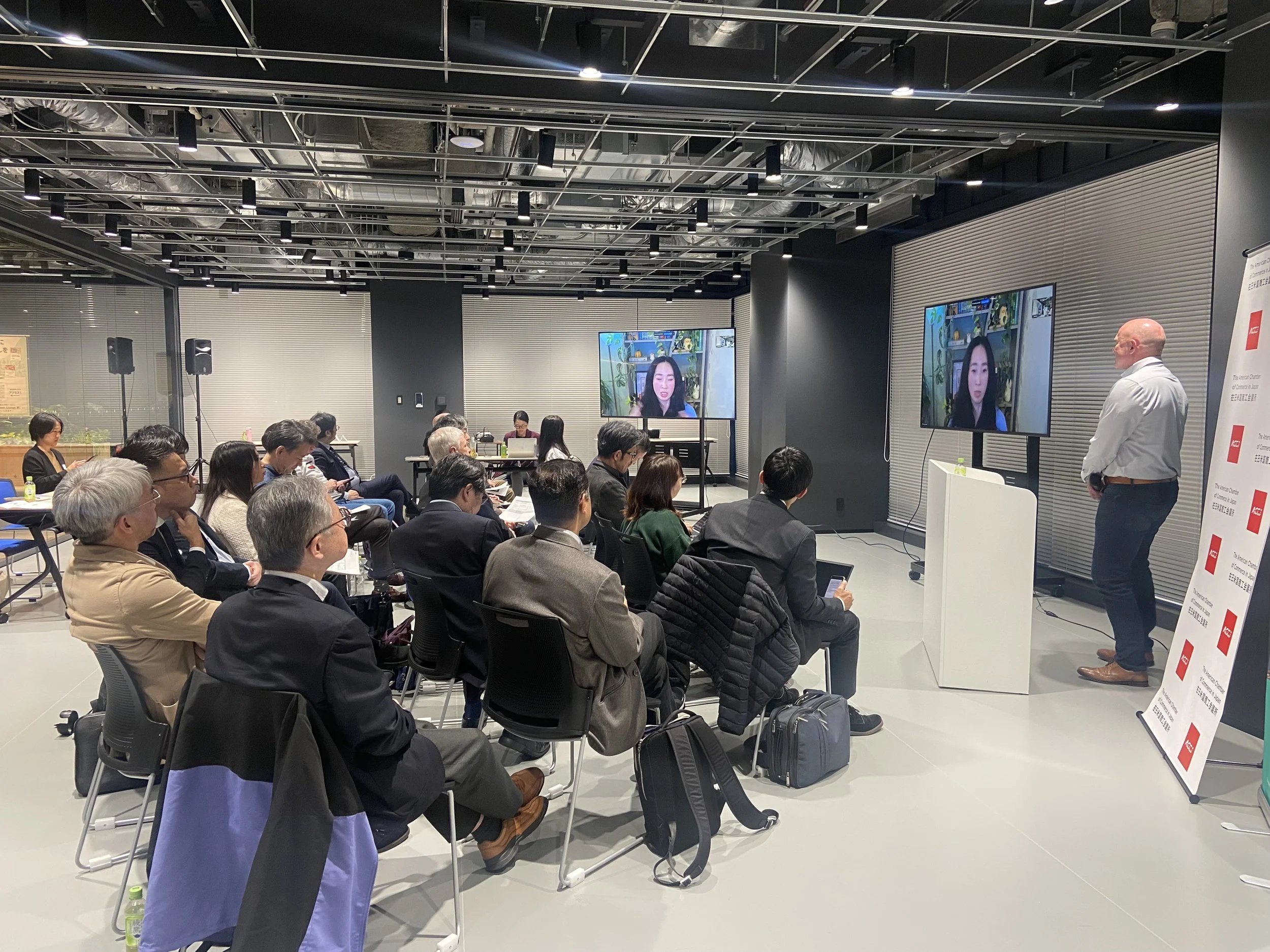
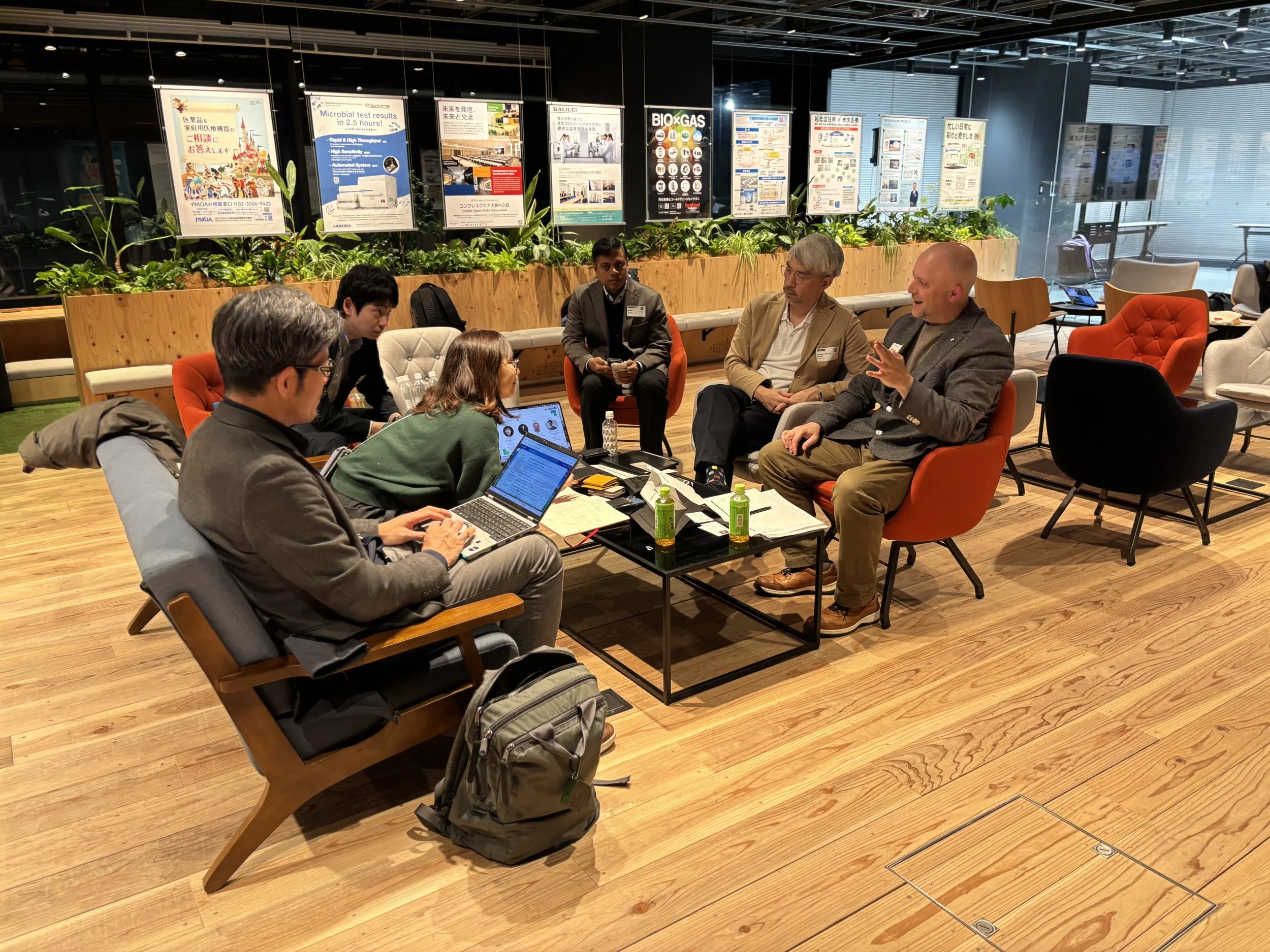
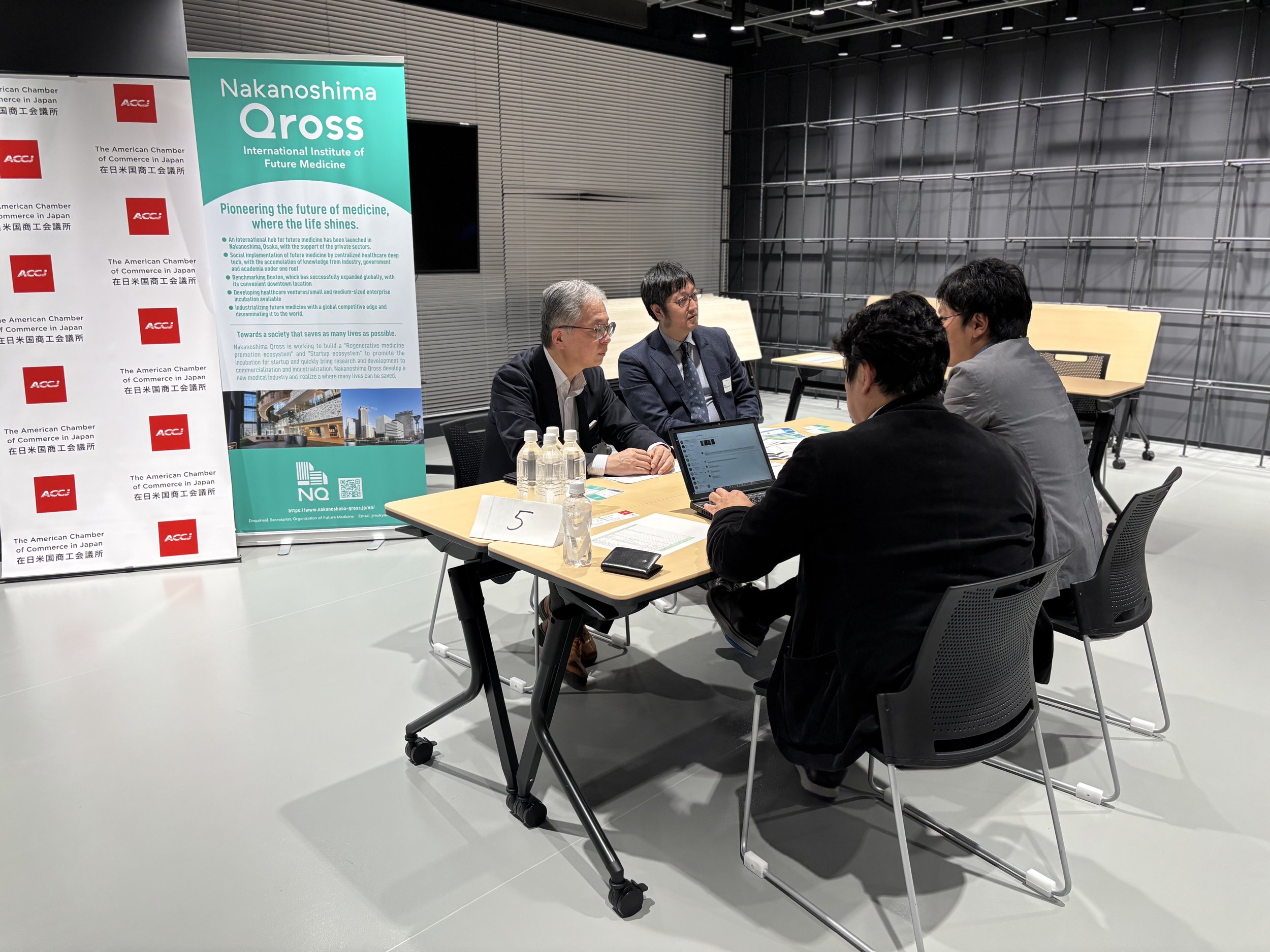
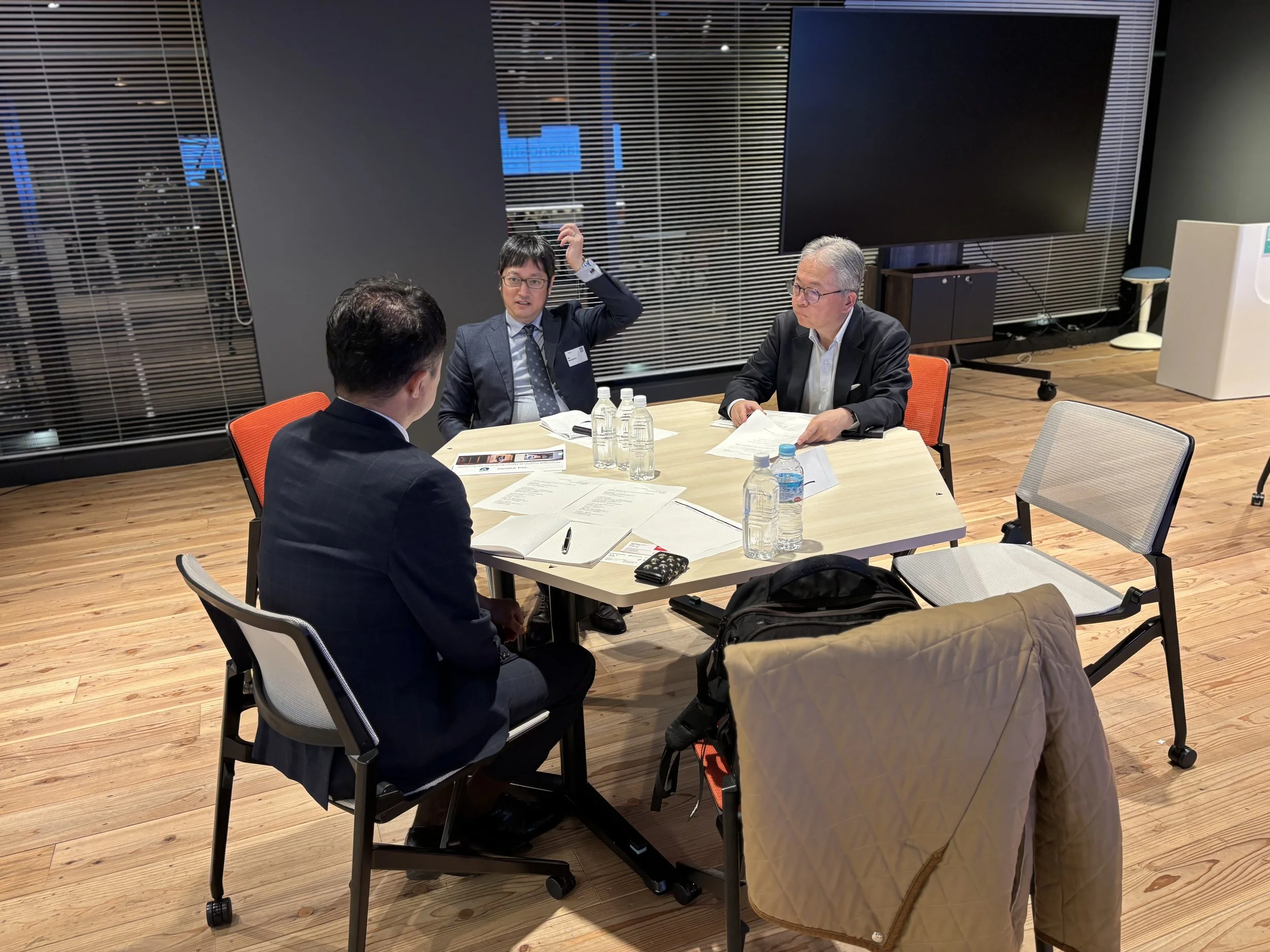
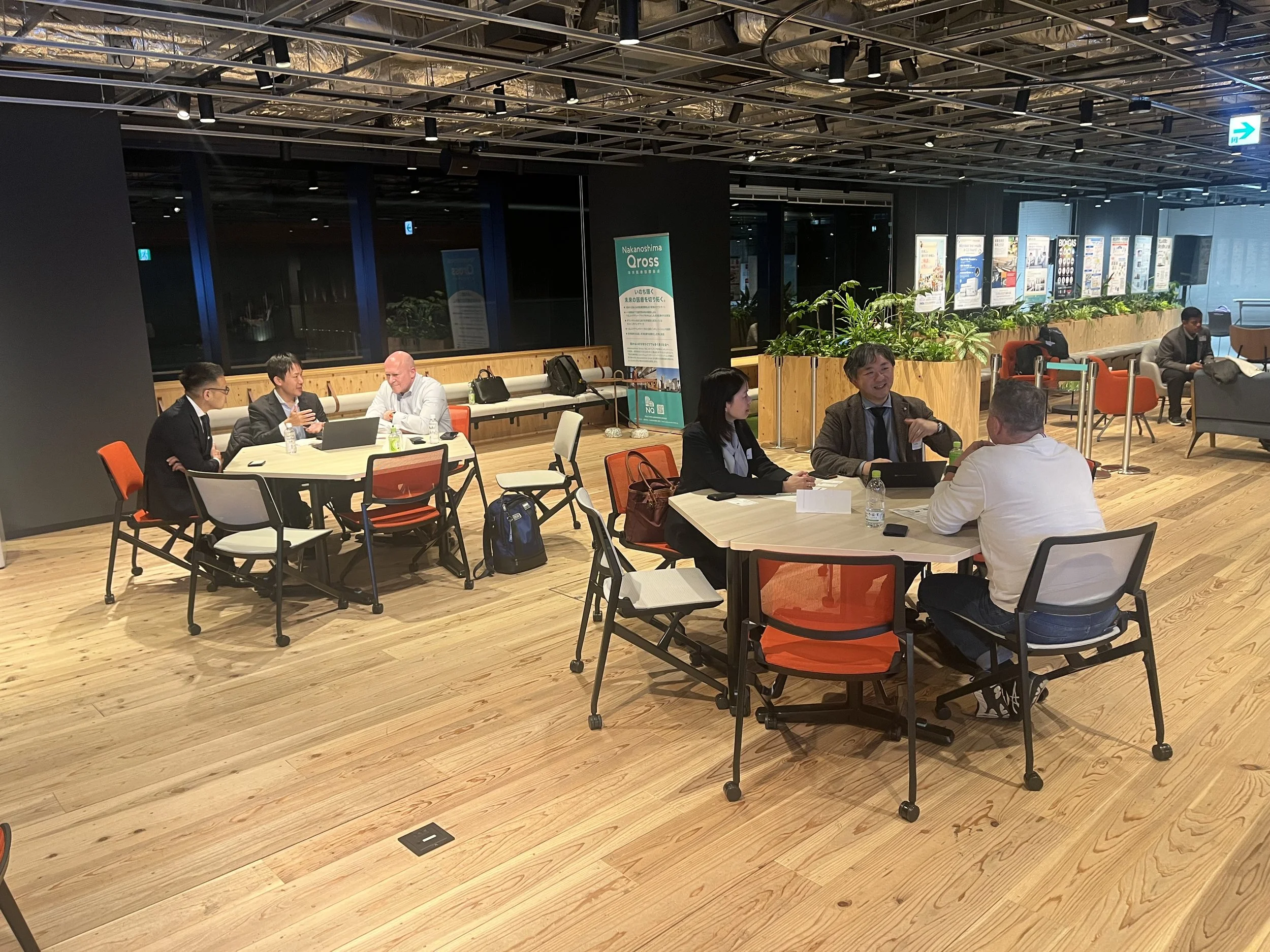
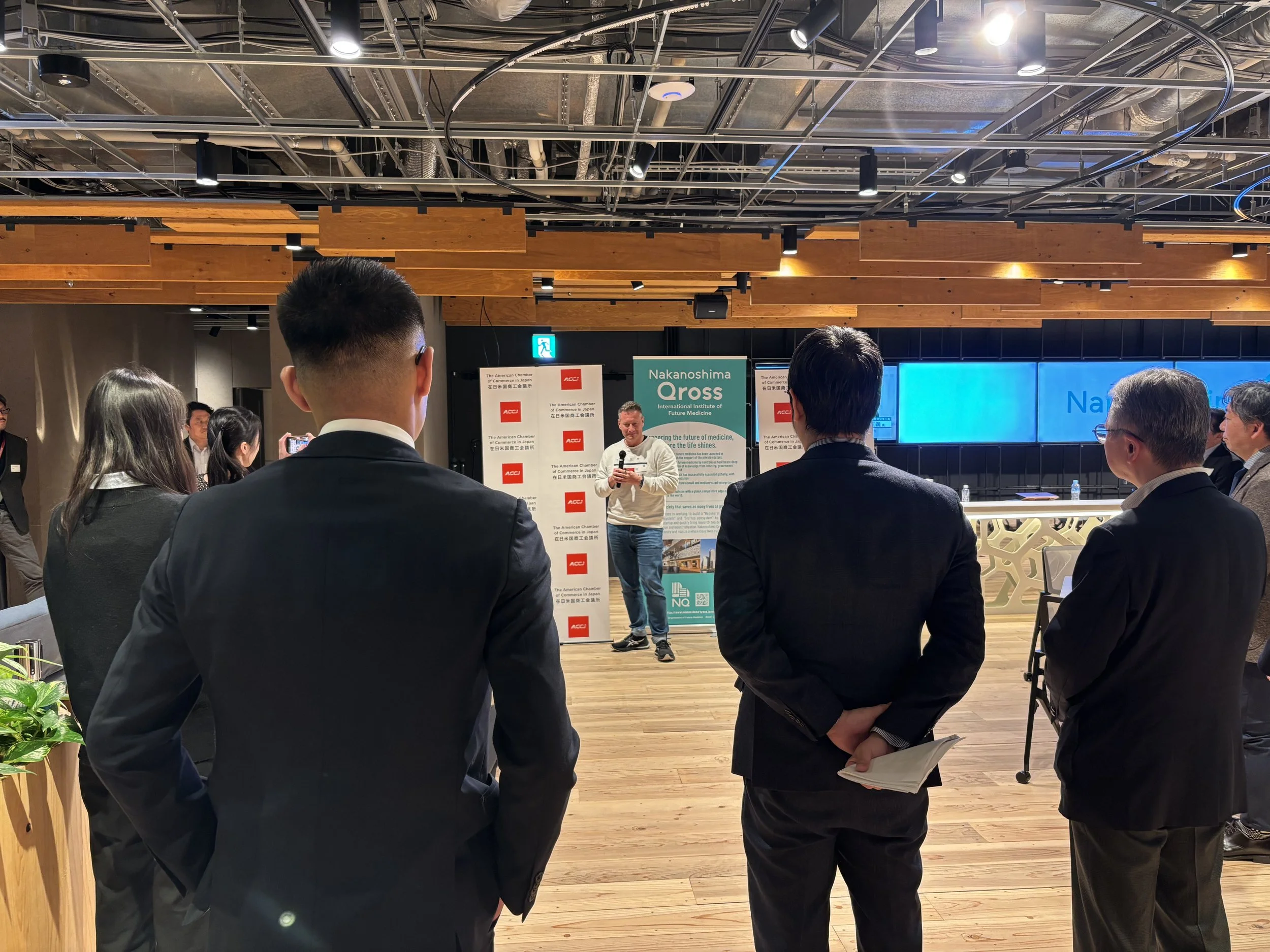
The ACCJ Healthcare x Digital (HxD) initiative reached a new milestone on December 2 with its first-ever exclusive mentorship event for healthcare startups at Nakanoshima Qross in Osaka. Instead of pitching onstage, founders spent the afternoon strengthening their narratives—then pressure-testing them in small-group mentoring sessions with industry experts.
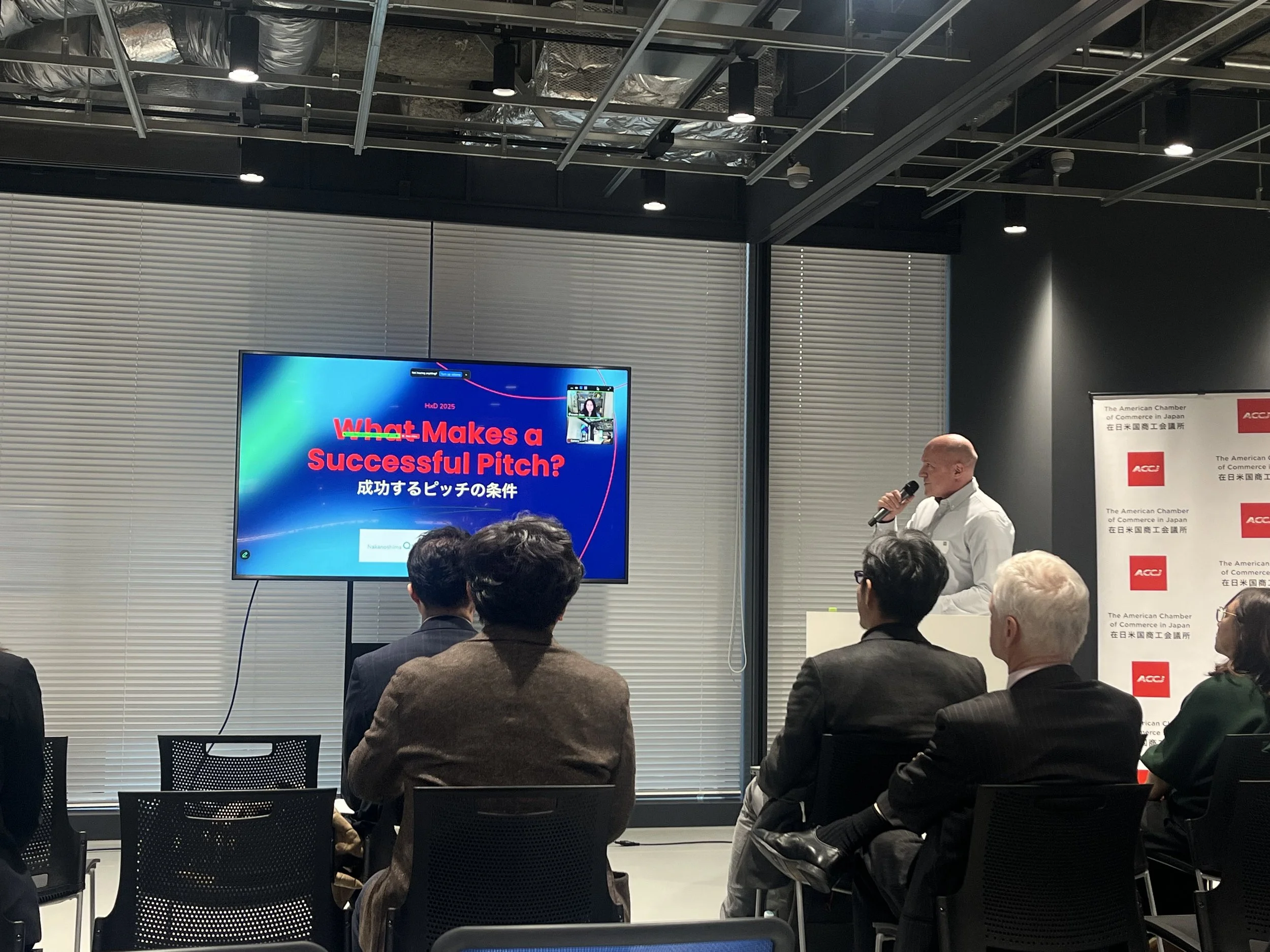
The program opened with a workshop led by Christian Boettcher, managing partner at Takaraya Capital and formerly a senior partner and APAC sector leader consulting partner for healthcare and life sciences at EY Strategy & Consulting. He was joined remotely by Kristin Chen, a Silicon Valley product leader, fractional chief executive (CxO), and adviser with more than 15 years’ experience at LinkedIn, Twitch, Pinterest, and multiple startups.
Their joint message? A compelling pitch starts with clarity, discipline, and a strong grasp of what investors listen for in the first minute.
Expanding the Model
HxD is an initiative team within the ACCJ–Kansai chapter’s Healthcare Committee. It connects academia, startups, corporates, and government around three themes:
- The hospital of the future
- Patient data empowerment
- Urban–rural healthcare equity
Since 2020, HxD has hosted pitch competitions and ideathons; the December Mentor Day introduced a more intimate format designed to help founders refine their thinking ahead of the 2026 HxD Pitch Competition.
After the workshop, founders rotated through two rounds of 30-minute sessions with mentors from organizations including Eli Lilly, AstraZeneca, EY, IQVIA, K&L Gates, Innovation Dojo, and Zimmer Biomet. The conversations were candid and practical, focusing on communicating value, understanding customers, and positioning within the healthcare ecosystem.
Christian’s Essentials: Focus Your Story
Boettcher began with simple, universal guidelines:
- One message per slide
- Readable font sizes
- Minimal, intentional use of color
From there, he walked through several elements investors expect to see. The first is the founding team—why they are qualified to address the problem and what insight or experience led them to the idea.
Next comes the problem definition. Founders often jump into technology, he noted, without clearly explaining the pain point or who experiences it. “What is the problem itself? And why does it matter?”
Only after establishing the problem should founders propose their solution and what differentiates it. He urged startups to evaluate the “graveyards” where companies that attempted similar ideas and stalled—and understand what went wrong.
Boettcher also highlighted the importance of financial clarity. Even non-financial founders must be able to explain revenue streams, cost structures, runway, and the logic behind market estimates. Overstated markets or vague assumptions erode credibility quickly.
Finally, he emphasized context awareness. With artificial intelligence (AI) accelerating innovation and policy changes influencing healthcare, strong founders show they understand how broader shifts affect their strategy.
Kristin’s First 60 Seconds: What Investors Listen For
Chen offered an investor’s perspective, noting that expectations have risen. “Venture capitalists now want retention, growth, and monetization signals early,” she said.
Sharing a four-pillar framework for evaluating a pitch, Chen stressed that she listens for all four within the first 60 seconds:
- A real, enduring problem
- A meaningful or growing market
- A scalable, tech-driven advantage
- A credible path to revenue
“If these elements aren’t clear within a minute, it’s hard for an investor to stay engaged,” she said.
To make the problem tangible, Chen urged founders to reference user research and analytics: interviews, surveys, user-generated content, and existing studies. Specific data points or quotes help quantify severity and show that founders understand the people they aim to serve.
She also recommended preparing two deck versions: a concise one for live delivery and a self-contained one for investors reviewing the pitch independently.
Pain, Markets, and Communication
During the Q&A session, a mentor asked how to quantify customer pain and how narrowly to define the target market. Chen suggested starting with an ideal customer profile and using qualitative and quantitative research to validate who feels the pain most. Boettcher offered a healthcare example: Japan’s diabetes-related hospitalizations can be quantified not only in medical costs but also lost productivity.
A biotech founder asked how to pitch when pharmaceutical companies are the paying customers, but patients benefit most. Boettcher explained that in areas like AI-driven drug discovery, startups must map a multilayered market—including pharma, biotechs, and government programs. Chen added that founders should be explicit about the sales cycle, decision-makers, and associated risks.
Another question focused on Japan-based founders pitching in English while simultaneously managing verbal, visual, and nonverbal communication. Chen emphasized practice, tailoring the story to each investor, and developing “executive presence.” Early-stage investors, she said, often bet on the founder as much as the idea. “If you don’t believe in yourself, how do you expect others to believe in you?”
Boettcher echoed the importance of rapport. Even strong products struggle if founders cannot communicate confidently and connect with the audience.
Platform for 2026 and Beyond
After the workshop, the mentoring sessions brought theory into practice. Founders and mentors sat together to refine slides, discuss specific markets, and explore potential collaboration pathways.
As the first HxD Mentor Day, the gathering added a valuable new dimension to HxD’s ongoing efforts to support digital health innovation across Japan. With the next major pitch opportunity coming in February, participating founders left with clearer stories, stronger decks, and a better understanding of what resonates with investors, especially in that critical first minute.
In a healthcare environment where technology and expectations are evolving quickly, these communication skills are becoming as essential as the innovations themselves.
Gateway to Japan
As arrivals boom, can the country’s hospitality industry keep pace through a new era of omotenashi? That was the question at the center of an ACCJ event hosted on October 8, featuring Tokyo Governor Yuriko Koike.
As arrivals boom, can the country’s hospitality industry keep pace through a new era of omotenashi?
Photos Miki Kawaguchi/LIFE.14
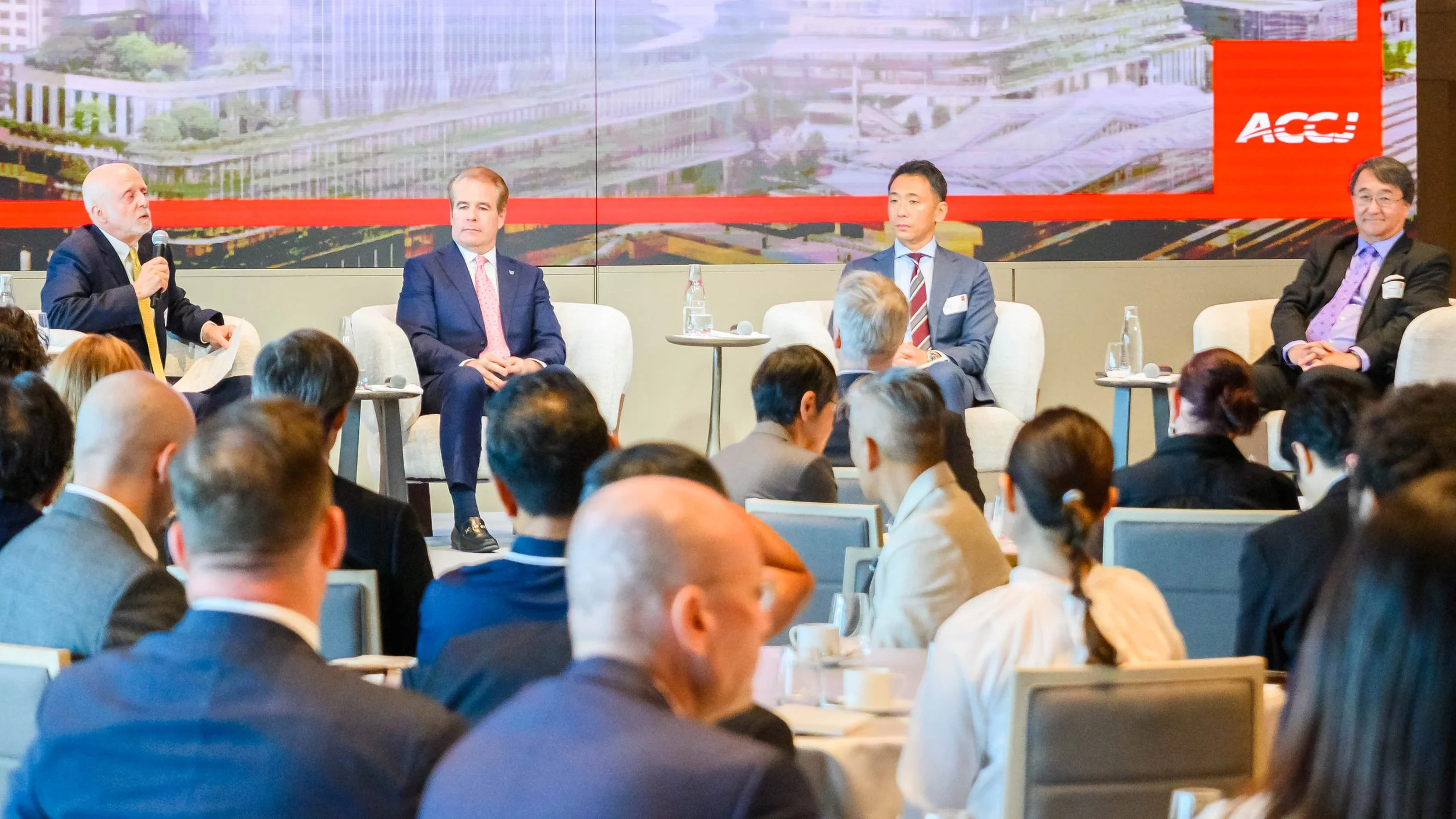
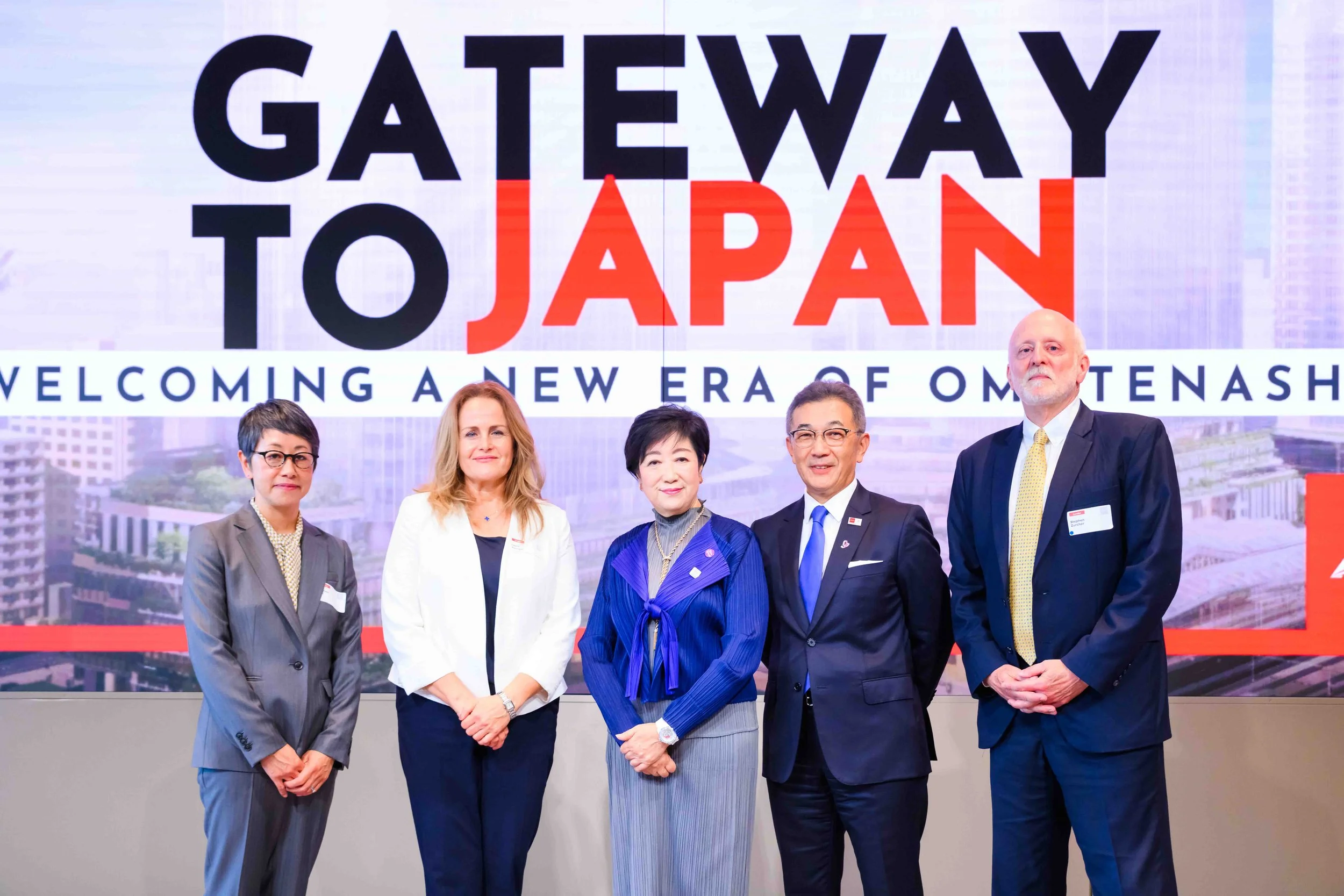
From left: Stephen Zurcher, Christopher Clark, Yoshiya Amanai, and Tadayuki Hara
Bullet trains slicing past a snow-covered Mount Fuji. Real-life anime beneath the neon lights of Akihabara. A fleeting glimpse of geisha in Kyoto’s lantern-lit alleys. For millions of tourists around the world, it’s scenes like these that put Japan at the top of their travel list.
Demand for such experiences has surged since the country reopened its borders in October 2022, after nearly two and a half years of pandemic-imposed isolation. This year alone, more than 35.5 million inbound tourists arrived through October, shattering the previous annual record set in 2019 of 31.88 million with two months to go. Japan is well on its way to hitting the government’s target of 60 million by 2030.
With visitors comes money. Inbound tourism is now Japan’s second-largest export industry after autos, and achieving the 2030 goal would see an injection of ¥15 trillion ($100 billion) into the economy—equal to the nation’s annual defense spending at nearly two percent of gross domestic product.
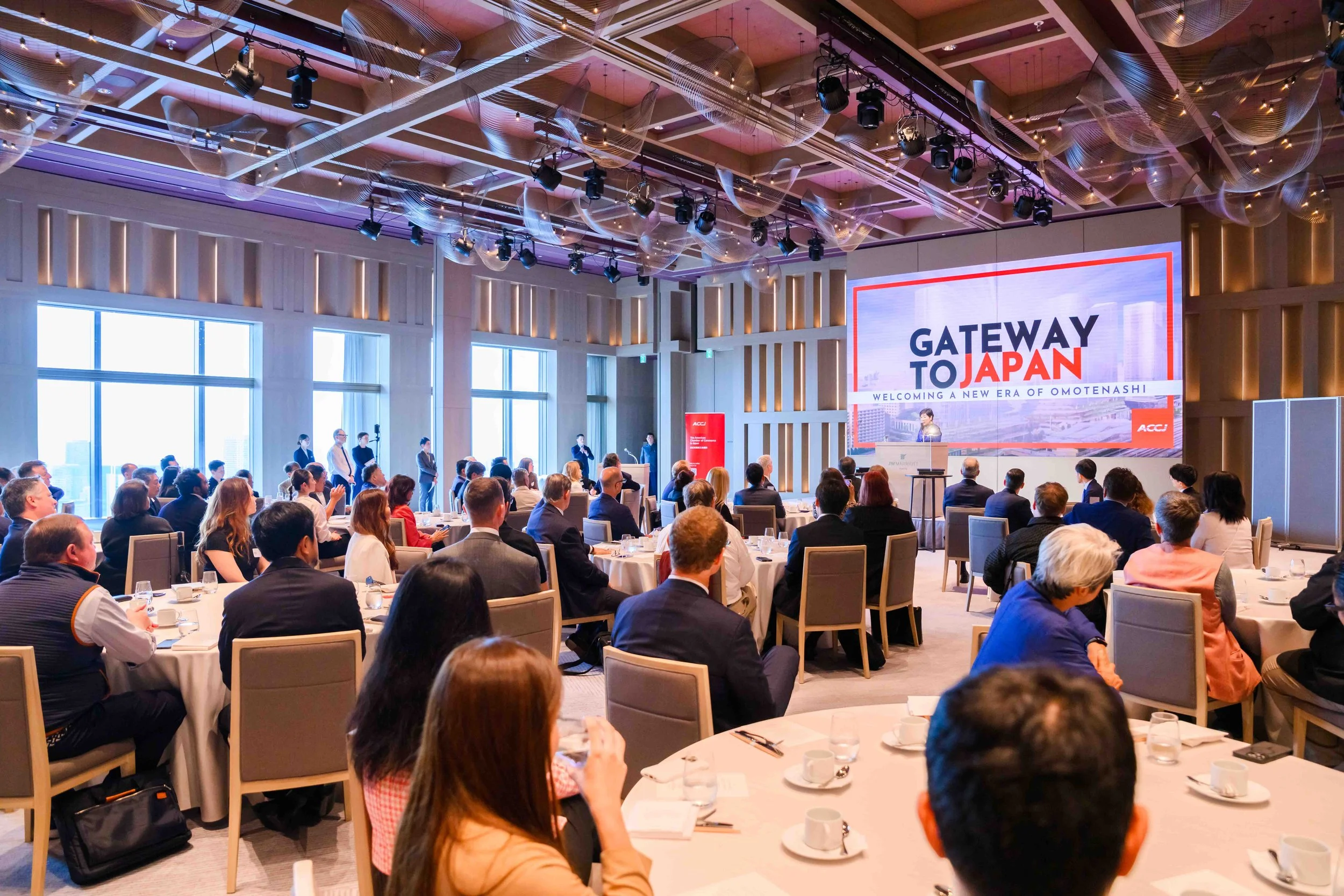
This potential—and how to harness it—was at the center of an event at the new JW Marriott Tokyo on
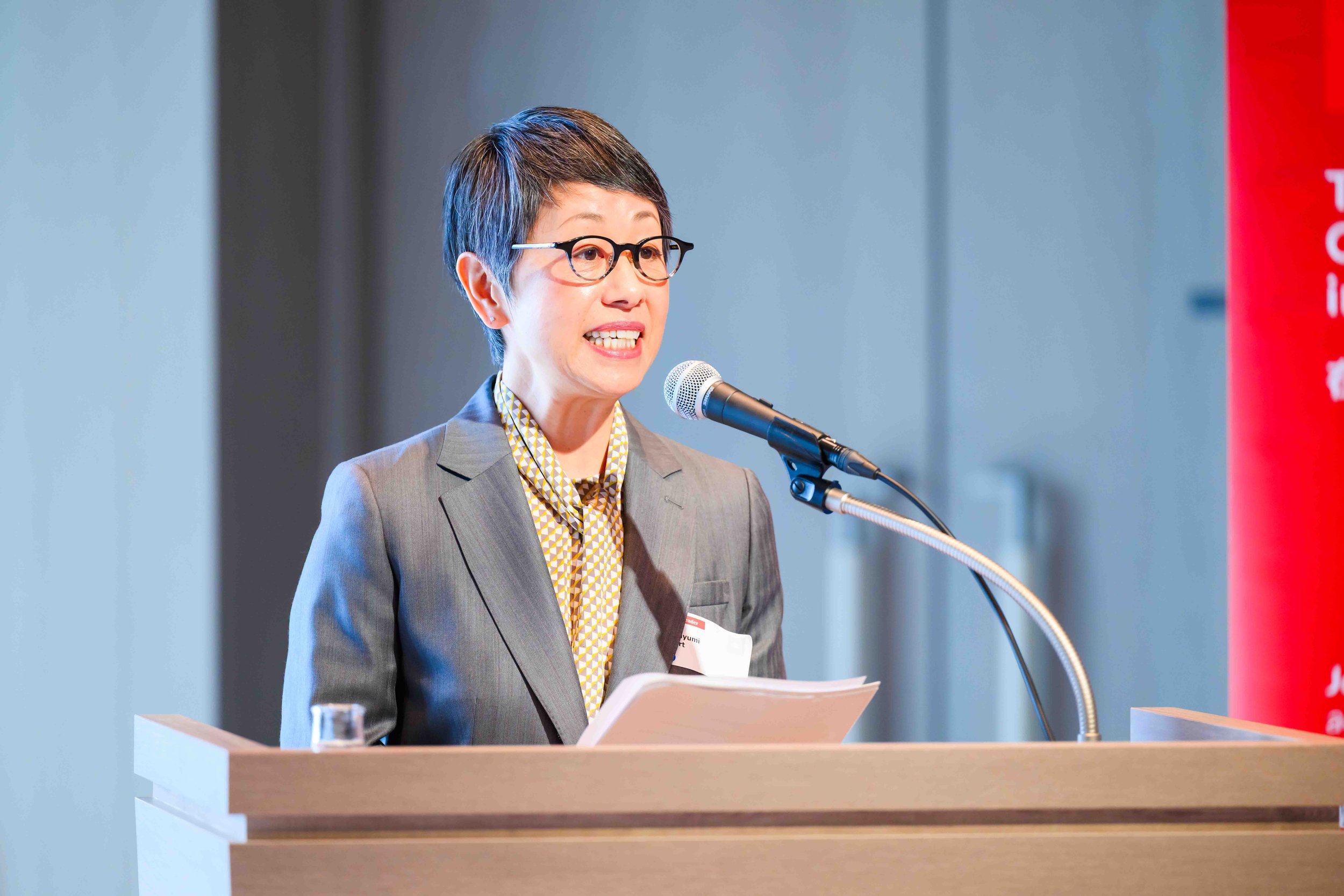
October 8, hosted by the American Chamber of Commerce in Japan (ACCJ) Tourism and Hospitality Committee and organized by Vice-chair Mayumi Nakamura Birt, who also served as emcee.
Gateway to Japan
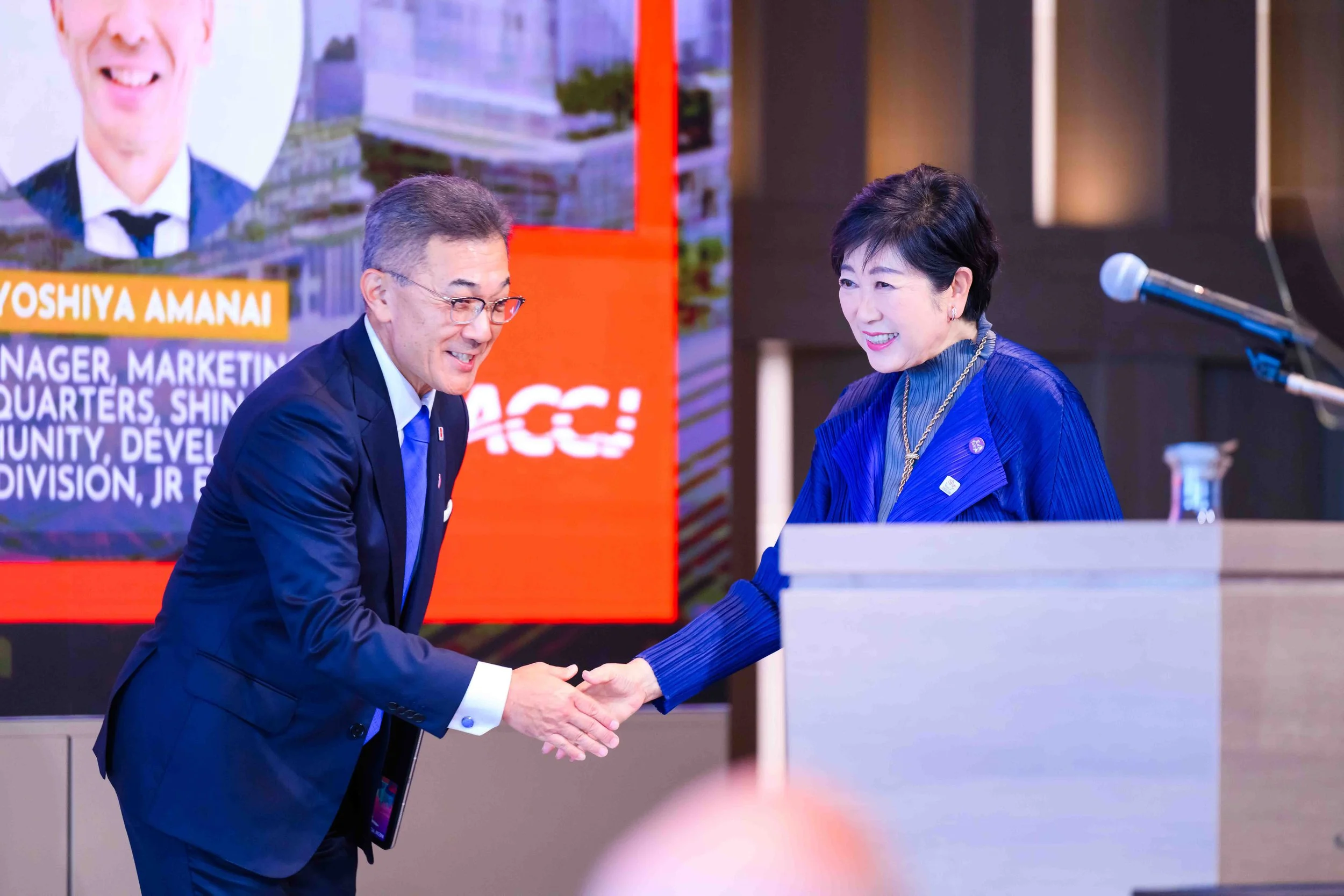
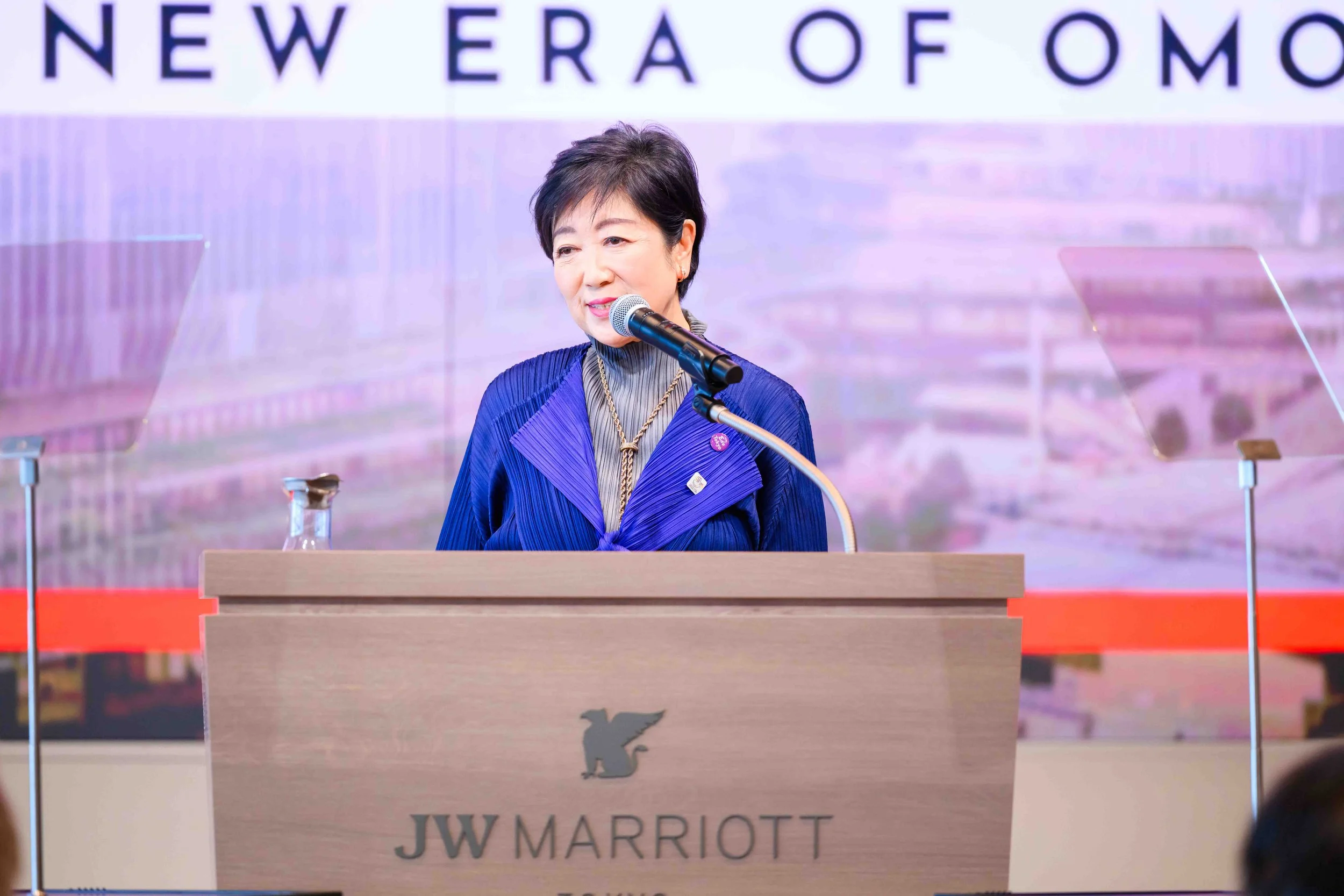
Tokyo Governor Yuriko Koike delivered the keynote, sharing exciting plans that stretch even farther and promise to elevate all aspects of tourism, going beyond sightseeing to business, education, cultural exchange, events, investment, and innovation.
“We have formulated the Tokyo 2050 Strategy as a compass guiding us to the future,” she explained, speaking in a milestone year when New York City and Tokyo celebrate their 65th anniversary as sister cities. “The driving force harnessing the strength of the city is people. And that is why Tokyo is advancing people-focused initiatives. Notably, in response to globalization, we are bolstering efforts to build an environment enabling younger generations to play an active role in the world. Through our investment in people who underpin socioeconomic activities, we will enhance our hospitality and guide the further growth of Tokyo and the rest of Japan.”
Tokyo ranked third behind New York and London in the 2024 Global Power City Index, compiled by the Mori Memorial Foundation’s Institute for Urban Strategies. First published in 2008, the annual study ranks major cities around the world in terms of magnetism—their power to attract creative individuals and enterprises—according to 70 indicators across six functions:
- Economy
- Research and development
- Cultural interaction
- Livability
- Environment
- Accessibility
Thanks to improvements in research and development, cultural interaction, livability, and accessibility, Tokyo significantly increased its score from the previous year, closing the gap on second-place New York. In the study’s actor evaluation—how a city is perceived by specific groups of people—Tokyo ranked second among tourists.
But there’s still room for improvement. After-dark activities is one area highlighted by Koike.
“We are also focusing on upgrading our nighttime tourism. Projection mapping on the wall of the Tokyo Metropolitan Government building holds a Guinness record and has attracted over 900,000 spectators,” said the governor.
The event’s panel of experts, who discussed hospitality in depth following the keynote, also touched on nighttime offerings.
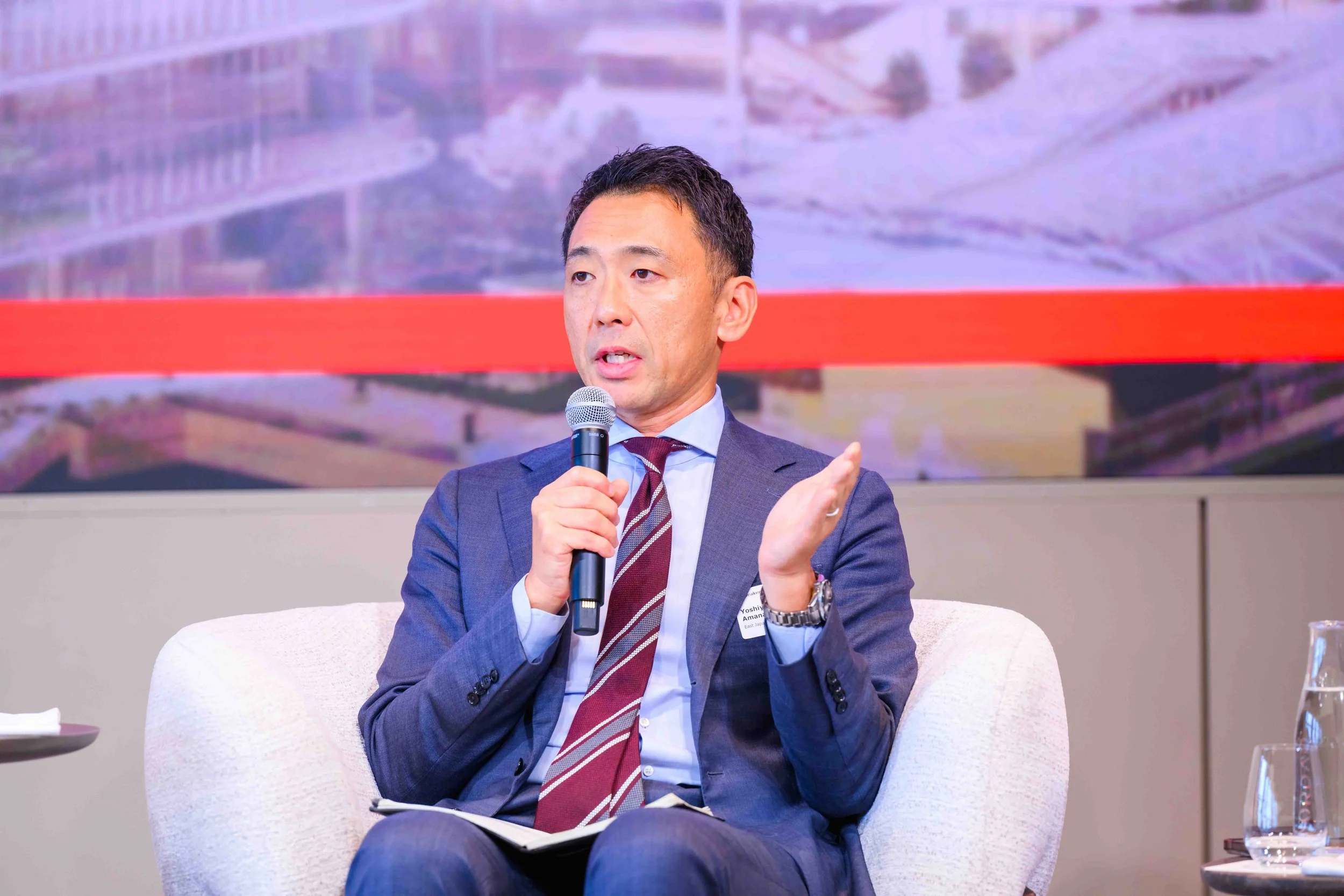
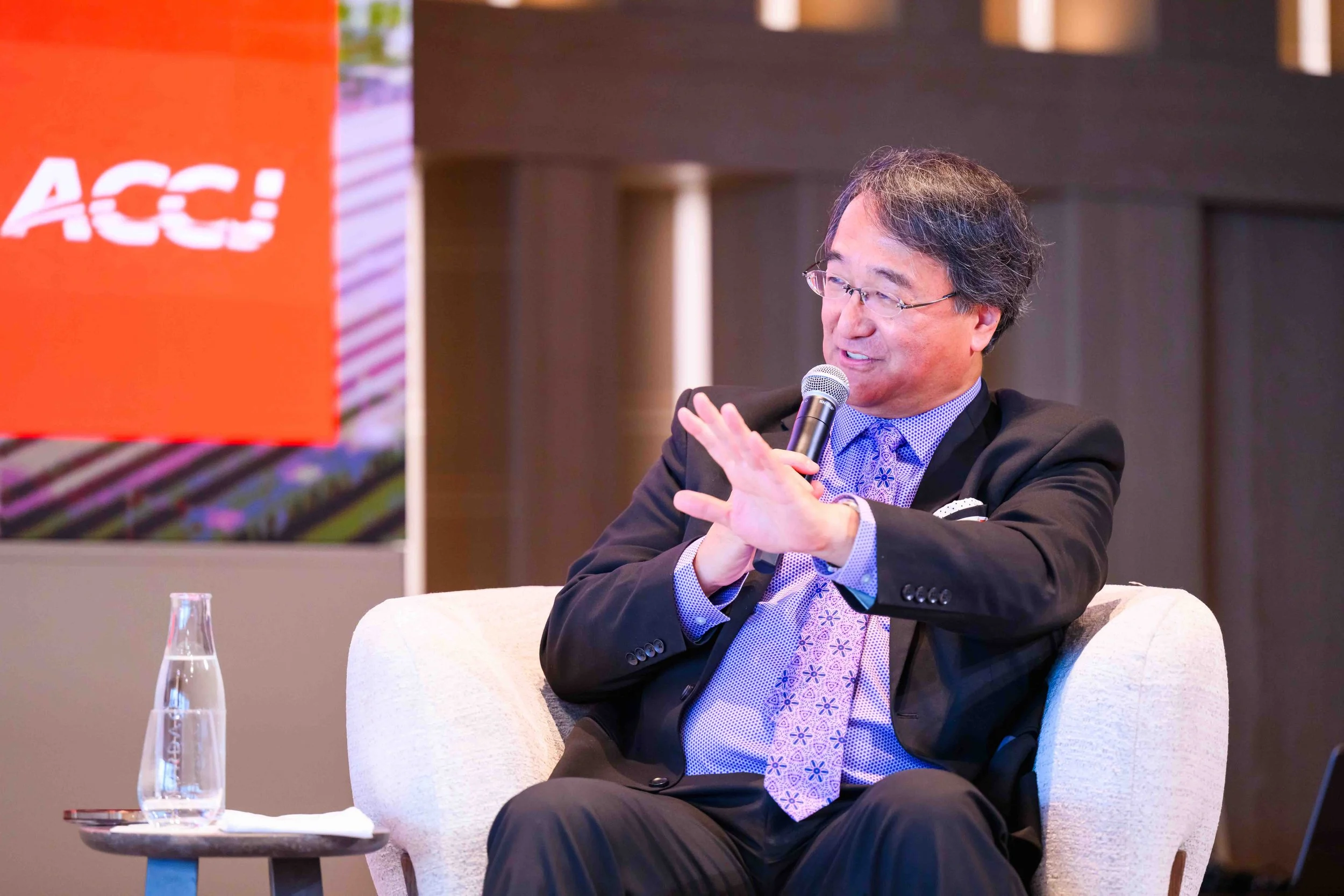
“Compared to other countries, Japan has quite few nighttime activities,” noted Yoshiya Amanai, a manager at East Japan Railway Company (JR East) who oversees the marketing headquarters of the Shinagawa Community Development Division. JR East is the developer of the Takanawa Gateway City complex, of which the JW Marriott is a part.
Amanai said that entertaining guests after 5:00 or 6:00 p.m. is a core part of the Takanawa Gateway concept, and such activities will expand as more buildings open. The complex is scheduled for completion in spring 2026.
“If we can expand the nighttime economy, that’s going to bring a lot of revenue,” he added.

Broader Appeal
Tokyo is at the center of discussion because it truly is the gateway to Japan. Two-thirds of all visitors to the country come through the capital. While 2025 numbers are not yet in, that figure equated to nearly 25 million people in 2024.
But for Japan to truly benefit from its superstar role on the global travel stage, tourist destinations beyond Tokyo and the Golden Route that runs west through Kyoto and Osaka must be developed and marketed.
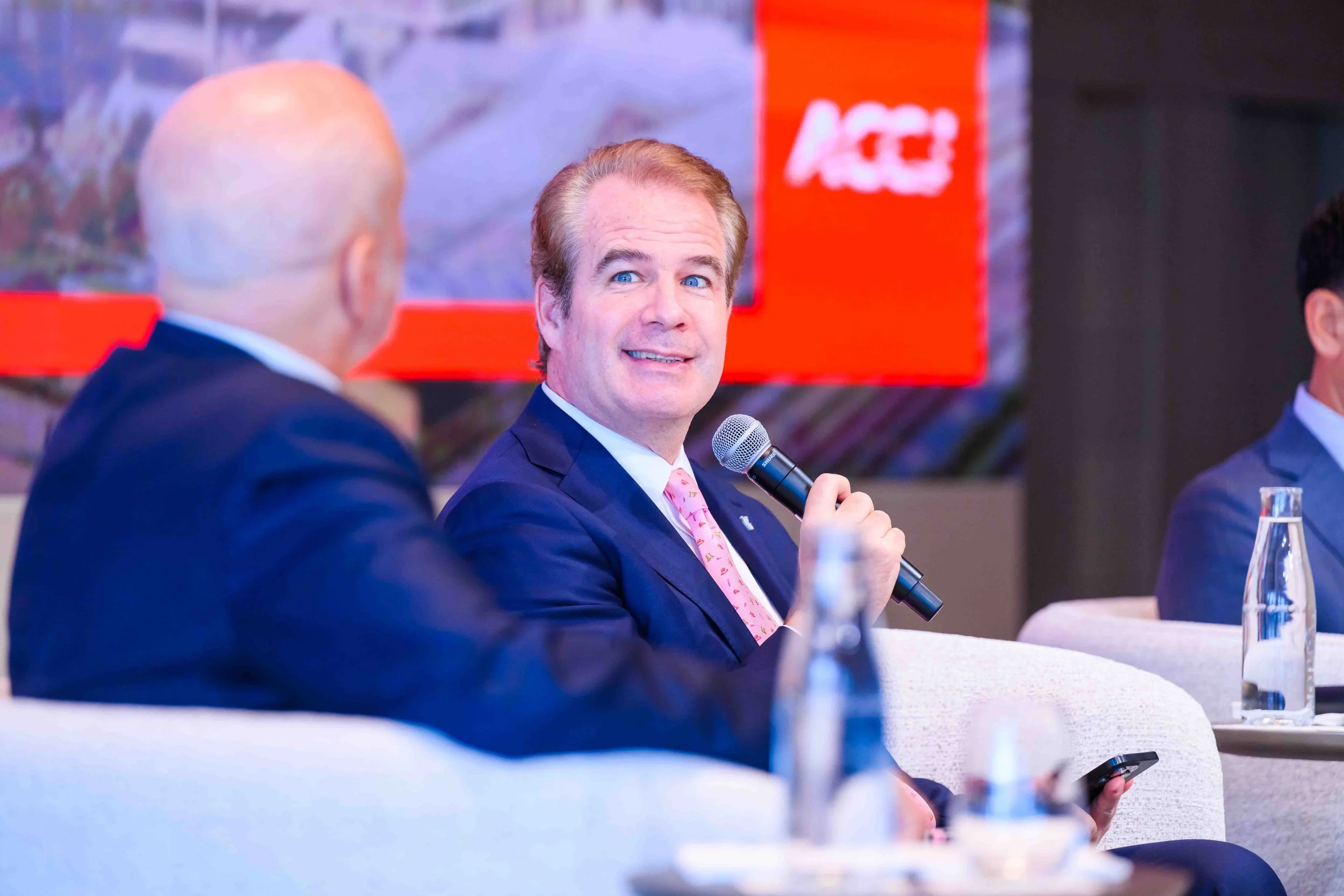
Stephen Zurcher, chair of the ACCJ Tourism and Hospitality Committee and moderator for the discussion, noted that diversification is essential in part because the most popular destinations are seeing strain on their infrastructure as a result of Japan’s remarkable tourism growth.
JR has been doing its part with a special experience that taps into one of tourists’ greatest loves and fascinations about the country: trains.
“In 2017, we started Shiki-shima, a luxurious train with service spanning three to five days in the eastern side of Japan,” Amanai shared.
Shiki-shima takes travelers to lesser-known corners of Honshu, tracing routes from Tokyo’s Ueno Station north to Tohoku and Hokkaido—the opposite direction from the Golden Route. Its journeys tear up the typical guidebook itinerary to reveal delights such as the cedar forests of Nikko, the sake breweries and crafts of Fukushima and Miyagi, the inns and hot springs of the Iwate highlands, and the samurai history of Akita.
“It’s expensive, but every time we sell tickets they all sell out,” Amanai added. All courses through summer are fully booked, and JR is currently accepting applications for tours between July and September.
JW Marriott Tokyo General Manager Christopher Clark shared Marriott International’s embrace of diversified tourism. “We operate 116 hotels in Japan, and the goal is to continue growing in all prefectures. We see that inbound tourists are increasingly interested in traveling beyond the Golden Route. We want to be there, whenever our customers want to go.” Also an ACCJ governor, Clark was previously general manager and oversaw the opening of JW Marriott Nara before moving to Tokyo to lead the new property in Takanawa Gateway City.
People Matter
The theme of investment in people, which Governor Koike emphasized as central to Tokyo’s future, resonated in the panel discussion.
One thing the panelists agreed on is that more qualified talent is needed to meet the growing needs of Japan’s skyrocketing tourism industry. Clark experienced this firsthand while hiring for JW Marriott Tokyo.
“Our biggest challenge opening the hotel was the human resource element,” he revealed. “I think the number of young associates who are willing to enter the hospitality business is becoming less and less in Japan. We need to continue to encourage the younger generation to join our industry. However, we also need support from the international market, in regards to visas and programs, to allow these employees to come and be trained on language but also Japanese omotenashi.”
Dr. Tadayuki Hara is very familiar with the industry talent outside Japan. He is an associate professor and senior research fellow at the Dick Pope Sr. Institute for Tourism Studies at the University of Central Florida in Orlando, a tourism mecca.
Hara noted the importance of developing human resources. “Unfortunately, in Japan, many universities are putting emphasis on tourism studies, but it’s a study of tourism. I don’t think it’s really meeting the need of the industry. Whereas in America, 70–75 percent of tourism-related programs are hospitality management. Management is how you allocate the limited internal resources into the highest growing areas.”
He sees three skills as key:
- Hospitality management
- Entertainment management
- Event management
Zurcher, dean of Asian studies at Kansai Gaidai University in Osaka, has been working to boost Japan’s hospitality talent for years. “Honestly, the reason I started a hospitality program 10 years ago was to help Chris [Clark] and other GMs who were telling me that they couldn’t find enough people to support the growth of their business. And now, of course, that challenge has become more severe.”
The gap—and the challenge of filling it—is certainly not lost on policymakers. Koike used part of her keynote to announce that Tokyo will subsidize overseas study for young people, noting that the weak yen has reduced their ability to gain international experience. “We wish for more of our young people to step out into the world,” she said. “Through our investment in people who underpin socioeconomic activities, we will enhance our hospitality and guide the further growth of Tokyo and the rest of Japan.”
Education, however, is not only about developing talent. It’s also about helping locals understand why tourism matters, Hara said. “What the government needs is more marketing. Not external marketing to bring more people, but internal marketing. Tell taxpayers and residents about the importance of tourism. In America, this is highly emphasized. For a destination marketing organization, a DMO, it’s usually one of the three pillars. Whereas in Japan, many DMOs are not really paying attention to the internal market.”
Japan now faces a simple but powerful challenge: to grow tourism not only by promoting the country abroad, but by building understanding at home. And if it succeeds, 60 million tourists will be more than a visitor metric; it will be a driver of local prosperity.
Making a Difference Step by Step
This May will mark a major milestone for the ACCJ–Chubu community: the 35th anniversary of the Chubu Walkathon International Charity Festival. You're invited to join the celebration and make a difference.
The Chubu Walkathon invites you to celebrate 35 years of community support.
Photos By Andy Boone
This May will mark a major milestone for the ACCJ–Chubu community: the 35th anniversary of the Chubu Walkathon International Charity Festival. What began in 1992 as a small, collaborative effort between US businesses and local partners has grown into the region’s most visible international charity event—uniting thousands each year for a day of walking, food, entertainment, and community support.
Cofounder Robert Roche, now ACCJ vice president–Chubu, still remembers the first event. “Large corporations were coming to Nagoya saying, ‘It’s our culture in America to give back to the local community,’” he recalled with a laugh. “Harry Hill and I were the young guys doing most of the legwork while they got the spotlight—but in all seriousness, they were the ones who showed us how to do business the right way. Their guidance in those early years gave us a solid foundation, and the relationships we built—with orphanages, schools, and local charities, as well as sponsors like Kondo Sanko, are the reason the Walkathon is still going strong 35 years later.”
Since then, the Walkathon has contributed ¥196 million to organizations across the Chubu region, supporting children in foster care, individuals with illnesses or disabilities, families affected by domestic violence, Tohoku earthquake and tsunami relief, and many others. Over the five years from 2019 to 2023, donations averaged more than ¥5 million per year. The event continued to deliver strong results even through the heart of the pandemic thanks to organizers getting creative with a format that allowed participation amid social distancing.
Community Bridge
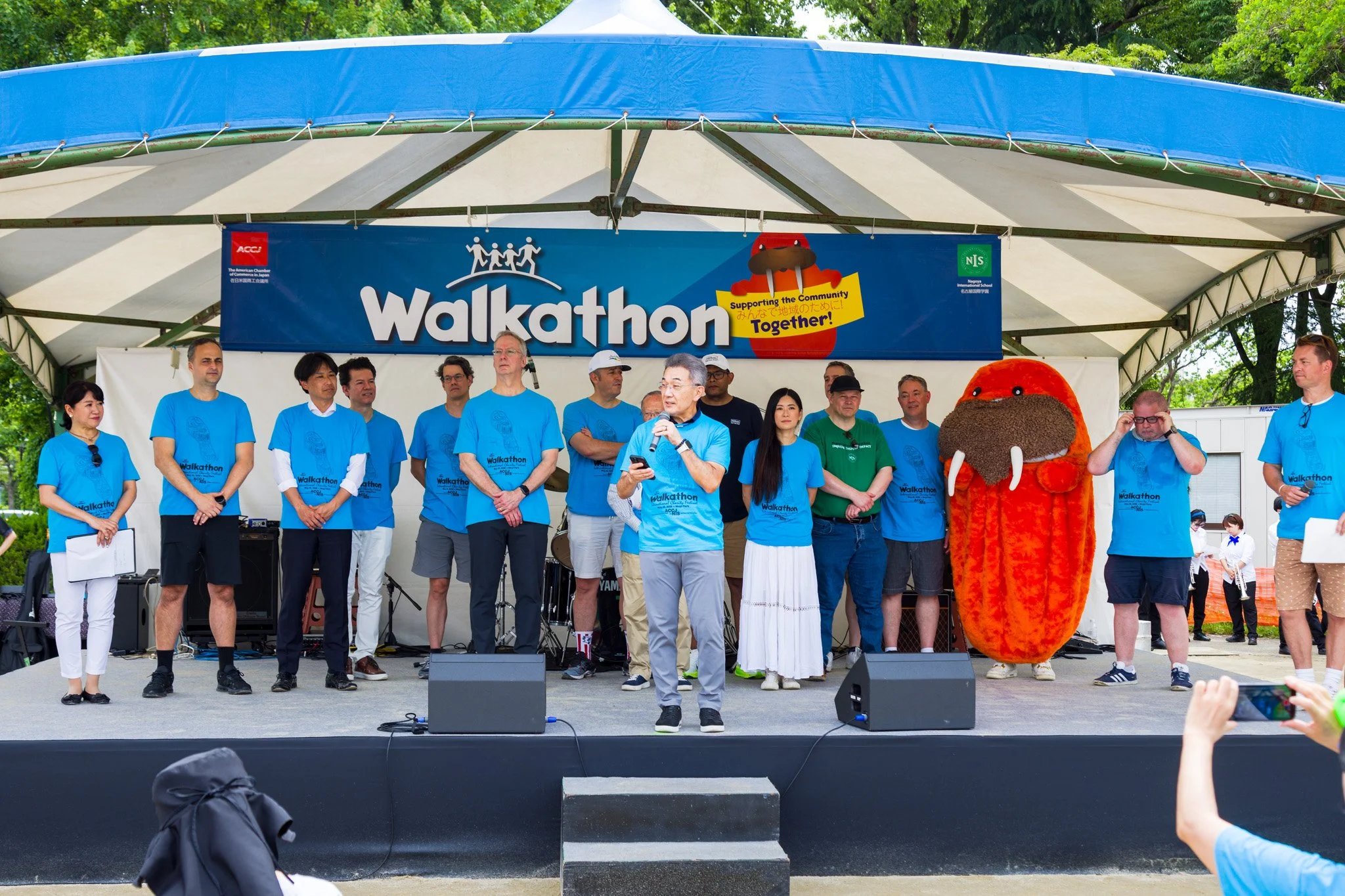
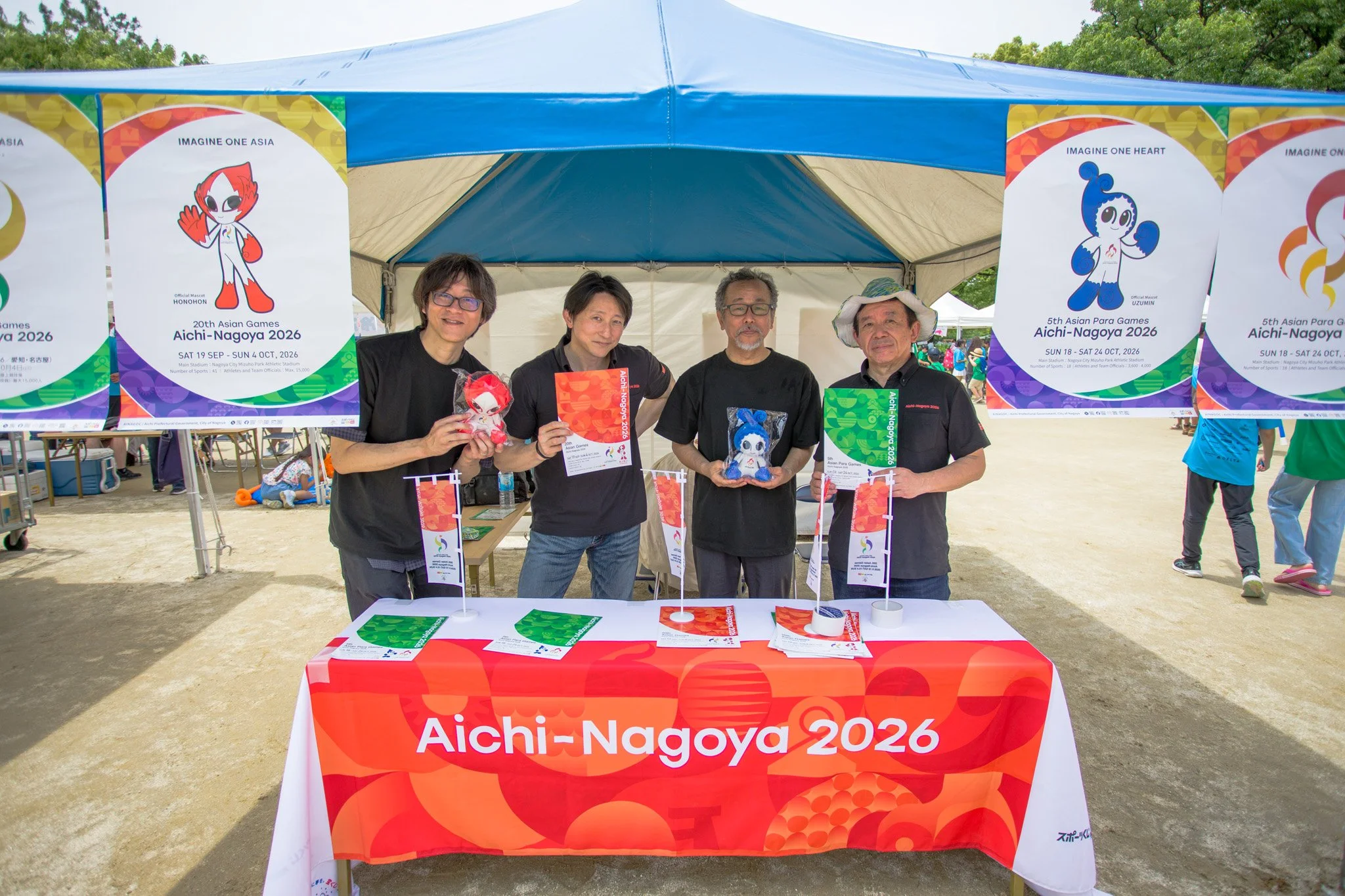
The Walkathon is jointly organized by the ACCJ–Chubu Community Service Committee and Nagoya International School (NIS). For event leaders Nao Geisler, Bryce Conlan, and Erik Olson-Kikuchi, the Walkathon is as much about community-building as it is about fundraising.
“Being part of the Walkathon is an immense honor,” said Geisler, who is chair of the committee. “It serves as a bridge between local and international communities. It’s not just raising money—it’s raising awareness, fostering cultural exchange, and demonstrating our commitment to central Japan.”
Fundraising, she added, is only the starting point. “When donations are transformed into real support, it gives people comfort and hope—things they may not be able to create alone.”
At recent donation ceremonies, charities shared messages such as “Your support allowed us to continue assisting children” and “We were able to start a new program thanks to your help.” Conlan, the committee vice-chair, said these words remind us why our work matters.
Festivities with Purpose
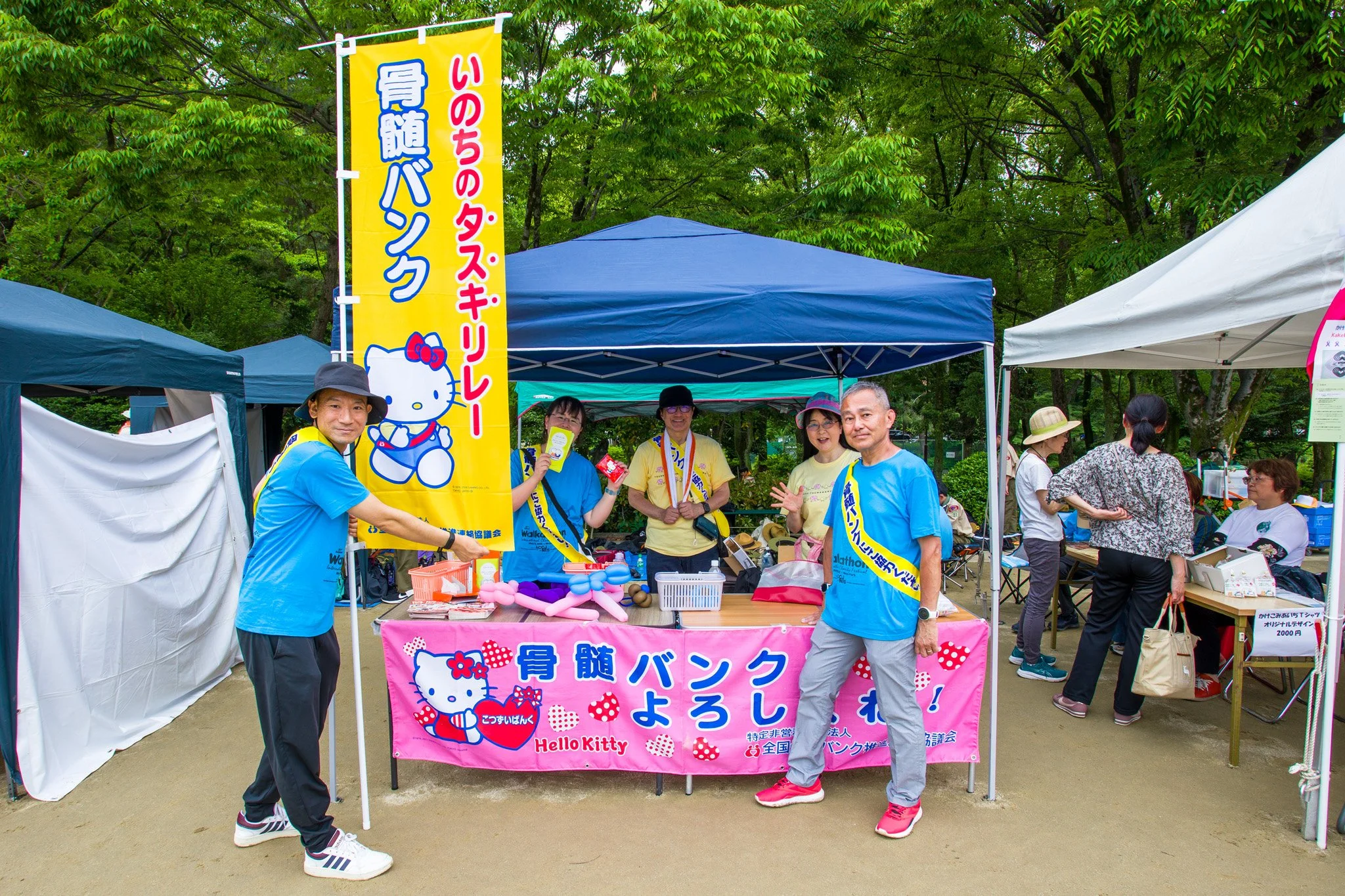
The Walkathon remains a highlight of the spring calendar for families across the region. The event features:
- A symbolic walk course through Meijo Park
- Live music, dance, and cultural performances
- Face-painting, crafts, and activities for kids
- An international food court and vendors
- Charity information booths
- A large-scale raffle (100 percent of proceeds donated)
All purchases are made with Walkathon food and activity tickets, and 100 percent of all activity purchases and 20 percent of food purchases are donated.
Celebrating 35 Years
To mark the anniversary, organizers are planning enhanced programming, a retrospective exhibit on the event’s history, and a new “35 Challenges” initiative— including a lead-up program called Walk 3.5K for 35 Days. The committee is also working to raise in excess of ¥15 million, its most ambitious target to date.
Roche hopes this year will set a precedent for the future. “We want this to be a 70-year, even 100-year tradition,” he said. “There’s no reason it can’t continue as long as the community keeps working together.”
He also hopes to see the largest turnout yet. “We’re aiming for more than 3,000 participants. We’ll be sending letters to members—hopefully everyone can help a little.”
Why It Matters
The Walkathon is widely regarded as the ACCJ–Chubu Chapter’s most impactful corporate social responsibility initiative. It strengthens trust between international businesses and local communities, demonstrates long-term commitment, and creates a welcoming environment where residents from Japan and abroad can connect over a shared humanitarian purpose. The Walkathon has also strengthened the ACCJ’s role in the community, highlighting the international business community’s long-standing commitment of contributing to the well-being of the Chubu region.
Join Us in May
With its mix of community spirit, cultural exchange, and real social impact, the Walkathon continues to embody the best of what international collaboration can achieve.
The organizing committee invites companies, families, and individuals to participate, volunteer, or sponsor the event—and to help make the 35th anniversary the strongest year yet.
The 35th Annual Chubu Walkathon takes place May 24. Companies interested in sponsoring are encouraged to contact the ACCJ–Chubu office at chubu@accj.or.jp.
Leading Voices
The ACCJ recognizes the 2025 Leaders and Volunteers of the Year for stellar contributions across its three chapters.
The ACCJ recognizes stellar contributions across its three chapters.
Photo Miki Kawaguchi/LIFE.14
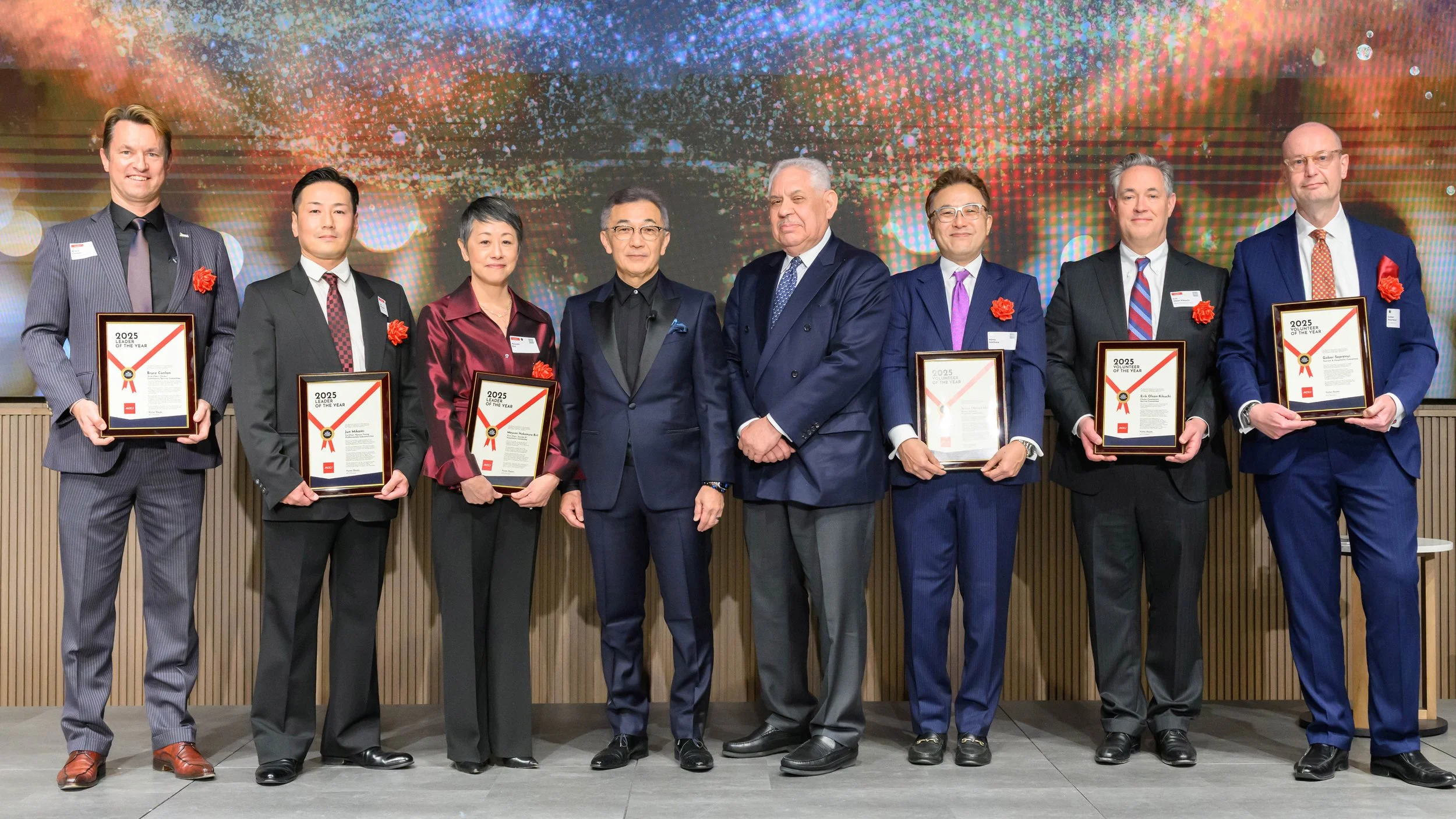
From left: Bryce Conlan, Jun Mikami, Mayumi Nakamura Birt, ACCJ President Victor Osumi, ACCJ Vice President Arthur Mitchell, Tetsuo (Harry) Ishihara, Erik Olson-Kikuchi, and Gábor Seprényi
Leaders of the Year
Mayumi Nakamura Birt (Tokyo)
The ACCJ proudly recognizes Mayumi Nakamura Birt for her extraordinary leadership as vice-chair of the Tourism and Hospitality Committee. Birt has played a central role in the committee’s post-Covid revival, driving dynamic programs that have improved member collaboration and engagement. She spearheaded key events and contributed her expertise to multiple viewpoints on tourism advocacy, and she facilitated 2025’s flagship inbound tourism event, Gateway to Japan, which included Tokyo Governor Yuriko Koike.
Jun Mikami (Kansai)
The ACCJ extends its appreciation to Jun Mikami for his thoughtful leadership as a founding member and co-chair of the Kansai Young Professionals (YPF) subcommittee. Mikami has strengthened the YPF with his vision, commitment, and passion, building a dynamic community that supports the next generation of global leaders. He successfully executed standout programs, including mentorship events and the annual Christmas Charity Bash, now signature YPF initiatives.
Bryce Conlan (Chubu)
The ACCJ expresses its heartfelt thanks to Bryce Conlan for his outstanding leadership and service, helping those in need as vice-chair of the Chubu Community Service Committee. Conlan has been pivotal to the success of the Chubu Walkathon. His dedication, organization, and ability to engage volunteers and sponsors ensured the event’s lasting positive impact on local communities. His energy, selfless leadership, and initiative, including serving as emcee and managing activities on the day of the Walkathon, have elevated the committee’s activities and the chamber’s visibility and impact in the Chubu region.
Volunteers of the Year
Gábor Seprényi (Tokyo)
The ACCJ expresses its gratitude to Gábor Seprényi for his valuable contributions to the Tourism and Hospitality Committee. Seprényi has been instrumental in the committee’s advocacy initiatives, providing guidance on government policy and directly contributing to the successful publication of two viewpoints. His expert insights have strengthened the committee’s advocacy strategy to drive improvements in the tourism and hospitality sector. He consistently supports the committee by hosting many of its meetings.
Tetsuo (Harry) Ishihara (Kansai)
The ACCJ extends sincere appreciation to Tetsuo (Harry) Ishihara for his outstanding commitment to the Kansai Business Programs Committee. Ishihara was responsible for planning and executing several high-profile programs with prominent speakers, including the Bank of Japan Osaka Branch seminar and the very successful Osaka to Orbit event at Expo 2025 Osaka, Kansai, held at the USA Pavilion. He also contributed articles to _The ACCJ Journa_l on Kansai Chapter activities.
Erik Olson-Kikuchi (Chubu)
The ACCJ is indebted to Erik Olson-Kikuchi for his instrumental contributions to the Chubu community and the Chubu Walkathon, which is organized with the Nagoya International School. Olson-Kikuchi has played a critical role in mobilizing resources from NIS each May, ensuring smooth coordination and impactful outcomes for the ACCJ’s largest community service event. His passion and dedication to volunteerism have contributed to the Walkathon’s continued success, and he has directly enhanced the ACCJ’s ability to deliver on its commitment to corporate social responsibility and community support.
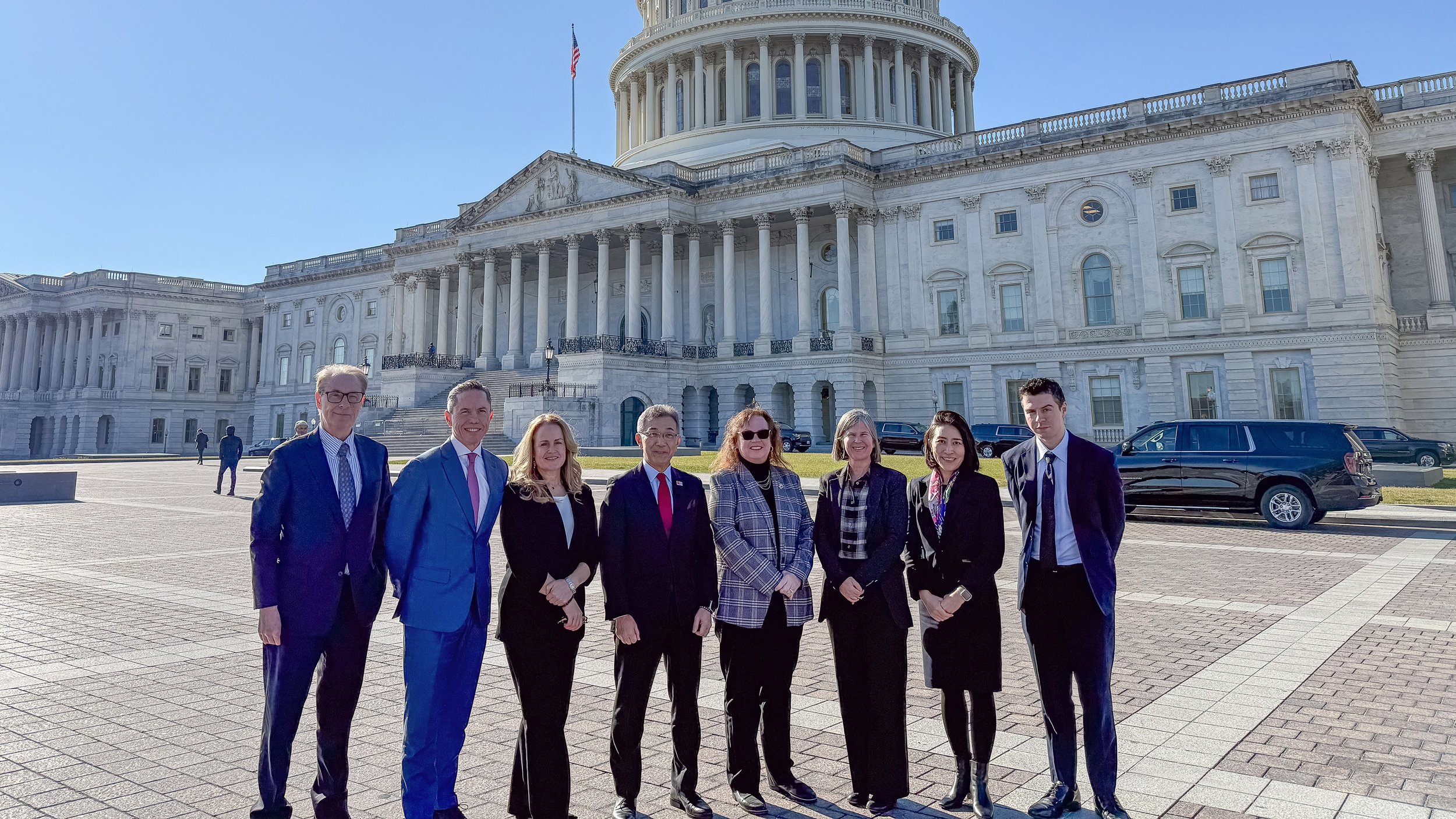
Advancing Dialogue
A delegation of seven leaders from the American Chamber of Commerce in Japan (ACCJ) traveled to Washington, DC in December for the 2025 DC Doorknock. The visit carried forward momentum from April’s DC recon trip and reinforced the chamber’s sustained engagement with US policymakers.
ACCJ leaders make their most extensive post-pandemic Washington visit.
A delegation of seven leaders from the American Chamber of Commerce in Japan (ACCJ) traveled to Washington, DC in December for the 2025 DC Doorknock. The visit carried forward momentum from April’s DC recon trip and reinforced the chamber’s sustained engagement with US policymakers. Representing the digital, aerospace and defense, energy, and finance, sectors, the group carried a unified message that reflected both recent progress and the work that still lies ahead in the bilateral economic relationship.
Over two days, the delegation completed one of the most comprehensive DC schedules the ACCJ has executed in recent years. Meetings included four US senators and senior officials at the Departments of Commerce, Treasury, and State, as well as the Office of the United States Trade Representative (USTR) and other key agencies. These conversations allowed the ACCJ to reaffirm support for the administration’s recent achievements, including the US–Japan trade agreement and the successful Japan summit, while underscoring persistent nontariff barriers detailed in the ACCJ’s recent submissions to the USTR.
ACCJ President Victor Osumi noted the significance of this year’s program. “The Doorknock is one of our most important advocacy tools because it gives us direct insight into US priorities while allowing us to elevate the voice of American business in Japan,” he said. “This year’s meetings showed real momentum, and I left Washington encouraged by how open officials were to our ideas and how eager they were for continued dialogue.”
A central theme throughout the visit was the shift in Washington from dealmaking to execution. Officials emphasized that implementation is still in its early stages and encouraged the ACCJ and its member companies to play a role in proactively identifying opportunities for investment in the two nations. They also highlighted ongoing efforts to build secure supply chains for critical minerals and emerging technologies, and expressed interest in supporting member companies in advancing these goals.
There was additionally broad interest in Japanese Prime Minister Sanae Takaichi and how her premiership may shape the next stage of US–Japan relations. The delegation returned to Tokyo with a clear mandate to continue driving member priorities during this important period of transition.

Welcoming a New Era of Omotenashi
Tokyo Governor Yuriko Koike headlines a special ACCJ event on the future of tourism.
Tokyo Governor Yuriko Koike headlines a special ACCJ event on the future of tourism.
Photos Miki Kawaguchi/LIFE.14
From left: ACCJ Tourism and Hospitality Committee Vice-chair Mayumi Birt, Executive Director Laura Younger, Tokyo Governor Yuriko Koike, ACCJ President Victor Osumi, and Tourism and Hospitality Committee Chair Stephen Zurcher
On October 8, more than 120 attendees joined the American Chamber of Commerce in Japan (ACCJ) at the new JW Marriott Tokyo, part of the East Japan Railway Company’s Takanawa Gateway City development, for a discussion about ways to reimagine Japan’s inbound tourism.
Hosted by the ACCJ Tourism and Hospitality Committee, the event kicked off with a keynote by Tokyo Governor Yuriko Koike, who highlighted how the city is leading the way as a global tourism destination under its Tokyo 2050 Strategy.
Following Koike’s extensive presentation, committee Chair Stephen Zurcher moderated a thought-provoking discussion on the future of tourism in Japan with three tourism and hospitality leaders:
Dr. Tadayuki Hara associate professor and senior research fellow at the University of Central Florida’s Dick Pope Sr. Institute for Tourism Studies
Yoshiya Amanai, manager of the marketing headquarters for the East Japan Railway Company’s Shinagawa Community Development Division
Christopher Clark, general manager of JW Marriott Tokyo
With Japan welcoming 28.38 million visitors for the year through August, and a target of 60 million annual visitors by 2030, this event came at a critical point for the country’s hospitality and tourism industry.
Key themes discussed include:
Melding traditional omotenashi hospitality with data-driven, connected-city strategies.
Cross-sector collaboration among hospitality, rail, and urban planning.
Leveraging Japan’s existing rail network to expand tourism beyond the Tokyo–Kyoto–Osaka “Golden Route.”
A focus on high-value, experience-driven tourism and repeat visitors.
Practical ways to fill critical staffing gaps and cultivate multilingual, digitally fluent teams.
The ACCJ extends a sincere thank-you to Governor Koike, our distinguished panelists, and all the attendees, as well as JW Marriott Tokyo for its support of this event.


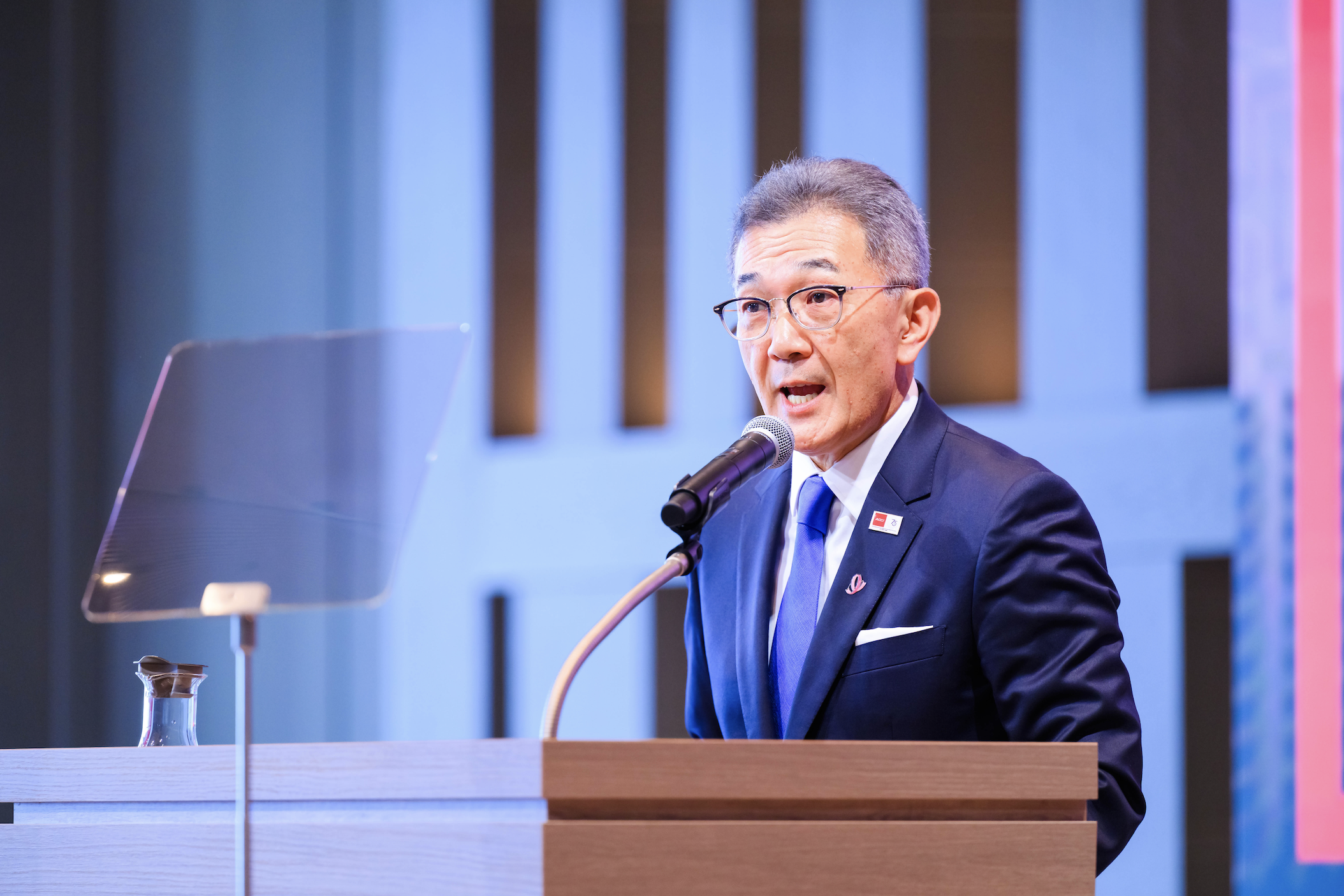


2025 Person of the Year: Ambassador William E. Grayson
The ACCJ honors the USA Pavilion commissioner general for his support of Expo 2025 and bilateral relations.
The ACCJ honors the USA Pavilion commissioner general for his support of Expo 2025 and bilateral relations.
Photos Yuichi Terada/Cloud9Field
On October 10, the American Chamber of Commerce in Japan (ACCJ) recognized Ambassador William E. Grayson as the 2025 ACCJ Person of the Year. He was selected for his leadership in advancing the US–Japan partnership as commissioner general of the USA Pavilion at the Expo 2025 Osaka, Kansai.
ACCJ President Victor Osumi, Executive Director Laura Younger, and several ACCJ Board members presented the award at the USA Pavilion, just before the Expo officially closed on October 13.
The expo, which highlighted nearly 160 countries and regions, was a resounding success for Japan and the Kansai region, drawing 25,578,986 visitors during its 184-day run. In the final month, an average of 200,000 guests per day explored the global gathering on the artificial island of Yumeshima in Osaka Bay.
At the award presentation, Osumi highlighted how Grayson, alongside the entire USA Pavilion team, strengthened the long-standing legacy of collaboration and deepened ties between the United States and Japan. Guided by the theme Imagine What We Can Create Together, the USA Pavilion welcomed more than one million visitors to experience the breadth of US innovation and entrepreneurship, from space exploration to artificial intelligence and next-generation technologies.
The ACCJ was also proud to hold the “Osaka to Orbit: Showcasing Space Ambitions from Japan” event at the USA Pavilion, highlighting bilateral innovation and collaboration on space exploration.
An in-depth interview with Grayson will be published in the upcoming issue of The ACCJ Journal.


About the ACCJ Person of the Year
Created in 1996, the award recognizes individuals who have had a significant positive impact on the international business environment in Japan and advanced relations between Japan and the United States. Past recipients include Rahm Emanuel (2024), Caroline Kennedy (2016), Wendy Cutler (2015), Hiroshi Mikitani (2011), Taizo Nishimuro (2005), Yoshihiko Miyauchi (2001), and Walter Mondale, the first recipient.

Osaka to Orbit
Japan’s space sector charts a bold course at Expo 2025.
Japan’s space sector charts a bold course at Expo 2025.
Photos Andy Boone
On August 19, 2025, the Kansai chapter of the American Chamber of Commerce in Japan (ACCJ) hosted a landmark panel discussion at Expo 2025 Osaka, Kansai. Members, guests, and the general public gathered inside the USA Pavilion for “Osaka to Orbit,” an event at which four distinguished leaders from Japan’s space industry explored the nation’s expanding role in low earth orbit commercialization, orbital sustainability, and aerospace innovation in a panel discussion moderated by Toshio Ono of Boeing Research & Technology Japan.
Voices from the Final Frontier
The discussion opened with remarks from Dr. Koichi Wakata, chief technology officer at Axiom Space and Japan’s most experienced astronaut. Wakata, who has spent more than 500 days in space and served as the first Japanese commander of the International Space Station (ISS) reflected on his early fascination with space, sparked by a 1973 Gakken children’s encyclopedia, and traced Japan’s evolution from a peripheral player in space exploration to a central contributor to the future of orbital infrastructure. He introduced Axiom’s ambitious plan to construct the world’s first commercial space station, which will succeed the aging ISS. The Axiom Station is designed to support microgravity research, in-space manufacturing, and orbital data centers, offering a platform for both scientific advancement and commercial enterprise. Wakata emphasized that Japan’s technical expertise and international partnerships position it to play a pivotal role in shaping the next chapter of human spaceflight.
Nobu Okada, founder and chief executive officer of Astroscale Holdings, addressed the increasingly urgent issue of space debris. “As there was no existing market, I took on the challenge,” he explained. Examples of about 1,600 new pieces of debris created by major rocket and satellite fragmentations in the second half of 2024 alone were shown. While Astroscale focuses on large debris, NASA estimates more than 100 million objects of one millimeter or smaller exist. In some cases, they can collide with other objects at over 100 times the speed of a bullet. Okada presented Astroscale’s suite of on-orbit servicing technologies, including debris removal, satellite life extension, and inspection capabilities. Okada framed space sustainability not only as a technical challenge but also as a moral and generational imperative. He called on younger innovators to view orbital cleanup as both a societal responsibility and a viable business model, stressing that the long-term viability of space commerce depends on maintaining a safe and navigable orbital environment.
Koichi Yonemoto, cofounder and chief technology officer of Space Walker Inc., introduced Japan’s first reusable suborbital spaceplane initiative. With a similar silhouette to the US space shuttle, more reusable parts would save time and costs. With technical leadership drawn from the Kyushu Institute of Technology and the Tokyo University of Science, Space Walker aims to democratize access to space through tourism, scientific payload delivery, and small satellite launches. Yonemoto outlined a phased development timeline leading to orbital missions and even space tourism over the next 10 to 20 years, supported by strategic partnerships with Kawasaki Heavy Industries, Toray Industries, and the Japan Aerospace Exploration Agency, better known as JAXA. He emphasized that the company’s regional manufacturing base in Fukushima and its planned launch operations in Hokkaido position Space Walker as a catalyst for regional revitalization and industrial diversification.
Osamu Aoki, president and chief executive officer of Aoki Co., Ltd., provided a grounded perspective from Japan’s small and medium-sized enterprise (SME) sector. Aoki’s company, based in Higashi-Osaka, supplies precision components for Astroscale’s servicing satellites and Space Walker’s vehicles. As the smallest Boeing-certified factory in the world, Aoki proudly underscored the value of craftsmanship, proposal-driven engineering, and workforce development. He described his company’s approach to manufacturing as deeply rooted in monozukuri—the Japanese philosophy of making things with spirit and precision. Aoki challenged the audience to recognize the strategic importance of Japan’s SME ecosystem in sustaining a competitive and resilient space economy.
The panel concluded with a lively Q&A session, during which audience members engaged with the speakers on topics ranging from launch site strategy and international collaboration to the role of public–private partnerships in accelerating innovation. The discussion revealed a shared optimism about Japan’s trajectory in space and a collective commitment to ensuring that its contributions are both technologically advanced and socially responsible.
Future Visions
The sold-out Osaka to Orbit event offered a vivid glimpse into Japan’s vision for space—a domain with no boundaries or limits—thanks to the efforts of the ACCJ–Kansai Business Programs, the ACCJ–Chubu Aerospace and Mobility, and the ACCJ Aerospace and Defense Committees, as well as the support of the US Consulate General Osaka–Kobe. From astronauts and entrepreneurs to engineers and machinists, the panelists embodied a unified vision: that space is no longer a distant aspiration but a tangible frontier—one that begins in Osaka and extends far beyond. The ACCJ also thanks Electroimpact, Takata International, MGM Resorts, and Jupiter International Corporation for their generous support, enabling the chamber to take part in Expo 2025’s showcase of global innovation and affirming that Japan’s space sector is not only ready to participate in the next era of exploration but to help lead it.


