
Two-Way Street
Young Professionals Forum events connect people across chambers and generations.
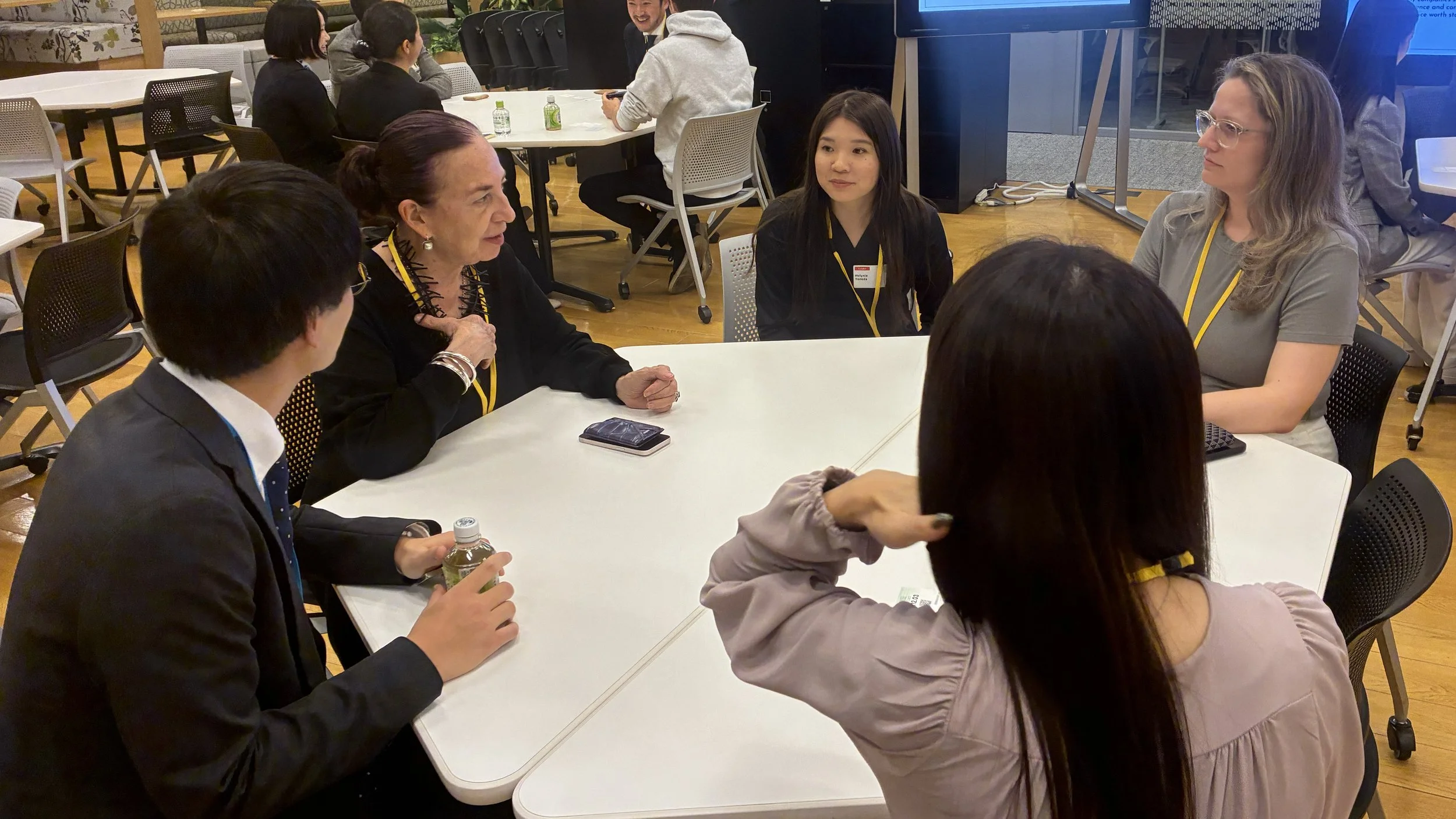
For young professionals, institutions such as the American Chamber of Commerce in Japan (ACCJ) can sometimes feel difficult to access. Walking into a room of seasoned executives and established business leaders can be daunting, particularly early in a career when it is easy to wonder: “What do I have to offer?”
Helping lower that barrier is an important part of the ACCJ Young Professionals Forum (YPF) mission.
The YPF provides a platform for professionals aged 35 and under, including a growing number of student members, to engage through networking, information sharing, advocacy, mentorship, and peer-led programming. In Japan, where business remains deeply rooted in relationships and trust, those connections can be particularly valuable.
The YPF continues to build on two of its flagship programs. Speed Networking will soon enter its fourth iteration, while plans are also taking shape for a third Reverse Mentoring session with the ACCJ CEO Forum. The formats are different, but both are built around the same idea of lowering the barriers that can keep people, perspectives, and opportunities apart.
Making Networking Less Intimidating
The YPF Speed Networking event began in 2023 with a simple idea: Could we take the familiar format of speed networking and use it to create a more approachable, lower-barrier way for young professionals to connect?
Rather than asking young professionals to navigate a room and find their own way into conversations, the structured format gives everyone a reason to start talking. It makes that first introduction easier and creates space for the conversation to develop naturally.
That approach has shaped the event ever since.
Now beginning its fourth version, Speed Networking has grown into one of the YPF’s most anticipated and well-attended events. Last year, nearly a dozen international chambers of commerce joined the ACCJ as cohosts, bringing together young professionals from across Tokyo’s global business community. That level of cross-chamber collaboration is relatively rare and has helped make the event a unique opportunity to build connections well beyond any single chamber or professional circle.
Skyler Scofield, client services director at Covue Japan and a YPF vice-chair, remembers the inaugural event: “I was surprised, in the best way, to see so many young professionals gathered in one place. Beyond making business connections, I met people I connected with personally, some of whom I still keep in touch with today.”
Melynie Yoneda, sales director of Crimtan and a YPF co-chair, has led the event’s development and execution from the start. “It has been incredibly rewarding to see the event grow into a true representation of the YPF mission—to connect young professionals from different backgrounds and industries,” she said. “Each year brings together new people and new chambers, creating new connections that might never otherwise happen.”
Community in the Age of AI
That hunger for connection has only grown as more of our lives move online and become intertwined with artificial intelligence (AI).
“There’s a lot of talk about what AI means for the future of work,” said Fatim Diallo, a YPF vice-chair and a director at communications and public affairs advisory FGS Global. “Young professionals are already living that change, experimenting with new tools and sharing what actually works with each other. And yet, the more connected we are online, the more people seem to crave a room full of real people. That’s where the best conversations still happen.”
Reversing the Conversation
If Speed Networking is about lowering barriers among peers, our other returning flagship event addresses a different kind of distance: the gap that can exist between generations and levels of seniority within an organization.
Reverse Mentoring, co-created by the YPF and the CEO Forum, turns the traditional model on its head. CEOs and business leaders come prepared not primarily to advise but to ask questions and listen.
What makes these conversations compelling is how practical the questions often are. How should a manager give difficult feedback to someone who is earlier in their career? Is it better to save feedback for a formal review, or address a matter when it is most relevant? When young professionals choose between employers, how do they weigh compensation against purpose, flexibility, benefits, or opportunities for development?
Others have focused on navigating Japan’s high-context workplace. How can someone newly arriving in Japan understand what colleagues are really thinking? How can companies encourage employees to say what they might otherwise leave unsaid? What role does visible leadership play in normalizing parental leave, flexibility, or other workplace practices?
Jarrod Trusler, president of Dow Chemical Japan, Ltd. and co-chair of the CEO Forum, reflected on what he took away from the event: “The experience was a powerful reminder that younger professionals often see emerging workplace expectations and cultural shifts earlier than senior leaders. If we take the time to listen, these perspectives can challenge our assumptions and help us lead more effectively.”
The third Reverse Mentoring session is now being developed with the CEO Forum, with details to be announced soon.
What Should CEOs Know?
Perhaps that is the broader opportunity. Not only should young professionals be asking how they can gain access to senior leaders, organizations should also be asking how senior leaders gain access to the perspectives of their next generation of employees, customers, and leaders.
As we look ahead, we also want to take that conversation beyond the people who happen to be in the room. Ahead of the next session, we plan to ask our wider community one simple question: What is one thing you wish CEOs and senior executives understood about young professionals today? We hope to crowdsource those perspectives and bring them directly into the discussion.
Speed Networking creates opportunities for connections that might otherwise never happen. Reverse Mentoring creates space for perspectives that might otherwise go unheard. The formats are different, but the ambition is the same. We want to make it easier for people to meet, exchange ideas, and learn from one another across industries, chambers, and generations.
The next connection, idea, or opportunity may begin with a single introduction. We hope to see you there.
