
Two-Way Street
Young Professionals Forum events connect people across chambers and generations.
Young Professionals Forum events connect people across chambers and generations.
For young professionals, institutions such as the American Chamber of Commerce in Japan (ACCJ) can sometimes feel difficult to access. Walking into a room of seasoned executives and established business leaders can be daunting, particularly early in a career when it is easy to wonder: “What do I have to offer?”
Helping lower that barrier is an important part of the ACCJ Young Professionals Forum (YPF) mission.
The YPF provides a platform for professionals aged 35 and under, including a growing number of student members, to engage through networking, information sharing, advocacy, mentorship, and peer-led programming. In Japan, where business remains deeply rooted in relationships and trust, those connections can be particularly valuable.
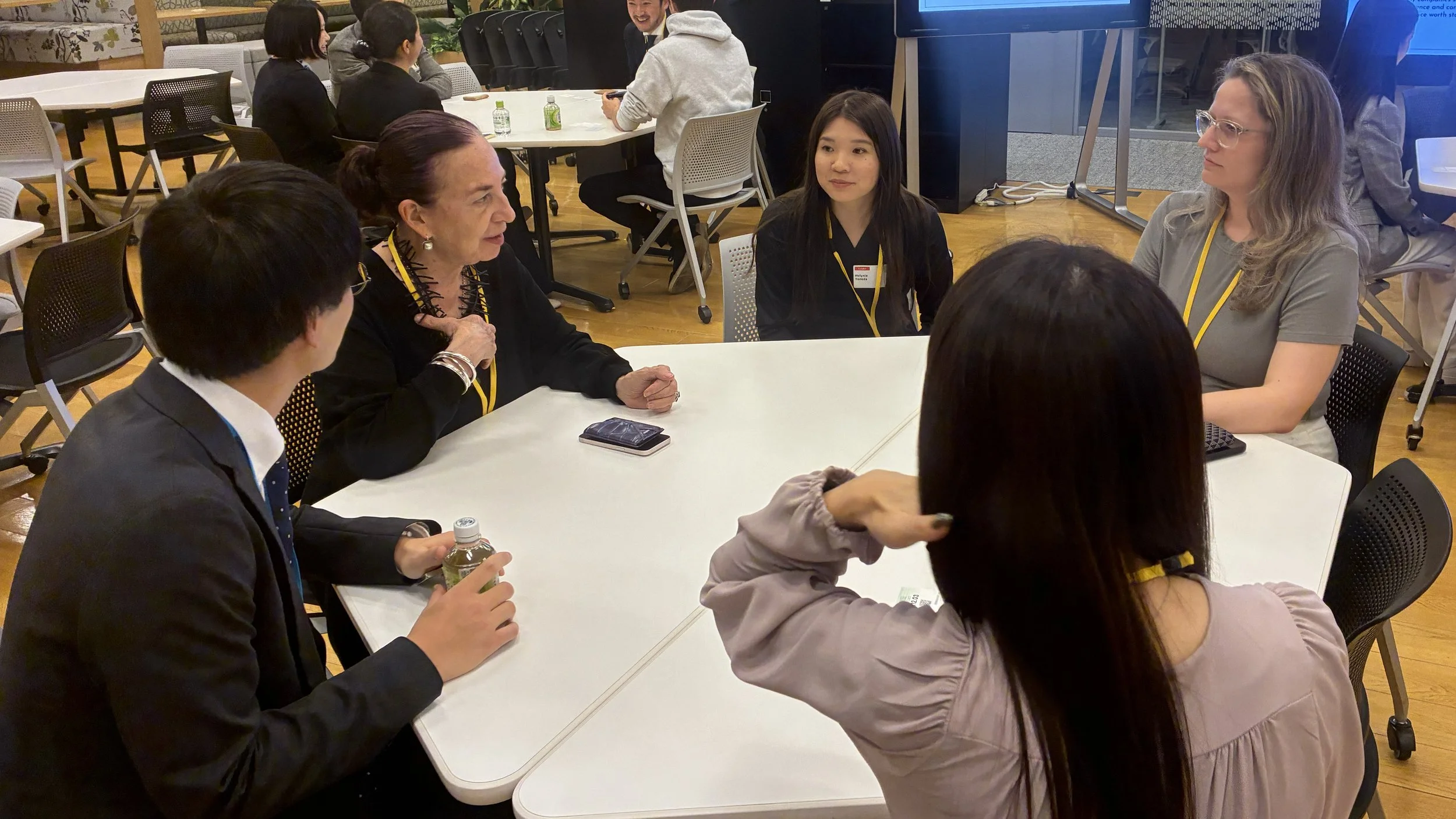
The YPF continues to build on two of its flagship programs. Speed Networking will soon enter its fourth iteration, while plans are also taking shape for a third Reverse Mentoring session with the ACCJ CEO Forum. The formats are different, but both are built around the same idea of lowering the barriers that can keep people, perspectives, and opportunities apart.
Making Networking Less Intimidating
The YPF Speed Networking event began in 2023 with a simple idea: Could we take the familiar format of speed networking and use it to create a more approachable, lower-barrier way for young professionals to connect?
Rather than asking young professionals to navigate a room and find their own way into conversations, the structured format gives everyone a reason to start talking. It makes that first introduction easier and creates space for the conversation to develop naturally.
That approach has shaped the event ever since.
Now beginning its fourth version, Speed Networking has grown into one of the YPF’s most anticipated and well-attended events. Last year, nearly a dozen international chambers of commerce joined the ACCJ as cohosts, bringing together young professionals from across Tokyo’s global business community. That level of cross-chamber collaboration is relatively rare and has helped make the event a unique opportunity to build connections well beyond any single chamber or professional circle.
Skyler Scofield, client services director at Covue Japan and a YPF vice-chair, remembers the inaugural event: “I was surprised, in the best way, to see so many young professionals gathered in one place. Beyond making business connections, I met people I connected with personally, some of whom I still keep in touch with today.”
Melynie Yoneda, sales director of Crimtan and a YPF co-chair, has led the event’s development and execution from the start. “It has been incredibly rewarding to see the event grow into a true representation of the YPF mission—to connect young professionals from different backgrounds and industries,” she said. “Each year brings together new people and new chambers, creating new connections that might never otherwise happen.”
Community in the Age of AI
That hunger for connection has only grown as more of our lives move online and become intertwined with artificial intelligence (AI).
“There’s a lot of talk about what AI means for the future of work,” said Fatim Diallo, a YPF vice-chair and a director at communications and public affairs advisory FGS Global. “Young professionals are already living that change, experimenting with new tools and sharing what actually works with each other. And yet, the more connected we are online, the more people seem to crave a room full of real people. That’s where the best conversations still happen.”
Reversing the Conversation
If Speed Networking is about lowering barriers among peers, our other returning flagship event addresses a different kind of distance: the gap that can exist between generations and levels of seniority within an organization.
Reverse Mentoring, co-created by the YPF and the CEO Forum, turns the traditional model on its head. CEOs and business leaders come prepared not primarily to advise but to ask questions and listen.
What makes these conversations compelling is how practical the questions often are. How should a manager give difficult feedback to someone who is earlier in their career? Is it better to save feedback for a formal review, or address a matter when it is most relevant? When young professionals choose between employers, how do they weigh compensation against purpose, flexibility, benefits, or opportunities for development?
Others have focused on navigating Japan’s high-context workplace. How can someone newly arriving in Japan understand what colleagues are really thinking? How can companies encourage employees to say what they might otherwise leave unsaid? What role does visible leadership play in normalizing parental leave, flexibility, or other workplace practices?
Jarrod Trusler, president of Dow Chemical Japan, Ltd. and co-chair of the CEO Forum, reflected on what he took away from the event: “The experience was a powerful reminder that younger professionals often see emerging workplace expectations and cultural shifts earlier than senior leaders. If we take the time to listen, these perspectives can challenge our assumptions and help us lead more effectively.”
The third Reverse Mentoring session is now being developed with the CEO Forum, with details to be announced soon.
What Should CEOs Know?
Perhaps that is the broader opportunity. Not only should young professionals be asking how they can gain access to senior leaders, organizations should also be asking how senior leaders gain access to the perspectives of their next generation of employees, customers, and leaders.
As we look ahead, we also want to take that conversation beyond the people who happen to be in the room. Ahead of the next session, we plan to ask our wider community one simple question: What is one thing you wish CEOs and senior executives understood about young professionals today? We hope to crowdsource those perspectives and bring them directly into the discussion.
Speed Networking creates opportunities for connections that might otherwise never happen. Reverse Mentoring creates space for perspectives that might otherwise go unheard. The formats are different, but the ambition is the same. We want to make it easier for people to meet, exchange ideas, and learn from one another across industries, chambers, and generations.
The next connection, idea, or opportunity may begin with a single introduction. We hope to see you there.
Sharpening the Story
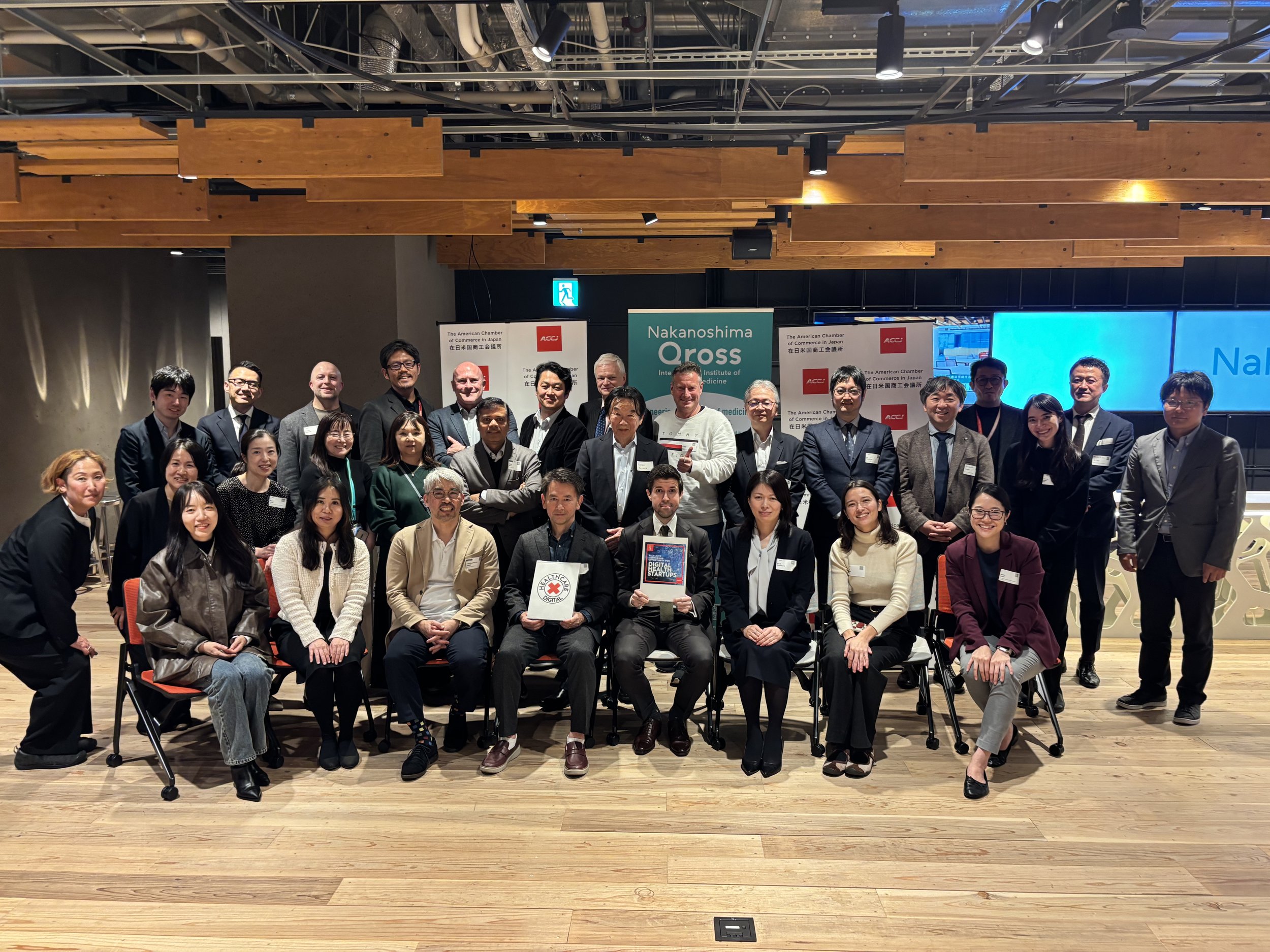
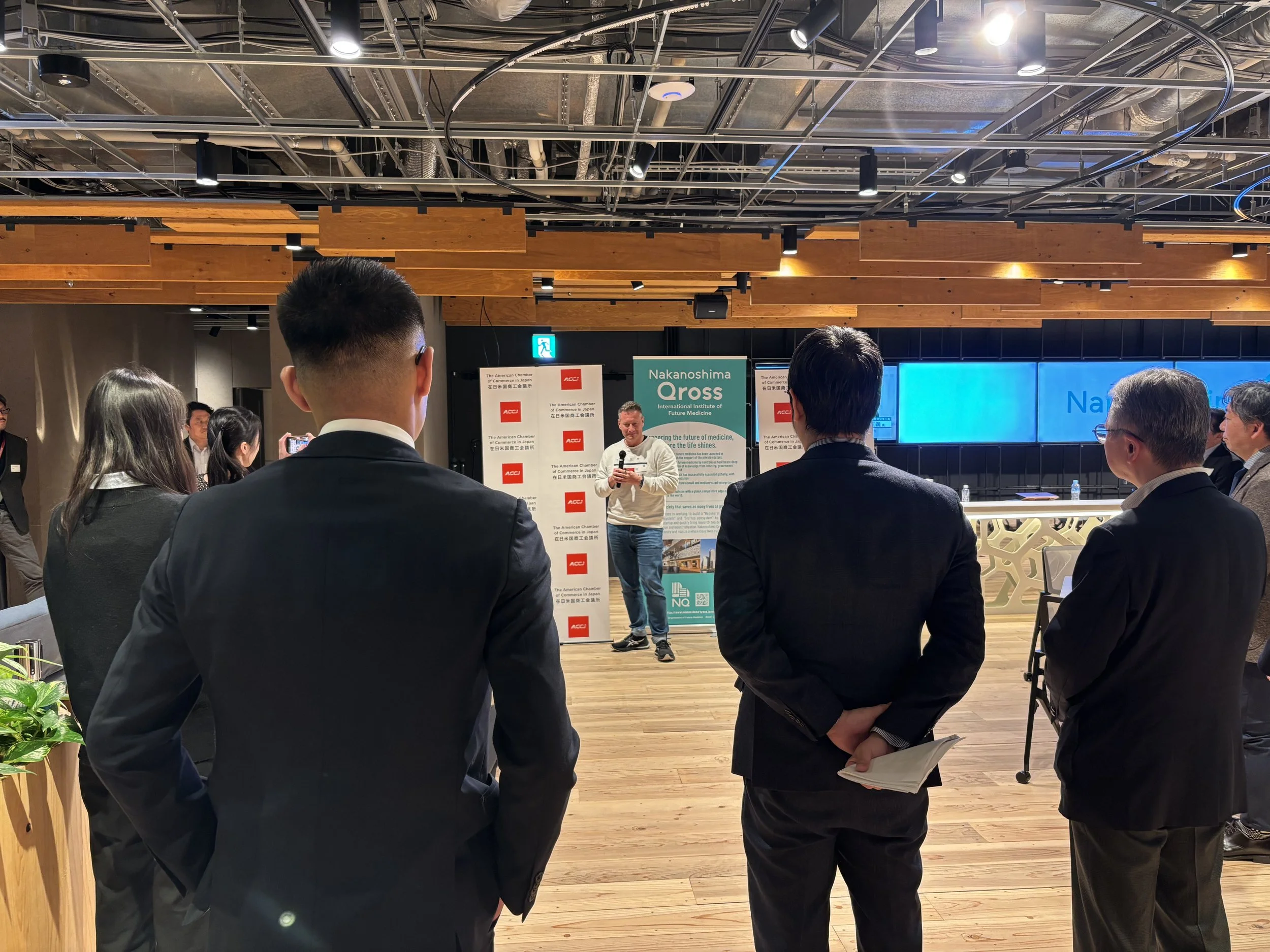
The ACCJ Healthcare x Digital (HxD) initiative reached a new milestone on December 2 with its first-ever exclusive mentorship event for healthcare startups at Nakanoshima Qross in Osaka.
HxD Mentor Day helps healthcare startups perfect their pitch for 2026.
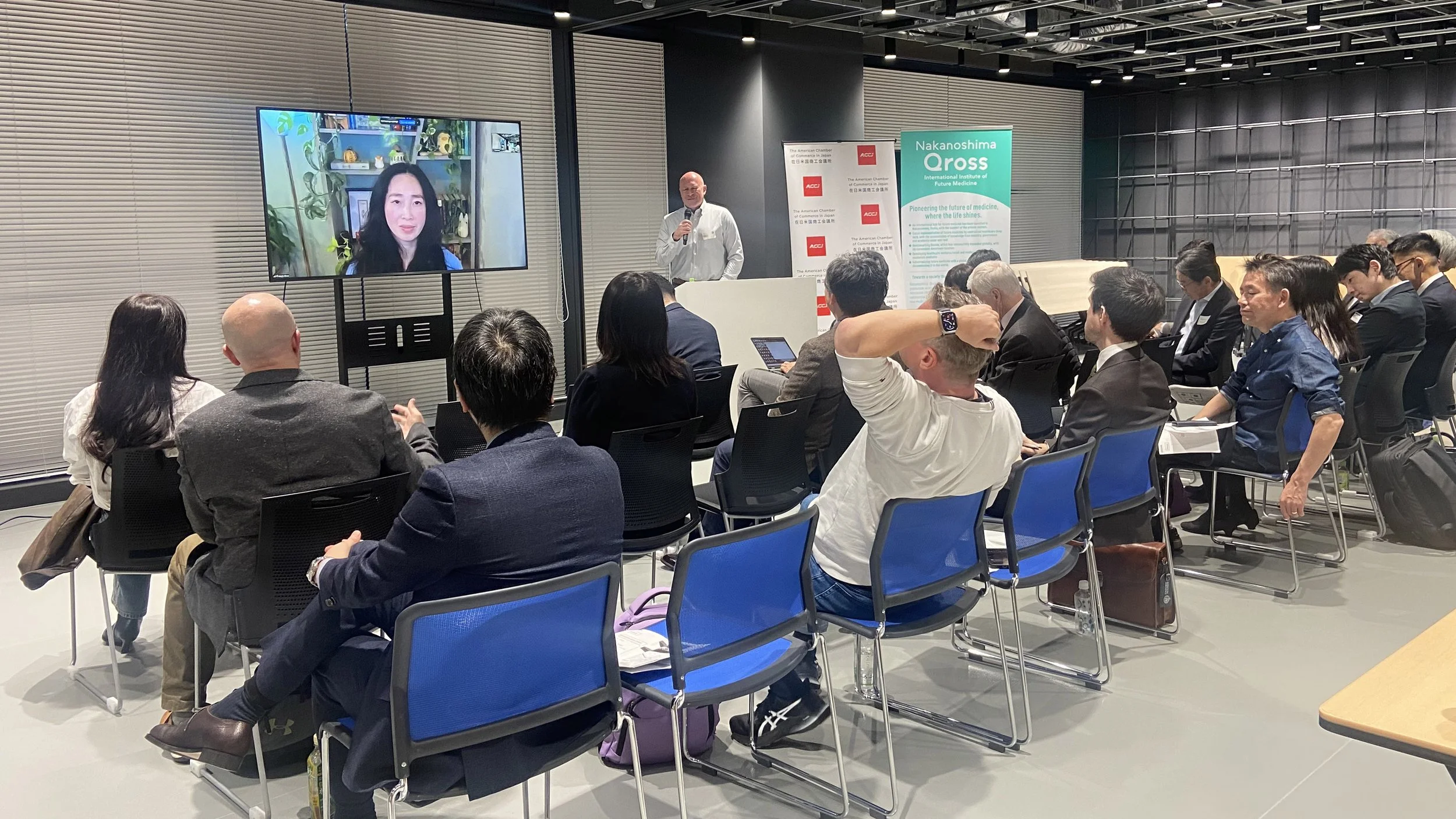
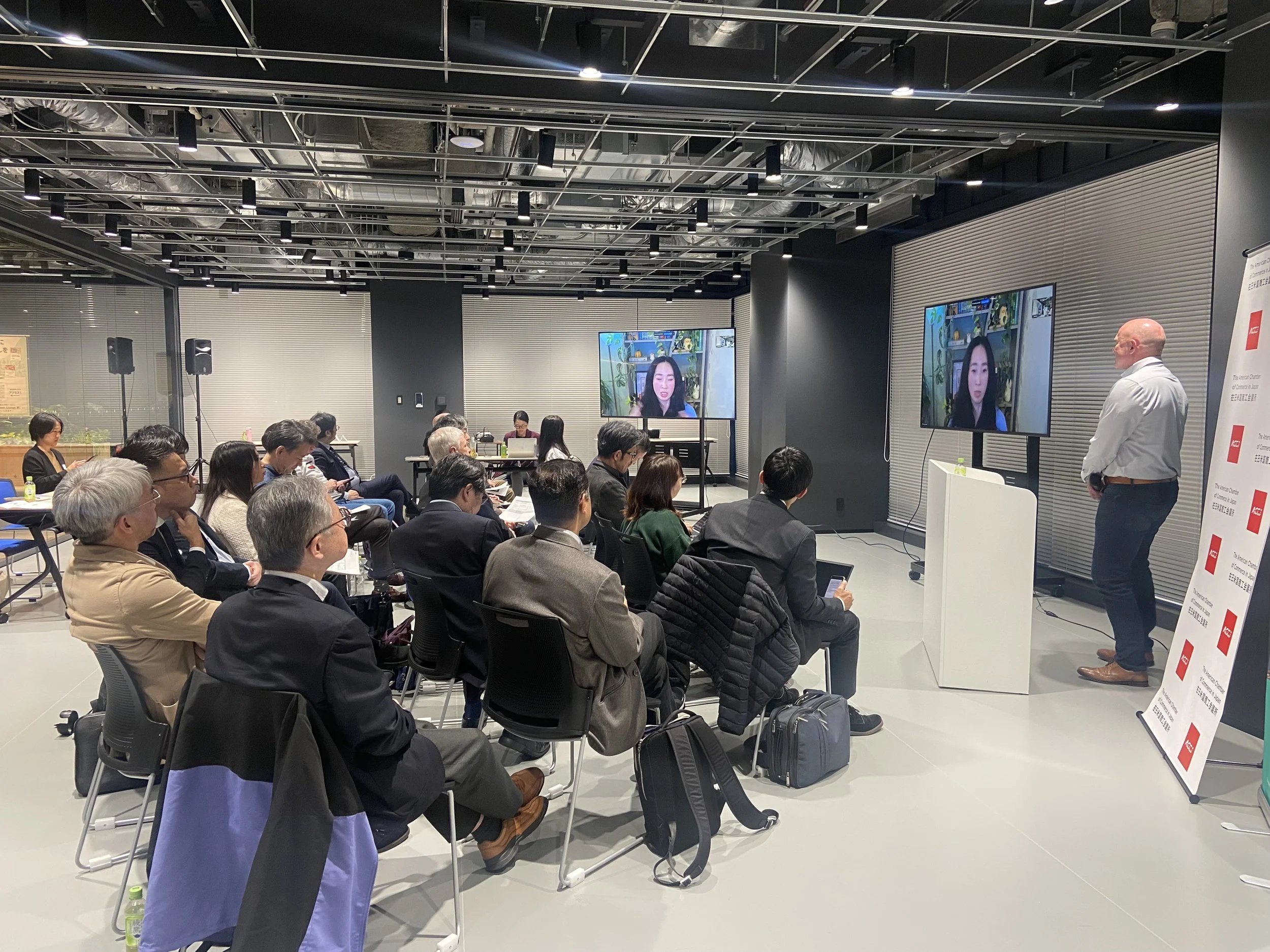
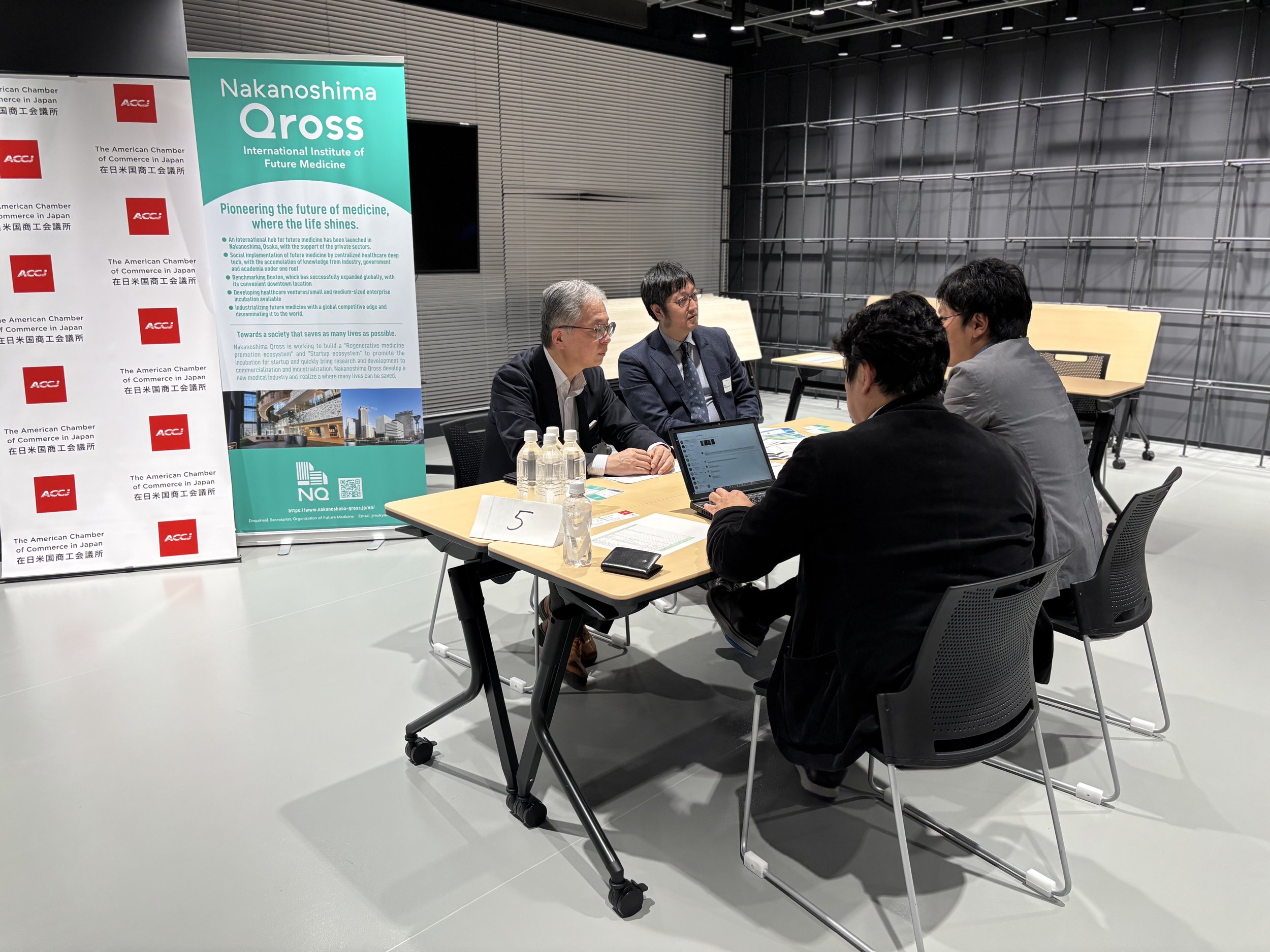
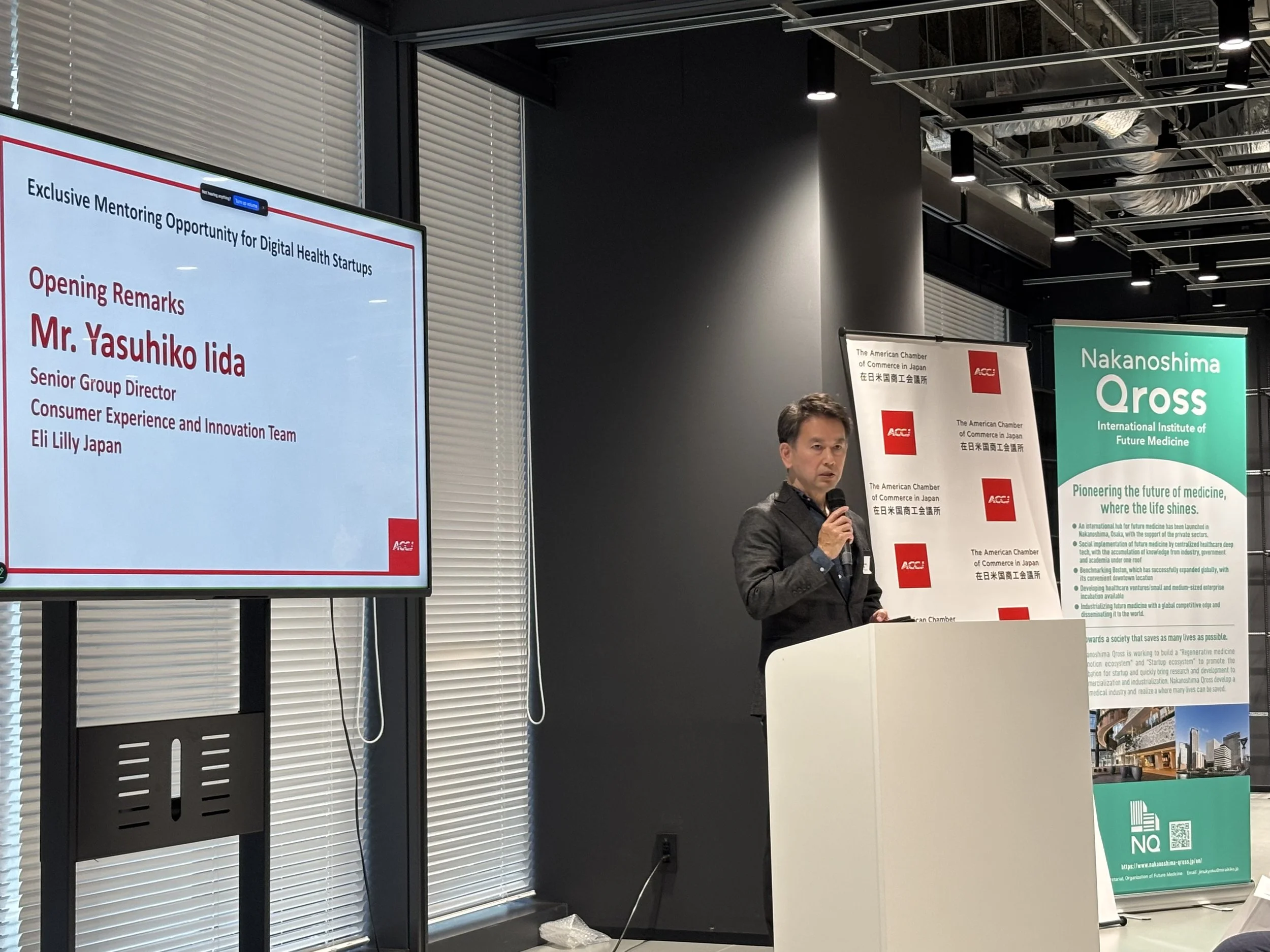
The ACCJ Healthcare x Digital (HxD) initiative reached a new milestone on December 2 with its first-ever exclusive mentorship event for healthcare startups at Nakanoshima Qross in Osaka. Instead of pitching onstage, founders spent the afternoon strengthening their narratives—then pressure-testing them in small-group mentoring sessions with industry experts.
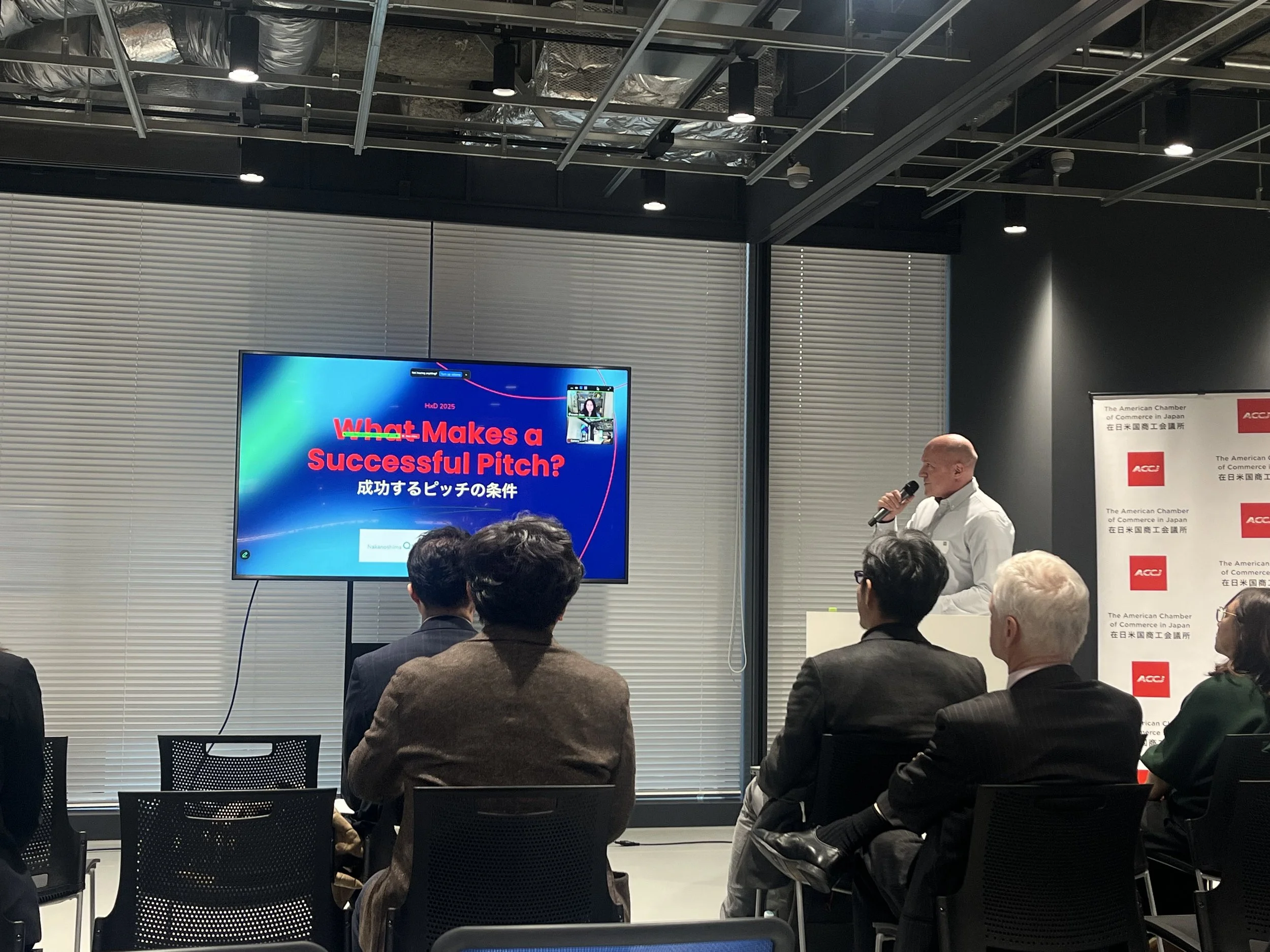
The program opened with a workshop led by Christian Boettcher, managing partner at Takaraya Capital and formerly a senior partner and APAC sector leader consulting partner for healthcare and life sciences at EY Strategy & Consulting. He was joined remotely by Kristin Chen, a Silicon Valley product leader, fractional chief executive (CxO), and adviser with more than 15 years’ experience at LinkedIn, Twitch, Pinterest, and multiple startups.
Their joint message? A compelling pitch starts with clarity, discipline, and a strong grasp of what investors listen for in the first minute.
Expanding the Model
HxD is an initiative team within the ACCJ–Kansai chapter’s Healthcare Committee. It connects academia, startups, corporates, and government around three themes:
- The hospital of the future
- Patient data empowerment
- Urban–rural healthcare equity
Since 2020, HxD has hosted pitch competitions and ideathons; the December Mentor Day introduced a more intimate format designed to help founders refine their thinking ahead of the 2026 HxD Pitch Competition.
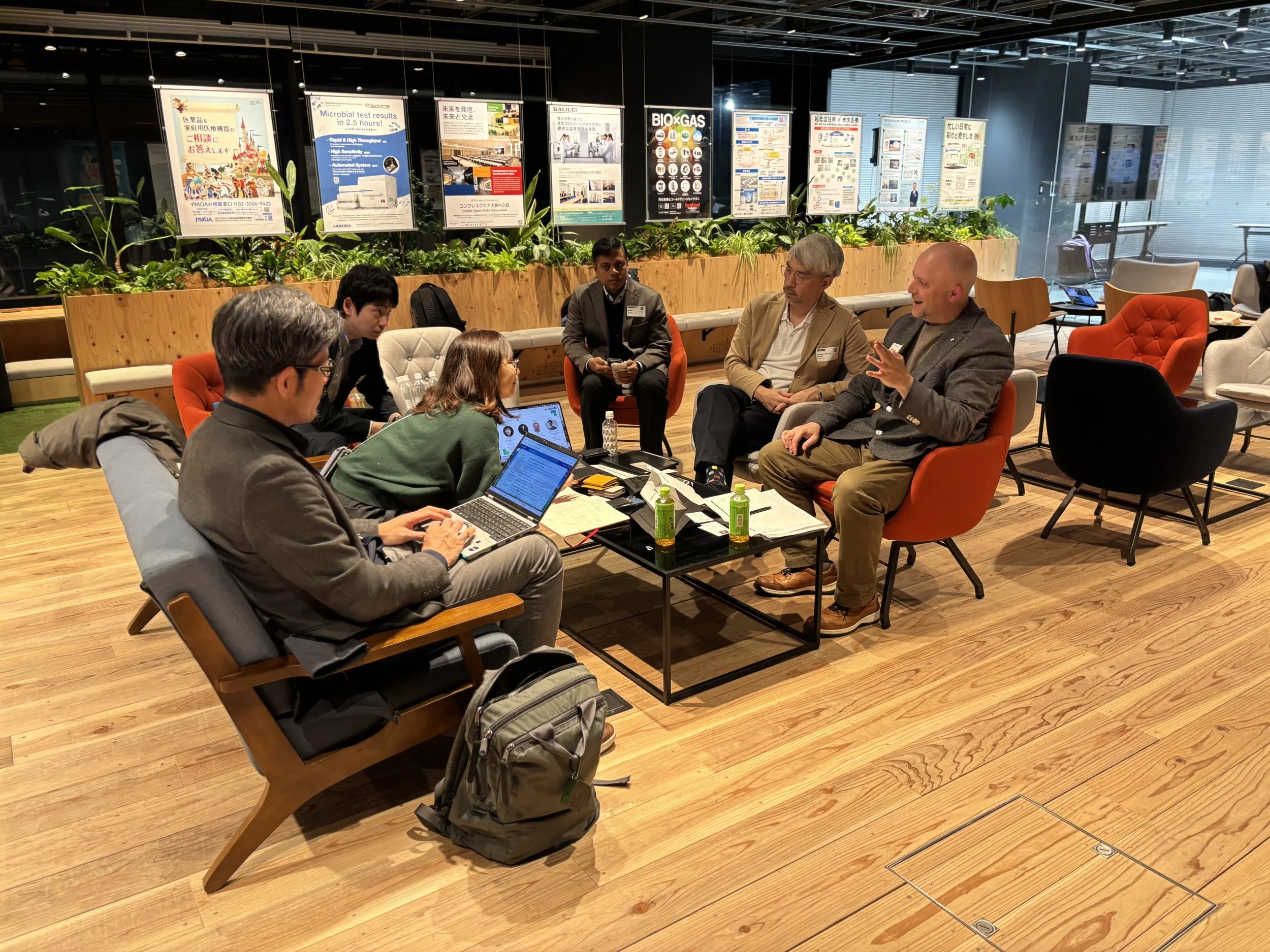
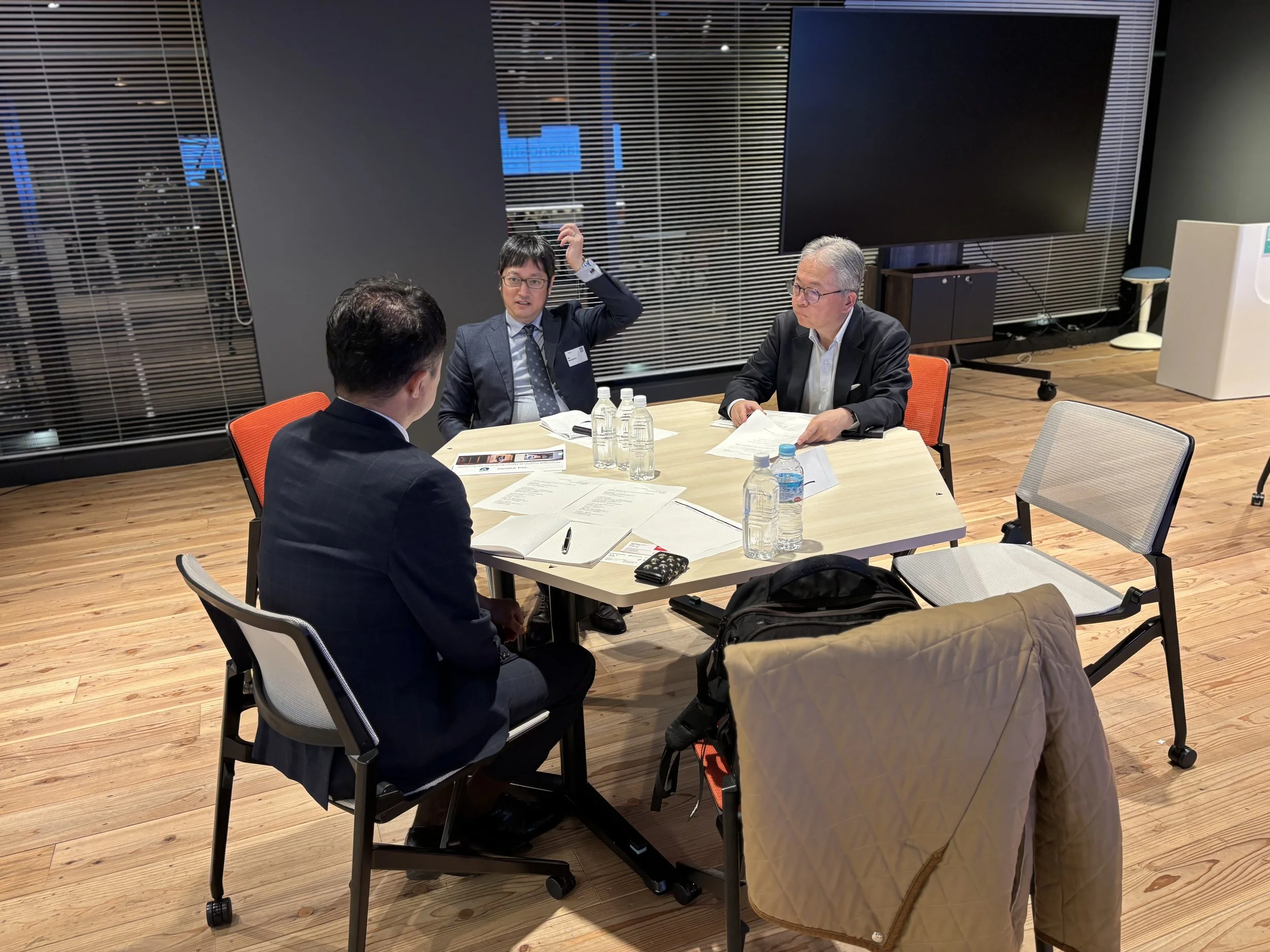
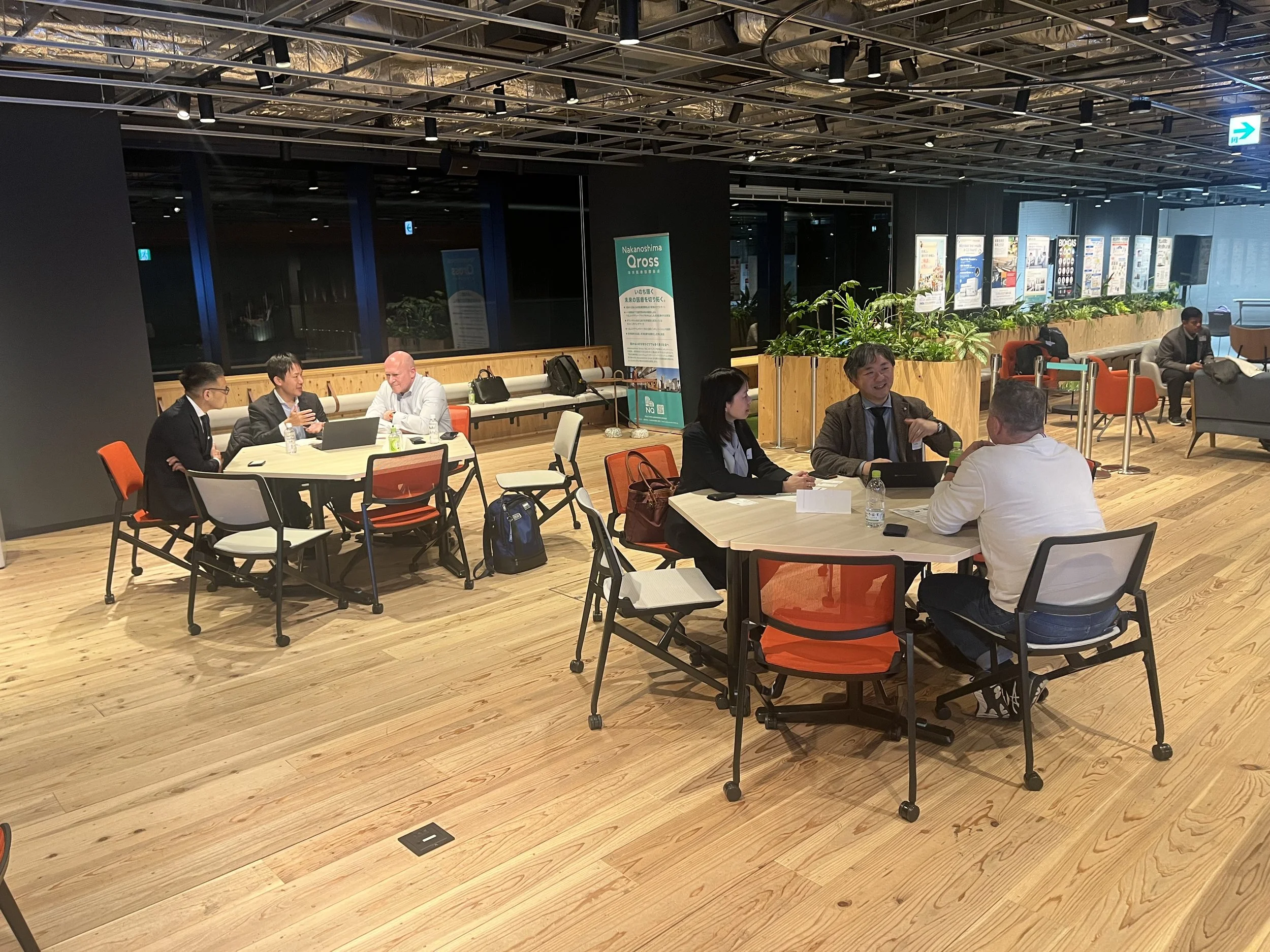
After the workshop, founders rotated through two rounds of 30-minute sessions with mentors from organizations including Eli Lilly, AstraZeneca, EY, IQVIA, K&L Gates, Innovation Dojo, and Zimmer Biomet. The conversations were candid and practical, focusing on communicating value, understanding customers, and positioning within the healthcare ecosystem.
Christian’s Essentials: Focus Your Story
Boettcher began with simple, universal guidelines:
- One message per slide
- Readable font sizes
- Minimal, intentional use of color
From there, he walked through several elements investors expect to see. The first is the founding team—why they are qualified to address the problem and what insight or experience led them to the idea.
Next comes the problem definition. Founders often jump into technology, he noted, without clearly explaining the pain point or who experiences it. “What is the problem itself? And why does it matter?”
Only after establishing the problem should founders propose their solution and what differentiates it. He urged startups to evaluate the “graveyards” where companies that attempted similar ideas and stalled—and understand what went wrong.
Boettcher also highlighted the importance of financial clarity. Even non-financial founders must be able to explain revenue streams, cost structures, runway, and the logic behind market estimates. Overstated markets or vague assumptions erode credibility quickly.
Finally, he emphasized context awareness. With artificial intelligence (AI) accelerating innovation and policy changes influencing healthcare, strong founders show they understand how broader shifts affect their strategy.
Kristin’s First 60 Seconds: What Investors Listen For
Chen offered an investor’s perspective, noting that expectations have risen. “Venture capitalists now want retention, growth, and monetization signals early,” she said.
Sharing a four-pillar framework for evaluating a pitch, Chen stressed that she listens for all four within the first 60 seconds:
- A real, enduring problem
- A meaningful or growing market
- A scalable, tech-driven advantage
- A credible path to revenue
“If these elements aren’t clear within a minute, it’s hard for an investor to stay engaged,” she said.
To make the problem tangible, Chen urged founders to reference user research and analytics: interviews, surveys, user-generated content, and existing studies. Specific data points or quotes help quantify severity and show that founders understand the people they aim to serve.
She also recommended preparing two deck versions: a concise one for live delivery and a self-contained one for investors reviewing the pitch independently.
Pain, Markets, and Communication
During the Q&A session, a mentor asked how to quantify customer pain and how narrowly to define the target market. Chen suggested starting with an ideal customer profile and using qualitative and quantitative research to validate who feels the pain most. Boettcher offered a healthcare example: Japan’s diabetes-related hospitalizations can be quantified not only in medical costs but also lost productivity.
A biotech founder asked how to pitch when pharmaceutical companies are the paying customers, but patients benefit most. Boettcher explained that in areas like AI-driven drug discovery, startups must map a multilayered market—including pharma, biotechs, and government programs. Chen added that founders should be explicit about the sales cycle, decision-makers, and associated risks.
Another question focused on Japan-based founders pitching in English while simultaneously managing verbal, visual, and nonverbal communication. Chen emphasized practice, tailoring the story to each investor, and developing “executive presence.” Early-stage investors, she said, often bet on the founder as much as the idea. “If you don’t believe in yourself, how do you expect others to believe in you?”
Boettcher echoed the importance of rapport. Even strong products struggle if founders cannot communicate confidently and connect with the audience.
Platform for 2026 and Beyond
After the workshop, the mentoring sessions brought theory into practice. Founders and mentors sat together to refine slides, discuss specific markets, and explore potential collaboration pathways.
As the first HxD Mentor Day, the gathering added a valuable new dimension to HxD’s ongoing efforts to support digital health innovation across Japan. With the next major pitch opportunity coming in February, participating founders left with clearer stories, stronger decks, and a better understanding of what resonates with investors, especially in that critical first minute.
In a healthcare environment where technology and expectations are evolving quickly, these communication skills are becoming as essential as the innovations themselves.
Incredible Opportunity
Isabella Boulware shares her experiences interning at the ACCJ and how the Bishop Family Memorial Scholarship continues to open doors for young talent.
The Bishop Family Memorial Scholarship continues to open doors for young talent.
Photo Miki Kawaguchi/LIFE.14
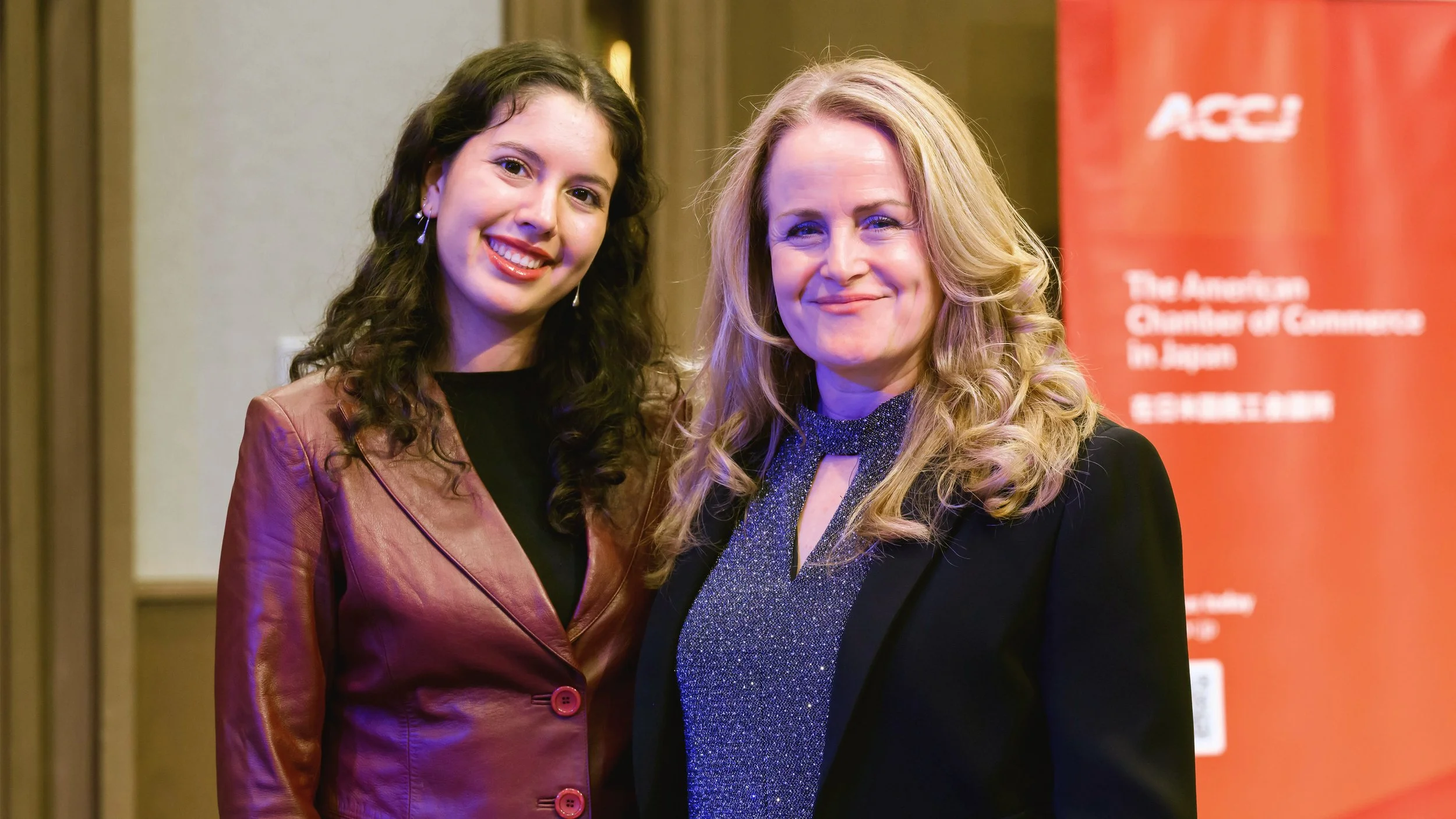
From left: Isabella Boulware and ACCJ Executive Director Laura Younger
When Isabella Boulware logged on for a virtual meeting with the U.S.-Japan Bridging Foundation, she thought it was just a second-round interview for an internship. So when she was told she had been selected as the next American Chamber of Commerce in Japan (ACCJ) Bishop Memorial Scholar—a fellowship that honors late ACCJ leader Bill Bishop and his family—she was a bit surprised.
“I was thrilled,” said the Austin native. “I hadn’t planned on working during my time in Japan, but when I received an email about the opportunity, I knew I had to go for it.”
An international business management student at the University of Arkansas, Boulware, whose minors include Japanese, has been on a yearlong exchange at Toyo University in Tokyo since September. She spoke to The ACCJ Journal about her experiences at the chamber so far.
What was your first impression of the ACCJ?
Very positive. I researched the chamber when I first learned about the internship. As someone from the United States with an interest in working in Japan, the ACCJ’s mission immediately stood out to me. The team I’ve worked with, the professionals I’ve connected with, the events I’ve helped put together, and the projects I’ve contributed to have all made the experience incredibly impactful.
In which areas have you been most involved?
I’ve had the chance to take on a wide range of projects, which has been one of my favorite parts of working with the chamber. I’m still exploring where I want to focus in business, and the ACCJ has given me the opportunity to explore different aspects of the field. That’s helped me get a clearer sense of what I’m aiming for.
What has been your favorite event?
My first event was both my favorite and the one that left the biggest impression. It was on my first official day and was my introduction to the ACCJ. It was Building the Future of The Estée Lauder Companies in Japan, delivered by President and General Manager James Aquilina. I was impressed by the quality of the presentation and his effectiveness as a speaker. That event gave me a clear picture of the kind of professional I hope to be in the future.
How will you maintain your relationships?
I believe the relationships I’ve built at the ACCJ will continue to be an important part of my professional life. I plan to stay in touch with the people I’ve met, both personally and professionally. My coworkers, in particular, have become some of my good friends. Professionally, I will maintain connections through LinkedIn, email, and ongoing collaboration, ensuring that the relationships I’ve formed continue to grow.
What would you tell future Bishop Scholars?
This internship is an incredible opportunity. Make the most of each and every part of it. The ACCJ gives you a chance to work on a variety of projects and to meet people from across many industries. Build relationships during your time with the chamber; these are people who may be able to support you as you pursue your future.

Reverse Mentoring
Mentorship is a familiar concept, but in a world where workplace dynamics are constantly evolving, who says mentorship needs to be top-down? This recent Young Professionals Forum event challenges the notion.
Young professionals bridge generations in the workplace by sharing insights with executives.
Mentorship is a familiar concept, but in a world where workplace dynamics are constantly evolving, who says mentorship needs to be top-down? The American Chamber of Commerce in Japan (ACCJ) recently held a pilot event—organized by the Young Professionals Forum (YPF) and championed by the CEO Forum—designed to challenge and expand what it means to be a mentor. The night was generously sponsored and hosted by Kraft Heinz Japan, and attendees were warmly welcomed by Steve Briggs, the company’s president for northeast Asia and an ACCJ vice president.
This pilot event brought together eight senior executives as mentees—all eager to gain insights from next-generation YPF leaders. Along with Briggs, these esteemed executives were:
- James Aquilina, president and general manager of the Estée Lauder Companies Japan K.K.
- Sarah Bader, managing director and principal representative in Japan for Gensler and Associates/International, Ltd.
- Meghan Barstow, president and representative director of Edelman Japan
- Royanne Doi, executive director of TELL
- Deborah Hayden, partner at FGS Global
- Mari Matthews, director and vice-chair at BNY Japan
- Irina Menshikova, president of Amway Japan G.K.
About 20 young professionals joined, ready to share their knowledge and provide mentorship advice on a variety of topics. Discussions covered intergenerational management, avoiding burnout, talent retention, recruitment, and technology. The evening saw lively discussions and a rich exchange of information, as well as the opportunity to explore Kraft Heinz’s stunning new office near Shinjuku Gyoen and sample some of the company’s delicious signature food.
Young professionals have a wealth of knowledge and fresh perspectives to offer senior executives. In the realm of intergenerational management, young professionals can offer insights that help senior leaders effectively bridge the gap between themselves and younger age groups in the workplace. This includes understanding the unique motivations and workstyles of younger employees, fostering a culture of inclusivity, and leveraging the strengths of a diverse workforce.
Avoiding burnout is another critical area where young professionals—with the rise of remote work and the blurring of boundaries between personal and professional life—can provide valuable perspectives. The group discussed how companies can differentiate themselves by implementing strategies to promote work–life balance. Young professionals, generally being more attuned to the importance of mental health, can offer practical advice on how to create a supportive work environment that prioritizes employee well-being.

Talent retention and recruitment are perennial challenges for organizations. Young professionals, who are often at the forefront of job-market trends, provided senior executives with a deeper understanding of what makes an employer attractive and how they can retain top talent. This includes company culture and opportunities for professional development, as well as the need for a clear and compelling employer brand, vision, and purpose.
“This reverse mentoring pilot event was an eye-opening experience, and I was grateful to hear ideas and advice from so many enthusiastic young professionals,” said Kraft Heinz’s Briggs. “The fresh perspectives and innovative ideas shared will be critical in shaping Japan’s evolving corporate environment, and I was so glad that many of Kraft Heinz’s talented young team members could participate.”
YPF Co-chair Tomoki Fukasawa noted: “This event marked my last initiative as co-chair of the YPF, so it is extra special for me to bring together such a talented group of executives and motivated young professionals. This is exactly why I wanted to join the YPF—to encourage meaningful dialogue across generations. I am confident that the YPF leadership team will continue what I have started and host more events like this in the future.”
Reverse mentoring is not just a trend; it is a powerful strategy for bridging gaps and fostering a culture of continuous learning and innovation. By nurturing an environment of mutual learning and collaboration, organizations can harness the collective intelligence of their workforce and drive sustainable growth. The YPF will continue to create platforms to embrace opportunities for cross-generational collaboration and growth.

Emerging Talent
Finding a place in a community of seasoned executives can seem daunting. To make it easier, the chamber offers a platform tailored specifically for working professionals aged 35 and under.
Connect and gain insights through the Young Professionals Forum
Too often, institutions such as the American Chamber of Commerce in Japan (ACCJ) can seem inaccessible to young professionals. Finding a place in a community of seasoned executives can seem daunting. To make it easier, the chamber offers a platform tailored specifically for working professionals aged 35 and under.
The Young Professionals Forum (YPF) seeks to empower its members by engaging them in all aspects of ACCJ activities, including networking, information sharing, and advocacy. Through peer-led programs, mentorship, and training, the YPF nurtures future ACCJ leaders and helps them grow professionally and personally while expanding their networks.
Spotlighting Young Talent
As we head into 2025, we are pleased to pen the first in a series of columns that will delve into themes relevant to the ACCJ and offer fresh perspectives and insights from the younger generations. We will also feature interviews with up-and-coming talent making significant contributions to the ACCJ and the YPF in a “Young Professionals to Watch” series. The interviews will spotlight journeys, achievements, and aspirations, providing a platform for young professionals to have their voices heard by the wider ACCJ community.
In selecting those to be featured, the YPF is committed to maintaining an unbiased approach and a high standard of excellence. We aim to promote diversity in nationality, gender, and field to ensure fair representation. By highlighting a diverse range of young professionals, we hope to inspire and motivate others within the community.
Making Connections
In Japan, where doing business is deeply rooted in relationships and trust, fostering professional networks is crucial. For young professionals, the world of networking can seem opaque and hard to access. Many fear they cannot get their foot in the door. “How can I talk to someone so senior? I have nothing to offer,” is a common thought.
We are promoting events directly targeting young professionals to help them meet like-minded peers and speak directly with individuals they may normally not have access to.
The YPF has already hosted several successful events that have greatly benefited its members. These include:
- Speed Networking, where young professionals from various chambers of commerce in Japan meet and engage in rapid-fire networking sessions
- Mentorship events and panel discussions, where senior executives share their experiences and insights with younger members
- The Mentorship Series, which invites seasoned executives to a roundtable discussion with young professionals
These events have been instrumental in fostering a sense of community and providing valuable learning opportunities.
Recognition
This year also saw YPF Co-chair Tomoki Fukasawa named as one of the ACCJ’s Leaders of the Year. Fukasawa said: “I am extremely proud of what we have been able to achieve with the YPF and look forward to continuing our mission of making the ACCJ more attractive to younger professionals. I hope we can bring in more passionate young professionals and I look forward to seeing everybody at our events in 2025!”
Feedback and Support
As we promote young professionals within the ACCJ, we welcome feedback and support from the wider community through the ACCJ website or in person. We ask members reading this to promote and encourage younger talent in their companies to participate in YPF events and initiatives. Your insights and encouragement are invaluable as we strive to create a vibrant and inclusive platform for young professionals. Together, we can foster a culture of continuous learning, collaboration, and growth that benefits all ACCJ members.

Youthful Energy
Fresh ideas and youthful energy are the lifeblood of business and international relations, and the ACCJ is dedicated to nurturing rising talent through the Young Professionals Forum.
The ACCJ Young Professionals Forum opens doors for ages 35 and under.

Fresh ideas and youthful energy are the lifeblood of business and international relations, and the American Chamber of Commerce in Japan (ACCJ) is dedicated to nurturing rising talent through the Young Professionals Forum (YPF). An interactive platform for young, working professionals aged 35 and under, the YPF provides members with opportunities to actively engage in all aspects of the chamber’s activities, including networking, information sharing, and advocacy.
“The YPF is all about creating connections that bridge generations, industries, and more,” explained Melynie Yoneda, a vice-chair of the forum. “Members have the opportunity to interact with high-ranking leaders within the ACCJ, as well as network with peers that they might not necessarily be able to meet in their day-to-day jobs. And ACCJ corporate members are able to get fresh perspectives from YPF members.”
Co-Chair Kelly Langley said that the YPF “has worked closely with the Board of Governors to enhance engagement with young professionals and continue innovating to build the future pipeline of leaders and members.” He added that professional development and human resource challenges continue to be areas where the YPF aims to contribute.
“The YPF is all about creating connections that bridge generations, industries, and more.”
Events such as the Learning from Executives series, held in collaboration with the ACCJ CEO Forum, expand mentorship and training, helping members develop both professionally and personally.
Yoneda said she is grateful for the forum and the opportunities it opens up. “As a young professional in Japan, it is easy to get swept away in your day-to-day tasks or fall prey to tunnel vision,” she noted. Her favorite memory so far was a cross-chamber networking event last October that brought together members of eight foreign chambers of commerce. “There was a palpable energy in the room that radiated from the 80 young professionals eager to meet and network with their peers.” A similar event is planned for September 17.
“If anything, the YPF is a chance to interact with peers from all industries and walks of life,” Yoneda concluded. “Today, we may just be networking and eating pizza, but it is exciting to think that the connections we make will become the future leaders shaping the US–Japan relationship.”