

From Disaster to Tech Hub
Soon after the Great East Japan Earthquake of March 11, 2011, Japan’s Ministry of Economy, Trade and Industry (METI) began coordinating a wide range of efforts to revitalize this former disaster zone. METI’s revitalization initiatives were raised to a new level with the launch of the Fukushima Innovation Coast Framework in May 2017. Here’s how things are developing five years on.
The bold ambitions of Japan’s Fukushima Innovation Coast Framework
Listen to this story:

For his first-ever trip to Japan, in 2011, Warren Buffett chose to visit Iwaki City, Fukushima Prefecture. What attracted the world’s most celebrated investor to a former mining community of some 300,000 residents far away from the bright lights of Tokyo? The Sage of Omaha came in person to show his support for Tungaloy Corporation, a leading maker of cutting tools. Tungaloy also happens to be owned and operated by a company led by Buffett. Just a few months after the Great East Japan Earthquake of March 11, 2011, devastated much of the surrounding region, Buffett stood in front of Tungaloy’s Iwaki headquarters holding a sign that read, “Never give up, Fukushima!” The act underscored his commitment to the company, its employees, and the community that hosts them.
Tungaloy President Satoshi Kinoshita explained: “Companies are only as good as their people. The workers here in Iwaki City are bright, diligent, and ambitious. They are filled with creative ideas. This wealth of local talent on our doorstep—combined with very supportive local communities and government agencies—makes the case for investing in Fukushima so compelling.”
Fukushima Reimagined
Iwaki City is just one of a string of towns and cities in the Hamadori area, Fukushima Prefecture’s coastal region facing the Pacific Ocean which was hardest hit by the earthquake, tsunami, and nuclear disasters. Soon after the catastrophe, the Ministry of Economy, Trade and Industry (METI) began coordinating a wide range of efforts to revitalize this former disaster zone. METI’s revitalization initiatives were raised to a new level with the launch of the Fukushima Innovation Coast Framework in May 2017. Under the framework, the ministry is attracting innovators in six core sectors through financial and other types of aid. The core sectors include:
- Decommissioning
- Robotics and drones
- Energy, environment, and recycling
- Agroforestry and fisheries
- Medical care
- Aerospace
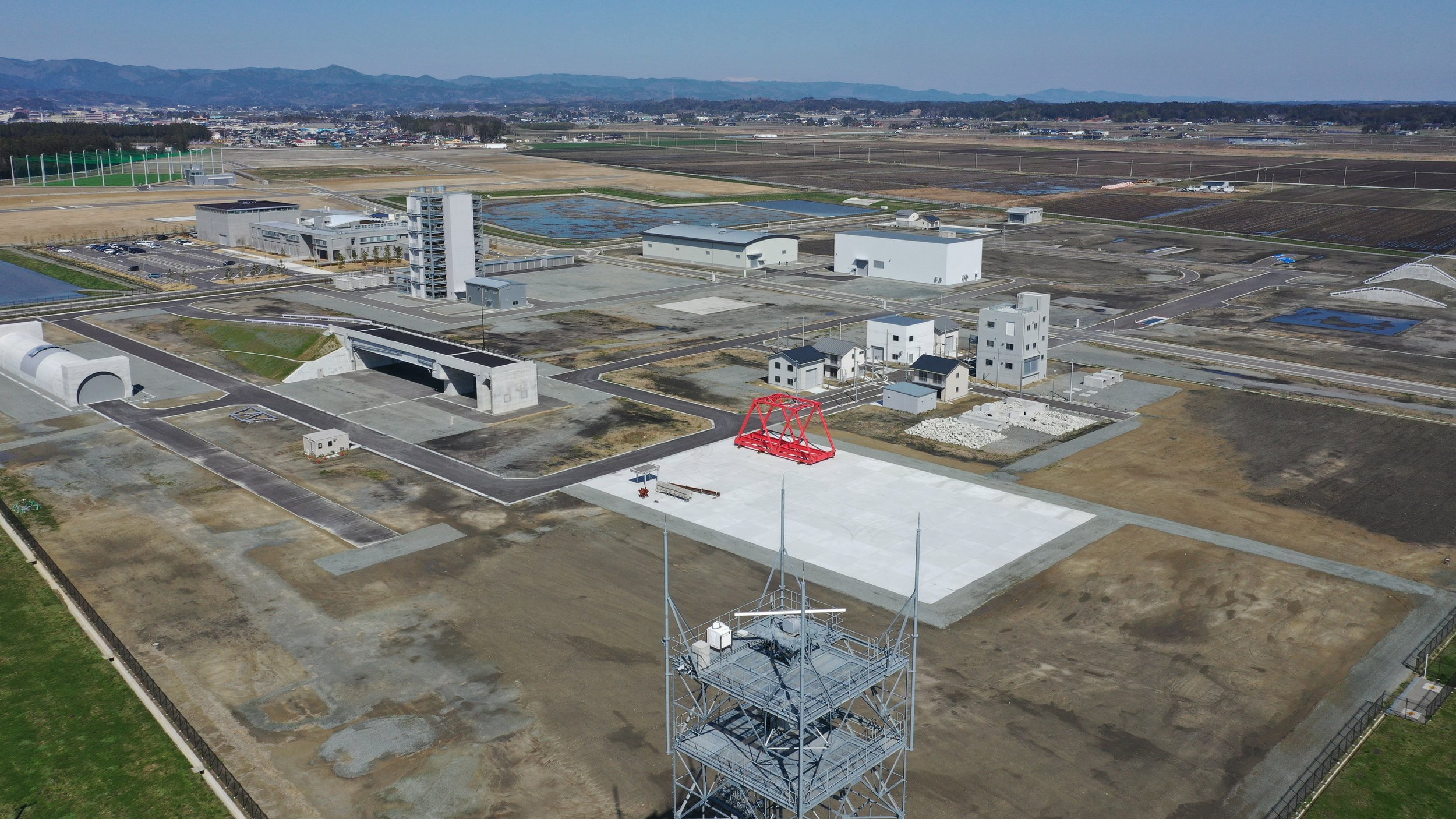
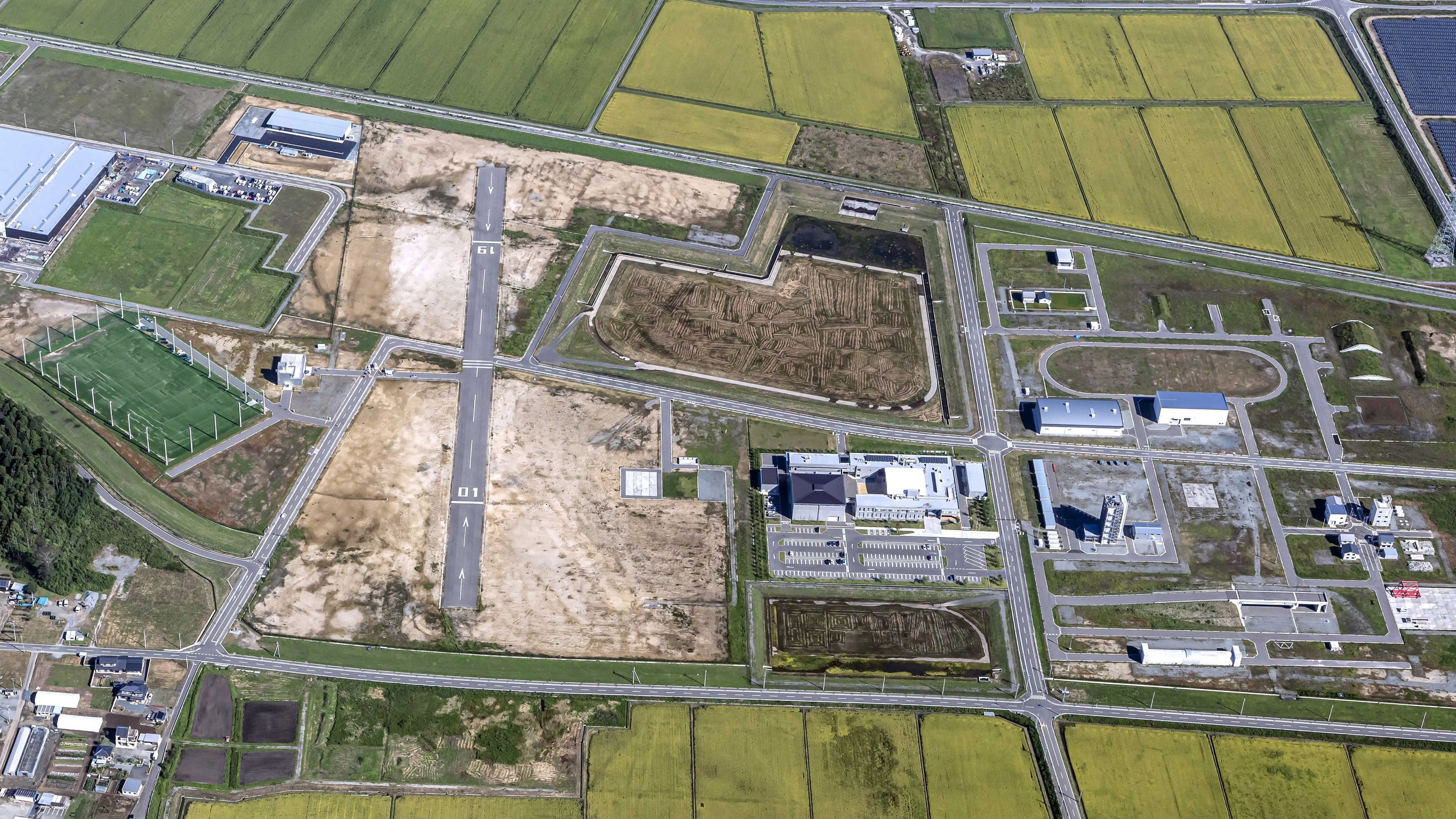
Future Tech Hub
In the 11 years since the earthquake, recovery has focused on restoring businesses to their original locations in Fukushima through business and livelihood restoration efforts; but that doesn’t provide a vision of Fukushima’s future. The Fukushima Innovation Coast Framework aims for “creative reconstruction” by developing new industries in the prefecture’s coastal region.
“As we attract outside companies, we also want locals to restart their businesses. True creative reconstruction is only realized once local companies successfully mesh with new partners and drive the creative cycle,” explained Masami Miyashita, director of METI’s Fukushima New Industries and Employment Promotion Office.
A Leg Up for Robotics
One of the cutting-edge research and development facilities is the Fukushima Robot Test Field. It offers experimental equipment and development facilities such as tunnels, bridges, and runways for aircraft to test the performance of robots for infrastructure inspection and communication towers for drones.
Sou Yanbe, growth manager of the venture capital Real Tech Fund, explained: “Test environments that can assess the durability of devices are indispensable for the commercial rollout of hardware such as robots and drones. But most startups can’t afford to own and operate the facilities needed to conduct these tests. Robotics startups aiming for mass production should first consider setting up a base in the Hamadori area of Fukushima.”
Big Hydrogen Plants
Take for example the small community of Namie, which has been reimagined as Hydrogen Town Namie and houses one of the world’s largest-capacity hydrogen plants: Fukushima Hydrogen Energy Research Field. Sucking up an enormous amount of energy generated by solar panels, the field applies this solar energy to produce enough hydrogen fuel daily to power about 150 households or to fully charge 560 fuel-cell vehicles.
In response to the national government’s 2050 Carbon Neutral Declaration, which is expected to encourage even further the introduction of renewable energy in Japan, Namie has declared itself a zero-carbon city, aiming to achieve virtually no carbon dioxide emissions by 2050. While this will promote the generation and use of renewable energy, the key to achieving their 2050 goal is found in the “create local, use local” strategy for clean Namie hydrogen produced at the Fukushima Hydrogen Energy Research Field.

Fixed-wing drones will scan disaster-struck areas.
Drones to the Disaster Response
Meanwhile, the startup Terra Labo is addressing the other side of the coin: disaster preparedness. Investing just over $2 million to build a research, development, and manufacturing hub next to Fukushima Robot Test Field, Terra Labo Chief Executive Officer Takahide Matsuura aims to develop and commercialize long-range, unmanned drones by the end of 2023.
Matsuura envisions a disaster management system where fixed-wing drones capable of long-distance flight share images and 3D models generated from aerial surveying with a special analysis team, which then passes them on to government bodies.
“No other facility is so well equipped with not only an airfield and testing facilities, but also ancillary facilities,” Matsuura said, noting how critical the facilities are to his vision. “This makes it ideal for a development-centered company. It must not have been easy to secure the site.”
Engaging Education
But it’s not all billionaires, venture capitalists, and entrepreneurs. The next generation of Fukushima residents is just as involved. In the classroom of a local school, children’s eyes light up when one palm-sized robot bows. The robot attracting their attention is the Aruku Mechatro WeGo, designed to help children learn programming. Classes such as these are held regularly in Fukushima for elementary and middle school students with the hopes that some will grow up to be the innovators of the future. And perhaps, in the years to come, one of Buffett’s successors will visit Fukushima and be inspired by local creativity and entrepreneurship to invest more in the vibrant Fukushima of the future.

Children interact with the Aruku Mechatro WeGo robot.


Spirit of Yozan
The death of a close friend at college prompted Tohoku native Hiroaki Miyajima to pursue a career in advertising in the United States. Having returned to his hometown of Yonezawa, Yamagata Prefecture, in 2011, he is now part of a local business collective whose mission is to secure the town’s future prosperity. The Ukogi collective, established by Miyajima and several other Kojokan graduates, channels the spirit of Yozan in a bid to grapple with the issues facing Yonezawa and many of Japan’s rural areas.
How a samurai reformer inspires a new generation to take the lead and succeed
Listen to this story:
The death of a close friend at college prompted Tohoku native Hiroaki Miyajima to pursue a career in advertising in the United States. Having returned to his hometown of Yonezawa, Yamagata Prefecture, in 2011, he is now part of a local business collective whose mission is to secure the town’s future prosperity.
Place of Inspiration
Those not familiar with the Tohoku region, in the far north of Japan’s main island of Honshu, may be excused for being unaware of Yonezawa. But this landlocked town has inspired some of the nation’s most successful executives and one of the United States’ best-loved presidents. When John F. Kennedy was asked after his inauguration to name a Japanese figure whom he respected, to the surprise of the Japanese press corps he answered with the name Yozan, a clan leader who ruled the domain of Yonezawa during the 18th century.
Yozan Uesugi inherited a Yonezawa impoverished by profligate leaders and entrenched interests. Heavily influenced by his teacher, Heishu Hosoi, who saw it as the duty of rulers to put the interests of their domains above their own, Yozan swore an oath to restore the prosperity of Yonezawa and its people. He is highly admired for his radical economic reforms and being an exemplar of frugality.
In Yonezawa, the figure of Yozan looms large, and in no place more so than Kojokan High School, which he founded in 1776. The school seeks to instill a sense of service and importance of action summed up by one of Yozan’s most famous sayings: “For all things, try and you will succeed; do not try and you will not succeed. Lack of success is merely due to lack of trying.”
Intellectual Foundation
The Ukogi collective, established by Miyajima and several other Kojokan graduates, channels the spirit of Yozan in a bid to grapple with the issues facing Yonezawa and many of Japan’s rural areas. The name Ukogi is that of a deciduous shrub that Yozan promoted for use in making hedgerows, while the edible leaves can serve as a food source in times of famine. Use of the shrub symbolizes the importance of creative thinking and self-reliance, which Yozan stressed to his people.
Collective member Yohei Sano, who helps with the family fish market, has a background in legal philosophy and studies local history in his free time. Known as The Professor, he is a quiet contrast to the ebullient Miyajima and provides Ukogi’s intellectual foundation. Synthesizing the virtues and lessons of the past, he is developing the philosophy of a restoration based on sustainable development and employing public–private sector cooperation. Put simply, Sano said, “I want to make Yonezawa a place to which the next generation will want to return and make their life.”
The speed of change in Japan can often be glacial, but Yozan overcame the powerful social and economic forces of the 18th century to restore the prosperity of Yonezawa. Ukogi is aiming to instigate a second restoration and make Yonezawa a place that once again inspires beyond its borders.


Trusts and Audits
In December 2021, the Japanese government revealed its proposed changes to tax legislation. Some of these proposals affecting individual taxpayers are discussed in this column, together with an update on how Covid-19 has impacted the tax authority’s approach to inheritance and gift tax audits.
How changes to Japan’s tax rules may impact individuals
Listen to this story:
In December 2021, the Japanese government revealed its proposed changes to tax legislation. Some of these proposals affecting individual taxpayers are discussed in this column, together with an update on how Covid-19 has impacted the tax authority’s approach to inheritance and gift tax audits.
Assets and Liabilities Statement
The rules surrounding this reporting obligation, which was introduced in 2015, have been amended to increase the scope of taxpayers subject to the requirements.
The additions are aimed at minority shareholders of large family corporations, such as an owner’s Japan-resident spouse or children. If the shareholder receives dividends and has no other source of income, the income tax can be settled through withholding and no return is due. Previously, they would not have met the requirement to file an assets and liabilities statement, regardless of the value of their shareholding and other assets, but the proposed changes would bring them within the scope of the report.
The changes are due to apply to income and assets beginning January 1, 2023 (January 1, 2024, for mitigating factors) with the first reports due in 2024.
Trust Reporting Requirements
Another proposed amendment is to the trust reporting requirements that apply to Japan-resident trustees and trust corporations of domestic and overseas trusts. Previously, if it was difficult to estimate the value of the assets within a trust, then the assets did not need to be included in the filing. The reports are required within one month of:
- Establishment or closure of a trust
- Changes in beneficiaries
- Changes in beneficial rights
Although there are no penalties for failure to file, individual trustees should pay attention to any filing requirements triggered by this amendment, which will apply to reports due beginning January 1, 2023.
Audit Focus
In December 2021, the National Tax Authority (NTA) released its annual audit statistics for 2020, showing the impact of Covid-19 on its approach to onsite audits. During 2020, the number of inheritance tax audits fell by 52 percent, from 10,635 to just 5,106. Of these, 551 related to overseas assets, with the NTA utilizing tax treaty information exchange provisions and Common Reporting Standards information to gather details of the assets. The average tax raised was ¥9.4 million per audit opened, a 47-percent increase in the average compared with the previous year’s ¥6.4 million.
The decrease in audits was countered by a 58-percent increase in the number of simple investigations, consisting of telephone inquiries and correspondence with taxpayers. There were 13,634 such instances in 2020, compared with 8,632 in 2019, while ¥650 million in additional tax and penalties were levied. The move from onsite audits to simple investigations shows that the pandemic has caused the NTA to focus personnel on audits with a higher chance of levying tax. The remainder are being handled with remote inquiries, seemingly a more efficient use of resources.
Takeaways
The tax reform proposals will affect individual taxpayers in different ways but, for most, the change to the filing deadline will reduce the administrative burden of filing asset and liabilities statements and overseas assets reports. Trustees of overseas trusts will have to pay attention to the changes in reporting requirements and be prepared to file reports containing estimated valuations. Finally, the increase in simple investigations is likely to mean that more taxpayers receive calls from their local tax office. In such cases, as always, seek professional advice on how to respond to such requests.

For more information, please contact Grant Thornton Japan at info@jp.gt.com or visit www.grantthornton.jp/en

Ramen Romance
Chinese noodles first gained popularity in Japan in 1859, when centuries of isolation ended and the port of Yokohama opened for international trade. Yokohama, a short jaunt south from Tokyo, prides itself on serving some of the country’s best ramen, and has two museums to celebrate the cheap, delicious, and filling meal.
A flavorful world of history and innovation awaits you in Yokohama
Listen to this story:
Chinese noodles first gained popularity in Japan in 1859, when centuries of isolation ended and the port of Yokohama opened for international trade. At the same time, a nationwide ban on eating meat was lifted, bringing to the table new flavors. To a bowl of basic Chinese-style noodles, Japanese chefs added a slice of fatty chashu (braised pork belly) and unique soup stocks made with local ingredients, such as miso, kelp, bonito, and clams. And in doing so, they created a delicious umami-rich dish now famous the world over: ramen.
The Raumen Museum
Yokohama, a short jaunt south from Tokyo, prides itself on serving some of the country’s best ramen, and has two museums to celebrate the cheap, delicious, and filling meal. Minutes from Shin-Yokohama Station, the Raumen Museum (the unique spelling reflects the way the word used to be pronounced) is a great place to start your ramen reconnaissance. This food-themed amusement park opened in 1994, the brainchild of industrialist Yoji Iwaoka, who envisioned a truly distinctive museum.
It’s ¥380 to enter the museum which, despite benches shaped like ramen ingredients and a carpet decorated with narutomaki fish cake, looks at first fairly ordinary. There are displays in English and Japanese that chart the history of ramen, and several impressive exhibits that reflect regional specialties. There are even several walls of various donburi (pottery bowls) used throughout Japan. Of special charm is a reconstruction of Rairaiken, the shop that set off Japan’s first ramen boom after it opened in Asakusa in 1910. With the help of 13 Chinese cooks from Yokohama’s Nankinmachi, Rairaiken is said to have ladled out between 2,500 and 3,000 bowls of ramen a day. The first floor also has a nifty gift shop, with a wide variety of ramen-related goods, such as heat-n-serve packs, recipe books, ramen bowls, and even a curious treat called ramen chocopuffs.
What really sets the Raumen Museum apart, though, is found in the second basement. Stepping into this vast two-story section of the museum is like discovering a time portal; though you know you are inside a building, you would swear you are outside at dusk, walking the backstreets of a bygone era. A huge central court, lit by cinema posters, neon pachinko signs, and light bulbs strung from second floor living quarters, also holds half a dozen actual ramen restaurants doing brisk business. Before queuing there, though, be sure to tour the backstreets of the town, all along the periphery of the food court. You’ll find the alleyways more intricately detailed than movie sets. The humble wooden homes, speakeasies, candy store, tobacco shop, police box, and even a phone booth add up to a realistic scene you’ll swear you’ve actually been to, somewhere in Shitamachi. Attention to detail—a chalked hopscotch, children’s yukata hung out to dry, and a public bath entrance (that’s actually an elevator)—evoke an era when lives were more intimately connected, and community coalesced around a simple bowl of noodles with family and friends.
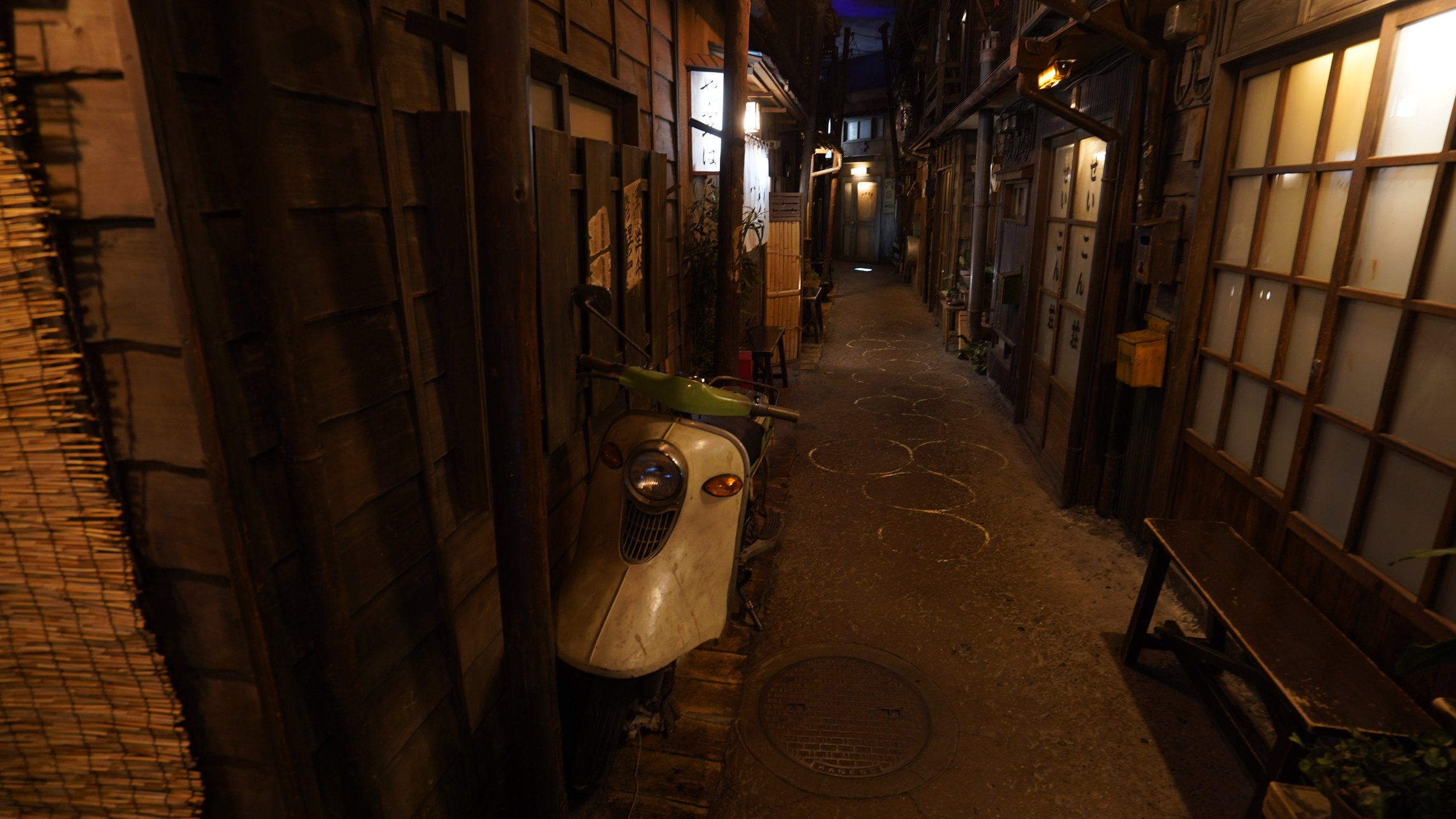
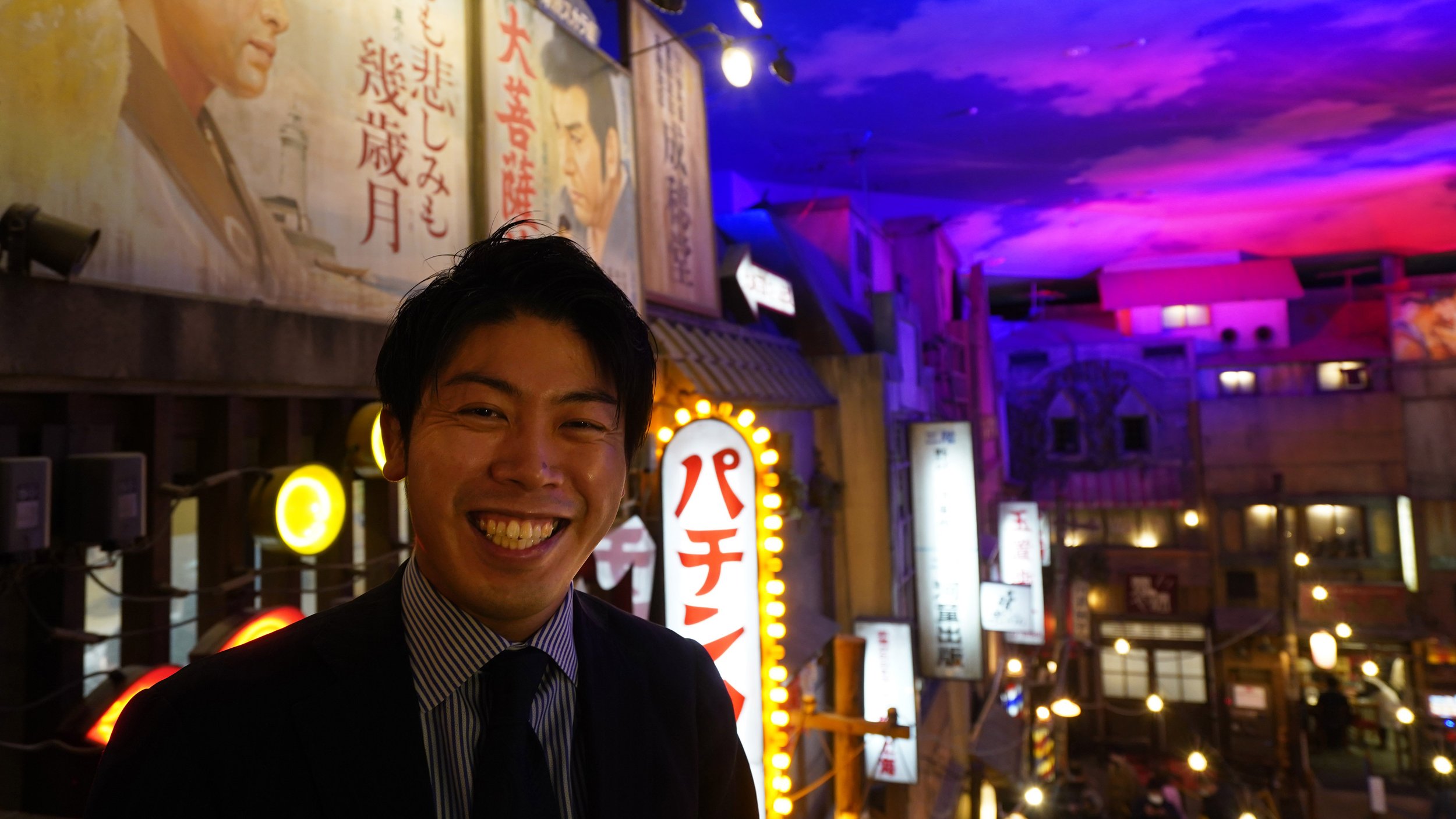



Museum founder Iwaoka’s son, Takuji explains that his father wanted to recreate a 1958 retro townscape, not just for nostalgia but also because that year marked the invention of instant noodles by Momofuku Ando, a true turning point for the internationalization of ramen.
Heading into the central square, snag tickets from a vending machine for the ramen of your choice. The shops and selections come from around Japan and change occasionally, but the important point is that you can choose regular or “mini portion” servings, which allow you to sample several of the shops’ offerings.
You might see homemade slabs of pork hanging here and there, but vegetarian ramen options are also always on offer (try Komurasaki, from Kumamoto). The variety of soups—usually in soy, miso, or salt seasonings and bases of pork bone, fish, chicken, or vegetable broth—make for infinite combinations. The museum is a great place to develop your vocabulary and taste for ramen, and the atmospheric setting might make you yearn for the good old days of Japan.
The Cup Noodles Museum Yokohama
The year immortalized by the Raumen Museum’s fantasy backstreets, 1958, is the same one in which Momofuku Ando realized his dream of making instant ramen noodles. The whole story behind Ando’s development of instant ramen is packaged beautifully at the Cup Noodles Museum, a 12-minute walk from Sakuragicho Station on the JR Yokohama Line.
The minimalistic red brick exterior of the facility, officially known as the Momofuku Ando Memorial Museum, was conceptualized by Creative Director Kashiwa Sato to express “simplicity devoid of the unnecessary” and to stimulate creative thinking. The vast clean entryway features a 24-meter-high back wall that extends up all five floors of the museum, and a white nebuta-style float made of washi paper in the shape of Nissin’s popular product.
Corporate Communications Division Manager Kazuki Tsurumaru notes that the facility “really looks like an art museum”—an impression borne out by displays on the second floor. One entire room, the Instant Noodles History Cube, has a floor-to-ceiling exhibit of every variety of fast-food noodles, from Ando’s very first pack of Chicken Ramen to the items currently on sale. There are also cup versions, some of which include flavor variations sold in other countries. Tsurumaru points out that the early packets of Chicken Ramen had little windows, “so people could see what was inside, because they didn’t know.” They sure know now.
The next exhibit, Momofuku’s Work Shed, is a faithful recreation of the place in which Ando struggled for a year to create his invention. Tsurumaru reveals that it was Ando’s wife who provided the catalyst for his breakthrough. “Ando watched her cooking tempura and realized that, when the noodles were fried in oil, the moisture was forced out, making it possible to preserve them for a long time. He also discovered that hot water poured over the noodles was absorbed through tiny cavities formed during dehydration. The water seeped into the noodles, restoring them to their original soft state.
The message here is that inspiration for inventions can come from literally anywhere and that, even in humble surroundings, it’s possible to create something extraordinary.


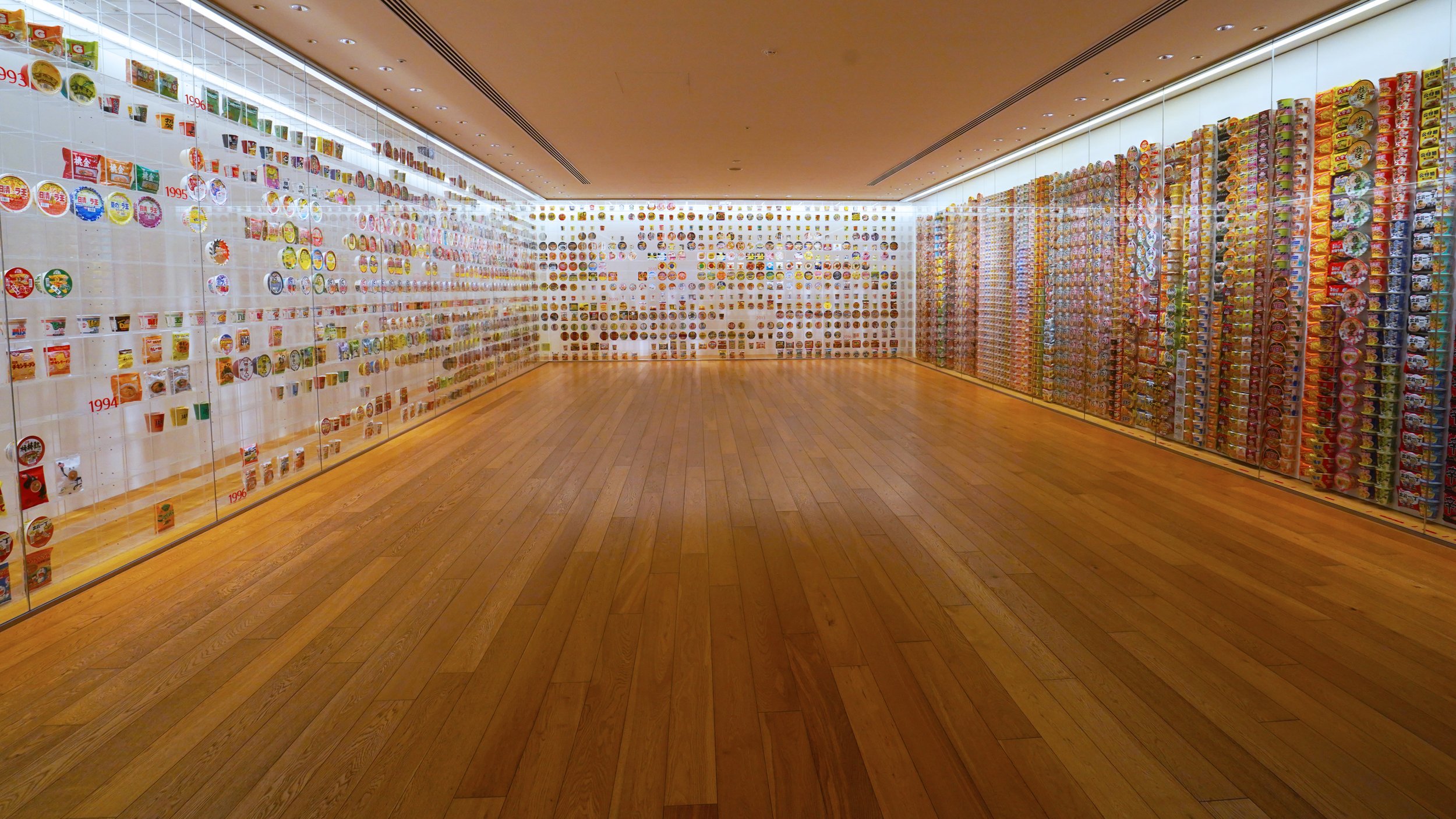


Each of the exhibits on the second floor underlines Ando’s thought process. An oversize cup with white noodles spilling out, for example, has words hidden in the noodles themselves, encouraging viewers to look at things carefully and from all angles. A nearby separate room helps children learn how great ideas can arise from simple tools, and that by using your noodle, so to speak, you can come up with unique inventions by understanding the needs of others.
The third floor offers two hands-on experiences. One (reservations required, tickets ¥800) involves making Chicken Ramen by hand, starting with kneading, spreading, and steaming the wheat flour and then drying it with a flash-frying method. The other (¥400 tickets sold at the entrance) is a fun experience in which you design your own Cup Noodles, from illustrating the exterior of the cup itself to choosing the soup flavors and toppings. Children will love adding the likeness of Chicken Ramen’s mascot Hiyoko-chan, made from dried fish cake, to their concoction. Staff then seal the lid, shrink-wrap your creation, and place it in an “air package” that you pump into a nifty pillow to safely tote home.
To round out the fun, the fourth floor has a fabulous playground (check for current Covid-19 restrictions) where kids “become” noodles in a factory. Nearby, the Noodles Bazaar serves up noodle dishes from eight countries, from Kazakhstan to Italy. The highlight here might be an outrageously confusing, but delicious, ramen ice cream!
Ramen Trick
After two excellent museums, you might want to sink your chopsticks into the ramen made at one of Yokohama’s independent ramen shops. If that’s the case, Yokohama Convention and Visitors Bureau Management Planning Department Manager Shisei Aoki has a recommendation: Ramen Trick, located a minute from the Blue Line’s Yoshinocho Station, Exit 3. Despite the unsettling name and the informal atmosphere of the joint, decorated with bombastic rooster illustrations, the place is the real deal. Ramen Trick was opened in 2012 by Noboru Nishigaki and his wife, Kazumi. “Before opening,” Noboru recalls, “we were working in Chinatown, above the Trick Art museum, and one day, we realized the word ‘trick’ sounded like ‘tori-ku’ (eat chicken), so we chose the name.”
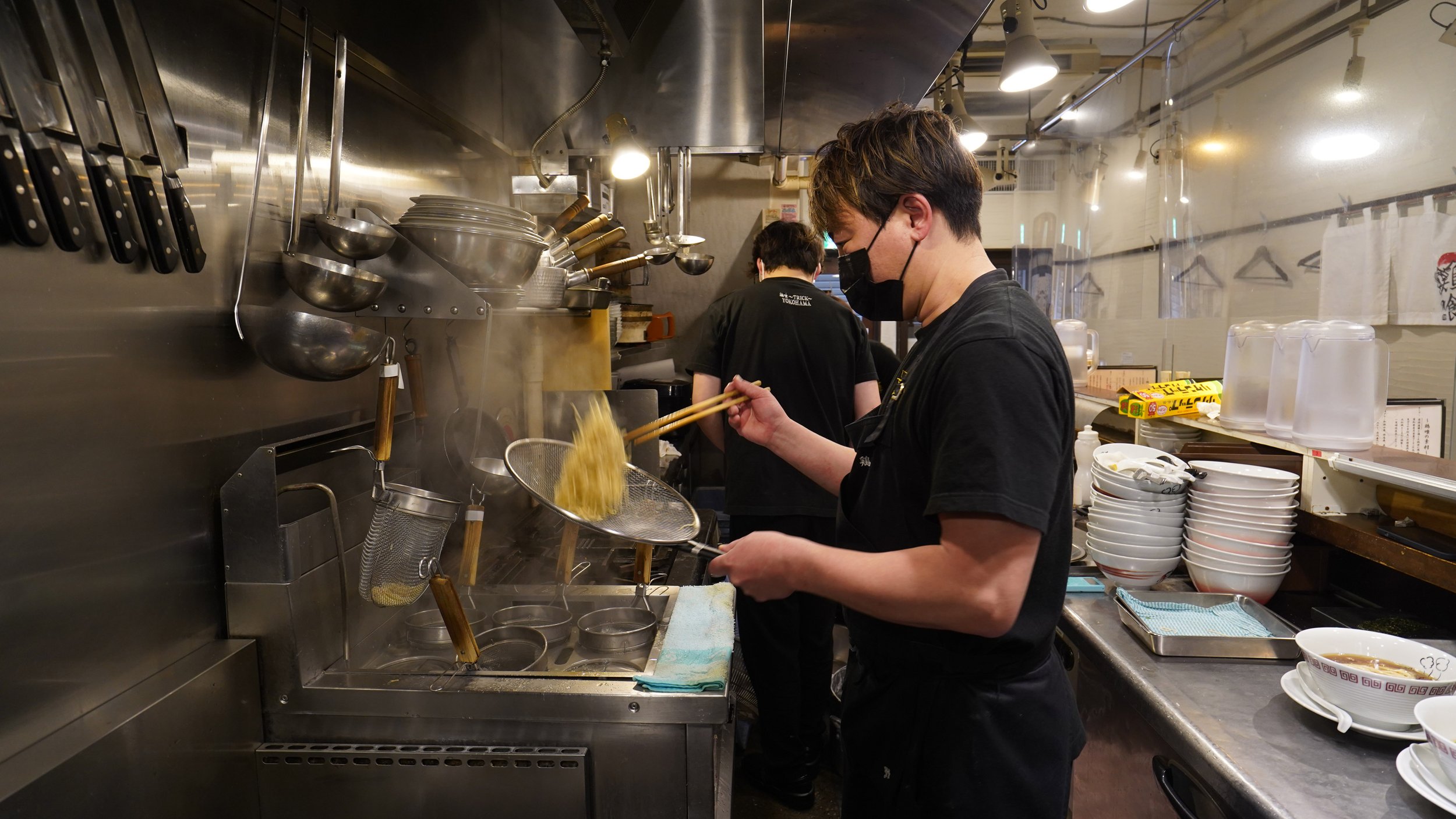

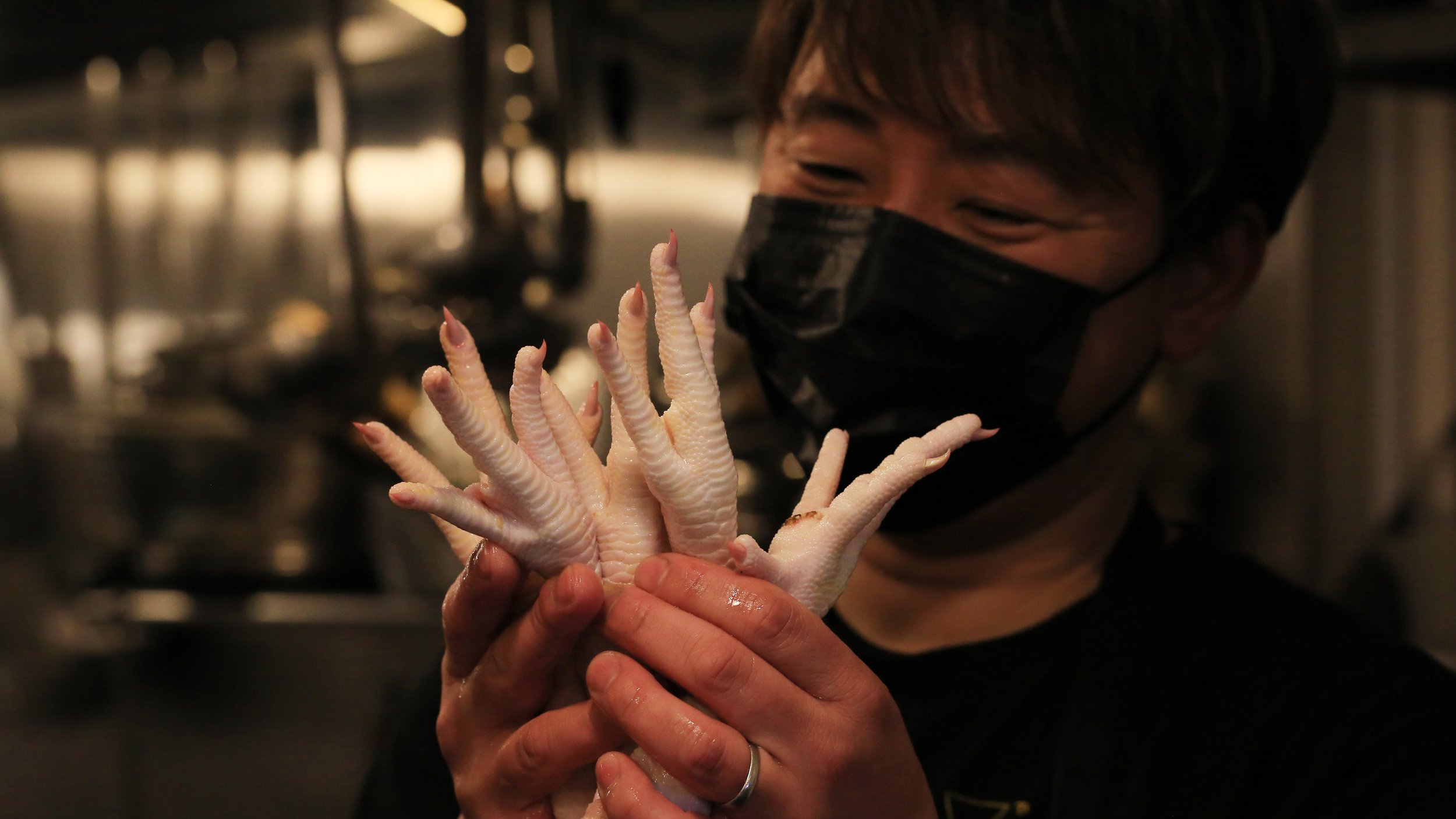
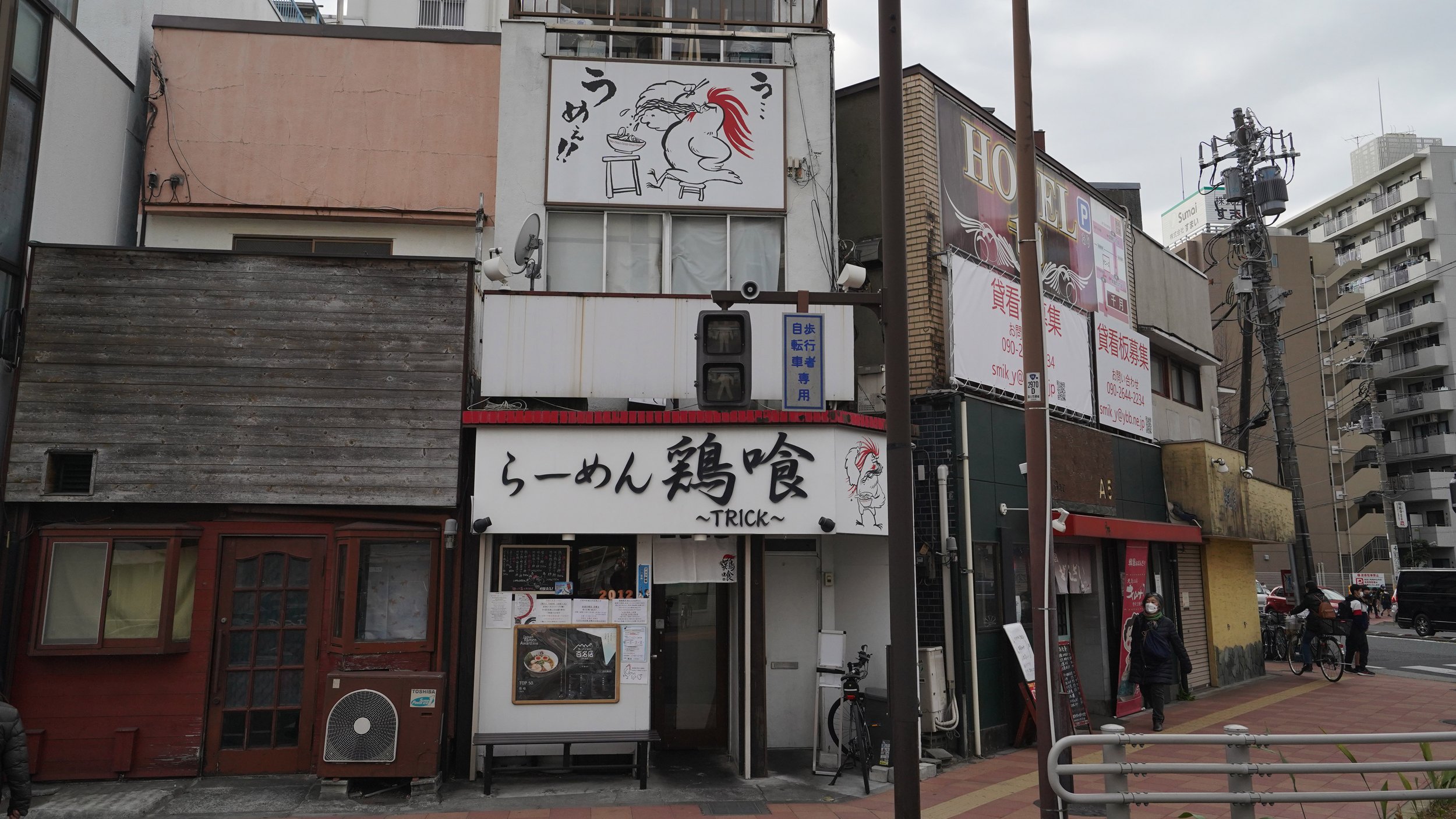
Puns aside, Ramen Trick is all about chicken—no other meat products are on offer—and if you visit between hours, be prepared to see big plastic pails of chicken parts being prepped for the stock pot bubbling away in the back of the kitchen. Three kinds of fowl, including Okayama’s Sansui, Nagoya’s Cochin, and Yamanashi’s Shingen simmer away with dried tomatoes and konbu (seaweed), bringing out unique umami notes. A quick glance at the walls reveals the restaurant has prizes—including a Bib Gourmand Award from Michelin—to back up Aoki’s recommendation.
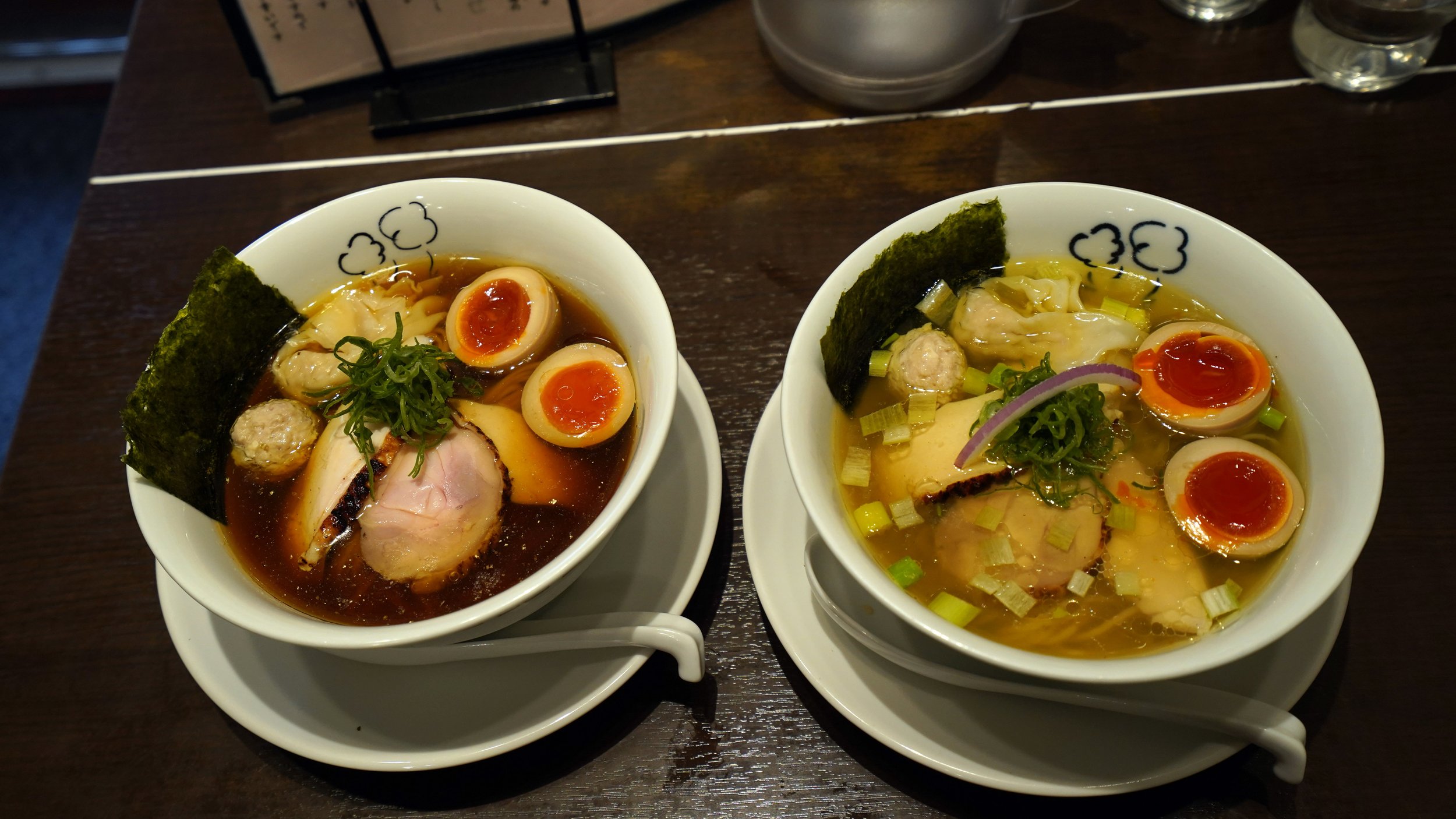
By all means, try the tokusei (special) salt-broth ramen (¥1,200). In a light golden broth, the toppings include crisp fresh spring onions, chicken meatballs, chicken chashu, a sliver of red onion, both halves of a meltingly soft ajitsuke (marinated) egg. For the salt ramen dishes, the noodles, sourced from noodle-maker Mikawa Seimen, include a bit of bran to add to the flavor and texture. Guaranteed, after tasting this ramen, the main trick will be to resist ordering a second bowl on the spot.
Learn more …
The Raumen Museum: www.raumen.co.jp/english
The Cup Noodles Museum Yokohama: www.cupnoodles-museum.jp/en/yokohama/
Yokohama Convention & Visitors Bureau: www.yokohamajapan.com

D&I Hiring in Healthcare
It has been two decades since the Japanese government set its target of having women in 30 percent of management positions by 2020. The country has fallen far short of that goal, which the government has pushed off to 2030. Titan Consulting K.K. Business Development Manager Sophia Plessier certainly noticed the imbalance on her arrival in Japan. Coming from San Francisco, where discussion of diversity and inclusion (D&I) and support for women in business are a part of everyday life, she found it striking how few Japanese companies were promoting these important issues.
Titan Consulting helps companies put diversity policies into action
Listen to this story:
It has been two decades since the Japanese government set its target of having women in 30 percent of management positions by 2020. The country has fallen far short of that goal, which the government has pushed off to 2030.
Titan Consulting K.K. Business Development Manager Sophia Plessier certainly noticed the imbalance on her arrival in Japan. Coming from San Francisco, where discussion of diversity and inclusion (D&I) and support for women in business are a part of everyday life, she found it striking how few Japanese companies were promoting these important issues.
At Titan, she helps clients increase the diversity of their leadership. It’s a natural progression of her career in executive recruitment for the pharmaceutical, biotechnology, medical devices, and technology industries. She began that journey in 2015 in the United States, where she partnered with top healthcare companies to fill key spots in their management.
Focus on Diversity
Filling those positions is about more than just reaching a percentage. It’s about benefiting society through the innovation and solutions that emerge from teams built on diverse views, experiences, and backgrounds. And Titan’s area of focus—healthcare and life science—requires a little extra attention.
As Business Operations Manager Sean Lindley noted: “The benefits of having a more diverse leadership team are well established, but building that team can be more of a challenge in healthcare—especially in Japan—due to the somewhat conservative nature of the industry.” The way in which these companies approach screening adds an extra layer that must be overcome, he explained, “but with this challenge come opportunities, and if you’ve got something which can potentially remedy that, then the most conservative industry is probably where you want to try and apply the solution.”
The solution he speaks of is the D&I Spotlight Package, which Titan has created, inspired by another product they offer to clients which focuses on medical-doctor hiring. The package helps clients who wish to start putting their D&I policies into action through talent acquisition do so in the most effective way possible.
“Titan takes the time to understand the areas on which the client is aiming to focus their D&I hiring and the foreseeable challenges.”
The D&I Spotlight Package is a 12-month commitment from Titan Consulting which starts with an in-depth discussion to understand the client’s current situation and business needs. Titan takes the time to understand the areas on which the client is aiming to focus their D&I hiring and the foreseeable challenges. This offers a close partnership in which Titan provides detailed market analysis, access to an extensive network of professionals, a market map that identifies candidates, and ongoing, proactive support. Whether the client just wants a market map, needs to hire for key positions, or has extensive hiring needs, Titan is ready with a tailored service.
“We work with the client to pinpoint what type of professionals they want to engage with,” explained Partner Daniel McGrath. “Some clients have urgent and immediate needs while others are more focused on casual exploratory meetings for pipelining. Whatever their situation, Titan offers the opportunity to turn D&I hiring ambitions into reality for companies that are serious about evolving their business.”
Real World Results
Plessier shared an example of a successful placement. In another case, a medical device client, which was focused on Japan and had an entirely male executive team, was given a big incentive from the global executives to push for more diversity. They needed to replace their head of research and development, so decided to invest in diversity hiring and work with Titan. In just six weeks, the final candidate was selected from three finalists.
If you’re ready to strengthen your management team with more female leaders and greater diversity of voices and ideas, Titan Consulting is ready to help.

Learn more about the D&I Spotlight Package:
titanconsulting.jp/diversity

Explore Kumamoto
The southern island of Kyushu is famous for hot springs, active volcanoes, breathtaking nature filled with lush greenery, and a relaxing lifestyle that is a refreshing escape from the hustle and bustle of Tokyo. If you are looking for a domestic getaway that will delight the whole family, you can’t go wrong in Kumamoto, the island’s third largest city. Here are 12 must-visit locations in the city and around the prefecture.
Nature and culture await on the island of Kyushu
The southern island of Kyushu is famous for hot springs, active volcanoes, breathtaking nature filled with lush greenery, and a relaxing lifestyle that is a refreshing escape from the hustle and bustle of Tokyo. If you are looking for a domestic getaway that will delight the whole family, you can’t go wrong in Kumamoto, the island’s third largest city. Here are 12 must-visit locations in the city and around the prefecture.
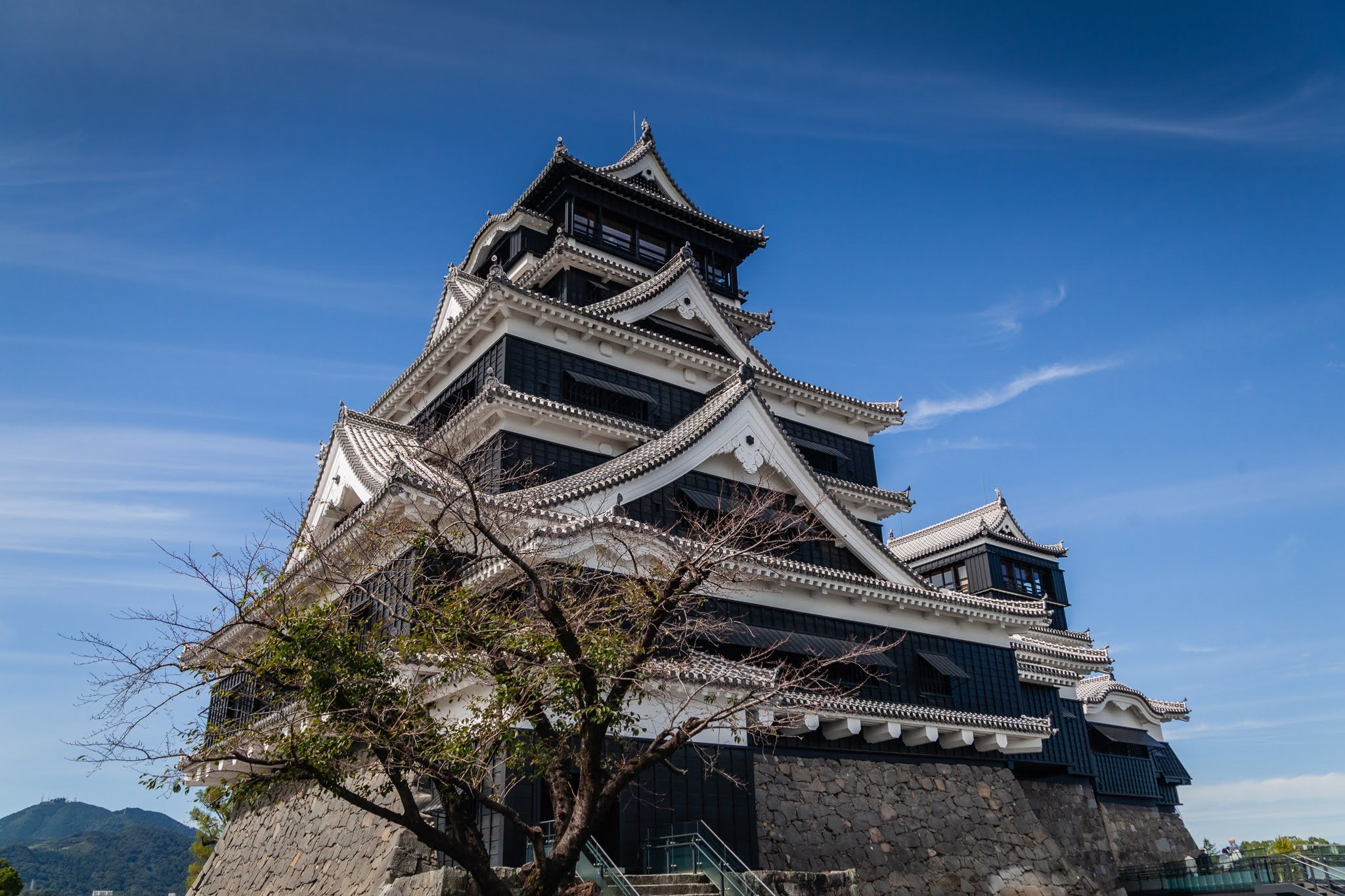
Kumamoto Castle
One of the three most famous castles in Japan, Kumamoto Castle was built in 1607 by the daimyo Kato Kiyomasa (1562–1611). It was one of the main stages of the Satsuma Rebellion in 1877, during which it was partially burned. The castle was designated an Important Cultural Property in 1933 and the main keep, along with several walls and towers, was rebuilt in 1960. The grounds, which are home to the Kumamoto Museum and Kumamoto Prefectural Art Museum, are particularly beautiful during cherry blossom season (late March). The castle tower was damaged during the series of earthquakes that struck Kumamoto in 2016, but reconstruction has progressed and you can once again enter. https://castle.kumamoto-guide.jp/en/
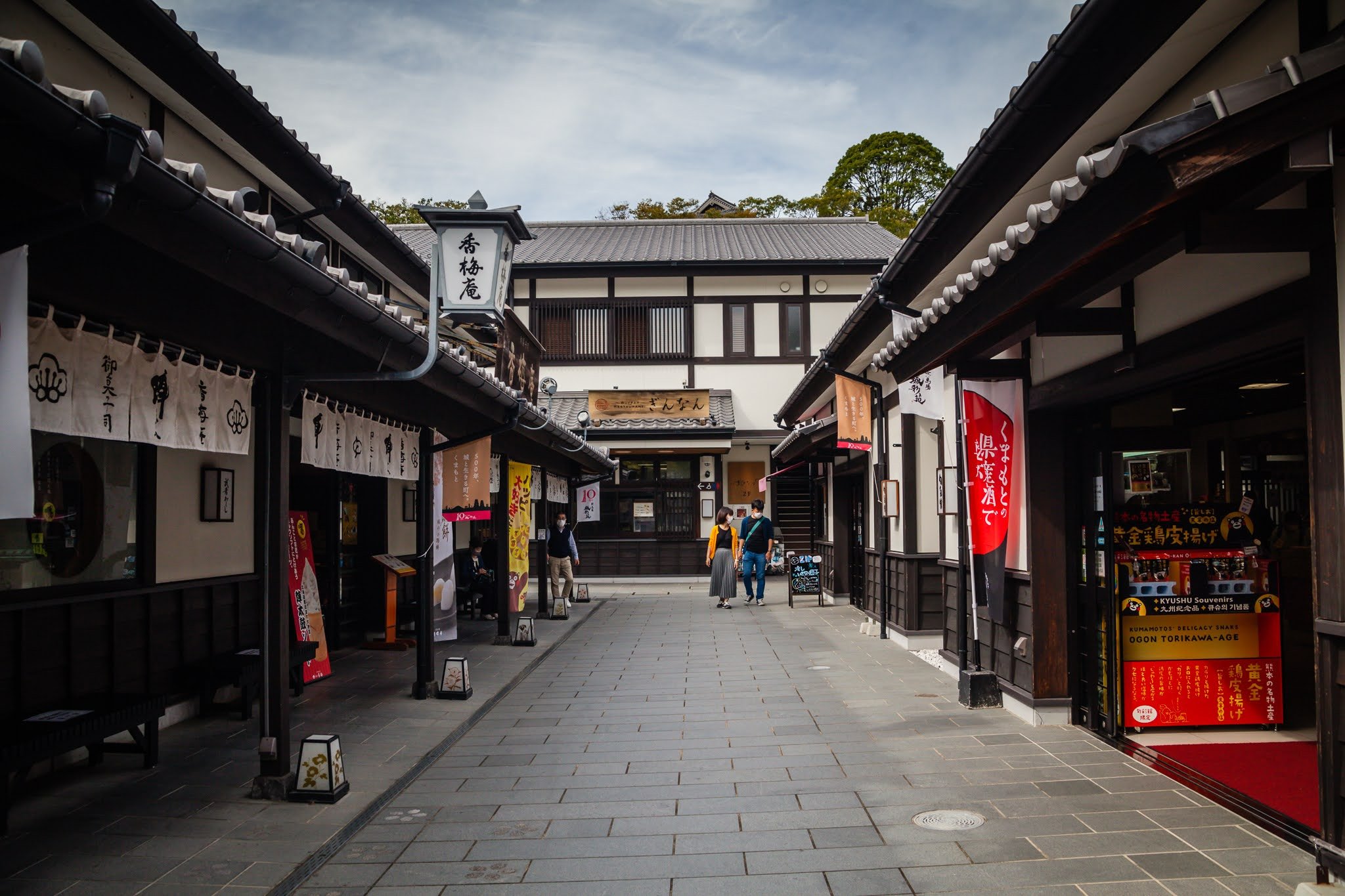
Josaien
A small shopping center modeled after the alleys of an Edo-Period castle town, Josaien in located right next to Kumamoto Castle. It’s a great spot for exploring the culinary delights of the region and picking up souvenirs. It is also home to Yamami Chaya, a restaurant specializing in horse meat. https://josaien-shops.jp
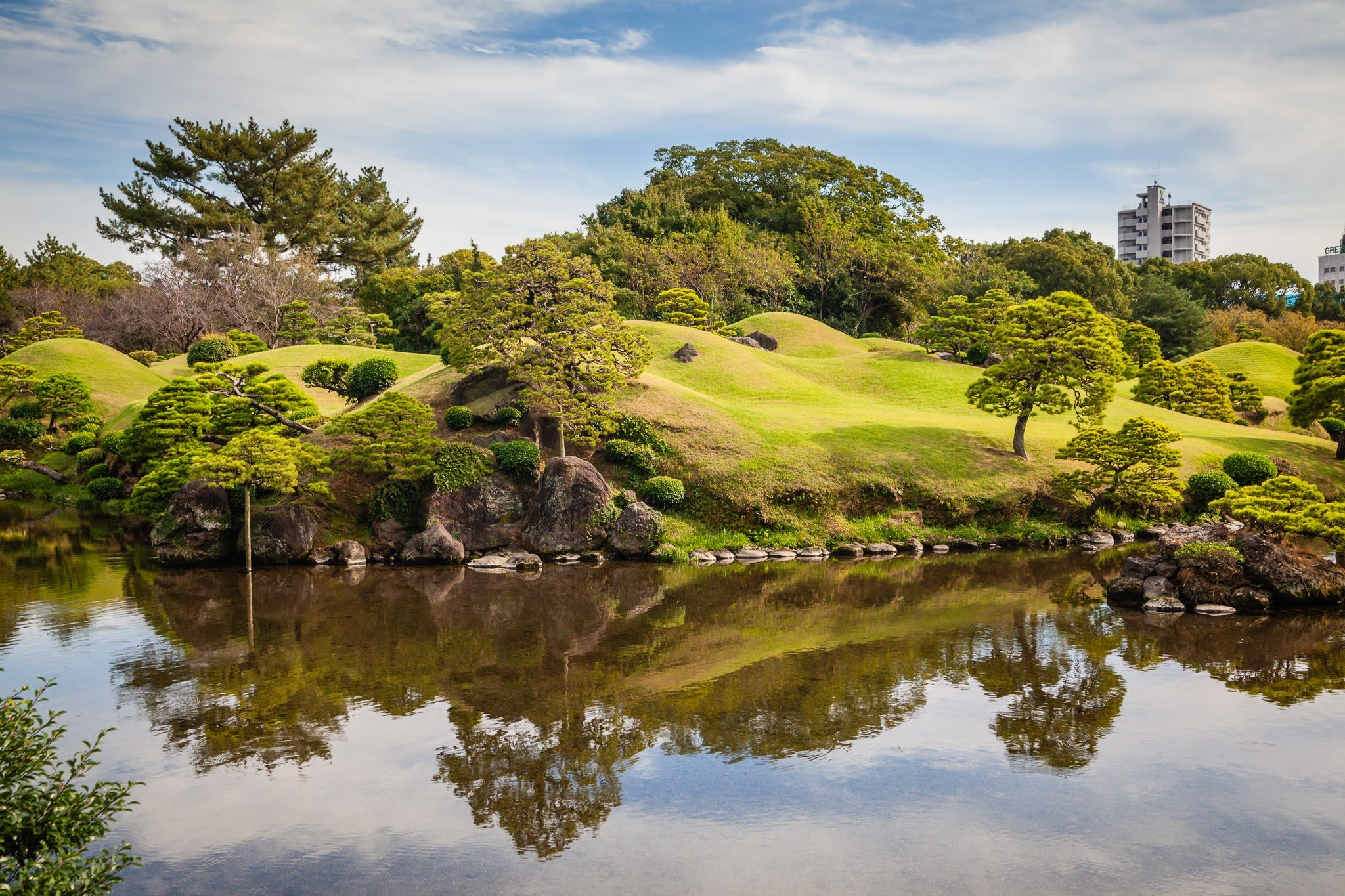
Suizenji Jojuen Garden
A Momoyama-style tsukiyama (circular) garden, Suizenji Jojuen was built in its current form in 1671 by the feudal lord Tadatoshi Hosokawa (1586–1641). The main feature of the 640,000-square-meter grounds is the Izumi Shrine. The garden was officially designated a National Scenic Spot and a National Historic Site in 1929. www.suizenji.or.jp
Higo Zogan
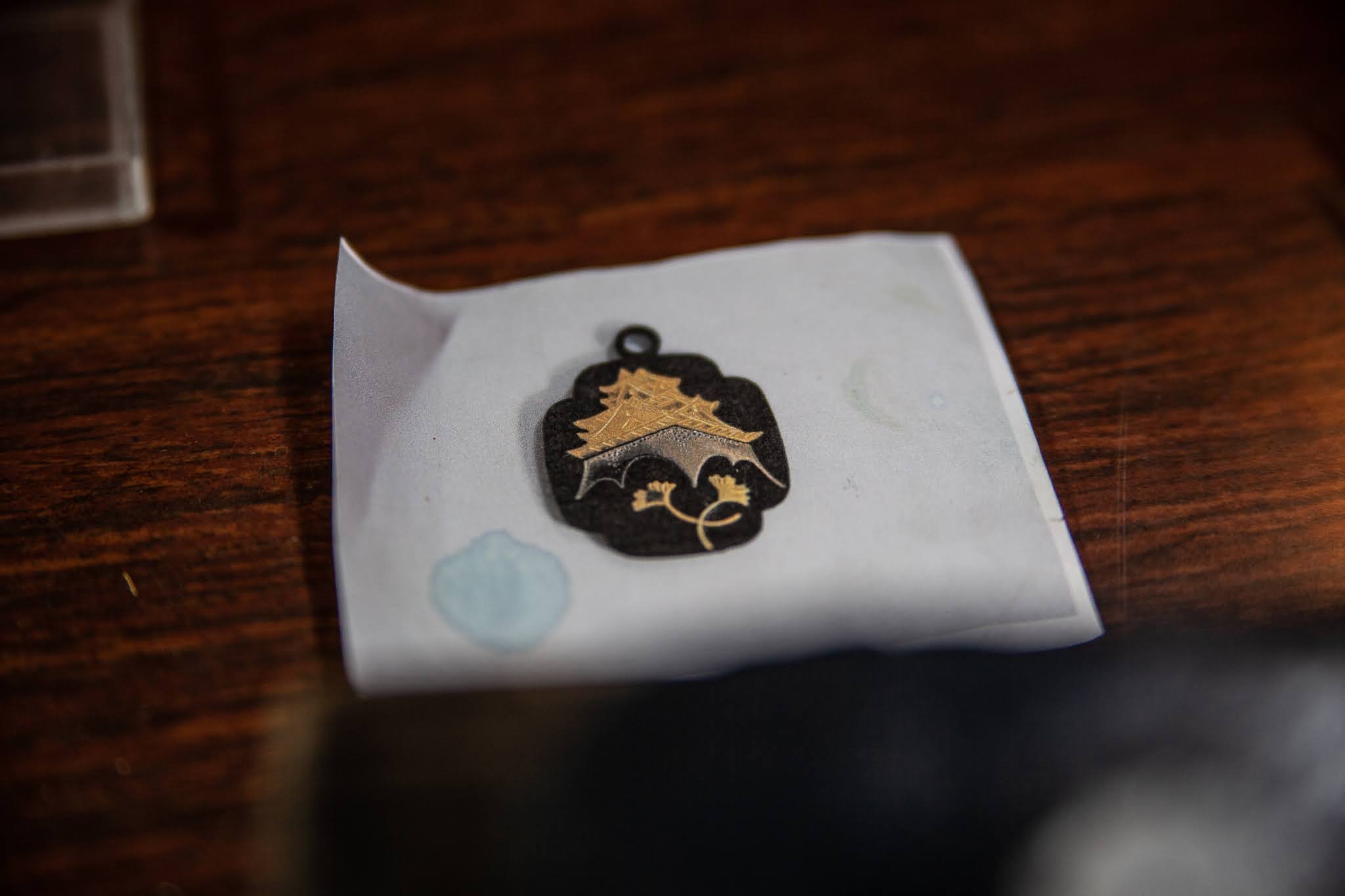
Specializing in Higo zogan, a traditional craft of the prefecture, Mitsusuke is a workshop established in 1874 that prides itself in continuing the 400-year-old art form and evolving it with the times. The workshop’s pieces have been commissioned by the Imperial Household as well as by the prefectural government. Here you can learn to craft a small piece with designs that include the famous Kumamoto Castle or the beloved local character Kumamon. https://mitsusuke.com
Meihodo
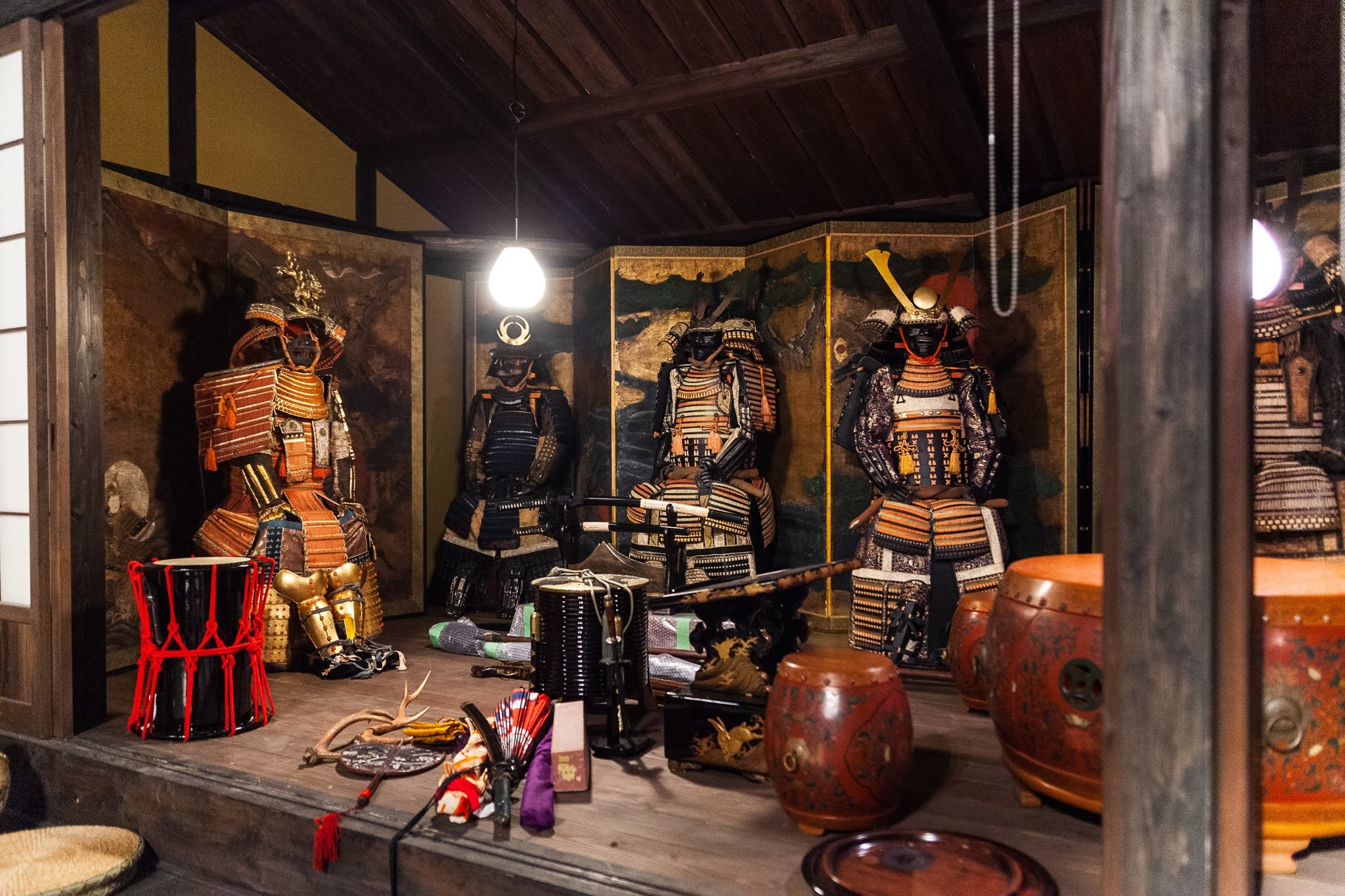
This 60,000-square-meter facility surrounded by nature was designed to resemble a traditional samurai villa. Built in 1997 as a private martial arts training facility, it gradually expanded its activities to a broad range of learning experiences focused on traditional Japanese arts and crafts. http://meihodojp.com
Fumoto Ryokan
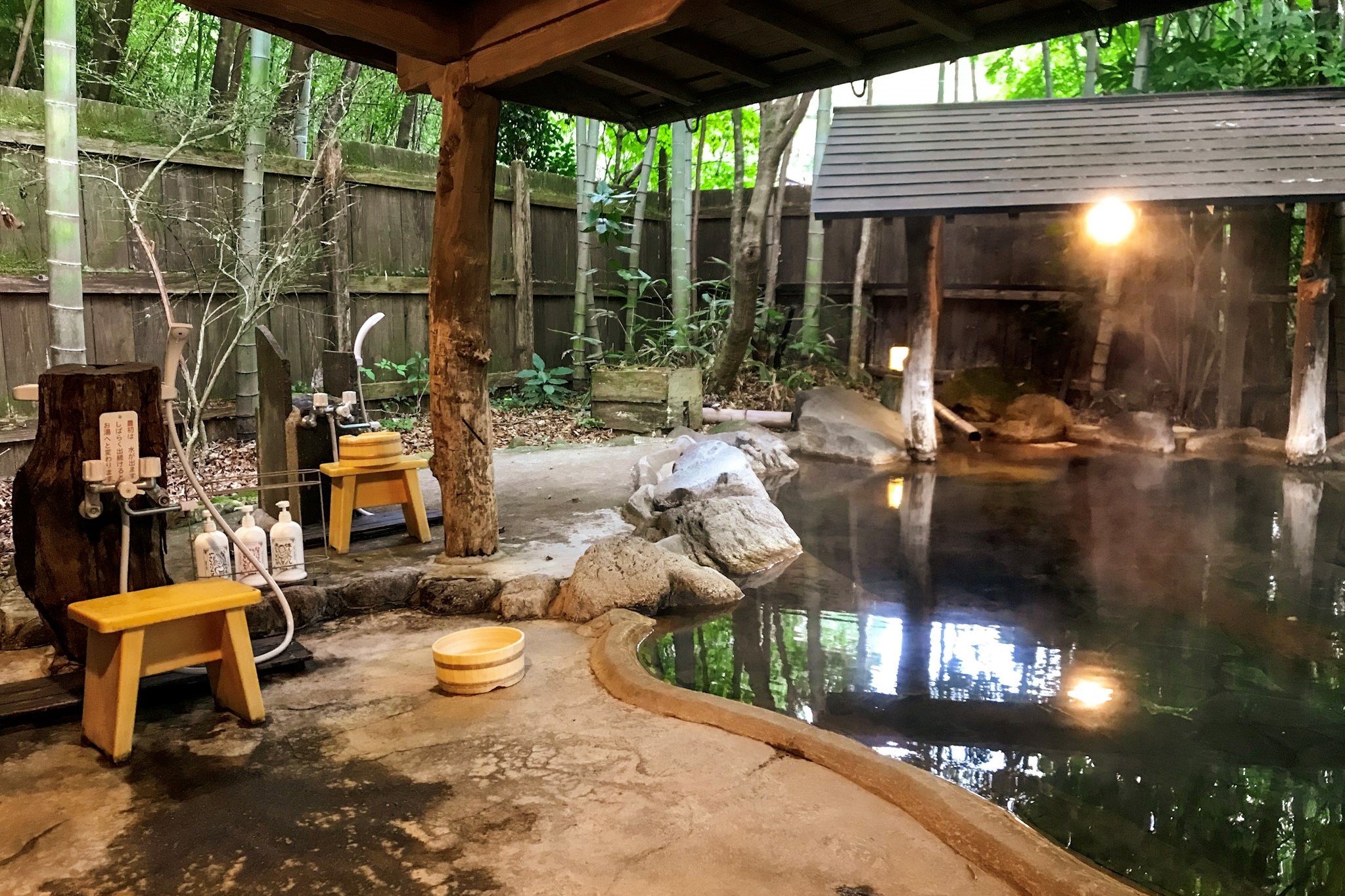
Founded in 1955, Fumoto Ryokan is a gorgeous traditional Japanese inn located at the heart of Kurokawa Onsen. Open-air and guest-only hot springs, as well as traditional Japanese-style rooms with tatami and futon, provide a simple, cozy, and relaxing experience. www.fumotoryokan.com/en/index.html
Aso Volcano Museum
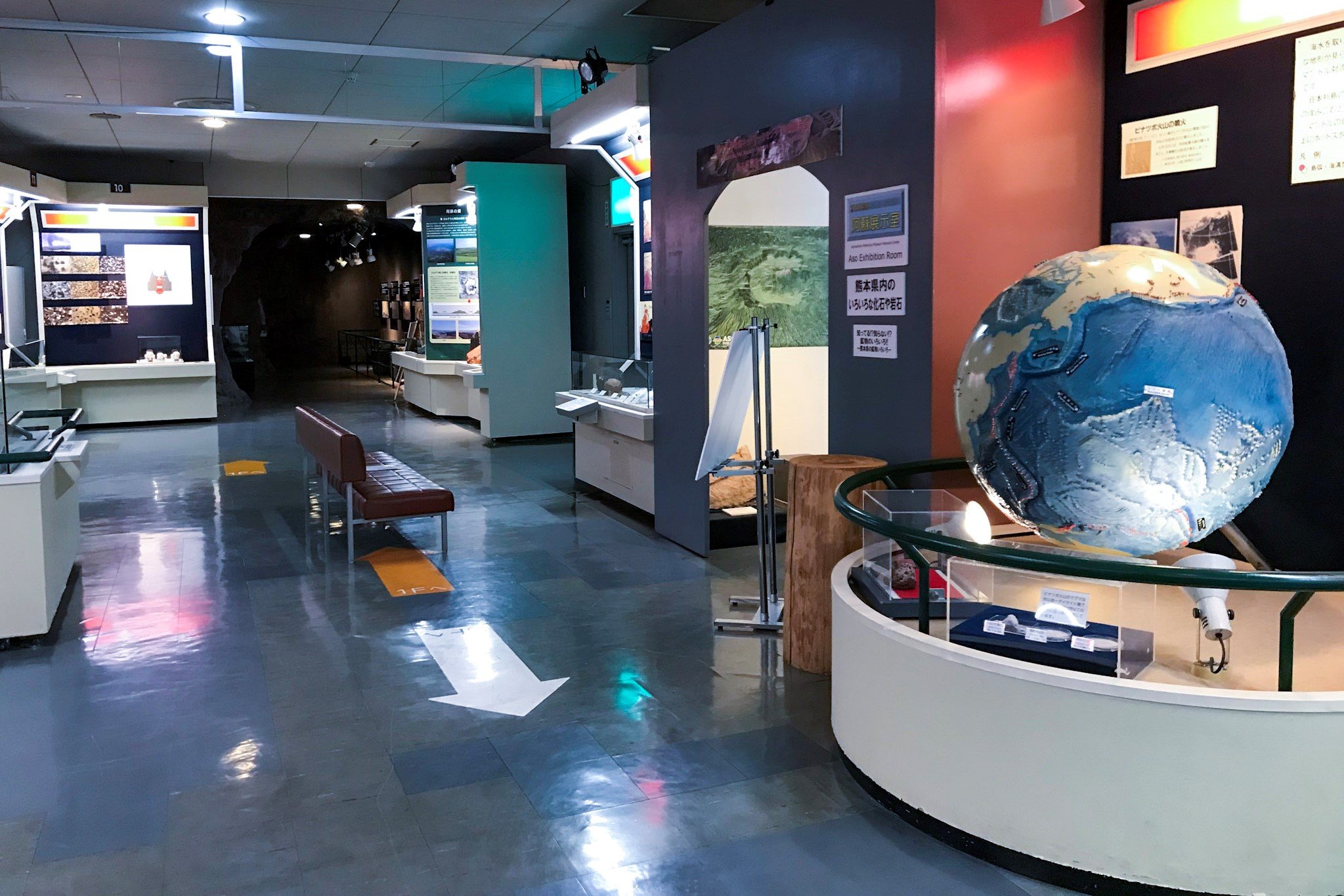
Established in 1982, Aso Volcano Museum helps visitors better understand Japan’s largest active volcano. The second and third floors feature an exhibition about volcanoes, local wildlife, and a 17-minute documentary on the history of Mount Aso. There’s also an observation deck. www.asomuse.jp/facility/
Kokindenju no Ma
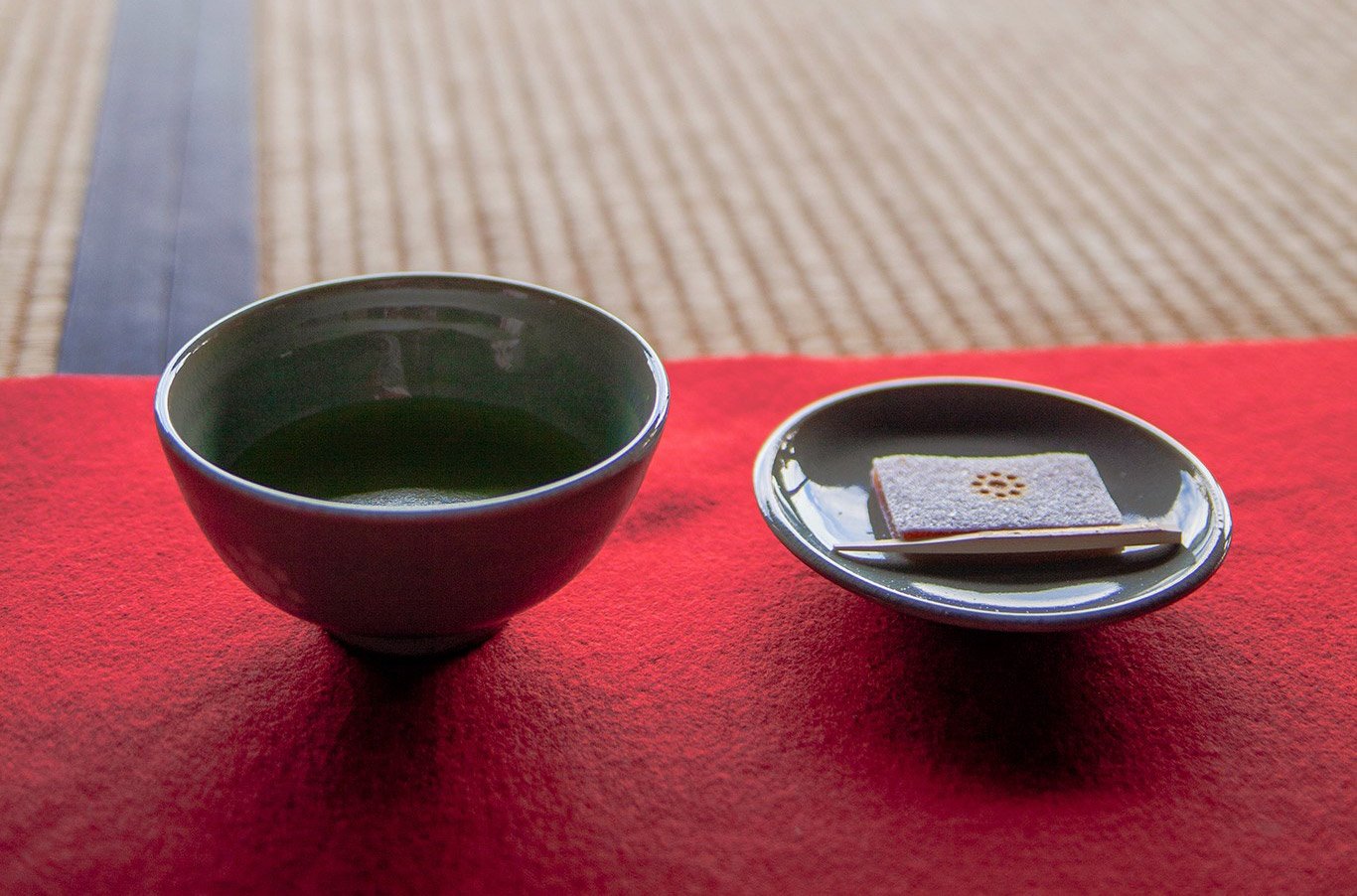
A beautiful tea house inside Suizenji Jojuen Garden, Kokindenju no Ma was built inside the Kyoto Imperial Palace during the Edo Period and moved to its current location in 1912. Enjoy matcha with sweets while sitting on tatami and contemplating the tsukiyama landscape. www.kobai.jp/kokin/
Kurokawa Onsen
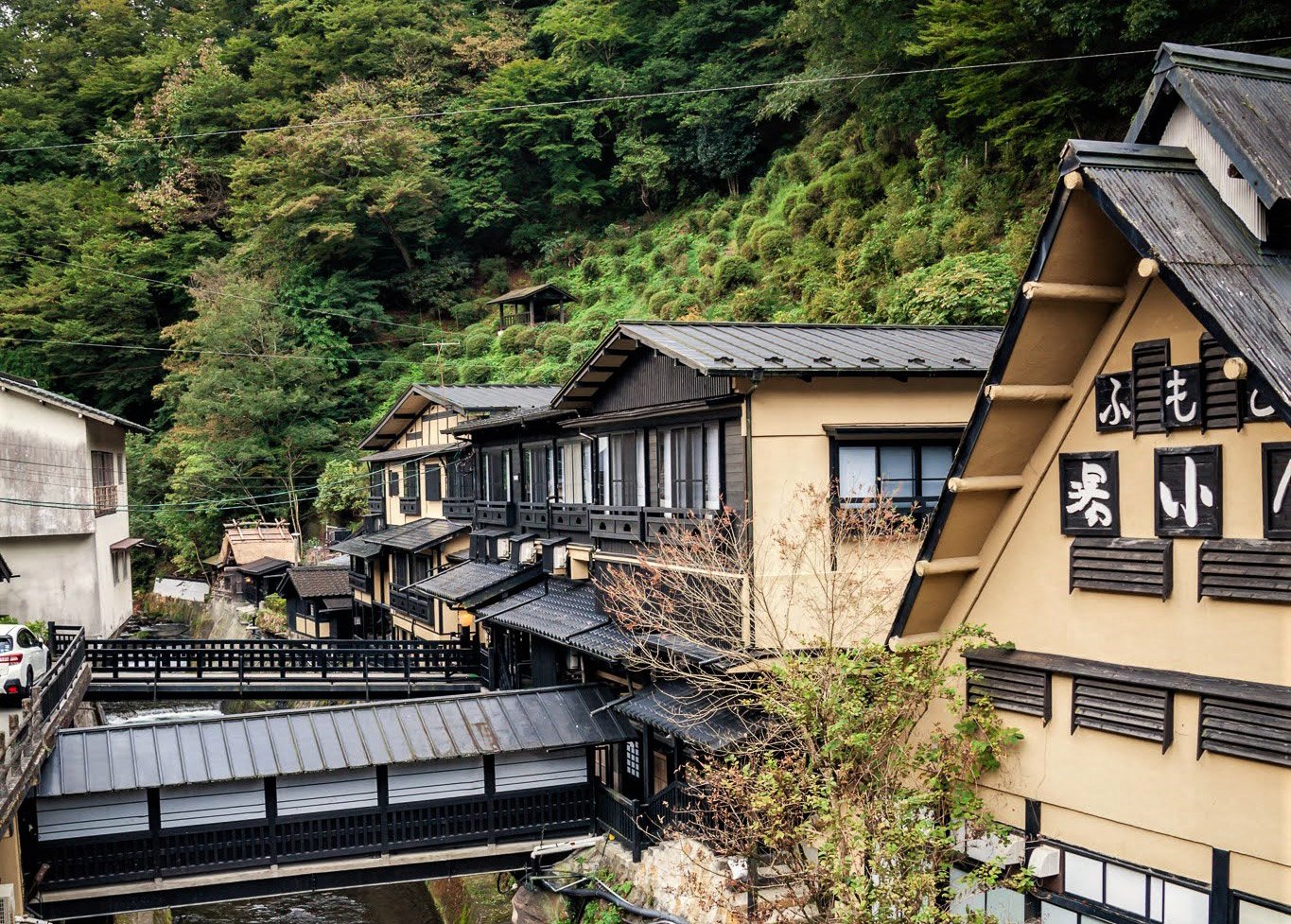
North of Mount Aso, this beautiful onsen village with a history spanning more than 300 years boasts some 30 outdoor onsen (hot spring) ryokan. Wooden architecture dominates the landscape in this small valley, transporting visitors to olden days surrounded by nature’s beauty. www.kurokawaonsen.or.jp/eng_new/
Kimono Experience
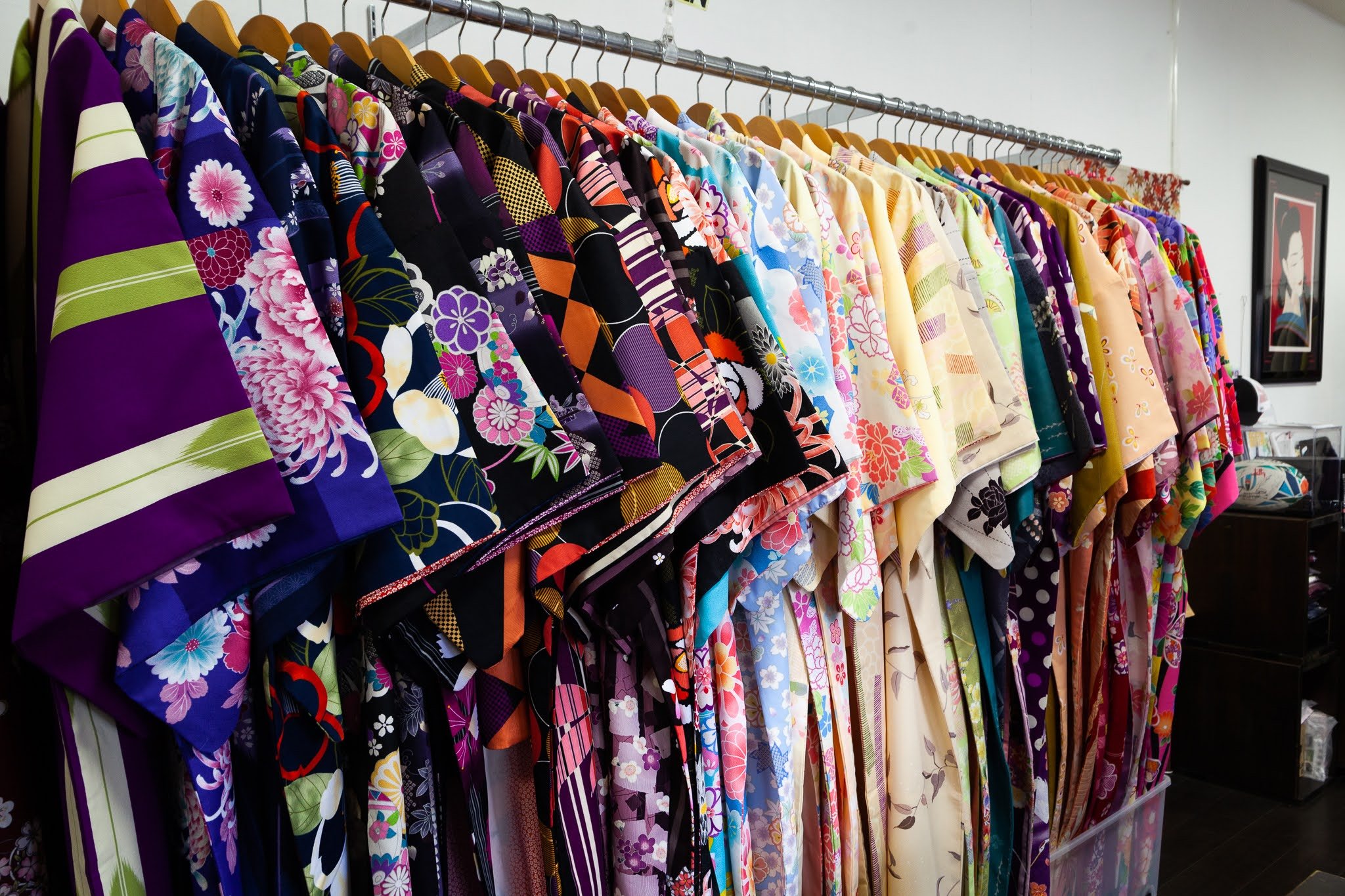
If you’d like to try a traditional Japanese kimono—or the more casual yukata, which is popular in summer—drop by Wa Collection Mito, a shop founded in 1967 and located next to Suizenji Jojuen Garden. With a selection numbering over 200, they have designs that appeal to everyone. https://wa-collection.jp
Mount Kishima Trekking
One of five peaks in the Mount Aso area, Mount Kishima offers trekking with an elevation difference of about 200 meters. It takes about two hours to traverse the trekking course, starting at the Aso Volcano Museum. From the top of the mountain, you can enjoy great views. www.aso-geopark.jp/kyoukai/event/events.shtml?no=9
Aso Kuju Cycle Tour
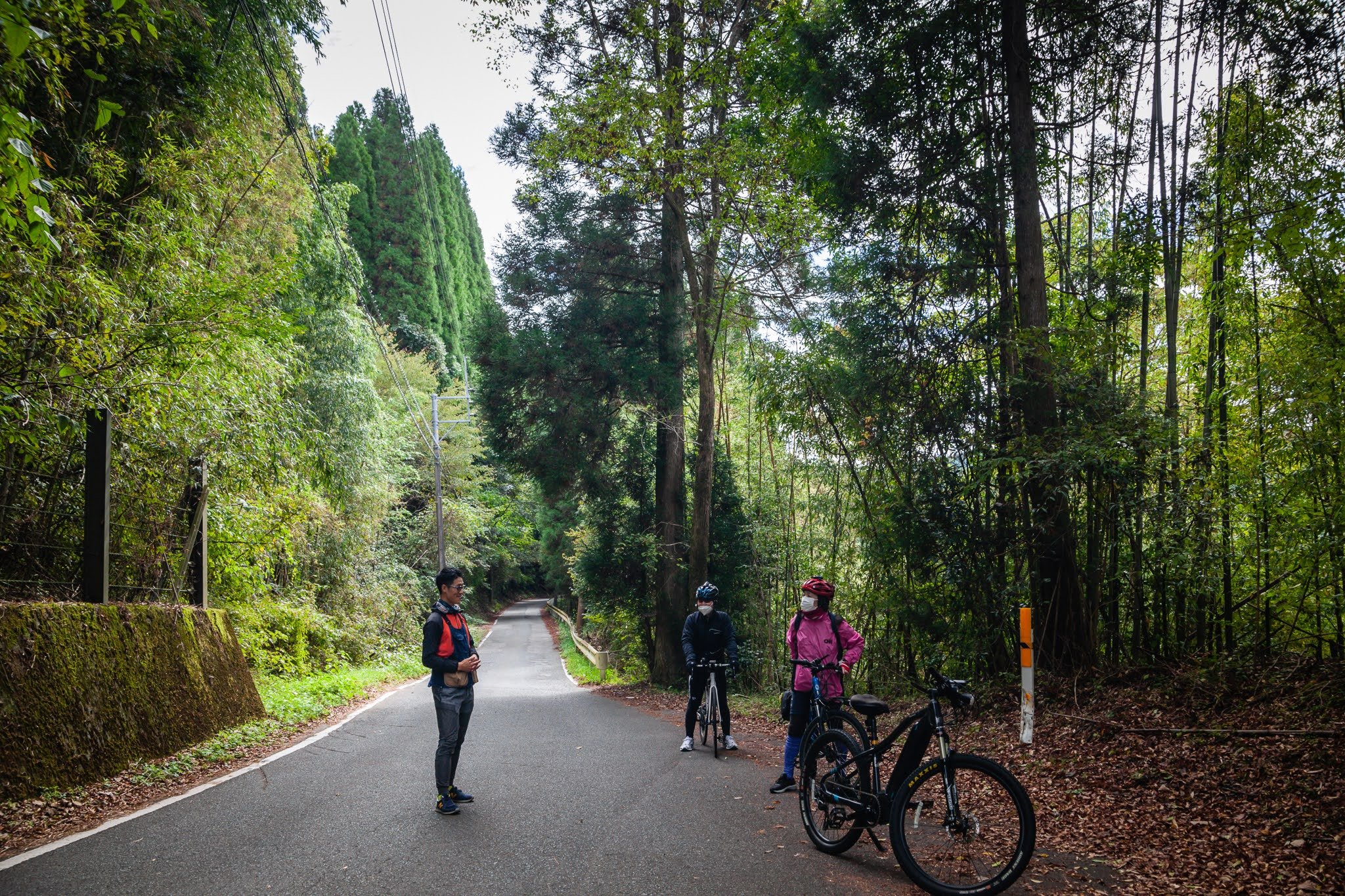
An excellent option for exploring the breathtaking landscapes and highlights of the countryside area surrounding Aso-Kuju National Park, Aso Kuju Cycle Tour offers many family-friendly options as well as those designed for different fitness levels. http://aso-cycletour.com


Iiyama Winter Wonderland
Nagano is well known as a destination for winter fun, thanks to its role as host of the 1998 Winter Olympics. As a result of that global prominence, a high number of visitors chart course for the beautiful, snowy landscape where those Winter Games were held. The area is home to many excellent ski resorts, such as Nozawa Onsen and Ikurao Kogen—conveniently located near Iiyama Station—where you can enjoy powder just two hours from Tokyo.
Enjoy a family vacation or workcation off the beaten path
Nagano is well known as a destination for winter fun, thanks to its role as host of the 1998 Winter Olympics. As a result of that global prominence, a high number of visitors chart course for the beautiful, snowy landscape where those Winter Games were held. The area is home to many excellent ski resorts, such as Nozawa Onsen and Ikurao Kogen—conveniently located near Iiyama Station—where you can enjoy powder just two hours from Tokyo.
Madarao Mountain Resort
Snowy fun for the whole family awaits at the largest of Iiyama’s resorts. At an altitude of 1,350 meters—just shy of the 1,382-meter peak of Mount Madarao—this resort boasts 29 courses accessible via 16 lifts. The Madarao Mountain Hotel, with its Japanese and Western-style accommodations, is a great base from which to venture into the snow. Ski lessons with English-speaking instructors, backcountry tours, and a play area with a wide sledding run where can frolic in the snow kids provide something for all skill levels. And for those looking to escape the city but still get remote work done in a relaxing and inspiring atmosphere, the Madarao Mountain Resort is a great choice for a workcation.
Togari Onsen Snow Resort
Nestled in the Sekita mountain range bordering Nagano and Niigata Prefectures, Togari Onsen Snow Resort is smaller and has fewer runs but offers something unique: Japan’s only snowbike park. If plunging down the slopes on a fat-tired mountain bike sounds like just the sort of exhilarating experience you need after so many months at home, this is the destination for you. Three distinct slopes, reserved exclusively for cyclists, offer options for riders of all abilities. There’s a simple slalom skills course with limited moguls, a technical course with narrow trails and groves, and an 800-meter downhill slope. For kids, there is also Snow Strider Park, where those not ready for a snowbike can ride a strider, a bicycle without pedals designed for children.





Nabekura Kogen Heights Mori-no-Ie
Away from the slopes you’ll find another enchanting experience on the Madarao Plateau, in Iiyama City. A collection of cottages nestled in the beautiful beech forest are available for rent and can accommodate groups of five to seven. With fully equipped kitchens, wood-burning stoves or space heaters, and Japanese and Western-style lodging, these cottages are ideal for a tranquil and safe getaway that puts you back in touch with nature. Snowshoe through the beautiful forest and along streams, or take a night hike in the snow and enjoy the moonlight and starry skies. Numerous pensions can also be found around Madarao. With private rooms and shared dining and bath facilities, most are family run and offer great hospitality and home-cooked meals.
Iiyama Kamakura Village
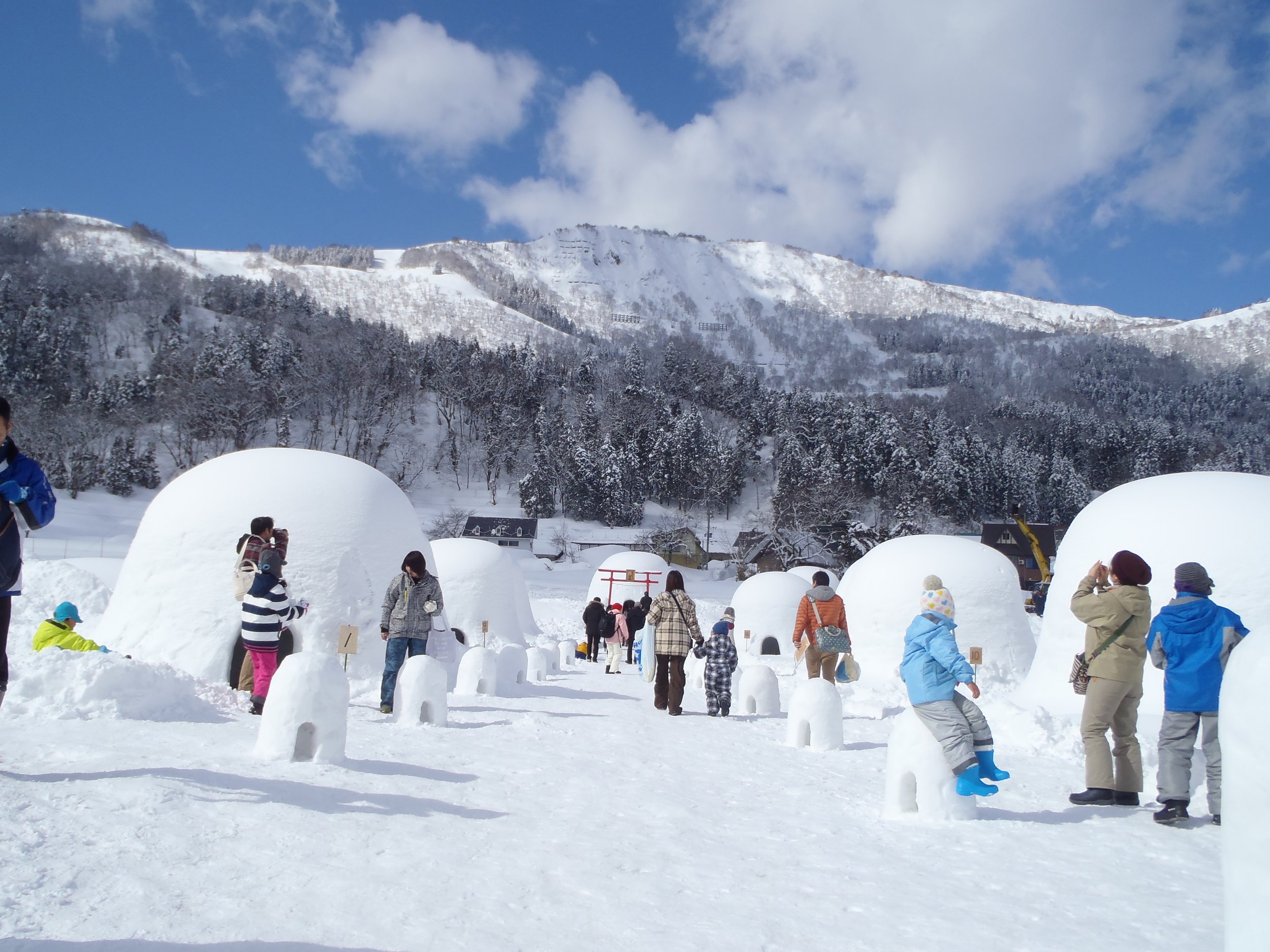
Another ethereal experience to be had is evening dining in a kamakura, a traditional domed hut made of snow. Each winter, from late January to late February, 20 of these huts are built to form the makeshift Iiyama Kamakura Village. Originally a place to worship the gods, the kamakura is today used as a place to savor nabe (hot pot), a Japanese dish of local vegetables, mushrooms, and pork that will warm you up as you relax in the snowy paradise.
During the day, you can enjoy activities such as sledding and riding a snowmobile.
Book Your Trip
Ready for a winter experience you won’t soon forget? Whether for a family vacation or a productive workcation, Iiyama Tabi-Tabi plans make arranging your trip simple. Several one- and two-night itineraries are available that include the activities described here. Just book your choice and let our friendly staff handle the rest. All you have to do is relax and enjoy a winter holiday.
Access
Take the Hakutaka on the Hokuriku Shinkansen from Tokyo Station to Iiyama Station. The journey takes about 110 minutes and costs about ¥8,250.


Added Disclosures
The journal entries used to record the transactions of a typical trading company seem basic and are usually taught in introductory accounting classes. But while simple, when coupled with financial management concepts such as reverse factoring, supply chain finance, or supplier finance arrangement, these entries may require additional disclosures for financial reporting purposes. In November, the International Accounting Standards Board (IASB) proposed additional disclosure requirements to enhance the transparency of supplier finance arrangements.
Proposed reporting rules eye supplier finance arrangements
The journal entries used to record the transactions of a typical trading company seem basic and are usually taught in introductory accounting classes. But while simple, when coupled with financial management concepts such as reverse factoring, supply chain finance, or supplier finance arrangement, these entries may require additional disclosures for financial reporting purposes. In November, the International Accounting Standards Board (IASB) proposed additional disclosure requirements to enhance the transparency of supplier finance arrangements.
The Transaction
A trading company generally purchases on account from its suppliers, and is invoiced after the receipt of goods. This poses no issues if the company is in good financial condition, but it can be a challenge if the company has liquidity concerns. When a company cannot pay the invoiced amount, as a rule the supplier will decline further transactions with the company or will impose stringent credit measures. This may disrupt the company’s supply chain. To avoid this and secure the supply chain, the company may enter into a supplier finance arrangement with a financial institution.
Under such an arrangement, the financial institution pays the supplier at a discounted rate and the company later reimburses the financial institution. This may sound like factoring, but it differs in that factoring is normally initiated by the supplier, who sells its accounts receivable. Here, reverse factoring is initiated by the buyer obtaining a loan to defray payables.
A supplier finance arrangement is beneficial for both supplier and buyer. The former is assured of payment and can collect the amount due earlier than the due date of the invoice, while the buyer benefits from an extended due date.
Accounting Concerns
But there are things to consider. On the supplier’s side, such an arrangement is like selling accounts receivable to a financial institution, only it is buyer initiated. In other words, like a factoring of receivables, this can be viewed as off-balance-sheet financing that allows a company to increase its cash without reporting a corresponding increase in liability or equity.
On the buyer’s side, a supplier finance arrangement adds another layer to the purchase-to-pay cycle. Instead of the usual buy and pay, it becomes buy, loan, and pay. The issue here is whether accounts payable must be converted into loans payable and disclosed in financial statements.
International Financial Reporting Standards 7 Financial Instruments: Disclosures (IFRS 7) requires an entity to disclose information that enables users of its financial statements to evaluate the nature and extent of risks arising from financial instruments to which the entity is exposed at the end of the reporting period.
International Accounting Standards 1 Presentation of Financial Statements (IAS 1) requires companies to distinguish financing from working capital purposes.
A company that is protecting its current ratio would like the payable, arising from the supplier finance arrangement, to be classified as loans payable instead of trades payable. This is because loans payable can be reported as non-current when they are to be settled more than 12 months after the reporting period. This cannot be done for trades payable, which are always reported as current liabilities even if they are due to be settled more than 12 months after the reporting period. Thus, a disclosure requirement for supplier finance arrangements is necessary to understand the transaction and standardize the financial reporting requirements.
As IASB Chair Andreas Barckow explained: “Investors require more detailed disclosures about companies’ supply chain finance arrangements, as these funding practices are becoming increasingly common. The proposed requirements are designed to give investors the information they need to assess the effects of such finance arrangements on a company’s liabilities and cash flows.”
Proposed Solution
The IASB plans to amend IFRS 7 and IAS 7 Statement of Cash Flows, to require buyer companies to disclose information that enables investors to assess the effects of a company’s supplier finance arrangements on its liabilities and cash flows.
The proposed rule requires an entity to disclose, at the beginning and end of the reporting period, the line items in the statement of financial position in which the entity presents financial liabilities that are part of a supplier finance arrangement.
The proposed financial reporting requirements for supplier finance arrangements are still on the IASB’s exposure draft and are open for comment until March 28, 2022.
For more information, please contact Grant Thornton Japan at info@jp.gt.com or visit www.grantthornton.jp/en

Of Sake and Scythe Weasels
On November 4, 2021, an evening of culture, flavors, and learning took place at Kojima Sohonten Co., Ltd., Japan’s 13th-oldest sake brewery, established in 1597. Located in Yonezawa, Yamagata Prefecture, Kojima Sohonten is best known for its award-winning Toko sake. When you’re inside the brewery, the dedication and craftsmanship of more than 400 years of brewing seem to infuse the darkened wood of the huge barrels. On this day, however, amid the ongoing travel restrictions, it was innovation—along with multiple cameras—that helped bring the historical setting to travel writers on the east coast of the United States.
A surprising view of Tohoku with Alex Kerr and John Gauntner
Listen to this story:
On November 4, an evening of culture, flavors, and learning took place at Kojima Sohonten Co., Ltd., Japan’s 13th-oldest sake brewery, established in 1597. Located in Yonezawa, Yamagata Prefecture, Kojima Sohonten is best known for its award-winning Toko sake. When you’re inside the brewery, the dedication and craftsmanship of more than 400 years of brewing seem to infuse the darkened wood of the huge barrels. On this day, however, amid the ongoing travel restrictions, it was innovation—along with multiple cameras—that helped bring the historical setting to travel writers on the east coast of the United States.
Jarman International KK proposed the special webinar as a way to satisfy the wanderlust of frustrated Japan lovers overseas. We used our Covid-induced thinking time to bring together sake expert John Gauntner and author Alex Kerr to speak about what makes the Tohoku region so culturally distinct. The event was hosted by the Japan National Tourism Organization’s New York office and co-produced with JR East Marketing & Communications, Inc., known as JEKI.
Flavorful Culture
What better way to connect with viewers than to send delicious sake to each, along with recipes which perfectly match the various brews? Perhaps having Gauntner and Kerr intertwine the story of Tohoku with an engaging discussion about sake flavor profiles and bouquets?
The evening proved to be the perfect appetizer for the travel boom we expect will hit next spring. Gauntner taught participants how to properly heat and taste sake, suggested pairings for various cuisines, and vividly showed how the flavor profile of each bottle is deeply connected to the region, its rice, and the craftsmanship.
Lost Japan author Kerr brought to life the mystical side of Tohoku. Do you know what bait to use to catch a kappa (river sprite) in Iwate? Have you heard the chilling tale of the kamaitachi (scythe weasel)?
Travel Preview
Tohoku is also filled with beautiful hamlets, forgotten by time, and is home to some of the few remaining views of old Japan, such as the now-rare red pines and the last surviving garden of the Heian Period (794–1185). As people around the world connect with Tohoku through innovative online events, we expect more travelers to follow the lead of Dr. Edwin O. Reischauer, former US Ambassador to Japan, and venture to the “other side of the mountain.” Tohoku is the cradle of Japanese civilization, and is sure to wow any visitor with colorful festivals, thatched villages, folklore, and, of course, plenty of wonderful sake.

CPA and 4IR
The Fourth Industrial Revolution is bringing great opportunities and challenges to many business sectors, including accounting and auditing. This requires employees to be more knowledgeable about their area of expertise and proficient in languages, as well as to develop soft skills. Here are some key things that certified public accountants (CPAs) need to know to thrive in the years to come.
What accountants need to know to thrive during the Fourth Industrial Revolution
The term Fourth Industrial Revolution (4IR) was first used in English in 2016 by Klaus Schwab, the founder of the World Economic Forum, inspired by the German “Industrie 4.0,” coined in 2011 at Hannover Messe by Professor Wolfgang Wahlster, director and CEO of the German Research Center for Artificial Intelligence (AI). In his book of the same name, Schwab describes how the 4IR is being ushered in by shifts and trends. These include AI, Big Data, the Internet of Things, blockchain, and machine learning—all of which allow us to automate and gain greater insight from many traditional processes.
The 4IR is bringing great opportunities and challenges to many business sectors, including accounting and auditing. This requires employees to be more knowledgeable about their area of expertise and proficient in languages, as well as to develop soft skills. Here are some key things that certified public accountants (CPAs) need to know to thrive in the years to come.
How is 4IR changing accounting and auditing?
Instead of manually dealing with traditional bookkeeping and auditing tasks, CPAs are learning to use new software and technologies. The benefits are numerous and could improve relationships with clients by:
- Reducing repetitive tasks, leaving more time for other work and interaction with clients
- Allowing files to be accessed, edited, and controlled from anywhere via cloud-based systems
- Providing greater ease, speed, and accuracy when managing client data
- Greatly enhancing security and compliance
- Equipping CPAs to answer client questions, provide feedback, or give advice instantly
- Bringing greater transparency to a client’s financial insights
How might the professions change?
Accountants may leave bookkeeping and stewardship to become strategic business partners. As automation increases, CPAs will need the ability to analyze, interpret, and use the output generated by these technologies to make strategic and operational decisions.
Auditors won’t be left behind in the 4IR. Instead, technology will not only assist in improving the quality of audit performance and data analysis, but also in giving clients better value-added feedback and superior recommendations.
How can CPAs adapt to the change?
1. Keep learning
Rapid changes in accounting and auditing practices, as well as in technology, require that individuals continuously learn. As a result, they can achieve their career goals, contribute to the organization, and provide value to clients.
As an international auditing firm, Grant Thornton is taking the lead in utilizing new technology to enhance audit quality and efficiency. Grant Thornton also annually provides training programs to help employees update their knowledge of tax regulations, financial reporting standards, auditing best practices, relevant laws and regulations, and technology.
In my opinion, the 4IR will bring more opportunities for accountants and auditors with international qualifications. Certificates such as those from the Association of Chartered Certified Accountants, CPA Australia, and the American Institute of Certified Public Accountants allow accountants and auditors to maximize their abilities and improve the competitiveness of human resources in the field of accounting and auditing.
2. Think radically
As professionals, we need to be open to profound changes. Research shows that humans and computers working together produce better results than computers alone. Moreover, we need to think about how we are going to take advantage of technology to maximize traits such as skepticism, leadership, teamwork, personal relations, and creativity that are beneficial to auditing and accounting careers.
3. Be adaptable
To remain relevant in an ever-evolving digital world, we must embrace these changes. Therefore, adaptability and agility are considered the most important soft skills for accountants and auditors. These skills play a vital role in ensuring that accountants and auditors can adapt to a changing working environment and to the challenges emerging from evolving business models.
To become a future-proof professional, we need to be flexible and embrace innovation.
For more information, please contact Grant Thornton Japan at info@jp.gt.com or visit www.grantthornton.jp/en

It’s a New World for JCT
Beginning in October 2023, major changes to the laws governing Japan’s consumption tax system will likely impact a wide variety of businesses. Consumers need not worry—there is no rate hike included in these changes—but companies doing business in or with Japan will have more to consider. Companies will have to register, pay any output JCT collected to the tax authorities, and issue a qualified invoice (with certain required items stated correctly) in order for their customers to claim input JCT credits on their purchases.
How will changes to Japan’s consumption tax rules affect your business?
Presented in partnership with PwC
Beginning in October 2023, major changes to the laws governing Japan’s consumption tax system will likely impact a wide variety of businesses. Consumers need not worry—there is no rate hike included in these changes—but companies doing business in or with Japan will have more to consider.
Japanese consumption tax (JCT) is Japan’s version of a value-added tax (VAT) or sales tax. The current rate of 10 percent (up from eight percent as of October 2019) is generally applied to goods and services provided in Japan. There are some major differences between JCT and other VAT systems around the world, however, particularly concerning a company’s ability to claim input JCT credits on purchases or expenses.
In a nutshell, the current system:
- Allows purchasers to claim an input JCT credit even if the credit relates to goods or services from companies not registered for JCT purposes
- Permits companies, not registered for JCT purposes, technically not to be required to pay the output JCT they collect to the tax authorities
- Has no strict invoicing requirements, and businesses can rely on their accounting records in some circumstances
In 2023, all the above will change. Companies will have to register, pay any output JCT collected to the tax authorities, and issue a qualified invoice (with certain required items stated correctly) in order for their customers to claim input JCT credits on their purchases.
Real-world Impact
What does this mean for companies doing business in Japan? First, it is important to note that these changes will impact not only businesses with a physical presence in Japan but also those providing certain digital services to Japanese customers. (In some cases, digital services may be taxable for JCT purposes in Japan, even if the provider is located overseas.)
While at a high level many of the changes may be operational in nature, there are some more nuanced impacts that should be considered. As a first step, companies should begin to think about whether they are going to apply for the new registration.
While the application itself is not overly complex, the decision to register may be a difficult one for those businesses that are not otherwise obliged to remit the output JCT they collect to the tax authorities.
If businesses choose not to register, they will need to consider the resulting impact on their relationship with customers, who will lose the ability to claim an input JCT credit.
Next, companies may need to reexamine certain administrative processes to ensure that they can accommodate the changes. The new rules will bring additional bookkeeping and record-keeping requirements, so companies should make sure their enterprise resource planning systems are set up to handle them. The needs may include alignment of accounting systems with invoicing systems, alteration of electronic data interchange systems, and more. This may also be a good time for companies to consider whether their systems and processes are compliant with Japanese e-storage rules if accounting records are being maintained in soft, rather than hard, copy.
More Things to Consider
Apart from the need for registration and to make changes to the content of a qualified invoice, complying with the new invoicing system is likely to be easier for sellers than purchasers. More changes will be required on the purchase/expense side, as receiving and maintaining appropriate invoices will be mandatory to claim input JCT credits.
Under the new system, companies will need to reconsider the adequacy of their internal procedures—including those for employee expense reimbursements—as the system will require invoices to be maintained in cases where there was no such requirement previously.
In addition, businesses will also have to check the invoices actually received from vendors, registered or non-registered, to confirm all necessary content is included, e.g., the vendor’s registration number. This review process may already be a regular procedure in other VAT jurisdictions, but it is not currently so in Japan.
Further, the legal changes may impact the preparation of JCT returns, as the new system will require some decision-making around how the final JCT liability will be calculated.
While the qualified invoice system itself will go live in October 2023, the tax authorities began accepting applications for registration by vendors on October 1 of this year. As the tax authorities will also begin to publish information about registered companies on a dedicated website, the expectation is that many will opt for this early registration. For companies that wish to be compliant with the new system by October 2023, the application should be submitted by the end of March 2023 at the latest.
The new rules will have a pervasive influence over operations and systems. Given that businesses are likely to need professional support to prepare for all the changes, and with the application window for vendor registration having opened on October 1, now would be a good time to begin preparation.


Be on Time
How often do we hear people say, “Sorry for being late”? How about, “I’m sorry I’m late, the traffic was so bad”? Does this sound like us? Many studies have shown why some people just can’t get somewhere on time. Several causes have been identified, but there is one common trait running through the behavior of chronically late individuals that may be the universal reason for their perpetual tardiness. Do we need to be on time for our appointments and meetings? Have we given thought to why punctuality is important?
Why punctuality matters and how to ensure it
How often do we hear people say, “Sorry for being late”? How about, “I’m sorry I’m late, the traffic was so bad”? Does this sound like us? Many studies have shown why some people just can’t get somewhere on time. Several causes have been identified, but there is one common trait running through the behavior of chronically late individuals that may be the universal reason for their perpetual tardiness.
Do we need to be on time for our appointments and meetings? Have we given thought to why punctuality is important?
Nick Saban, head football coach of the University of Alabama Crimson Tide, is renowned for teaching teamwork and responsibility. He says, “Be on time because it shows we care.” His teams’ success demonstrates why it matters.
Being on time shows others that we:
- Respect their time
- Are reliable and trustworthy
When we are punctual, we show others that we respect them and are thinking not only of ourselves but also their lives, roles, and responsibilities. We’re actively considering how our actions will affect them.
Arriving on schedule should not be a one-time event. To set a strong foundation of trust—and to make the most of our personal and professional relationships—we should always arrive on time.
As a secondee to the Tokyo office of Grant Thornton Japan for more than a year—and having worked for more than six years as an audit manager handling many Japanese clients in Indonesia—I am well aware of how important punctuality is in Japan. These days, more Japanese people have become relaxed about this, but being on time remains important in Japanese society, where shinrai (trust) is key.
How to Be Punctual
Here are three ways to break a pattern of tardiness:
1. Set alarms
This might not be an easy thing to do if we are not organized, but the more we use alarms to get things done—and stick to the process—the more reliable this approach will become.
2. Write it down
Some of us need to physically record things to remember them. Note conversations and plans on your smartphone calendar and stick to them.
3. Anticipate delays
Think ahead and plan for the unexpected:
- Check the traffic and weather before leaving
- Make sure you have enough gas the night before
- Ensure that your commuter pass has adequate fare
- Have breakfast at home instead of along the way
- Leave earlier to avoid crowded roads or trains
- Always have a Plan B
- For online meetings, make sure that you are in front of the computer at least 10 minutes early
Sometimes, delays are unavoidable. What should you do when you are late?
1. Apologize
The first and most crucial thing to do is to apologize to your boss and colleagues. When we can’t arrive on time, someone else may have to cover our work. Our absence might have caused a huge problem for our colleagues, therefore the most important thing is to show them respect and apologize.
2. Explain
It is considered good manners in Japan to explain why we are late for work. But we need to be careful of what reason we give and avoid those which are too personal.
3. Update
While still in transit, it is important to state exactly what time we expect to arrive, as this will affect the efficiency of the workplace. Giving our superiors enough information is also a way to show our sincerity and that we care about the work. Upon arrival at the office, we should apologize directly to our superiors and again explain the reason for our tardiness. It is also advisable to apologize once again prior to leaving to show that we care about having inconvenienced others. By doing so, we can leave a good impression and build a better relationship with our superiors.
For more information, please contact Grant Thornton Japan at info@jp.gt.com or visit www.grantthornton.jp/en

Investing in Kochi Prefecture
For most, investing brings to mind index funds, real estate investment trusts, or property. But what about investing in the growth of your local community via beer, tourism, or fitness? In Kochi, on the island of Shikoku, three families are looking beyond plain profit as they seek to revitalize and secure the future of their communities in unexpected ways.
How three expat families are making a difference in rural Japan
Listen to this story:
For most, investing brings to mind index funds, real estate investment trusts, or property. But what about investing in the growth of your local community via beer, tourism, or fitness? In Kochi, on the island of Shikoku, three families are looking beyond plain profit as they seek to revitalize and secure the future of their communities in unexpected ways.
Fitness Fans
Violet and Carlo Pacileo decided to move to Otoyo to help Violet’s mother restore the family’s land. But the enterprising duo decided they could do more.
“Aging populations, businesses dying out, houses being abandoned … these are issues all of Japan’s rural communities are facing. But seeing the impact firsthand in Otoyo was heartbreaking,” Violet explained.
Having spent her career analyzing businesses and investment potential, Violet quickly understood that the community needed an injection of private capital. “After years working for large financial institutions, this is my chance to give back to the community.”
The Pacileos recently received approval to start building a CrossFit box, in other words a barebones gym. While the idea is unconventional, they have done their research. “Shikoku doesn’t have a box yet and the weightlifting association in Kochi told us there are only two facilities where they can drop weights—and both are in public high schools,” Violet said. “I knew then that there would be a market, and that we had to get in while the fitness industry here is still in its infancy.” She expects their new business not only to bring fitness-loving visitors to Otoyo, but also to help improve health issues in the community.
Beer Brewers
Former California residents Kenneth and Masako Mukai moved to Niyodogawa-cho to start a brewery, which opened in November 2020. Although this may seem an odd thing to do in a village of 5,000 people, the Blue Brew Taproom is already a hit.
Kenneth explained that the brewery is having multiple positive effects on the local economy. “Our local post office gets more business from us shipping our products, and the local government receives tax funds from people buying our beer through the furusato nozei program. Sales at restaurants and hotels around us have gotten a boost, as our customers often stay nearby.”
The Mukais buy locally produced items such as tea, ginger, and Satsuma-imo (sweet potatoes), which they use as flavoring, and collaborate with six farmers to grow hops, creating a new market in the community.
They have many supporters among the owners of established businesses in the area, and their positive example has also brought about changes in the village government’s perception of investment from outside. “The chiiki-okoshi kyoryoku-tai program used to be closed to non-Japanese applicants, but, in April, the first American member was accepted and moved here with his family!” Kenneth said.
Hospitality Queen and Organic Farmer
Australian Rosie Moloney and her husband, Tsuyoshi, live in the 1,481-person village of Mihara. They know well the importance of leading by example and engaging with the community.
“When I first presented my plan to start a guesthouse, many locals asked, ‘Who would want to come here?!’” Rosie explained. “People can’t see the value of what they have, and it can take someone from outside to open their eyes and show them the opportunities outside the infamous box.”
Clearly, her guests agree. Rosie now runs two highly rated guesthouses in the Shimanto area, while also engaging in permaculture and helping with Tsuyoshi’s organic rice fields.
“I see such beauty, value, and potential here,” she said. “I started guesthouses to encourage the tourism industry and create new job opportunities.”
Many of Rosie’s guests—Japanese and those from abroad—stay for several days and contribute to the village economy through visits to restaurants and shops, as well as by booking outdoor activities. According to her, “Guests often say that the fondest memories of their trip are [those of] interacting with locals.”
Learn more about Kochi: visitkochijapan.com/en

Covid-related Financial Relief
As relief from economic and financial distress caused by the coronavirus pandemic, you may have received subsidies or grants from the national and/or local government. You may be wondering if you must declare this assistance on your income tax return. Here is a summary of tax treatment and revenue recognition timing published by the National Tax Agency of Japan.
What tax liabilities come with coronavirus help?
As relief from economic and financial distress caused by the coronavirus pandemic, you may have received subsidies or grants from the national and/or local government. You may be wondering if you must declare this assistance on your income tax return. Here is a summary of tax treatment and revenue recognition timing published by the National Tax Agency of Japan.
Non-Taxable
Payments received from the support fund set up in response to the new coronavirus (article 7 of the temporary special provisions of employment insurance)
Funds received from the allowance set up to support leave taken in response to the new coronavirus (article 7 of the temporary special provisions of the employment insurance law)
Special Fixed Amount Cash Payout (tentative name) of ¥100,000 per household member (article 4, paragraph 1 of the special measures concerning taxation regarding the coronavirus)
Special Cash Payout for Families with Children in Year 2020 (article 4, paragraph 2 of the act regarding coronavirus-related special taxation measures)
Emergency handouts to help support students (Article 9, Paragraph 1, Item 15 of the Income Tax Act
Temporary Special Cash Payout for Low Income, Single-Parent Households (Article 9, Paragraph 1, Item 17 of the Income Tax Act)
Provider Relief Fund related to the coronavirus (Article 9, Paragraph 1, Item 17 of the Income Tax Act)
Discount coupons provided as Support for Users of Company-Sponsored Babysitters (Article 9, Paragraph 1, Item 17 of the Income Tax Act)
Subsidy under the Babysitter Support Project of Tokyo (Article 9, Paragraph 1, Item 17 of the Income Tax Act)
Taxable
Treated as business revenue. Based on:
Payment decisions
- Covid-19 subsidies (for those who are self-employed and sole proprietors)
- Tokyo Metropolis Infection Spread Prevention Support Fund
Payment decision or expense incurment regarding:
- Employment adjustment subsidies
- Elementary school closure support
- Rent support
- Sustaining subsidies for small businesses
- Business continuity subsidies for agriculture, forestry, and fishing enterprises
- Subsidies for medical institutions and pharmacies helping to prevent coronavirus spread
Expenses incurred in connection with:
- Relief provided under the coronavirus-related supplementary aid to offset interest payments
Treated as Occasional Income
Occasional income (revenue–expenses, maximum ¥500,000 special deduction). Based on revenue recognition timing.
Covid-19 subsidies (for employment income earners)
- Payment decision
Go To Travel Campaign
- At end of travel or on use of coupon tickets
Go To Eat Campaign
- On use of meal tickets
Go To Event Campaign
- On use of event tickets
Treated as Miscellaneous Income
Based on revenue recognition timing.
Covid-19 subsidy (for miscellaneous income earners)
- Payment decision
For more information, please contact Grant Thornton Japan at info@jp.gt.com or visit www.grantthornton.jp/en