
Embracing AI in Learning
Seisen International School is preparing students for tomorrow’s business world with a thoughtful approach to artificial intelligence.
Seisen International School is preparing students for tomorrow’s business world with a thoughtful approach to artificial intelligence.
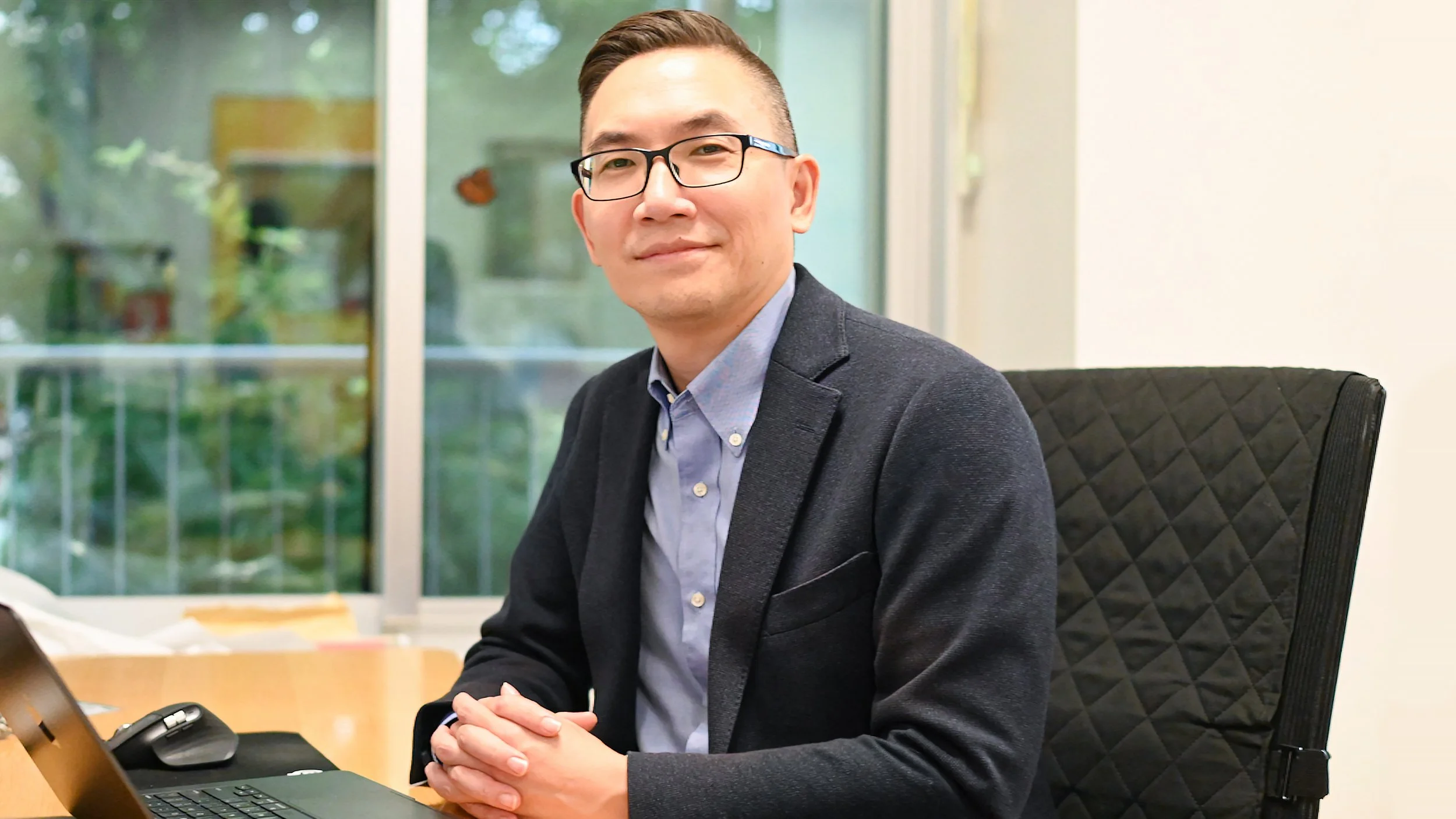
Seisen International School High School Principal Alex Lee
Artificial intelligence (AI) has opened up conversations among educators about what the true goal of learning is and the thinking behind it. Seisen International School’s high school principal Alex Lee sees AI as a powerful tool that complements the International Baccalaureate (IB) curriculum’s inquiry-based learning. “A structured approach to AI use in the classroom can empower students to explore alternative perspectives and deepen their inquiries while maintaining ethical accountability, an essential mindset for tomorrow’s workplace,” said Lee.
Lee talked to The ACCJ Journal about how shifting the narrative from finding answers to asking the right questions is preparing students for complex, real-world entrepreneurial leadership.
What do you see as the biggest immediate impact that AI is having on the classroom?
We are seeing a significant shift in focus toward learning as a process rather than the end product. As polished-looking work can now be done within minutes, this also means that submitted work in itself tells a teacher less about a student than it once did.
One of our learning principles as an international school states that technology should enhance learning, and while it may seem obvious to some, it sets a high bar. In practice, it means we do not adopt tools simply to try them out. We first ask what the learning intention of a task or experience is. This helps us assess whether implementing tools genuinely serves that intention. The discipline of asking this question for every task and every tool is the most significant change AI has brought to our classrooms.
Another area where AI helps is time management. Used well, AI tools can potentially reduce teachers’ workload as they plan how to meet the needs of a variety of learners, giving them back time to focus on the human-centric part of their jobs, which is to truly know students.
In what ways is Seisen leveraging AI to enhance the IB curriculum?
As an IB Continuum school, inquiry is already present in how we approach learning, and the IB’s own position has shaped ours. The IB’s stance is that it will not ban AI tools, because they will become part of everyday life and students must be taught to use them ethically and transparently. AI may support a student’s thinking, but it must never replace it.
In practice, every learning experience in our classrooms begins with an explicit learning intention, and teachers define the degree to which AI use is allowed. Some situations call for zero AI use, because the challenge is the point. In others, students may use it to generate counterarguments, test research questions, or examine a flawed answer generated by AI, which, in a theory of knowledge class, becomes a lesson in how knowledge claims are made.
Deliberate capacity building sits underneath it all. Our faculty has undergone extensive training from specialists in AI for schools, and their learning has informed our Generative AI Ethical Use Policy and professional use guidelines that apply schoolwide.
Many believe using AI erodes our ability to think on our own. Can AI in learning allow students to explore alternative perspectives and deepen their inquiries?
We believe that AI should add to a student’s intellectual work and not subtract from it. Learning depends on productive struggle, and when AI is used to remove that struggle, the learning is reduced. This is an important distinction to make between offloading thinking and extending it.
Our teachers guide this in a few ways. They are explicit about how much AI a task requires and are familiar enough with each student’s own voice to recognize its absence. They design learning experiences in which an AI response is material to be examined rather than an answer to be submitted.
When designed well, AI tools can bring forward perspectives that are otherwise hard to reach. In all cases, students are expected to approach AI output with skepticism and a critical eye, to check for accuracy, to identify missing perspectives, and to supplement the output with additional research.
As an educator, how do you see efforts around the world to restrict young people’s access to AI and the internet?
Many of these concerns are well founded and should be taken seriously. Not every product out there is designed for young minds, especially when there is a lack of supervision and structured access. For an educator, age-appropriate limits, data privacy protections, and proper training are reasonable expectations.
There is also a difference between safeguards and avoidance. A restriction may protect a child in a safe environment now, but it can also leave them unprepared for the years ahead, when these tools will be as common as calculators and translation software.
The complex capability that students will need is discernment, and that is only built through guided practice in a safe environment such as a school, where making mistakes is part of the learning opportunity. Students will still encounter AI out in the world, so if they do not practice and learn to use it thoughtfully at school, they will need to face it alone and without guidance, which will be much harder.
Do you believe familiarity and comfort with AI can actually enhance critical thinking skills?
It can, but only when that familiarity is built deliberately rather than casually absorbed. For us as a school, AI literacy means more than knowing how to prompt a tool. It includes understanding how these systems work, identifying their strengths and failures, recognizing bias in the output, and judging when a task calls for AI involvement. As with any valuable skill, we see this as a learning progression, developed over years, and consider how AI directly relates to what our graduates will need beyond our classrooms.
Critical thinking sits at the center of that progression as something we all continue to develop throughout our lives, constantly challenging our own thoughts and biases, not just the AI’s output. Used ethically and responsibly, AI can deepen perspectives. As a school that values intercultural competence, examining a question or problem from multiple angles is exactly the kind of thinking we encourage in our students.
I believe that as our graduates carry this intention into the business world, they will be well equipped and at an advantage, confident that they have agency and ownership to lead their own thinking.
Is there anything else parents should know about AI in education and in Seisen’s programs?
Firstly, education is in a period of genuine debate about AI, and this debate is healthy. Thoughtful leaders, organizations such as the IB, and experienced educators are constantly working out what good practice looks like, and their thinking guides ours. And while there is no perfect path to approaching AI in learning, we continue to act deliberately, be objective about its impact, and grow and adjust—just as we encourage our students to do.
Secondly, none of this displaces or replaces the role of an educator. Seisen International School’s mission involves the formation of the whole person, and that happens through building relationships. A tool can produce a response, but it cannot notice students’ silence, judge when to challenge them, or be genuinely invested in who they become. Our position is simple: use the technology with structure, ethics, and accountability, protect the productive struggle at the heart of learning, and keep the human at the center of everything we do.

For more information, to arrange a campus visit, or to enroll, please visit seisen.com.