

Gateway to Japan
As arrivals boom, can the country’s hospitality industry keep pace through a new era of omotenashi? That was the question at the center of an ACCJ event hosted on October 8, featuring Tokyo Governor Yuriko Koike.
As arrivals boom, can the country’s hospitality industry keep pace through a new era of omotenashi?
Photos Miki Kawaguchi/LIFE.14
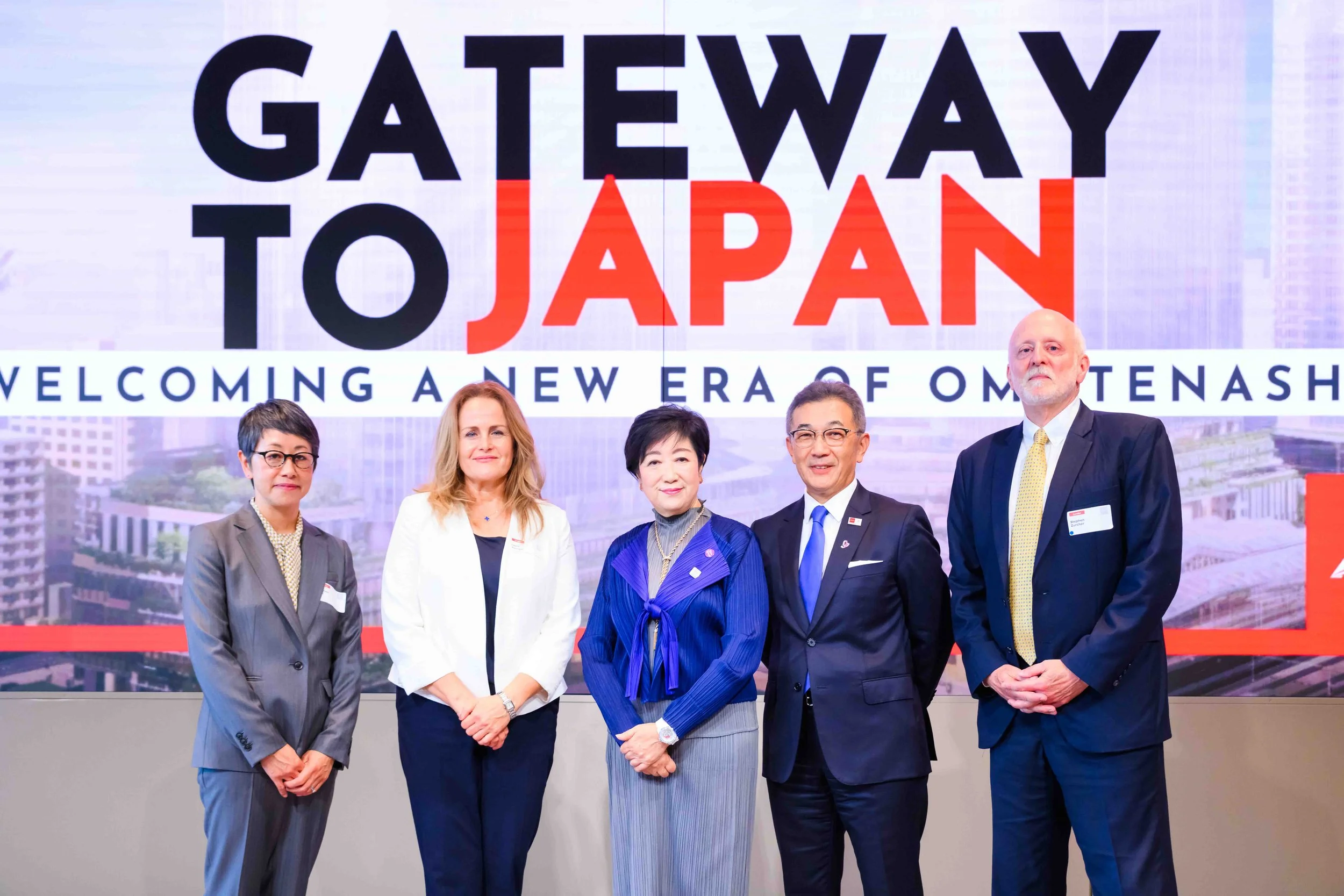
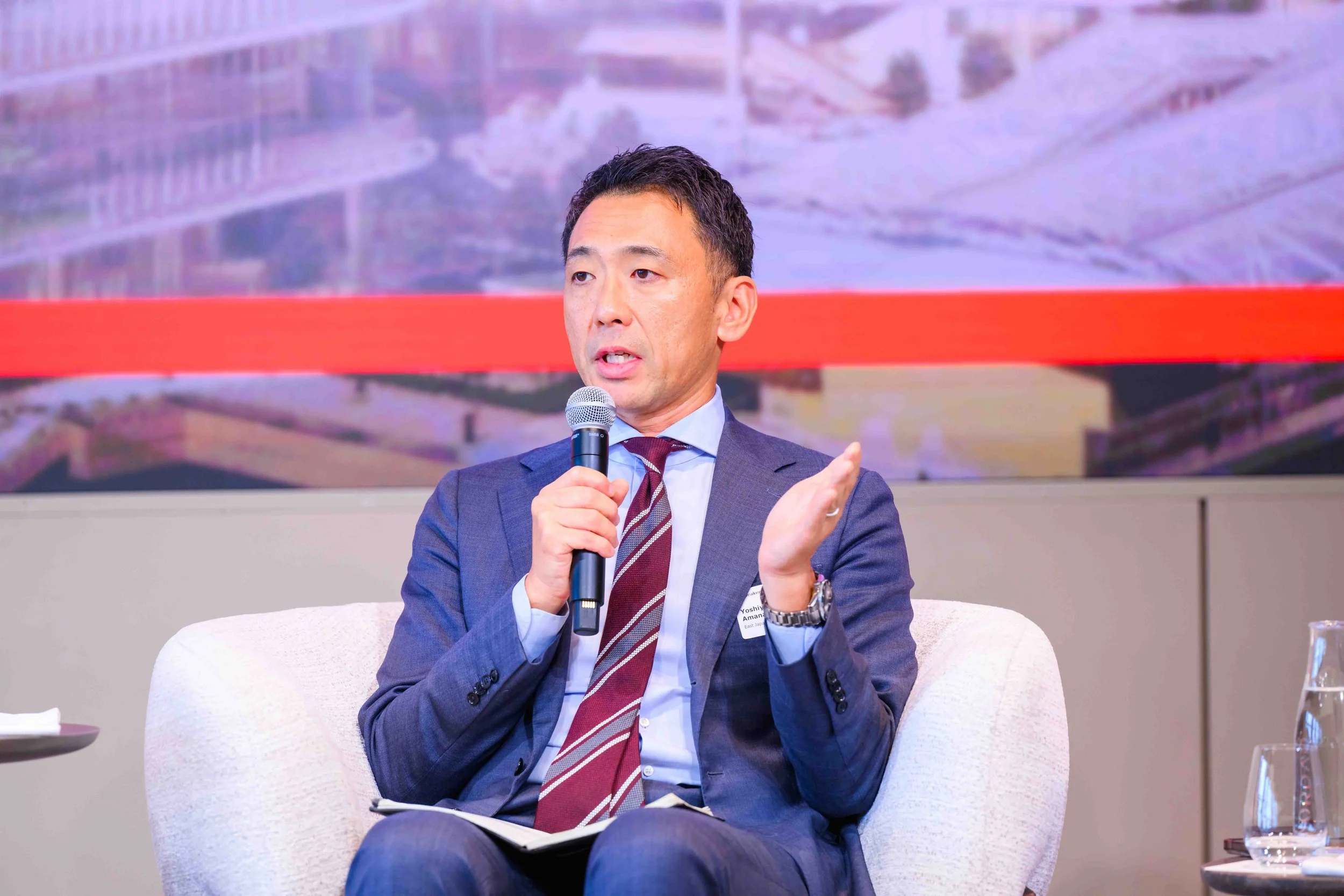
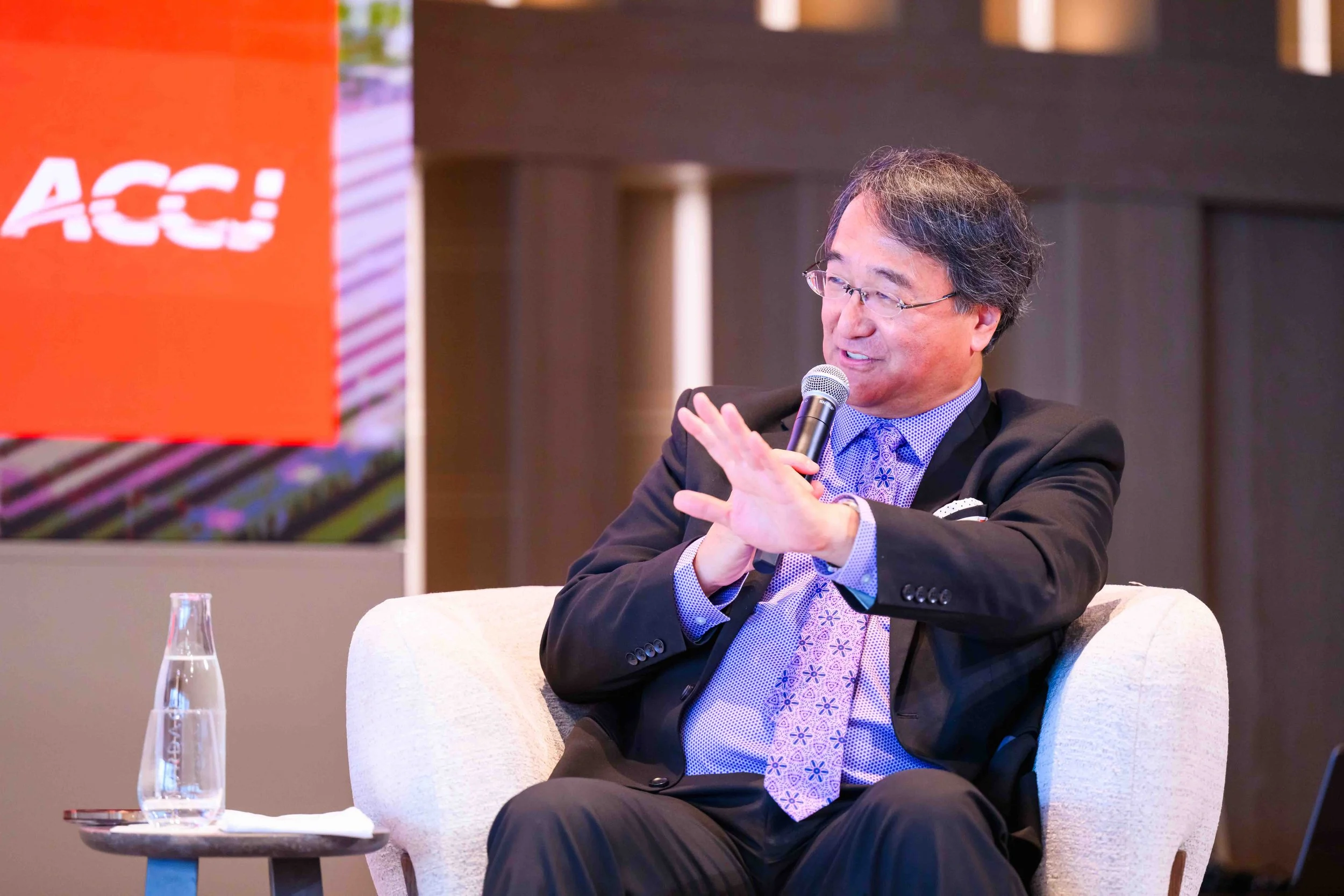
From left: Stephen Zurcher, Christopher Clark, Yoshiya Amanai, and Tadayuki Hara
Bullet trains slicing past a snow-covered Mount Fuji. Real-life anime beneath the neon lights of Akihabara. A fleeting glimpse of geisha in Kyoto’s lantern-lit alleys. For millions of tourists around the world, it’s scenes like these that put Japan at the top of their travel list.
Demand for such experiences has surged since the country reopened its borders in October 2022, after nearly two and a half years of pandemic-imposed isolation. This year alone, more than 35.5 million inbound tourists arrived through October, shattering the previous annual record set in 2019 of 31.88 million with two months to go. Japan is well on its way to hitting the government’s target of 60 million by 2030.
With visitors comes money. Inbound tourism is now Japan’s second-largest export industry after autos, and achieving the 2030 goal would see an injection of ¥15 trillion ($100 billion) into the economy—equal to the nation’s annual defense spending at nearly two percent of gross domestic product.
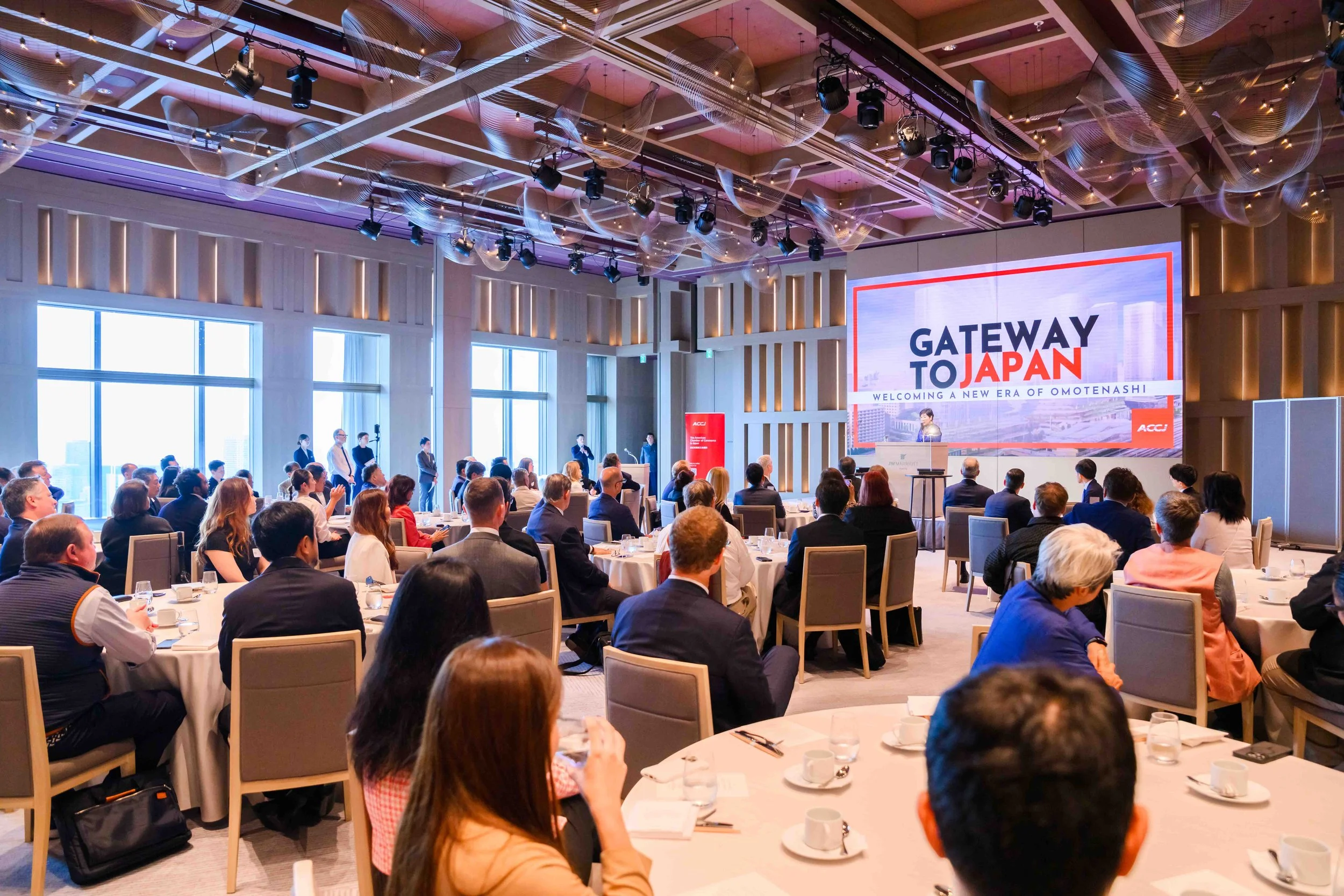
This potential—and how to harness it—was at the center of an event at the new JW Marriott Tokyo on
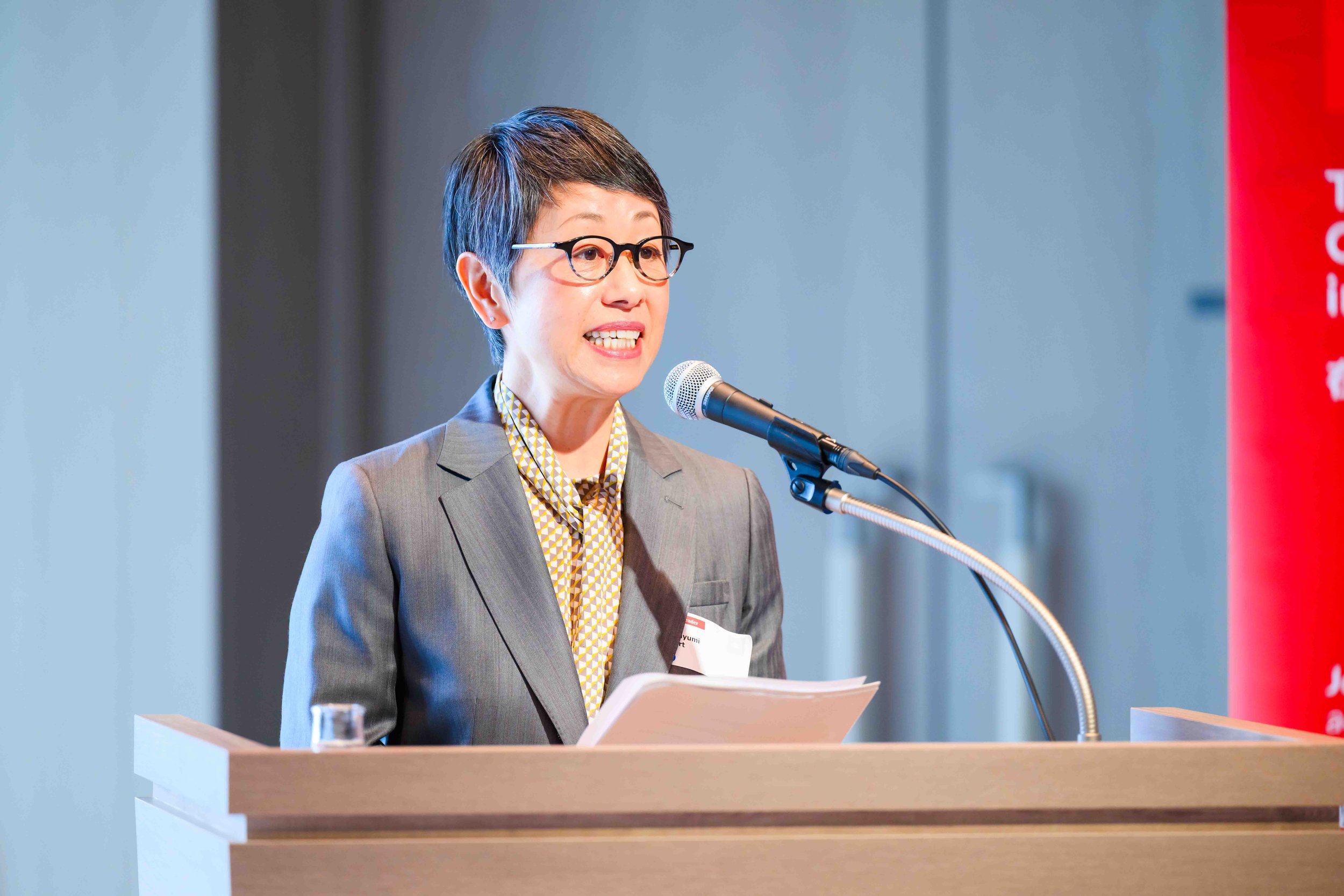
October 8, hosted by the American Chamber of Commerce in Japan (ACCJ) Tourism and Hospitality Committee and organized by Vice-chair Mayumi Nakamura Birt, who also served as emcee.
Gateway to Japan
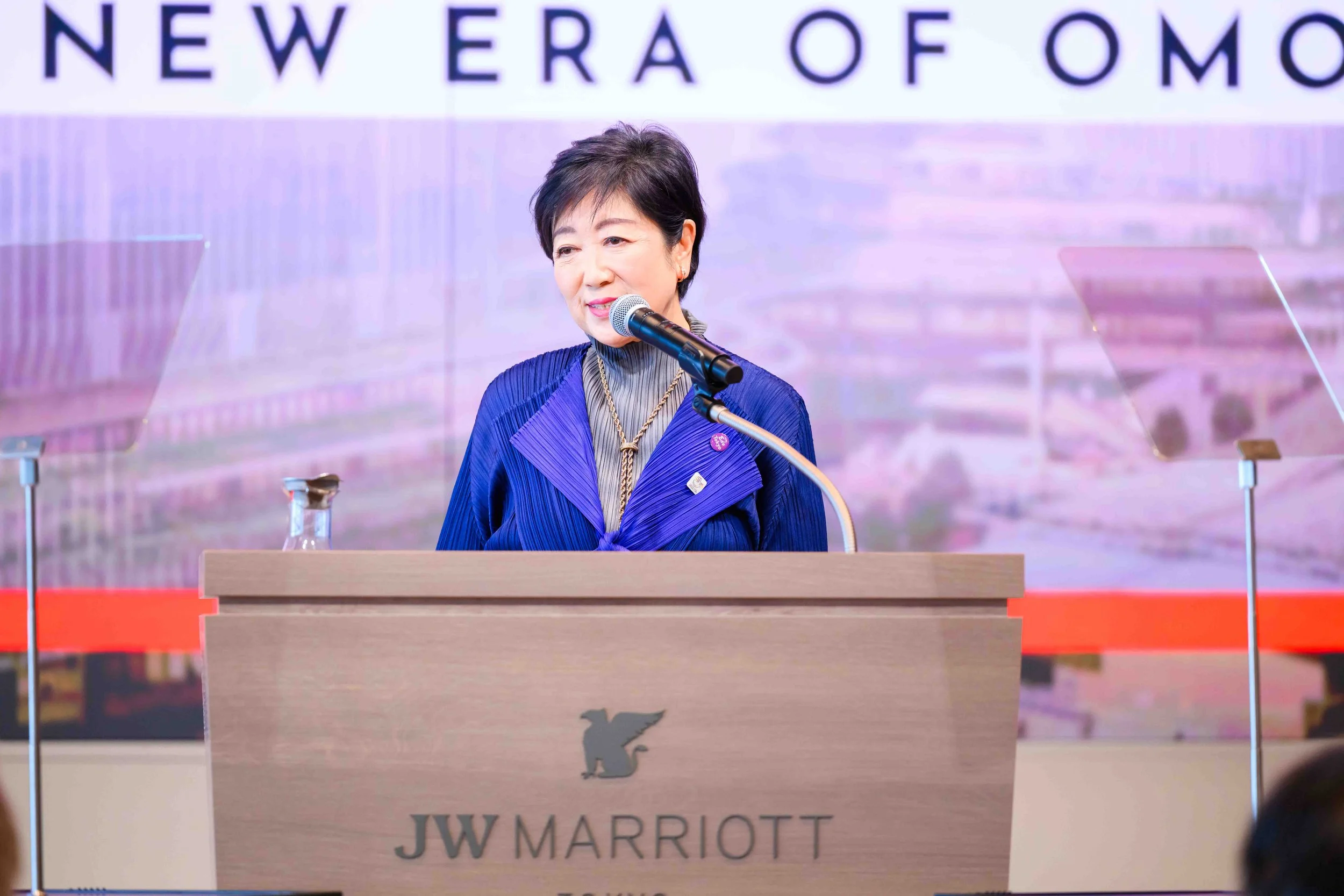
Tokyo Governor Yuriko Koike delivered the keynote, sharing exciting plans that stretch even farther and promise to elevate all aspects of tourism, going beyond sightseeing to business, education, cultural exchange, events, investment, and innovation.
“We have formulated the Tokyo 2050 Strategy as a compass guiding us to the future,” she explained, speaking in a milestone year when New York City and Tokyo celebrate their 65th anniversary as sister cities. “The driving force harnessing the strength of the city is people. And that is why Tokyo is advancing people-focused initiatives. Notably, in response to globalization, we are bolstering efforts to build an environment enabling younger generations to play an active role in the world. Through our investment in people who underpin socioeconomic activities, we will enhance our hospitality and guide the further growth of Tokyo and the rest of Japan.”
Tokyo ranked third behind New York and London in the 2024 Global Power City Index, compiled by the Mori Memorial Foundation’s Institute for Urban Strategies. First published in 2008, the annual study ranks major cities around the world in terms of magnetism—their power to attract creative individuals and enterprises—according to 70 indicators across six functions:
- Economy
- Research and development
- Cultural interaction
- Livability
- Environment
- Accessibility
Thanks to improvements in research and development, cultural interaction, livability, and accessibility, Tokyo significantly increased its score from the previous year, closing the gap on second-place New York. In the study’s actor evaluation—how a city is perceived by specific groups of people—Tokyo ranked second among tourists.
But there’s still room for improvement. After-dark activities is one area highlighted by Koike.
“We are also focusing on upgrading our nighttime tourism. Projection mapping on the wall of the Tokyo Metropolitan Government building holds a Guinness record and has attracted over 900,000 spectators,” said the governor.
The event’s panel of experts, who discussed hospitality in depth following the keynote, also touched on nighttime offerings.
“Compared to other countries, Japan has quite few nighttime activities,” noted Yoshiya Amanai, a manager at East Japan Railway Company (JR East) who oversees the marketing headquarters of the Shinagawa Community Development Division. JR East is the developer of the Takanawa Gateway City complex, of which the JW Marriott is a part.
Amanai said that entertaining guests after 5:00 or 6:00 p.m. is a core part of the Takanawa Gateway concept, and such activities will expand as more buildings open. The complex is scheduled for completion in spring 2026.
“If we can expand the nighttime economy, that’s going to bring a lot of revenue,” he added.
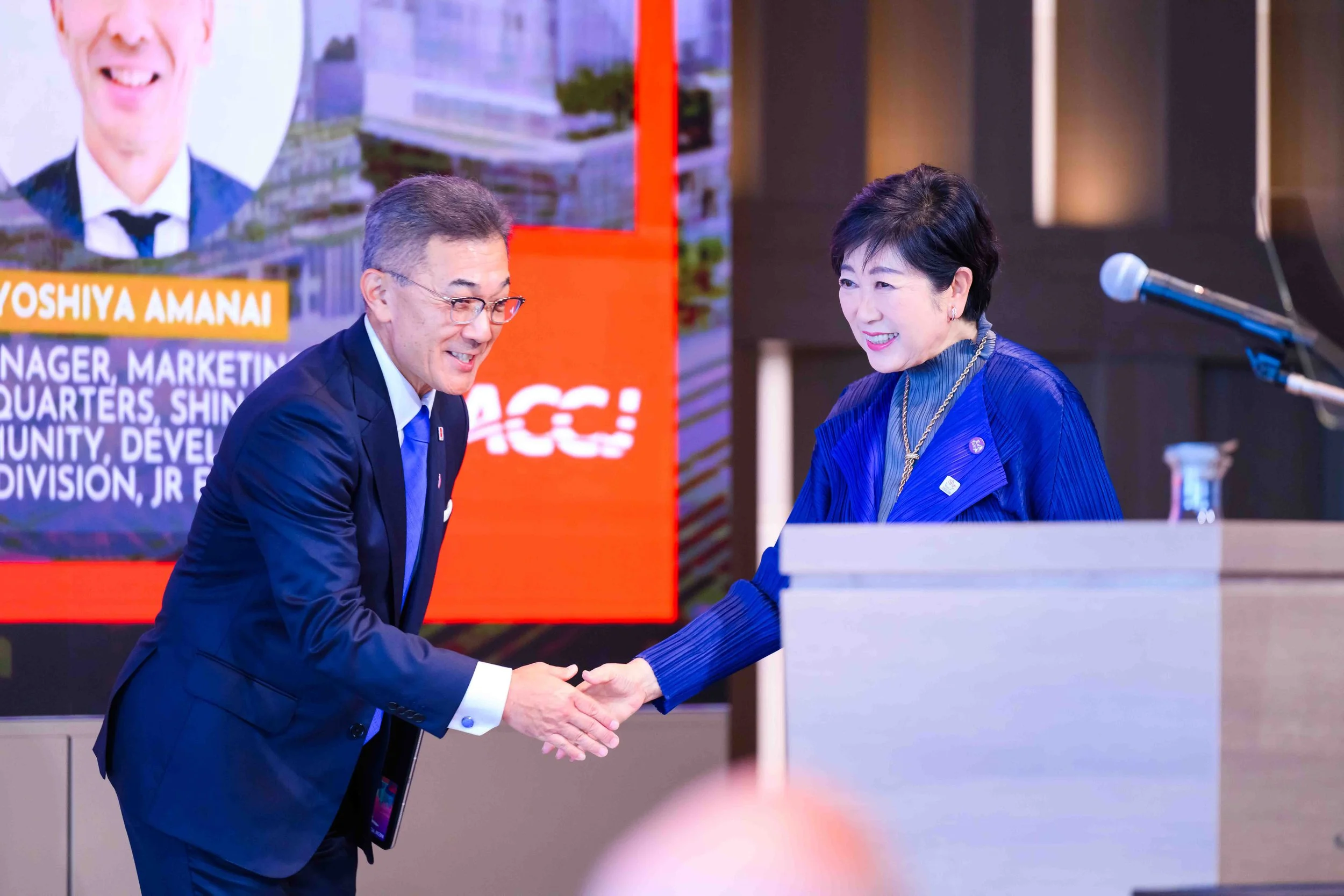

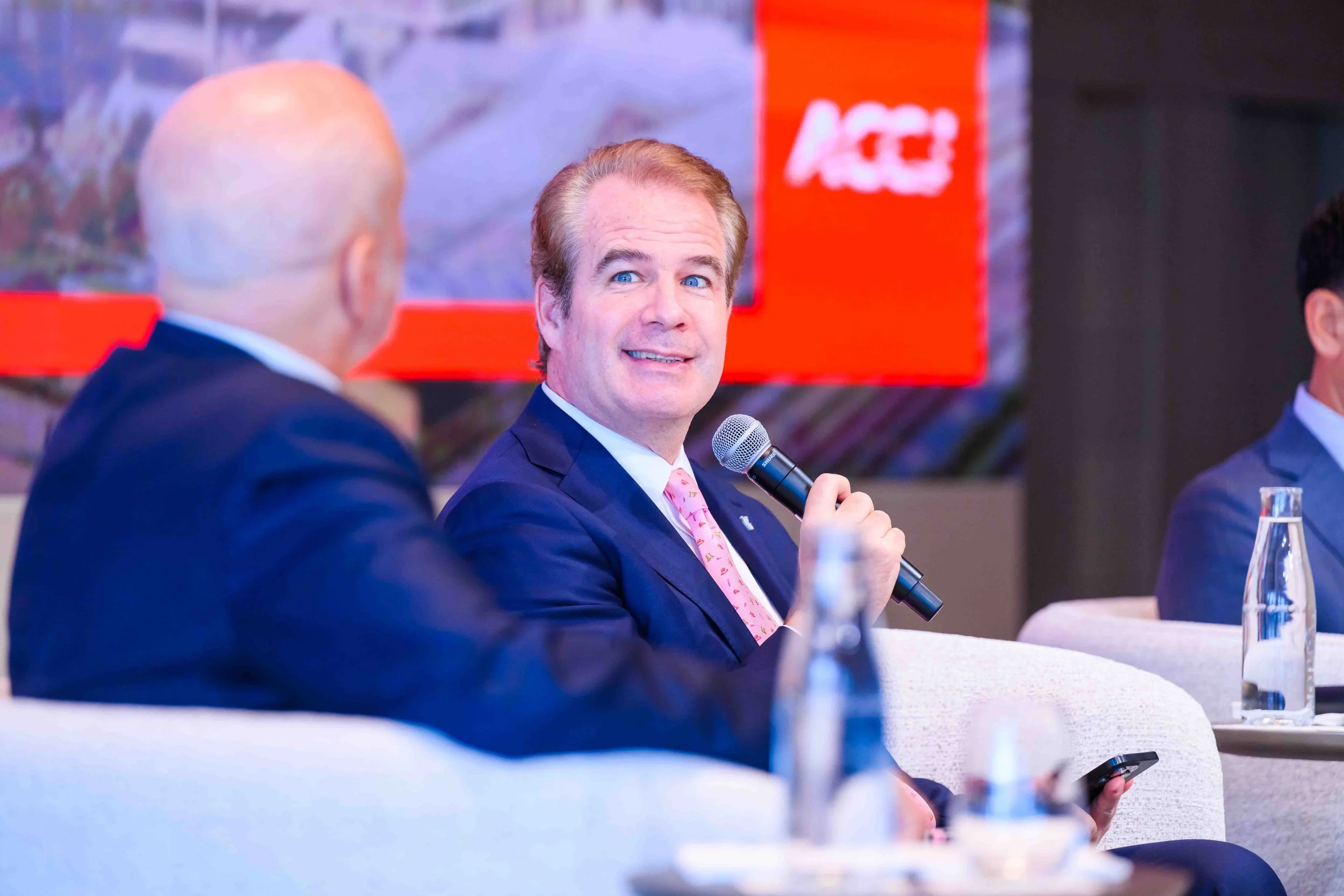
Broader Appeal
Tokyo is at the center of discussion because it truly is the gateway to Japan. Two-thirds of all visitors to the country come through the capital. While 2025 numbers are not yet in, that figure equated to nearly 25 million people in 2024.
But for Japan to truly benefit from its superstar role on the global travel stage, tourist destinations beyond Tokyo and the Golden Route that runs west through Kyoto and Osaka must be developed and marketed.
Stephen Zurcher, chair of the ACCJ Tourism and Hospitality Committee and moderator for the discussion, noted that diversification is essential in part because the most popular destinations are seeing strain on their infrastructure as a result of Japan’s remarkable tourism growth.
JR has been doing its part with a special experience that taps into one of tourists’ greatest loves and fascinations about the country: trains.
“In 2017, we started Shiki-shima, a luxurious train with service spanning three to five days in the eastern side of Japan,” Amanai shared.
Shiki-shima takes travelers to lesser-known corners of Honshu, tracing routes from Tokyo’s Ueno Station north to Tohoku and Hokkaido—the opposite direction from the Golden Route. Its journeys tear up the typical guidebook itinerary to reveal delights such as the cedar forests of Nikko, the sake breweries and crafts of Fukushima and Miyagi, the inns and hot springs of the Iwate highlands, and the samurai history of Akita.
“It’s expensive, but every time we sell tickets they all sell out,” Amanai added. All courses through summer are fully booked, and JR is currently accepting applications for tours between July and September.
JW Marriott Tokyo General Manager Christopher Clark shared Marriott International’s embrace of diversified tourism. “We operate 116 hotels in Japan, and the goal is to continue growing in all prefectures. We see that inbound tourists are increasingly interested in traveling beyond the Golden Route. We want to be there, whenever our customers want to go.” Also an ACCJ governor, Clark was previously general manager and oversaw the opening of JW Marriott Nara before moving to Tokyo to lead the new property in Takanawa Gateway City.
People Matter
The theme of investment in people, which Governor Koike emphasized as central to Tokyo’s future, resonated in the panel discussion.
One thing the panelists agreed on is that more qualified talent is needed to meet the growing needs of Japan’s skyrocketing tourism industry. Clark experienced this firsthand while hiring for JW Marriott Tokyo.
“Our biggest challenge opening the hotel was the human resource element,” he revealed. “I think the number of young associates who are willing to enter the hospitality business is becoming less and less in Japan. We need to continue to encourage the younger generation to join our industry. However, we also need support from the international market, in regards to visas and programs, to allow these employees to come and be trained on language but also Japanese omotenashi.”
Dr. Tadayuki Hara is very familiar with the industry talent outside Japan. He is an associate professor and senior research fellow at the Dick Pope Sr. Institute for Tourism Studies at the University of Central Florida in Orlando, a tourism mecca.
Hara noted the importance of developing human resources. “Unfortunately, in Japan, many universities are putting emphasis on tourism studies, but it’s a study of tourism. I don’t think it’s really meeting the need of the industry. Whereas in America, 70–75 percent of tourism-related programs are hospitality management. Management is how you allocate the limited internal resources into the highest growing areas.”
He sees three skills as key:
- Hospitality management
- Entertainment management
- Event management
Zurcher, dean of Asian studies at Kansai Gaidai University in Osaka, has been working to boost Japan’s hospitality talent for years. “Honestly, the reason I started a hospitality program 10 years ago was to help Chris [Clark] and other GMs who were telling me that they couldn’t find enough people to support the growth of their business. And now, of course, that challenge has become more severe.”
The gap—and the challenge of filling it—is certainly not lost on policymakers. Koike used part of her keynote to announce that Tokyo will subsidize overseas study for young people, noting that the weak yen has reduced their ability to gain international experience. “We wish for more of our young people to step out into the world,” she said. “Through our investment in people who underpin socioeconomic activities, we will enhance our hospitality and guide the further growth of Tokyo and the rest of Japan.”
Education, however, is not only about developing talent. It’s also about helping locals understand why tourism matters, Hara said. “What the government needs is more marketing. Not external marketing to bring more people, but internal marketing. Tell taxpayers and residents about the importance of tourism. In America, this is highly emphasized. For a destination marketing organization, a DMO, it’s usually one of the three pillars. Whereas in Japan, many DMOs are not really paying attention to the internal market.”
Japan now faces a simple but powerful challenge: to grow tourism not only by promoting the country abroad, but by building understanding at home. And if it succeeds, 60 million tourists will be more than a visitor metric; it will be a driver of local prosperity.