

Unexpected Liabilities?
Grant Thornton explains upcoming changes to how Japan calculates minimum income tax and what to be aware of if you expect large capital gains in 2027.
Beware of changes to the minimum income tax rules in 2027.
Japan’s minimum income tax rules will expand in scope from January 1, 2027, and both residents and nonresidents contemplating company share sales or large real estate sales should be aware of how these changes may impact them. Those who have inherited property overseas may also be affected. Careful planning is required to prevent a higher-than-expected tax bill.
The Need for a Minimum Tax
Higher income is usually caused by capital gains on shares or real estate sales rather than salary. These gains are taxed separately and at a flat rate—15 percent national tax plus 5 percent local tax—while salary is subject to progressive rates of 5–45 percent national tax plus 10 percent local tax. This means that the greater the share of a taxpayer’s income that comes from capital gains, the lower their overall effective tax rate may be.
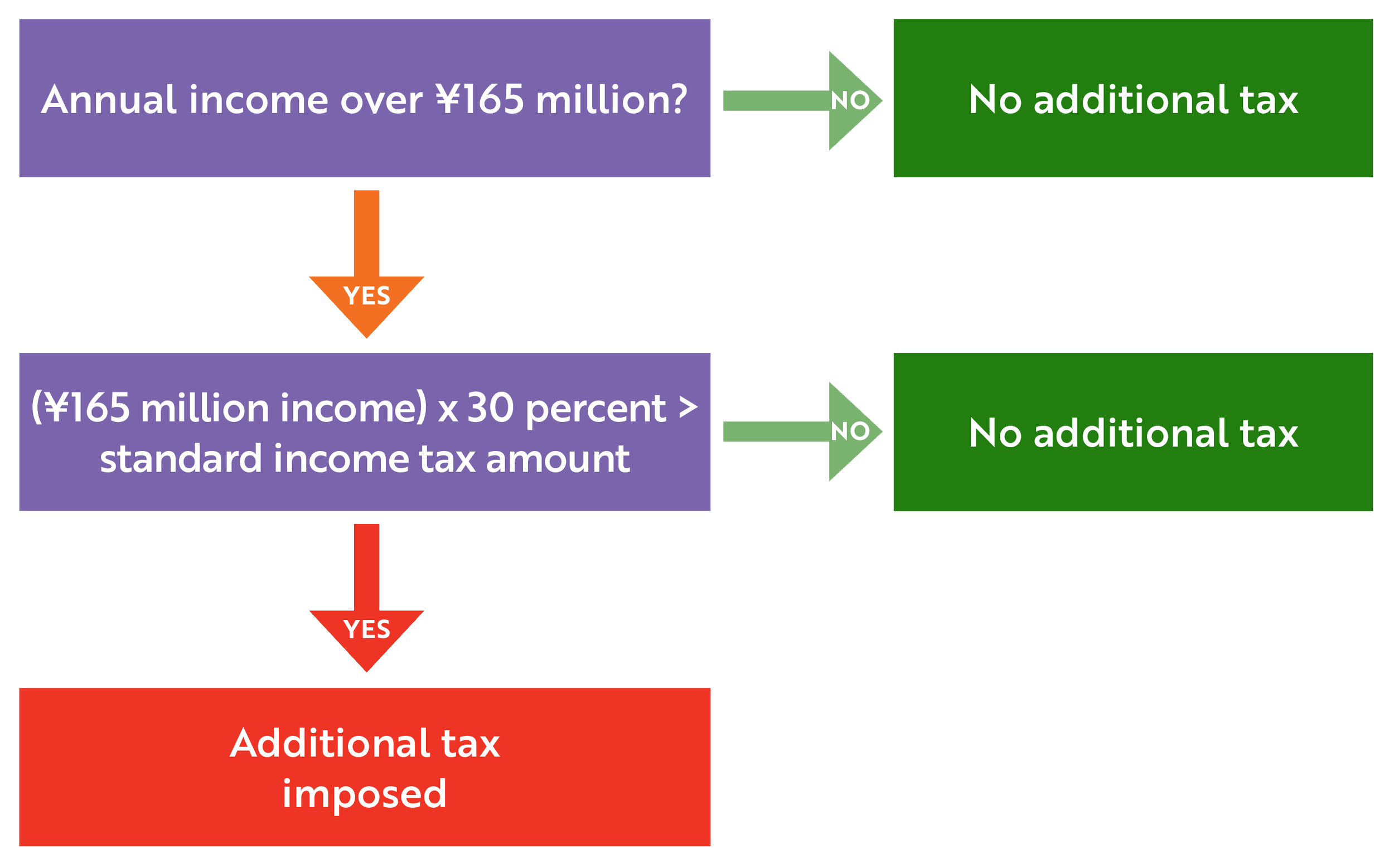
To correct this and ensure fairness, the Japanese government introduced the current rules (applicable from 2025) to impose a minimum tax calculation on individuals with income over ¥330 million. If the calculated tax is greater than the regular liability, additional tax is imposed.
From 2027, the scope will expand and the rate will increase. The threshold above which the tax is calculated will drop to ¥165 million and the minimum tax rate will rise to 30 percent from 22.5 percent. These changes will result in more taxpayers falling within the scope of the additional tax, in particular those with one-off capital gains or real estate sales.
The effects are shown in the following example calculation. For an individual with ¥50 million in salary and a ¥400 million capital gain, the regular tax liability would be approximately ¥79 million. The national tax (not including local tax) under the minimum calculation would be:
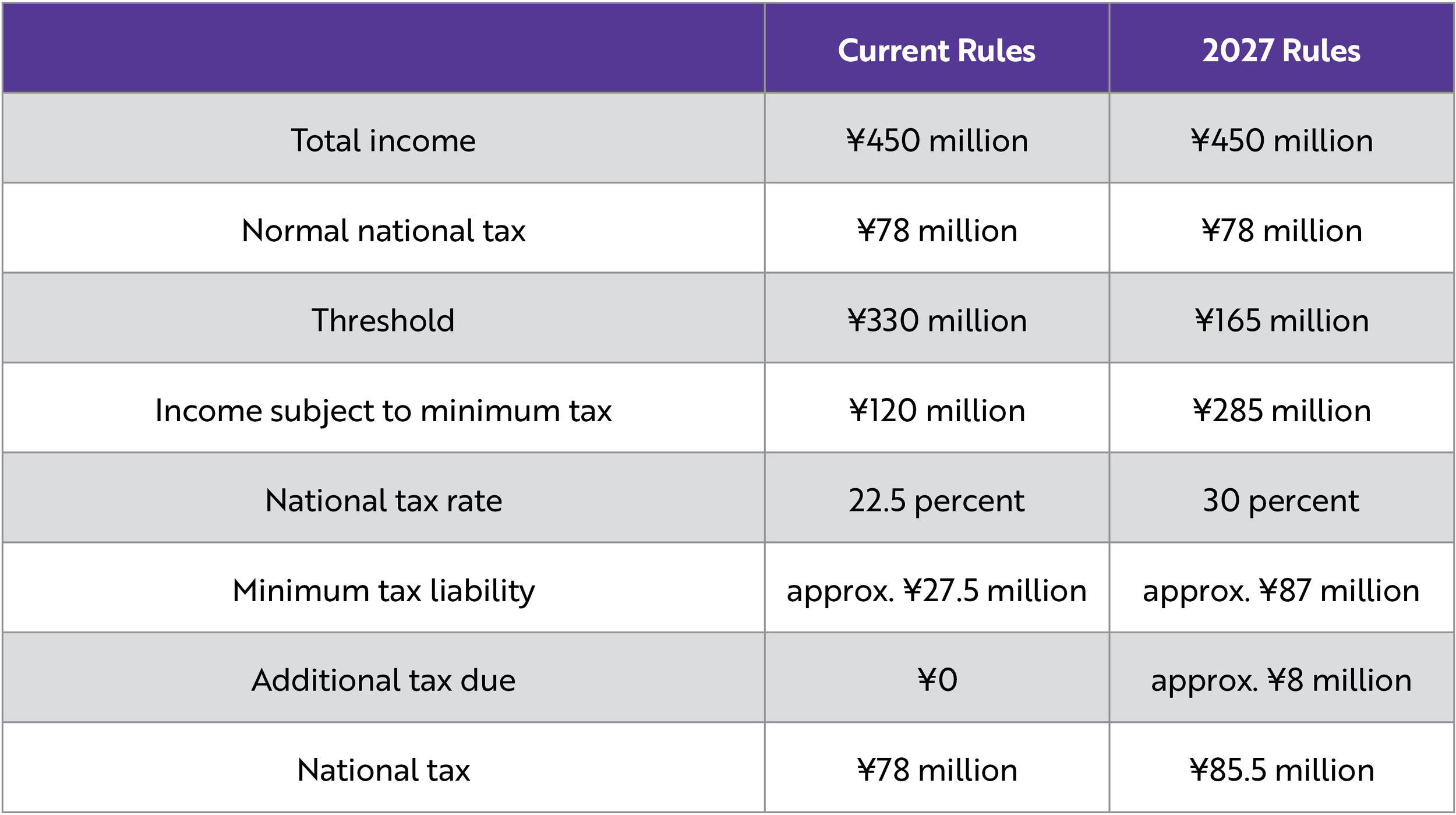
In addition, although local taxes are outside the scope of the calculation, the earthquake reconstruction surcharge (and defense surcharge for 2027) must be included.
Who May Be Affected?
The increased rate and reduced threshold will likely drag more taxpayers into the minimum tax regime, both individuals with high incomes who are prepared for the changes and others to whom the additional tax liability may come as a surprise.
Nonresidents with Japan real estate investments should be aware of the potential tax hike and consider accelerating plans to sell the property before the expansion of the minimum tax. Residents with large stock portfolios within special tax-advantaged accounts, executives with equity compensation, or business owners thinking of selling their companies should also seek advice on how the increased scope affects them.
With the new lower threshold, people who have inherited overseas houses should pay attention. In these cases, the individuals also take over the original purchase cost from the person who passed away. If this cost is unknown, they must use 5 percent of the current market value as the purchase cost for Japan income tax purposes. These values can give rise to considerable gains, particularly when the property was purchased many years ago. Typically, inherited houses are sold within a couple of years of inheritance, but if there is a large inheritance or estate tax bill to pay, it may be necessary to sell sooner, triggering a larger than expected income tax liability.
Takeaway
Although ostensibly aimed at individuals with high incomes, the threshold reduction and increased rate will cause more taxpayers to fall within the net of this additional tax, including those who may not have been aware of the tax or thought it did not apply to them. Taxpayers considering transactions that would trigger large gains should reassess the timing to minimize the impact. Seek professional advice before making any decisions.

For more information, please contact Grant Thornton Japan at info@jp.gt.com or visit www.grantthornton.jp/en